

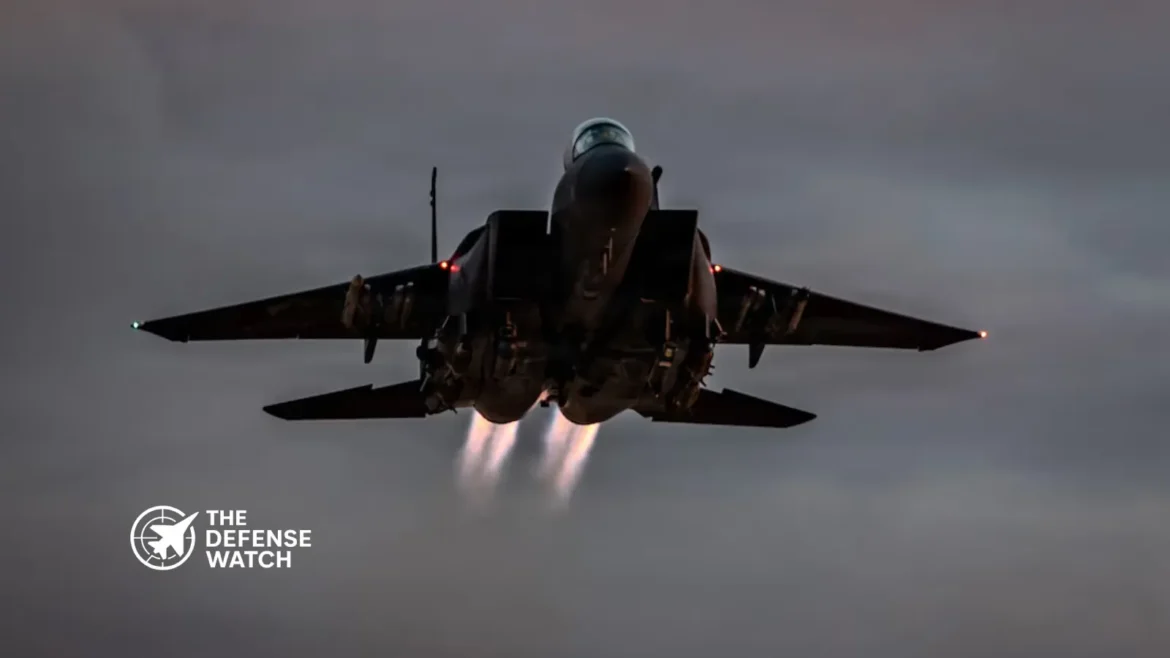
U.S. Deploys F-15E Strike Eagles To Undisclosed Middle East Base
U.S. Central Command says F-15E Strike Eagles have deployed to an undisclosed base in the Middle East to strengthen strike options against ISIS and support deterrence posture toward Iran, according to official statements and imagery released by U.S. military channels.
(adsbygoogle = window.adsbygoogle || []).push({});Short-range threats from militia drones, a persistent Islamic State insurgent footprint and rising pressure from Iranian proxy groups have shaped CENTCOM’s recent posture adjustments, officials said.
Deployment Details And Unit Involved
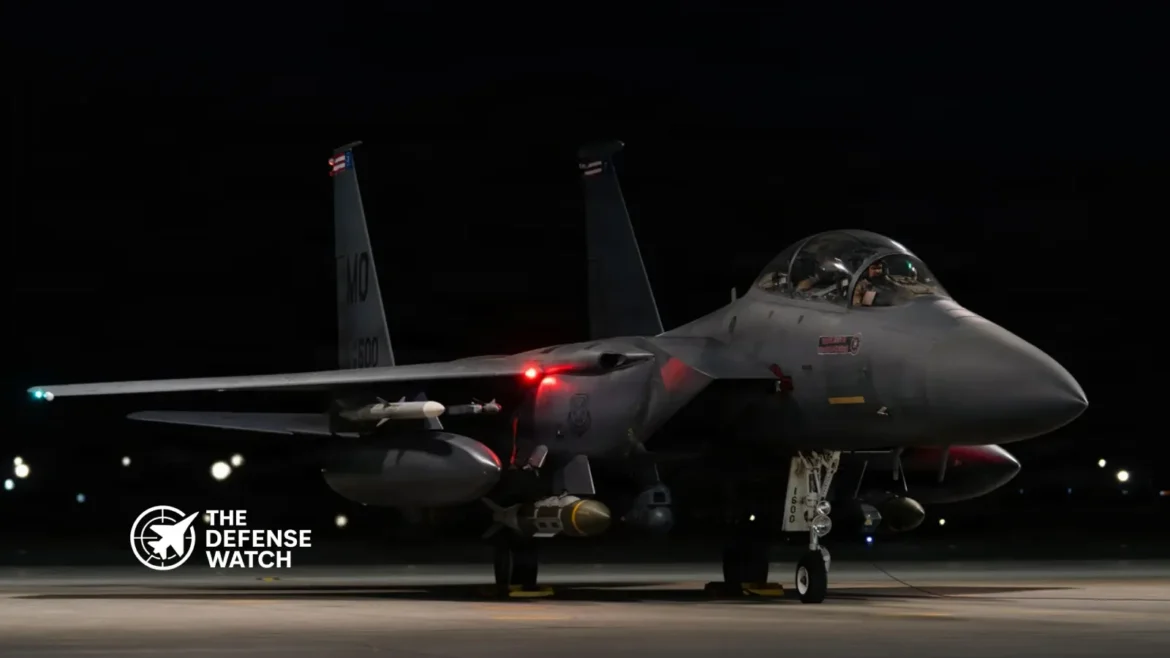
The aircraft involved are tied to the 494th Expeditionary Fighter Squadron, a Strike Eagle unit forward-deployed from RAF Lakenheath in the United Kingdom. Open-source flight tracking suggests a standard 12-aircraft detachment, supported by KC-135 aerial refueling assets to reach the CENTCOM area of responsibility without advanced notice.
CENTCOM framed the deployment as part of a readiness and stability measure, emphasizing that exact base locations and mission specifics remain restricted for operational security.
Why F-15E Strike Eagles
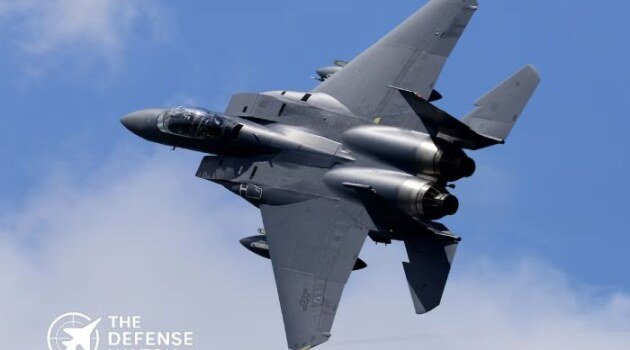
The F-15E Strike Eagle remains a mainstay for long-range multirole missions. Powered by twin Pratt & Whitney afterburning engines, the aircraft couples high speed and altitude capability with long range, especially when paired with aerial refueling. Its payload capacity and advanced sensors support both precision strike and air defense missions.
Strike Eagles carry a mix of air-to-air and air-to-ground munitions, including AIM-120 AMRAAM and AIM-9 Sidewinder missiles for air defense, guided bombs such as JDAM variants for precision strike, and targeting pods that support accurate delivery in complex environments.
- (adsbygoogle = window.adsbygoogle || []).push({});
The aircraft’s advanced electronic warfare suite (EPAWSS) helps detect and counter layered threats, a key factor in contested airspace where adversaries use surface-to-air systems and unmanned aerial systems.
Operational Context
This deployment aligns with a broader U.S. effort to reinforce airpower in the Middle East. The region has seen a mix of ISIS activity, militia threats and tensions tied to Iranian regional posture. U.S. air operations, including long-range precision strikes in Syria and Iraq against ISIS targets, remain ongoing.
In recent months, U.S. military activity has included aerial readiness exercises and deployments of other air assets, aiming to demonstrate rapid response capability and forward presence amid evolving security challenges.
Regional Deterrence And Strike Capability
Forward-deployed F-15Es enhance the U.S. ability to generate sorties quickly across sectors of the Middle East. Their presence signals that the Air Force can sustain both counterterrorism and high-end deterrence missions, bridging the gap between rotational forces and a larger permanent footprint.
- (adsbygoogle = window.adsbygoogle || []).push({});
These fighters offer commanders options from air defense to precision deep strike, complementing ISR and tanker support already operating in the region. Their range and payload help compress adversary decision cycles and support partner forces when stability threats rise.
Broader U.S. Airpower Posture
The deployment reflects the Pentagon’s continued emphasis on maintaining forward airpower in volatile environments. While exact operational details remain restricted by CENTCOM, the integration of F-15Es into Middle East operations underscores the role of tactical air assets in layered deterrence and counterterrorism efforts.
- (adsbygoogle = window.adsbygoogle || []).push({});
- (adsbygoogle = window.adsbygoogle || []).push({});


U S Airstrikes Hit ISIS Targets in Syria
The U S military carried out airstrikes against ISIS targets in Syria, U S Central Command said, in what officials described as part of a larger counterterror campaign following a deadly attack on American forces in late 2025.
Central Command said the strikes hit ISIS positions across central and eastern Syria. The operation, named Operation Hawkeye Strike, follows a Dec. 13 ambush near Palmyra that killed two U S soldiers and a civilian interpreter.
Operation Context
CENTCOM said the air campaign was aimed at degrading ISIS’s ability to plan and carry out attacks and to protect U S and partner forces in the region. The strikes used multiple aircraft and precision munitions to hit facilities linked to ISIS operatives and infrastructure.
This operation continues a series of actions under Operation Hawkeye Strike, which began in December 2025 with large-scale strikes on ISIS targets in central Syria in response to the Palmyra attack.
What Officials Have Said
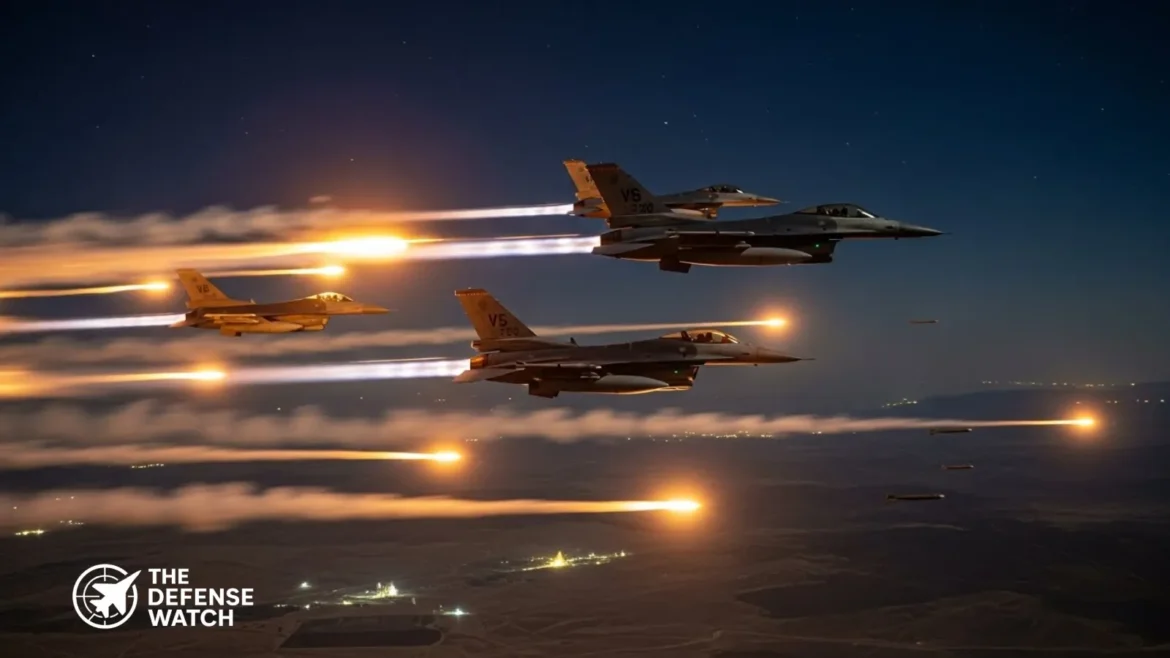
A U S military official told CBS News the airstrikes involved more than 90 precision munitions and aircraft including F-15E fighter jets, A-10 attack aircraft, AC-130 gunships, MQ-9 drones and Jordanian F-16s.
Central Command said the U S message to ISIS remains firm and that the strikes are part of a sustained effort to prevent future attacks on U S forces and partners.
Ongoing Military Effort
Approximately 1,000 U S troops remain deployed in Syria as part of ongoing operations against ISIS remnants and to support local partners. The U S continues to coordinate with allies in the region on counterterrorism activities.
US airstrikes on ISIS targets in Syria expand sharply
US airstrikes on ISIS targets in Syria intensified on December 19, when American forces struck more than 70 Islamic State sites across the country. The strikes took place amid a fragile political transition in Damascus, where President Ahmed al Sharaa is working to assert control while keeping limited cooperation with Washington intact.
According to US defense officials, the operation targeted ISIS command nodes, weapons storage areas, training camps, and logistics routes spread across central and eastern Syria. The campaign was launched six days after a deadly attack in Palmyra in which a Syrian security officer with suspected ISIS ties killed two US soldiers and a civilian interpreter.
Operation Hawkeye Strike and US objectives
The Pentagon confirmed the strikes were part of an operation named Hawkeye Strike. Defense Secretary Pete Hegseth said the mission aimed to disrupt ISIS cells seeking to regroup after months of reduced activity.
US airstrikes on ISIS targets in Syria were carried out using a mix of manned aircraft and remotely piloted systems operating from regional bases. Defense officials stated that the scale of the operation reflected growing concern that ISIS was exploiting gaps in local security forces during Syria’s political transition.
US Central Command assessed that the strikes degraded ISIS operational capacity, though it noted that follow on missions may be required if the group attempts to re establish networks.
Security pressure on Syria’s new leadership
For President Ahmed al Sharaa, the US operation underscored the limits of state control in remote areas. While the new government has pledged to counter extremist groups, its security forces remain unevenly trained and overstretched.
The Palmyra attack raised concerns inside the Syrian leadership about infiltration within its own ranks. US officials indicated that the attacker had recent contact with ISIS facilitators operating in desert regions where government presence remains thin.
US airstrikes on ISIS targets in Syria therefore placed added pressure on Damascus to improve internal vetting and coordination with local partners.
Background on ISIS activity in Syria
ISIS lost territorial control in Syria years ago but continues to operate as an insurgent network. Cells remain active in the Syrian desert and along key transit corridors. These areas allow fighters to move, recruit, and stage attacks against both Syrian and foreign forces.
US commanders have repeatedly warned that political instability creates openings for ISIS to rebuild. Intelligence assessments in recent months pointed to increased communications and movement among ISIS remnants, prompting renewed surveillance and planning.
US airstrikes on ISIS targets in Syria have been a recurring tool to prevent such resurgence, especially when local forces are unable to act quickly.
US Syria relationship under strain
Washington has described its relationship with the new Syrian government as limited and conditional. While there is no formal alliance, US officials have acknowledged quiet coordination aimed at preventing ISIS attacks on civilians and foreign personnel.
The scale of Hawkeye Strike highlighted how quickly the United States is willing to act unilaterally when American lives are at risk. At the same time, officials stressed that the strikes were not intended to undermine Syria’s sovereignty.
Analysts note that continued US airstrikes on ISIS targets in Syria could complicate Damascus’s efforts to project authority, particularly if civilian harm or political backlash emerges.
Regional and strategic implications
The latest operation signals that US counterterrorism policy in Syria remains active despite shifting regional priorities. It also serves as a warning to ISIS affiliates that attempts to exploit political change will be met with force.
Regional partners are closely watching whether Syria’s new government can stabilize key areas without sustained foreign intervention. Failure to do so could invite further unilateral action by external actors.
What comes next
US officials said intelligence monitoring will continue in the coming weeks. Additional strikes remain possible if ISIS activity persists or expands.
For Syria, the challenge will be translating political change into real security gains on the ground. The effectiveness of that effort may shape how often US airstrikes on ISIS targets in Syria are required in the months ahead.

Two U.S. Soldiers and Civilian Interpreter Killed in Syria
Two United States Army soldiers and a U.S. civilian interpreter were killed and three others wounded in Palmyra, Syria, on December 13, 2025, during a “key leader engagement,” Pentagon spokesman Sean Parnell confirmed. U.S. Central Command (CENTCOM) reported the personnel were ambushed by a lone gunman, who was subsequently killed.
The attack took place amid ongoing U.S.-led counter-ISIS operations in eastern Syria. According to Parnell, the soldiers’ names and unit details are being withheld pending next-of-kin notifications. The incident remains under active investigation.
Context: U.S. Military Presence in Syria
The United States continues to maintain roughly 1,000 troops in eastern Syria as part of a coalition effort to defeat the Islamic State group. Palmyra, a city of historical significance, previously served as an ISIS stronghold. U.S. forces conduct periodic joint patrols and key leader engagements to support counter-terrorism operations and stabilize the region.
The personnel targeted were participating in a mission designed to coordinate with local partners against remaining ISIS elements. The attack highlights the ongoing risks U.S. forces face even in areas previously considered stabilized.
Incident Details
Video footage from the scene shows a U.S. Air Force F-16 flying overhead and a Black Hawk helicopter on the ground, suggesting rapid response and casualty evacuation efforts. Local reports indicate the gunman acted alone, though authorities are still investigating potential affiliations and motives.
Pentagon officials emphasized that the attack will be thoroughly investigated. Sean Parnell noted on social media that the mission was “in support of ongoing counter-ISIS and counter-terrorism operations in the region.”
Operational and Strategic Implications
This incident underscores the continued threat environment in Syria, where U.S. troops operate in volatile areas alongside coalition partners. It may also affect planned coordination between U.S. forces and Syrian authorities following the country’s recent steps to engage more actively with the international coalition against ISIS.
Military analysts note that while U.S. forces have reduced large-scale combat operations, small-unit engagements remain high-risk, especially in regions with lingering insurgent activity.
What’s Next
U.S. Central Command is monitoring the situation closely and working with local partners to prevent further attacks. The Pentagon will release additional details as the investigation proceeds and families are notified.