

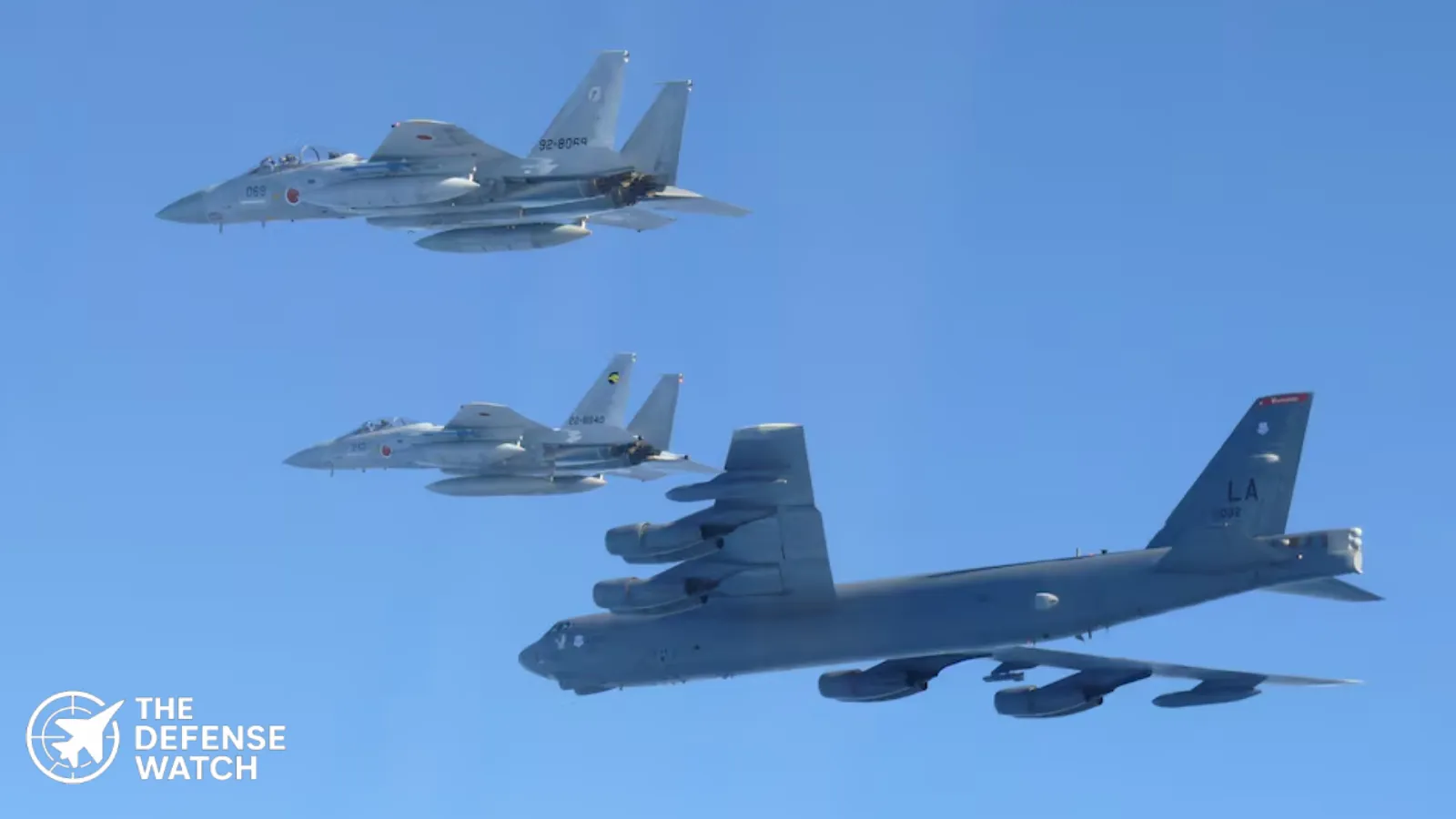
Japan and the United States held coordinated military drills over the Sea of Japan on Wednesday, with U.S. B-52 strategic bombers flying alongside Japanese fighter jets in a high-visibility demonstration of allied air power and readiness, Tokyo’s defense ministry said on Thursday.
The exercise came amid heightened regional military activity, including recent joint bomber flights by China and Russia near Japanese airspace, and serves as a clear signal of continued U.S. and Japanese cooperation in the face of shifting security challenges in the Indo-Pacific.
What Happened and Where
On December 10, two U.S. nuclear-capable B-52 strategic bombers flew over the waters of the Sea of Japan in formation with units of the Japan Air Self-Defense Force. Participating Japanese aircraft included three F-35 stealth fighters and three F-15 air-superiority jets, according to official statements.
The drills involved coordinated flight operations over international waters, with no reported violations of Japanese sovereign airspace. Japanese and U.S. officials described the flights as routine joint readiness exercises.
Context of Rising Regional Activity
The announcement followed separate military activity by China and Russia. On Tuesday, strategic bombers from both countries conducted a joint flight from the East China Sea into the western Pacific, prompting Japan to scramble fighter jets to monitor the patrol.
Tokyo has also reported other Chinese military maneuvers in recent days, including carrier drills and incidents of Chinese aircraft locking radar on Japanese fighters — incidents Japan regards as risky but which Beijing has denied were aimed at escalation.
These developments unfold against a backdrop of increasing Chinese air and naval activity near Taiwan and around Japan’s southwestern island chain, adding to strategic concerns in Tokyo and among U.S. defense planners.
Official Statements on the Drills
Japan’s defense ministry said the joint drills with U.S. forces reaffirmed both countries’ resolve to prevent any unilateral attempts to change the regional status quo by force, and confirmed the readiness posture of the Japan Self-Defense Forces and U.S. military.
In a statement, Tokyo highlighted that these exercises were designed to enhance interoperability between U.S. and Japanese units deployed in the region.
A U.S. official, speaking on condition of anonymity, noted that the missions were planned well before the recent China-Russia flights and that similar joint sorties with strategic bombers had taken place in previous months.
Strategic and Policy Implications
The use of B-52 strategic bombers in joint exercises underscores the depth of U.S. military engagement in the Indo-Pacific, particularly at a time of heightened tensions with China. The aircraft’s global reach and nuclear-capable designation add strategic weight to these drills, which Tokyo and Washington frame as routine but meaningful demonstrations of alliance cohesion.
U.S. officials in Washington reaffirmed the strength of the bilateral alliance with Japan, while also seeking to balance broader diplomatic ties with Beijing. At a press briefing, a White House spokeswoman said maintaining a strong alliance with Tokyo did not preclude constructive relations with China.
From Tokyo’s perspective, these joint exercises serve dual purposes. They signal deterrence against potential coercion in the region and reassure U.S. allies and partners of continued defense cooperation under shifting geopolitical conditions.
What Could Come Next
Allied observers are watching whether Japan and the United States will expand such joint air operations or integrate additional domains such as naval or missile defense drills in response to persistent military movements by China and Russia.
Japan, which hosts significant U.S. military assets including forward-deployed Marine units and carrier strike group support, may further calibrate its defense posture in future exercises to address emerging threats in the East China Sea and wider Indo-Pacific.
Down the line, Tokyo and Washington are likely to continue blending routine readiness drills with broader alliance signaling as tensions evolve, especially around Taiwan and contested maritime zones.

3 comments
[…] Palmyra, a city of historical significance, previously served as an ISIS stronghold. U.S. forces conduct periodic joint patrols and key leader engagements to support counter-terrorism operations and stabilize the […]
[…] and software that allow it to interpret its environment and fly without a pilot onboard. The aircraft is designed to perform persistent sea patrols, anti-submarine detection and tracking, and other missions that expose aircrew to hazardous […]
[…] key objective was refining airpower mobility. Tanker aircraft from both nations conducted joint refueling missions to support fighter operations, allowing combat aircraft to extend range and […]