Netherlands rushes interim mobile anti-drone setup to guard troops
The government of the Netherlands has announced plans to assemble a mobile anti-drone platform — using wheeled armored vehicles fitted with remote-controlled weapon systems — to furnish its infantry units with urgent counter-unmanned aerial system (C-UAS) capability. The move aims to fill a critical protection gap ahead of the scheduled delivery of the first Rheinmetall Skyranger 30 systems in 2028.
- Netherlands rushes interim mobile anti-drone setup to guard troops
- Why the urgency — growing drone threats in Europe
- What the interim system looks like
- Complementing longer-range air defense — the Skyranger 30
- Broader C-UAS investments — radar, portable systems, navy coverage
- Political pressure to act quickly — incidents drive urgency
- What comes next — implementation and integration
- Implications — a broader shift in European defense posture
State Secretary for Defence Gijs Tuinman disclosed in a letter to parliament that the new mobile C-UAS systems form part of a broader investment of between €1 billion and €2.5 billion in counter-drone capabilities.
Why the urgency — growing drone threats in Europe
European militaries are scrambling to keep pace with an evolving battlefield where small drones have emerged as a serious threat. In the war in Ukraine, unmanned aerial systems — including first-person-view (FPV) attack drones — have reportedly accounted for a growing share of front-line casualties.
The urgency for quick deployable C-UAS solutions is magnified by a wave of recent drone sightings and incursions over military bases and critical infrastructure across Europe, including incidents over air bases in the Netherlands, Poland, and Romania.
Acknowledging these developments, Tuinman wrote that the Netherlands is incorporating battlefield lessons from Ukraine into its C-UAS investment plans.
What the interim system looks like
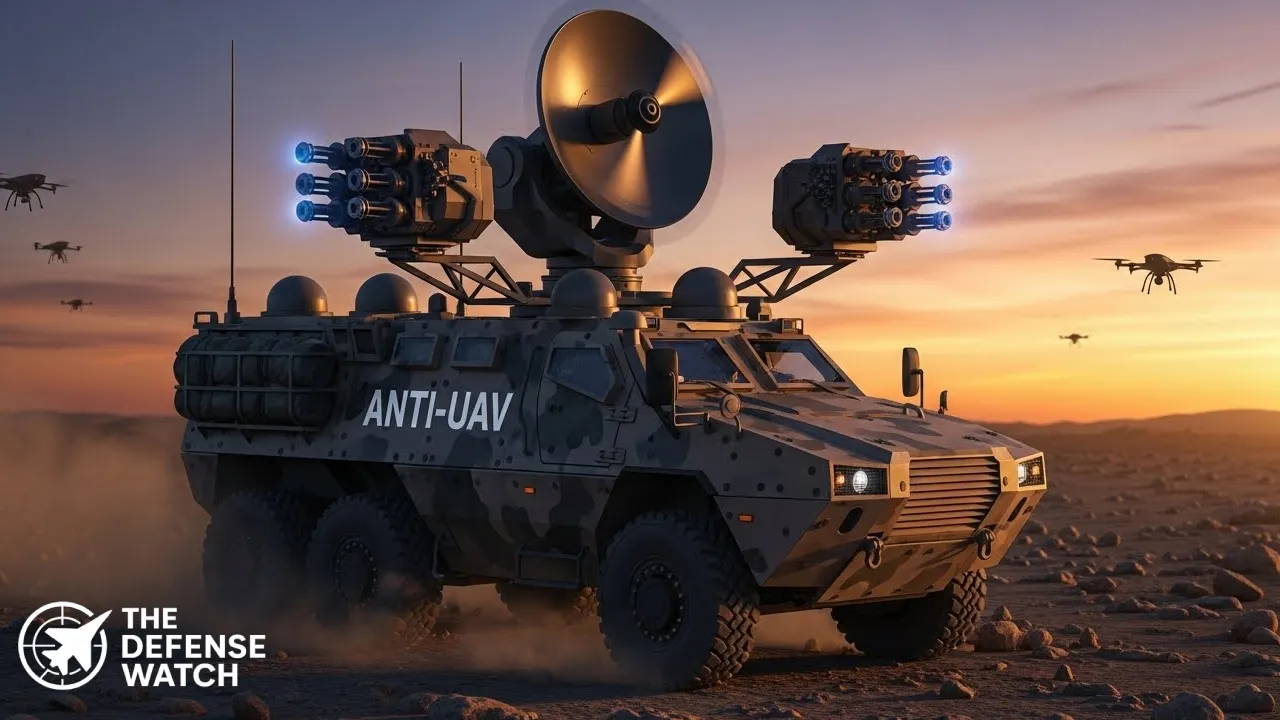
The proposed mobile anti-drone capability will be constructed from “off-the-shelf” military components: armored wheeled vehicles, remote-controlled weapon stations (RCWS), ammunition, and combat-management systems. These will be integrated — likely by a yet-to-confirmed systems integrator — to form operational air-defense platforms capable of rapid deployment.
The defense ministry declined to specify the number of units or suppliers involved, citing operational security.
These mobile C-UAS platforms are intended to remain in service even after the Skyranger 30 systems arrive in 2028, ensuring continuity of counter-drone coverage across infantry formations.
Complementing longer-range air defense — the Skyranger 30
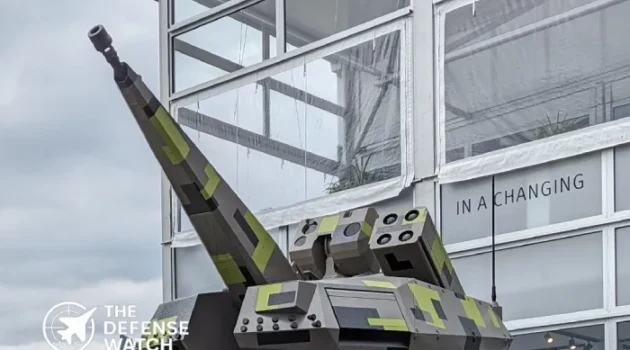
The interim mobile systems serve as a stopgap measure until the full deployment of the Skyranger 30. Earlier in 2025, the Netherlands announced acquisition of 22 Skyranger 30 mobile air-defense cannon systems from Rheinmetall, at a cost of around €1.3 billion.
The Skyranger 30 — mounted on a tracked ACSV vehicle — is designed to counter drones, helicopters, and low-flying aircraft up to around 5 kilometers. It uses a 30 mm rapid-fire cannon (Oerlikon) with airburst munitions and can carry short-range surface-to-air missiles to extend its engagement envelope.
With planned delivery starting in 2028, the Skyranger 30 represents the Dutch long-term solution for mobile air defense.
Broader C-UAS investments — radar, portable systems, navy coverage
The interim wheeled-vehicle C-UAS platform is only one component of a sweeping expansion of the Netherlands’ anti-drone posture. The Ministry of Defense also plans to acquire additional detection and disruption tools — including C-UAS radars (such as IRIS anti‑drone radar), all-terrain patrol vehicles with RCWS, man-portable and vehicle-mounted C-UAS units, and interceptor drones.
For maritime defense, the ministry has also signaled intent to invest in hard-kill C-UAS systems for the navy, addressing concerns that existing soft-kill measures (e.g., jamming) are inadequate against kamikaze-style drones.
Budget allocations for the naval C-UAS systems are projected between €250 million and €1 billion, with more details expected by spring 2026.
Political pressure to act quickly — incidents drive urgency
Domestic political pressure is mounting for swift action. Following multiple drone sightings over military air bases such as Volkel Air Base and Eindhoven Airport, lawmakers from several Dutch parties have urged the government to accelerate its anti-drone procurement plans.
One member of parliament warned that cheap drones are an attractive tool for adversaries to spread fear and disruption — a sentiment echoed across political lines.
The announcement of interim mobile C-UAS capabilities highlights the government’s response to these concerns, bridging the period ahead of more capable systems coming online.
What comes next — implementation and integration
The Netherlands’ Ministry of Defense is reportedly evaluating which defense firm will integrate the interim systems; for now, suppliers are not being named publicly.
More comprehensive details — including timelines, unit numbers, and operational deployment plans — are expected to be provided in parliamentary briefings slated for spring 2026.
In the longer term, the new mobile anti-drone platforms, combined with the forthcoming Skyranger 30 and a layered C-UAS architecture (radars, interceptors, soft-kill, portable systems), aim to provide the Dutch armed forces with a robust, multi-layered defense against the proliferating drone threat.
Implications — a broader shift in European defense posture
The Netherlands’ decision to field mobile interim C-UAS systems reflects a broader shift across Europe: nations are moving fast to adapt ground forces for a battlefield where small drones, loitering munitions, and drone swarms are now a primary threat.
By investing heavily and bridging capability gaps ahead of long-term procurement, The Hague signals that drone defense is no longer a niche requirement — but a core component of land-force survivability, deterrence, and readiness.
What happens next may influence decisions in other NATO countries, many of which face similar threats but have yet to commit to comparable investments.