

Russian Air Defences Neutralize Eight Drones Heading to Moscow
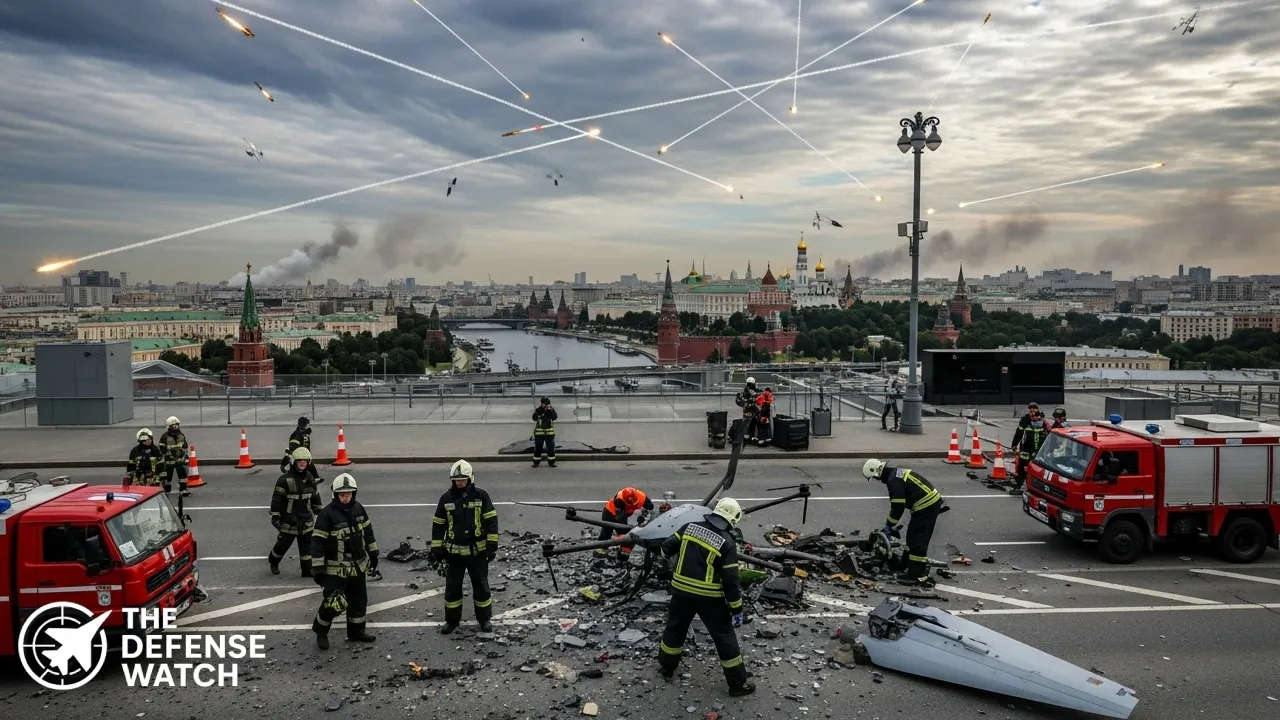
Russian air defense systems shot down eight drones en route to Moscow, the city’s mayor, Sergei Sobyanin, said Monday, following a major drone strike on nearby critical infrastructure the day before.
Background: The Shatura Power Station Strike
The drone intercepts come just one day after Ukrainian drones struck a power and heat station in the Moscow region. The targeted facility, the Shatura Power Station, is approximately 120 km east of central Moscow and provides electricity and heating to nearby towns. According to regional authorities, the strike triggered a fire and forced the activation of backup power and mobile heating systems for affected residents.

Details on the Drone Intercepts
- Mayor’s Statement: Moscow Mayor Sergei Sobyanin said in a public statement that eight incoming drones were successfully shot down by air defense units.
- Emergency Response: He added that emergency services are working at the sites where debris fell.
- Defense Ministry’s Report: Earlier, Russia’s Defense Ministry reported that ten Ukrainian drones had been intercepted across three regions — Moscow, Kaluga, and Bryansk.
- Airport Disruptions: In response to the threat, flight restrictions were imposed on Moscow’s three main airports. According to some reports, the curbs were lifted shortly afterward.
Context: Growing Drone Threats Over Moscow
This is not an isolated incident. In recent months, Moscow has reported multiple drone intercepts:
- In May 2025, Sobyanin said three drones were downed, prompting temporary suspensions at several airports.
- In March 2025, authorities claimed to have shot down four drones, with some debris reportedly damaging a residential building.
- In late September, a separate drone strike resulted in two civilian fatalities in the Moscow region.
These recurring incidents show an ongoing pattern: Moscow remains a target for long-range drone operations, and its air defenses are regularly called into action.
Strategic Implications
- Escalation Risk: The recent spike in drone activity close to Moscow raises the risk of more ambitious or destructive strikes by Ukraine—or by proxy actors—aiming to challenge Russian airspace security.
- Air Defence Strain: Repeated drone waves tax Moscow’s air defence networks and emergency response capacity. Each intercept involves not just missile systems but also the mobilization of rescue and investigation teams.
- Infrastructure Vulnerability: Targeting power and heat infrastructure, especially in sub-zero conditions, can have outsized effects on civilian populations and potentially disrupt both daily life and strategic logistics.
- Psychological Impact: Even if intercepted, drone incursions near the capital may erode perceptions of invulnerability and escalate domestic political and security debates within Russia.
- Diplomatic Significance: The timing — coming after a high-profile attack on energy infrastructure — may factor into broader geopolitics, particularly if drone strikes are leveraged in future ceasefire or peace negotiations.
What Comes Next
- Authorities will likely increase air defence readiness around Moscow and key infrastructure sites, especially power generation and heating facilities.
- Russia may publicly emphasize these intercepts to underscore its defensive capabilities and deter further drone incursions.
- Analysts will closely watch whether Ukraine (or other actors) continues pushing drone operations deeper into Russian territory, and whether these activities influence negotiations or retaliatory escalations.


8 comments
[…] the war in Ukraine approaches another year, policymakers across Europe and North America have been evaluating scenarios for […]
[…] in counter-UAV systems or changes in Russian air defence […]
[…] at signaling capability rather than battlefield necessity. The strike did not indicate a shift in Russia’s overall campaign but highlighted Moscow’s willingness to introduce new weapons during active […]
[…] minister said the aim is to make exporting Russian oil riskier for Moscow by squeezing its hard currency flows and reducing funds available for its war […]
[…] Kremlin publicly backed Trump’s comments, with spokesman Dmitry Peskov aligning Moscow with the assessment that Ukraine is holding up a deal. Russian officials said they are open to talks and that their terms are known […]
[…] of each individual loss remains limited, though open source analysts have previously confirmed that Russian air bases have been repeatedly targeted by Ukrainian long range systems since […]
[…] Deputy Foreign Minister Sergey Ryabkov made the remarks during a press event at the Russian Embassy in Beijing on February 3, saying a U.S. deployment of weapon systems on the Arctic island would prompt a direct response from Moscow. […]
[…] attacks, drone strikes, and artillery fire, rather than large scale offensives. NATO officials say that degraded Russian communications make it harder for Moscow to reinforce threatened sectors or coordinate defensive […]