The pursuit of hypersonic flight—speeds exceeding Mach 5—represents one of the most ambitious technological challenges in modern aerospace engineering. While no confirmed flight tests have occurred for the SR-72 and it remains a design concept, the broader field of hypersonic aircraft development is advancing rapidly, with multiple programs demonstrating breakthrough capabilities that could revolutionize military operations and strategic deterrence.
- Defining Hypersonic Speed: The Mach 5 Threshold
- The SR-72 Concept: Son of Blackbird
- How Hypersonic Aircraft Work: Revolutionary Propulsion Systems
- Operational Hypersonic Systems: What’s Actually Flying
- Stratolaunch Talon-A: Breakthrough Testing Platform
- Army Long-Range Hypersonic Weapon (LRHW)
- Air Force Hypersonic Programs
- Technical Challenges: The Engineering Gauntlet
- Strategic Implications: Why Hypersonic Aircraft Change Warfare
- Current Funding and Development Status
- The Path Forward: 2025-2030
- FAQs
Defining Hypersonic Speed: The Mach 5 Threshold
Hypersonic speed is universally defined as any velocity exceeding Mach 5, or five times the speed of sound. At sea level, this translates to approximately 3,800 miles per hour or 6,116 kilometers per hour. This threshold represents more than just a numerical milestone—it marks the point where a range of physical effects start becoming a significant engineering challenge, fundamentally changing how aircraft must be designed and operated.
The extreme velocities generate massive heat flux as vehicles travel through dense atmospheric layers, creating temperatures that can exceed 2,000 degrees Celsius on leading edges and structural surfaces. This thermal environment, combined with complex aerodynamic phenomena, distinguishes hypersonic flight from merely supersonic operations and requires revolutionary engineering solutions.
The SR-72 Concept: Son of Blackbird
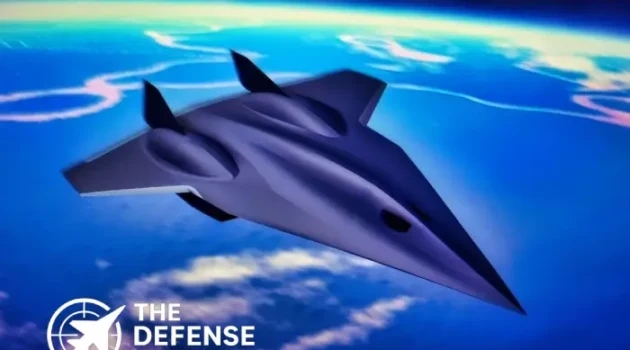
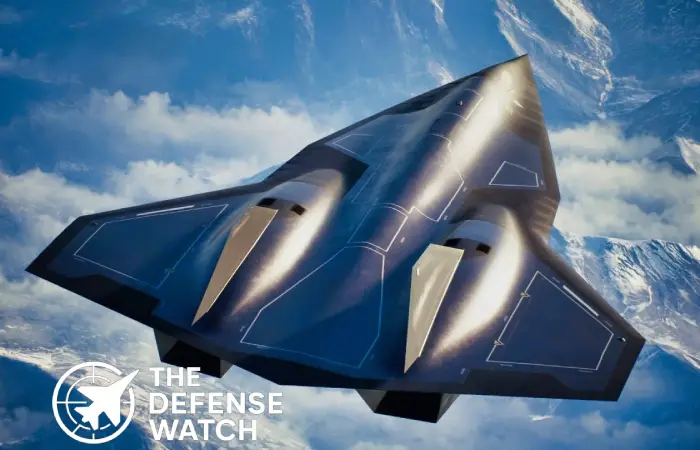
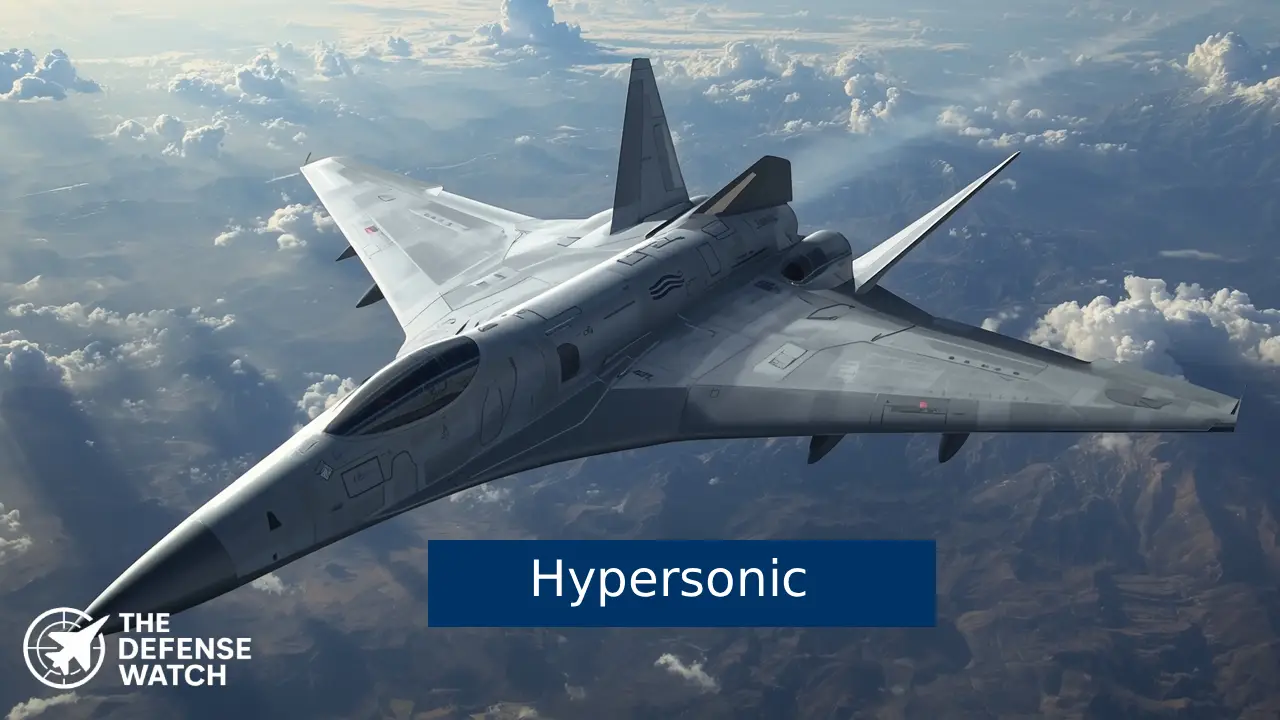
The Lockheed Martin SR-72, often dubbed “Son of Blackbird” as the proposed successor to the legendary SR-71 Blackbird reconnaissance aircraft, represents the cutting edge of hypersonic aircraft design. It was proposed privately in 2013 by Lockheed Martin with speculation persisting about potential service entry in the 2030s, though the program faces significant technical and financial hurdles.
Unlike its manned predecessor, the SR-72 is envisioned as an unmanned, reusable aircraft capable of autonomous missions at speeds exceeding Mach 6. With an anticipated length of over 100 feet, the aircraft would mirror the dimensions of the SR-71 but introduce fundamentally different propulsion architecture designed for sustained hypersonic flight.
Recent speculation in 2025 suggests Lockheed Martin could finalize a prototype of SR-72 by the end of 2025, though these remain unconfirmed projections. The program’s alignment with U.S. Air Force hypersonic roadmaps indicates a notional in-service date around 2030, contingent on overcoming substantial propulsion, thermal management, and materials challenges.

How Hypersonic Aircraft Work: Revolutionary Propulsion Systems
The heart of hypersonic flight lies in advanced propulsion technologies that operate efficiently at extreme velocities. Traditional turbojet and turbofan engines become impractical beyond Mach 3 due to the extreme temperatures and pressures generated by compressing incoming air at such speeds.
Scramjet Technology: Air-Breathing Hypersonics
A scramjet (supersonic combustion ramjet) is a variant of a ramjet airbreathing jet engine in which combustion takes place in supersonic airflow. Unlike conventional engines, scramjets have no moving parts—no compressor blades, no turbines. Instead, they rely entirely on the vehicle’s forward velocity to compress incoming air before mixing it with fuel and igniting it while maintaining supersonic flow throughout the engine.
The X-51 Waverider program demonstrated the viability of this technology, achieving a speed of Mach 5.1 and flying for 210 seconds until running out of fuel during its final test in May 2013. This represented the longest air-breathing hypersonic flight ever achieved and provided critical data informing current hypersonic weapons development.
Turbine-Based Combined Cycle (TBCC) Propulsion
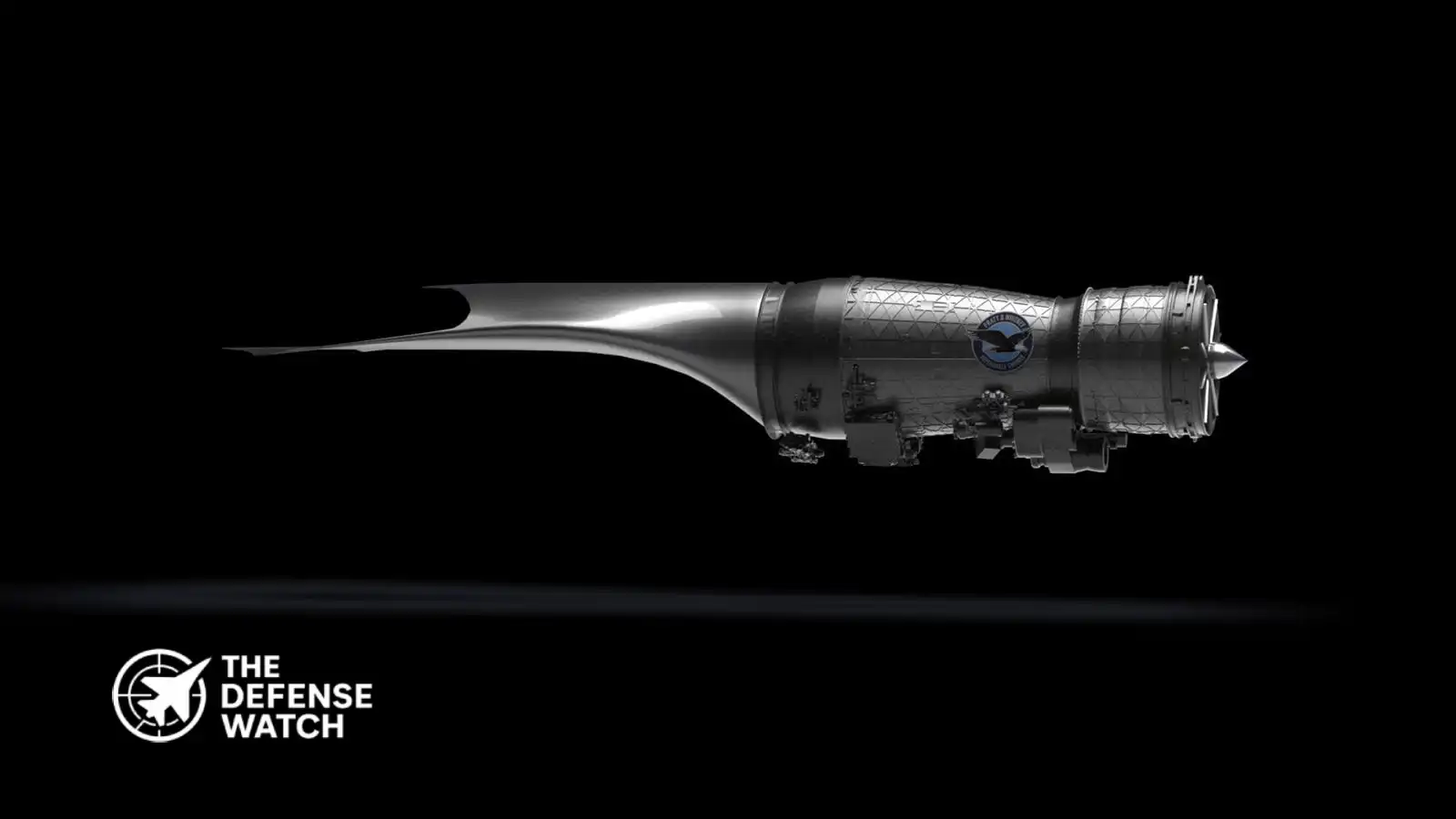
For aircraft like the proposed SR-72, a more sophisticated approach is required: the Turbine-Based Combined Cycle (TBCC) propulsion system. This revolutionary design merges a traditional turbofan engine—used during subsonic operations like takeoff and landing—with a scramjet capable of sustaining speeds above Mach 5.
The TBCC system employs shared air intakes and nozzles but maintains distinct airflow conduits, optimizing performance across a wide operational envelope. This dual-mode configuration is not merely a performance enhancement but an operational necessity, as no single engine type can efficiently cover the entire speed range from takeoff to hypersonic cruise.
Operational Hypersonic Systems: What’s Actually Flying
While the SR-72 remains conceptual, several hypersonic systems are approaching or achieving operational capability in 2025:
Stratolaunch Talon-A: Breakthrough Testing Platform
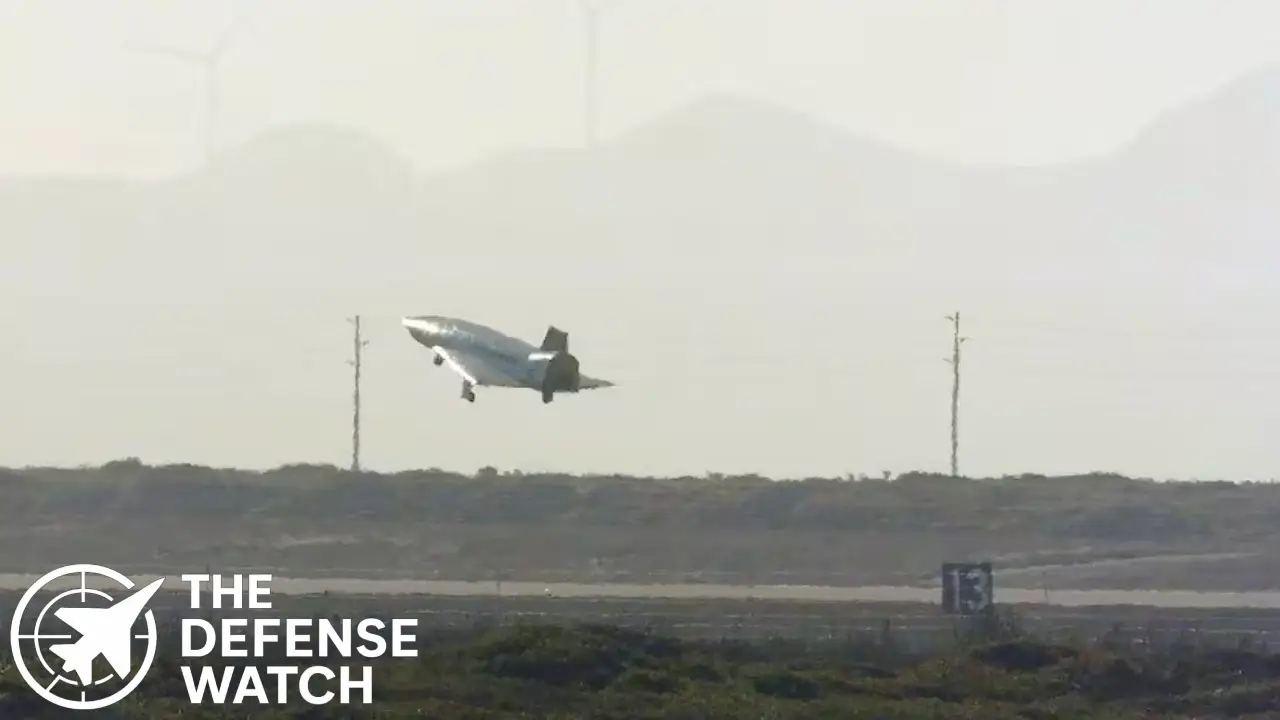
Stratolaunch’s Talon-A2 vehicle conducted flights in December 2024 and March 2025 as part of the Pentagon’s Multi-Service Advanced Capability Hypersonic Test Bed (MACH-TB) program, marking the first reusable hypersonic aircraft operations since the X-15 program ended in 1968. Both flights exceeded Mach 5 with the fully autonomous vehicle landing successfully at Vandenberg Space Force Base, demonstrating unprecedented precision in hypersonic testing.
Army Long-Range Hypersonic Weapon (LRHW)
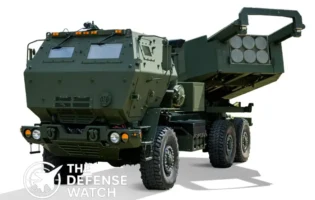
The U.S. Army’s 3rd Multi-Domain Task Force has successfully deployed a Long-Range Hypersonic Weapon system outside the continental U.S. for the first time, marking a significant milestone in operational hypersonic capability. The LRHW, also known as Dark Eagle, leverages the common hypersonic glide body and represents a new class of ultrafast, maneuverable long-range missiles launched from ground mobile platforms.
Air Force Hypersonic Programs
The U.S. Air Force is pursuing multiple hypersonic weapon systems. The Air Force wants to spend $387.1 million in fiscal 2026 to acquire its first hypersonic missile known as the AGM-183A Air-Launched Rapid Response Weapon (ARRW), officially transitioning the weapon from development into procurement after a troubled testing phase.
Additionally, the Hypersonic Attack Cruise Missile (HACM), developed by Raytheon and Northrop Grumman, employs scramjet propulsion and is expected to begin extensive flight testing in 2025, with operational capability targeted for 2027.
Technical Challenges: The Engineering Gauntlet
Sustained hypersonic flight presents extraordinary engineering challenges across multiple domains:
Thermal Management
Hypersonic velocities generate extreme heat loads that threaten airframe integrity, with the SR-72 incorporating advanced thermal protection systems including ceramic matrix composites and ablative coatings capable of withstanding temperatures exceeding 2,000°C. These materials, similar to those used in intercontinental ballistic missiles, ensure structural stability during prolonged hypersonic flight.
Materials Science
Developing materials that can withstand the punishing thermal and structural loads of hypersonic flight while remaining lightweight enough for efficient operation represents a critical bottleneck. Advanced composites combining carbon, ceramic, and metallic elements are essential for managing heat while maintaining structural integrity.
Propulsion Stability
Achieving reliable ignition and sustained combustion in supersonic airflow has been likened to “lighting a match in a hurricane.” The extreme velocities create turbulent, high-pressure conditions where fuel must be precisely injected, mixed, and ignited within milliseconds while maintaining stable thrust production.
Strategic Implications: Why Hypersonic Aircraft Change Warfare
Hypersonic aircraft and weapons fundamentally alter strategic military calculations in several critical ways:
Defeating Advanced Air Defenses
The SR-72’s ability to operate at altitudes above 80,000 feet and speeds beyond Mach 6 positions it beyond the reach of most current interceptors, providing a decisive intelligence advantage. Modern air defense systems like Russia’s S-500 and China’s HQ-19 are designed to intercept threats, but hypersonic vehicles traveling at Mach 6+ significantly reduce engagement windows and increase interception difficulty.
Rapid Global Reach
Hypersonic aircraft could traverse intercontinental distances in hours rather than the current timeframe of many hours or days. This rapid global reach enhances intelligence collection and strike capabilities, enabling commanders to respond to emerging crises with unprecedented speed.
Multi-Domain Strike Capability
The SR-72’s potential to carry hypersonic weapons such as the High-Speed Strike Weapon (HSSW) amplifies its battlefield impact, with the integration aligning with the U.S. Department of Defense’s 2025 National Defense Strategy emphasizing multi-domain operations. This combination of reconnaissance and strike capabilities in a single platform represents a force-multiplier for military operations.
Current Funding and Development Status
The Pentagon has significantly increased investment in hypersonic technologies. The 2025 budget request for hypersonic research totaled $6.9 billion, up from $4.7 billion in 2023, reflecting growing prioritization of these capabilities as China and Russia field operational hypersonic systems.
GE Aerospace announced remarkable propulsion and avionics milestones at the 2025 Air, Space & Cyber Conference, successfully demonstrating two rotating detonation combustion (RDC) engines: a missile-scale ramjet and a dual-mode ramjet for high-speed aircraft. The test campaign exceeded expectations, demonstrating a threefold increase in engine airflow compared to previously flight-tested hypersonic engines.
The Path Forward: 2025-2030
While the SR-72 remains in the concept and development phase, the broader hypersonic ecosystem is maturing rapidly. Multiple test programs are demonstrating critical technologies, operational weapons systems are entering service, and industrial capacity is expanding.
The next five years will likely see:
- Continued testing of reusable hypersonic test vehicles like Talon-A
- Initial operational deployment of hypersonic weapons including LRHW and potentially ARRW
- Maturation of scramjet and TBCC propulsion technologies
- Development of advanced thermal protection systems and materials
- Possible first flights of demonstrator aircraft incorporating SR-72-class technologies
Whether the SR-72 itself materializes as envisioned or evolves into a different configuration, the underlying technologies being developed are transforming aerospace capabilities and reshaping strategic military planning for decades to come.
FAQs
Is the SR-72 currently operational?No. The SR-72 remains a concept aircraft with no confirmed flight tests as of late 2025. While Lockheed Martin has conducted research and development work, the aircraft has not been built or flown, and speculation about a 2025 prototype remains unconfirmed.
What is the difference between the SR-71 and SR-72?The SR-71 Blackbird was a manned reconnaissance aircraft that flew at Mach 3.2 and was retired in 1998. The proposed SR-72 would be unmanned, fly at Mach 6+, and use entirely different propulsion technology (TBCC versus conventional turbojets). The SR-72 would approximately double the SR-71’s speed while operating autonomously.
How does scramjet propulsion workA scramjet (supersonic combustion ramjet) compresses incoming air using the vehicle’s forward velocity rather than mechanical compressors. It maintains supersonic airflow throughout the engine, mixing fuel with compressed air and igniting it while maintaining supersonic combustion—a process that only works efficiently above Mach 4-5.
What hypersonic weapons are currently operational?As of late 2025, the U.S. Army has deployed the Long-Range Hypersonic Weapon (LRHW/Dark Eagle) system, marking the first operational U.S. ground-launched hypersonic capability. The Air Force’s AGM-183A ARRW is transitioning to procurement phase with planned acquisition in fiscal 2026. Russia and China have fielded operational hypersonic systems including the Kinzhal, Avangard, and DF-ZF.
When might hypersonic passenger aircraft become available?Commercial hypersonic passenger aircraft remain decades away from operational service. While companies like Boom Supersonic are developing supersonic (not hypersonic) aircraft targeted for the late 2020s, true hypersonic passenger service faces enormous technical, safety, regulatory, and economic challenges that will require extensive research and development well into the 2030s and beyond.