

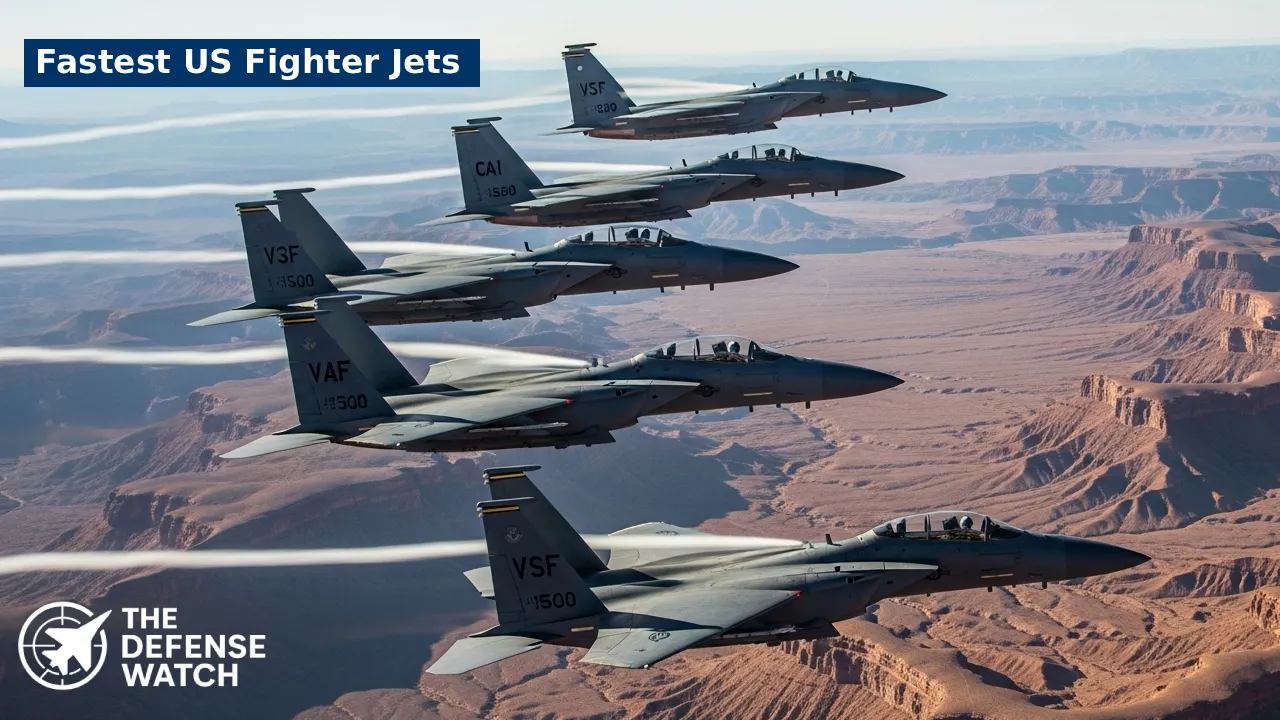
In an era where stealth and sensor fusion often steal the spotlight, the fastest fighter jets in the US military continue to underscore the enduring value of raw velocity. As of November 2025, these high-speed platforms form the backbone of America’s airpower, enabling rapid response, interception, and deep-strike operations amid escalating global tensions. From the Indo-Pacific to the Middle East, where adversaries field increasingly sophisticated defenses, the ability to outpace threats remains a cornerstone of strategic deterrence. This ranking draws on the latest operational data, highlighting the top five fastest fighter jets in the US military—platforms that blend blistering acceleration with cutting-edge avionics to maintain superiority.
The US Air Force and Navy’s fleet prioritizes not just top-end speeds but sustained performance under combat loads, a nod to real-world scenarios where pilots must evade missiles or surge to contested airspace. With ongoing upgrades and integration into networked battle management systems, these jets are evolving to counter peer competitors like China’s J-20 or Russia’s Su-57. Below, we break down the rankings based on maximum dash speeds at optimal altitudes, factoring in current deployments and enhancements through late 2025.
1. F-15EX Eagle II: The Pinnacle of Speed and Payload
At the apex of this list sits the Boeing F-15EX Eagle II, clocking a top speed of Mach 2.5—roughly 1,900 miles per hour at high altitude—making it the fastest fighter jet in the US military’s active inventory. Introduced to bridge the gap left by aging F-15C models, the Eagle II entered full-rate production in early 2025, with the first squadrons achieving initial operational capability at Eglin Air Force Base by summer. Its twin General Electric F110-GE-129 engines deliver over 29,000 pounds of thrust each, allowing for rapid climbs to 65,000 feet and seamless transitions from subsonic loiter to supersonic sprints.
What sets the F-15EX apart in 2025 is its unmatched weapons carriage: up to 22 air-to-air missiles or a mix of precision-guided munitions totaling 29,500 pounds. Fly-by-wire controls and a digital cockpit with large-area displays enhance pilot situational awareness, while the Eagle Passive Active Warning Survivability System (EPAWSS) provides robust electronic warfare protection against radar-guided threats. In exercises like Northern Edge 2025, F-15EX units demonstrated 20% faster response times compared to legacy Eagles, underscoring their role in high-threat environments. As the Air Force accelerates procurement to 144 units, this platform is poised to serve as a “missile truck” for fifth-generation fighters like the F-35, extending the reach of joint operations.
2. F-15E Strike Eagle: Versatile Velocity for All-Weather Strikes
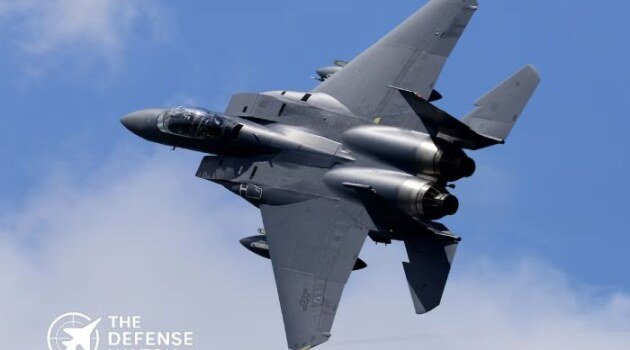
Matching the F-15EX’s Mach 2.5 benchmark is the battle-tested F-15E Strike Eagle, a dual-role workhorse that has logged over 500,000 flight hours since its 1988 debut. Upgraded through the 2025 fiscal year with enhanced Pratt & Whitney F100-PW-229 engines—boasting 58,000 pounds of thrust—the Strike Eagle accelerates from idle to full afterburner in under four seconds, a critical edge in dynamic combat zones. Its conformal fuel tanks extend range to 2,400 nautical miles, enabling long-duration missions without mid-air refueling.
The jet’s conformal radar and LANTIRN targeting pods allow for precision strikes in adverse weather, from low-level terrain-following runs to high-altitude intercepts. In recent deployments supporting Operation Inherent Resolve, Strike Eagles have neutralized high-value targets with Joint Direct Attack Munitions, all while maintaining air-to-air viability via AIM-120D missiles. Ongoing Service Life Extension Programs (SLEP) through 2025 incorporate open-mission systems architecture, facilitating rapid software updates for emerging threats like hypersonic glide vehicles. This adaptability ensures the F-15E remains a staple in the US military’s fastest fighter jets lineup, balancing speed with multirole flexibility.
3. F-22 Raptor: Supercruise King of Stealthy Speed
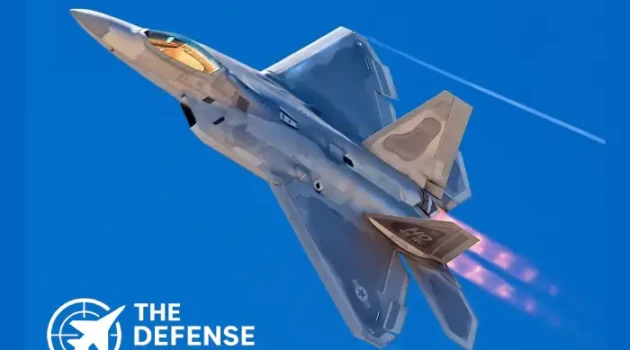
Slightly trailing at approximately Mach 2.0 (around 1,500 mph), the Lockheed Martin F-22 Raptor redefined air dominance when it achieved operational status in 2005. Its Pratt & Whitney F119-PW-100 engines enable supercruise—sustained Mach 1.5+ flight without afterburners—reducing infrared signatures and fuel burn during patrols. Thrust vectoring nozzles provide unparalleled maneuverability, with post-stall recovery capabilities that excel in close-quarters dogfights.
By late 2025, the Raptor’s fleet of 183 aircraft has undergone Digital Airplane upgrades, integrating advanced data links for collaborative tactics with unmanned systems under the Collaborative Combat Aircraft (CCA) initiative. In Pacific theater simulations, F-22s have quarterbacked drone swarms to penetrate denied airspace, leveraging their Mach 2 dash for quick ingress and egress. Though production ended years ago, incremental enhancements like infrared search-and-track sensors keep it relevant against stealthy foes. The Raptor’s speed, combined with all-aspect stealth, positions it as a high-end asset in the US military’s fastest fighter jets arsenal, though its numbers highlight the urgency for successors like the Next Generation Air Dominance (NGAD) program.
4. F-15C/D Eagle: Legacy Speed with Unbroken Records
Another Mach 2.5 contender, the McDonnell Douglas F-15C/D Eagle, entered service in 1979 but continues to anchor air superiority missions in 2025. Its robust airframe and twin F100 engines yield a thrust-to-weight ratio exceeding 1:1, facilitating vertical climbs and sustained turns at supersonic speeds. The single-seat C variant and two-seat D trainer have amassed an impeccable combat record: 104 kills without a single loss in aerial engagements.
Modernized via the Eagle Passive/Active Warning and Survivability System (EPAWSS) retrofit—completed on most units by mid-2025—these jets now feature digital radars capable of tracking 20+ targets simultaneously. In homeland defense roles with the Air National Guard, F-15Cs routinely intercept Russian bombers off Alaska, leveraging their speed for rapid scrambles. While some squadrons transitioned to F-15EX platforms this year, the Eagle’s low operating cost (about $30,000 per flight hour) ensures its longevity. As one of the fastest fighter jets in the US military, it exemplifies how legacy designs can evolve to meet contemporary demands.
5. F/A-18E/F Super Hornet: Carrier-Launched Speed for Naval Power
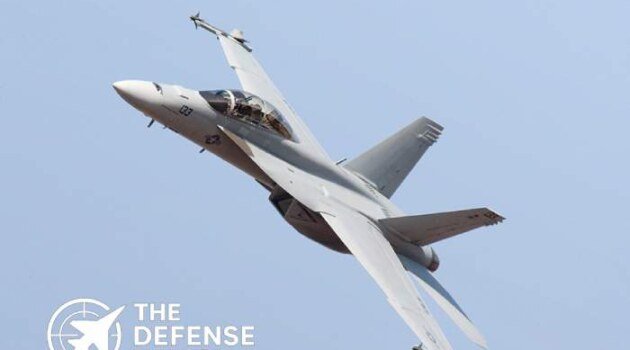
Rounding out the top five is the Boeing F/A-18E/F Super Hornet, achieving Mach 1.8 (over 1,190 mph) from the deck of nuclear carriers like the USS Gerald R. Ford. First flown in 1995, the Super Hornet’s two F414-GE-400 engines provide 44,000 pounds of thrust, with growth potential for future Block III upgrades incorporating gallium nitride radars for better detection ranges.
Optimized for naval operations, it carries a 20mm Vulcan cannon and up to 17,750 pounds of ordnance, including Harpoon anti-ship missiles and JSOW glide bombs. In 2025 Red Sea patrols, Super Hornets from Carrier Air Wing 1 executed over 1,000 sorties, using their speed to evade surface-to-air threats while delivering standoff strikes. The electronic attack variant, EA-18G Growler, further amplifies its utility with Next Generation Jammer pods. Though not the outright fastest, the Super Hornet’s carrier compatibility makes it indispensable for projecting US power projection across maritime domains.
Analysis: The Evolving Role of Speed in Networked Warfare
Speed alone no longer guarantees victory in 2025’s contested airspace, where integrated air defense systems and hypersonic threats demand a holistic approach. The fastest fighter jets in the US military, like the F-15EX and F-22, now operate within “kill webs”—data-sharing ecosystems that fuse off-board sensors for beyond-visual-range engagements. This shift reduces reliance on individual dash speeds, emphasizing instead endurance and survivability. For instance, the Air Force’s Advanced Battle Management System (ABMS) trials in October 2025 linked F-15Es with MQ-9 drones, allowing pilots to maintain subsonic efficiency while delegating high-speed intercepts to autonomous assets.
Yet, velocity retains tactical primacy in scenarios like Taiwan Strait contingencies, where closing speeds can outrun incoming missiles. Budget constraints—$849 million allocated for F-15EX in FY2025—signal a pivot toward affordable high-speed complements to stealth platforms, mitigating the F-22’s numerical shortfall. As adversaries accelerate hypersonic programs, US investments in adaptive engines could push these jets toward Mach 3 thresholds by decade’s end, ensuring speed evolves from a legacy metric to a networked multiplier.
Future Horizons: Toward Hypersonic Horizons
Looking beyond 2025, the US military’s fastest fighter jets will integrate with NGAD prototypes, expected to demonstrate Mach 2+ stealth supercruise by 2027. Programs like the Hypersonic Attack Cruise Missile, tested successfully in September 2025, will arm existing platforms, blurring lines between fighters and strategic bombers. This trajectory promises a more lethal, distributed force, where speed amplifies precision in an era of great-power competition.
FAQs
What is the fastest fighter jet in the US military in 2025?The F-15EX Eagle II leads with a top speed of Mach 2.5, followed closely by the F-15E Strike Eagle and F-15C/D Eagle.
How does the F-22 Raptor’s speed compare to other US fighters?The F-22 achieves about Mach 2.0 with supercruise capability at Mach 1.5+, prioritizing stealth and maneuverability over raw top-end velocity.
Why include the F/A-18 Super Hornet despite its lower speed?Its Mach 1.8 performance is optimized for carrier operations, making it vital for naval strike roles where versatility trumps absolute speed.
Are there plans for faster US jets beyond 2025?Yes, the NGAD program aims for sixth-generation fighters with enhanced speeds, while engine upgrades could boost current fleets toward Mach 3.
How has speed influenced recent US military operations?In 2025 Middle East deployments, high-speed intercepts by F-15 variants have neutralized drone swarms, highlighting velocity’s role in defensive layers.




6 comments
[…] Continuous evaluation: Given the severity of past failures, further internal and external reviews may monitor the performance and viability of this force. […]
[…] Max takeoff weight of 8,600 kg; top speed roughly 313 km/h; operational range between 844–1,009 km depending on configuration; service […]
[…] to KAI, the Boramae’s integration of BAE’s CIT units ensures the aircraft meets both current operational requirements and future NATO interoperability standards. The upgrade […]
[…] fighters in its air operations, consistent with the service’s broader emphasis on maintaining aerial superiority during complex border […]
[…] the operational concepts it supported, sustained sortie generation, forward deployment, and joint force integration, remain core to US fighter operations. Modern stealth fighters now deploy from land bases rather […]
[…] The Legion-ES system represents a critical enhancement to Taiwan’s air defense capabilities, providing F-16 fighter aircraft with passive detection technology capable of tracking airborne threats at extended ranges without emitting detectable signals. According to the company’s announcement, the low-profile sensor system is specifically designed for integration with F-16 platforms to complement existing aircraft performance. […]