• Home
  • About
  • Defense Systems
  • Manufacturer
  • Comparisons
  • Compare 
  • Tools
TheDefenseWatch.com
  • Aerospace & Aviation
  • Military & Ordnance
  • Naval & Maritime
  • Cyber & Space Defense
  • Policy & Strategy
  • Global News
  • Tools Library
    • Smart Calculator
    • Drone Flight Time Calculator
    • Drone Range Calculator
    • Counter-Drone Jammer Effective Range Calculator
    • Counter-Battery Radar Detection Calculator
    • Artillery Fire Correction Calculator
    • Thermal Camera Detection Range Calculator
    • Missile Range & Time-of-Flight Calculator
    • Radar Detection Range Calculator
    • FPV Strike Drone Payload vs Range Calculator
    • Loitering Munition Endurance Calculator
    • Sniper Ballistic Drop & Windage Calculator
    • Bullet Drop Calculator
    • U.S. Army Combat Fitness Test (ACFT) Calculator
    • Military Pension Calculator
    • Military Retirement Calculator
    • Military Pension Calculator
    • Large Number Calculator
Font ResizerAa

TheDefenseWatch.com

The Defense Watch | U.S. & Global Defense News, Analysis & Military Updates

Search
  • Home
  • About
  • Defense Systems
  • Manufacturer
  • Comparisons
  • Compare 
  • Tools

Stay Updated

Get the latest update

Subscribe

Explore

  • Drone
  • Fighter Jets & Military Aircraft
  • Hypersonic Weapons
  • Aircraft Carriers
  • Strategic History & Missions
  • Tools Library
Home » L3Harris Delivers First VAMPIRE Counter-Drone Systems to U.S. Army
Conventional Weapons & ModernizationMilitary & Ordnance

L3Harris Delivers First VAMPIRE Counter-Drone Systems to U.S. Army

Samuel Drake | Defense Analyst
Last updated: October 15, 2026 4:40 am
Samuel Drake | Defense Analyst
Share
7 Min Read
L3Harris VAMPIRE counter-drone system
L3Harris’ VAMPIRE system is a self-contained weapons solution that is capable of delivering advanced reconnaissance and precision strike against drones and other remotely piloted aircraft.
SHARE

L3Harris Technologies has begun delivering its VAMPIRE counter-unmanned aircraft systems to the U.S. Army, with the first units arriving within two months of an order valued at up to $106 million, the company announced on October 13, 2026. The deliveries provide an initial step toward fielding additional mobile capabilities against hostile drones.

Contents
  • A mobile system built around existing weapons
  • Why the Army ordered the system
  • Production capacity is becoming part of the requirement
  • VAMPIRE’s place in layered air defense

VAMPIRE combines surveillance and targeting equipment with a rocket-based engagement capability. Its role is to help military forces detect, track and engage unmanned aircraft without relying exclusively on larger air-defense systems designed for more demanding threats.

The initial deliveries also put the Army’s procurement effort into a broader context: counter-drone defense increasingly depends on matching the response to the threat, particularly when relatively inexpensive unmanned aircraft can force defenders to expend costly interceptors.

A mobile system built around existing weapons

VAMPIRE stands for Vehicle-Agnostic Modular Palletized ISR Rocket Equipment. Its modular design allows the system to be installed on suitable ground vehicles or configured for other deployment requirements, rather than requiring a dedicated, purpose-built combat vehicle in every case. L3Harris describes it as a self-contained reconnaissance and precision-strike system for drones and other remotely piloted aircraft.

- Advertisement -

The system can use Advanced Precision Kill Weapon System, or APKWS, laser-guided rockets. These weapons provide a means of engaging selected aerial targets using guided rockets rather than relying solely on conventional surface-to-air missiles.

That approach is relevant to short-range air defense, where the cost and availability of interceptors can become important considerations. However, the company has not disclosed a verified cost per engagement for the Army’s delivered VAMPIRE units in the announcement. It would therefore be premature to assign a specific savings figure to the system.

VAMPIRE’s modularity also offers potential advantages for forces operating from dispersed locations. Vehicle-mounted equipment can be moved as tactical requirements change, although mobility alone does not establish how quickly a unit can detect, identify and engage a target under battlefield conditions.

Why the Army ordered the system

The Army’s order, announced by L3Harris on June 10, 2026, was valued at up to $106 million. The October delivery announcement says initial units arrived within two months of that order, but does not specify the number delivered, the complete delivery schedule or the Army units that will receive them.

The distinction matters. The contract ceiling indicates the potential value of the order, not necessarily the amount already spent or the value of equipment delivered to date.

The Army’s interest in VAMPIRE reflects a practical challenge in modern air defense: small unmanned aircraft can be deployed in numbers, used for reconnaissance or attack, and operated in ways that complicate detection and interception. A defender needs enough sensors and engagement options to respond without exhausting higher-end weapons against every low-cost aerial threat.

VAMPIRE offers one possible layer in that defense. It is not a substitute for every air-defense capability, and the available announcement does not establish that it can defeat all classes of drones, especially those with different flight profiles, operating ranges or resistance to countermeasures.

Production capacity is becoming part of the requirement

Delivering the first Army units is only one part of the program. L3Harris began high-volume VAMPIRE production at a dedicated facility in Huntsville, Alabama, in March 2026. The company said the facility supports assembly, testing and integration onto ground vehicles and containerized weapon systems, with production capacity designed to adjust as demand changes.

- Advertisement -

That manufacturing investment could help the company respond to additional orders, but L3Harris has not published a production-rate figure or a complete delivery schedule for the Army order. The size of the initial shipment and the time required to equip operational units remain undisclosed.

The company also reported more than 350,000 operational hours for the technology in support of European combat operations since 2023. This is a manufacturer-reported figure, not an independently audited measure of combat effectiveness. Operational hours alone do not establish how many targets were engaged, the success rate of those engagements or the system’s performance against different drone types.

VAMPIRE’s place in layered air defense

VAMPIRE is best understood as one component of a broader counter-unmanned aircraft system architecture. Depending on the configuration, such defenses can combine sensors, target identification, command-and-control software and different means of defeating an aerial threat.

L3Harris has also expanded its counter-drone business beyond the Army. In September 2026, the company announced deliveries of VAMPIRE systems to the U.S. Navy for littoral counter-drone defense. The company said the naval configuration is being adapted to withstand maritime environmental conditions.

The Army and Navy requirements are not identical. Ground forces may need mobile protection for maneuver units and forward positions, while naval forces face different constraints involving shipboard integration, saltwater exposure and operations near coastlines. The two procurement efforts nevertheless show that the same underlying system is being adapted for different military settings.

The principal questions now concern scale and operational performance. The Army’s first deliveries confirm that fielding has begun, but the public announcement does not establish how many systems will ultimately be deployed, which formations will receive them first, or how VAMPIRE will be integrated with other Army sensors and air-defense weapons.

Those details will be important in determining how much the system contributes to a layered defense against increasingly common unmanned aerial threats.


TAGGED:Counter-UASL3HarrisVAMPIRE
Share This Article
Facebook Copy Link Print
BySamuel Drake | Defense Analyst
Follow:
Samuel Drake is a defense analyst at TheDefenseWatch.com covering naval warfare, military ordnance, maritime technology, fleet modernization, and defense procurement. His reporting focuses on documented capabilities, procurement programs, and military technology.

Latest Defense Systems

  • GBU-43/B MOAB Bomb GBU-43/B MOAB Bomb
  • John F. Kennedy Aircraft Carrier John F. Kennedy Aircraft Carrier
  • Voyager Tanker Voyager Tanker
  • YU-20 Tanker YU-20 Tanker
  • China KJ-500 Aircraft China KJ-500 Aircraft
  • SPY-6 Radar SPY-6 Radar
  • Boeing VC-25B Presidential Aircraft Boeing VC-25B Presidential Aircraft
  • SM-3 Block IB Missile SM-3 Block IB Missile
  • USS Abraham Lincoln Aircraft Carrier USS Abraham Lincoln Aircraft Carrier

Recent Compares

  • Tejas vs Gripen: Key Differences and Capabilities Tejas vs Gripen: Key Differences and Capabilities View Comparison →
  • Tejas vs MiG-21 Bison: How India Replaced Its Iconic Supersonic Fighter Tejas vs MiG-21 Bison: How India Replaced Its Iconic Supersonic Fighter View Comparison →
  • F-35 vs F-16: Stealth, Sensors and Combat Roles F-35 vs F-16: Stealth, Sensors and Combat Roles View Comparison →
  • Tejas Fighter Jet vs F-16 Fighting Falcon: Capability Compared Tejas Fighter Jet vs F-16 Fighting Falcon: Capability Compared View Comparison →
  • Rafale Fighter Jet vs F-16 Fighting Falcon : Which Fighter Has the Edge? Rafale Fighter Jet vs F-16 Fighting Falcon : Which Fighter Has the Edge? View Comparison →
  • Su-57 Fighter Jet vs J-20 Fighter Jet: Stealth and Air Combat Compared Su-57 Fighter Jet vs J-20 Fighter Jet: Stealth and Air Combat Compared View Comparison →
  • Mirage 2000 vs Tejas Mk1A: Legacy Combat Power vs Indigenous Modernization Mirage 2000 vs Tejas Mk1A: Legacy Combat Power vs Indigenous Modernization View Comparison →
  • Rafale Fighter Jet vs F-22 Raptor: Which Air Dominance Fighter Has the Edge? Rafale Fighter Jet vs F-22 Raptor: Which Air Dominance Fighter Has the Edge? View Comparison →
  • Tejas Fighter Jet vs. Rafale Fighter Jet: India’s Indigenous Fighter Meets France’s Proven Multirole Combat Aircraft Tejas Fighter Jet vs. Rafale Fighter Jet: India’s Indigenous Fighter Meets France’s Proven Multirole Combat Aircraft View Comparison →
  • F-22 Raptor vs. F-35 Joint Strike Fighter: Which Fifth Generation Fighter Has the Edge? F-22 Raptor vs. F-35 Joint Strike Fighter: Which Fifth Generation Fighter Has the Edge? View Comparison →

Recent Posts

  • US Military Weighs MOAB for Potential Future Strikes on Iran, CNN Reports
  • Saab Wins $120 Million Order for New Gripen Flight Control Computer
  • L3Harris Delivers First VAMPIRE Counter-Drone Systems to U.S. Army
  • Lockheed Martin Invests $300 Million in Texas Munitions Expansion, Plans 6,000 U.S. Jobs
  • Lockheed Martin Taps Avio for ER GMLRS and PrSM Rocket Motor Production

You Might Also Like

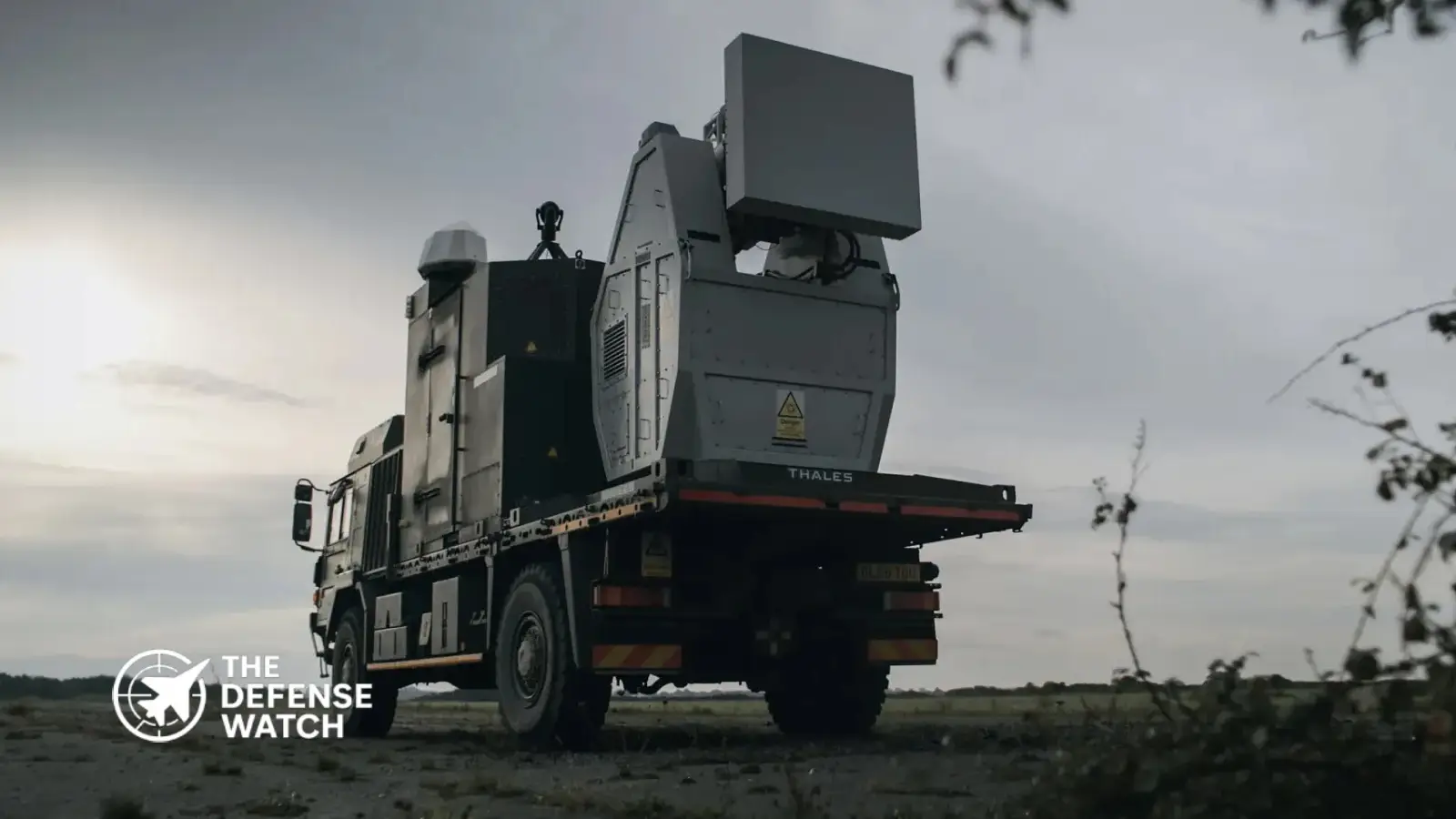
UK RapidDestroyer trials
AI & Electronic WarfareCyber & Space Defense

UK Tests Thales RapidDestroyer Radio Frequency Weapon After Downing 80 Drones in Counter-UAS Trials

September 7, 2026
CSG AUSA 2026
Military & OrdnanceTanks & Armored Vehicles

CSG Targets U.S. Land Systems Market With AUSA 2026 Debut

October 6, 2026
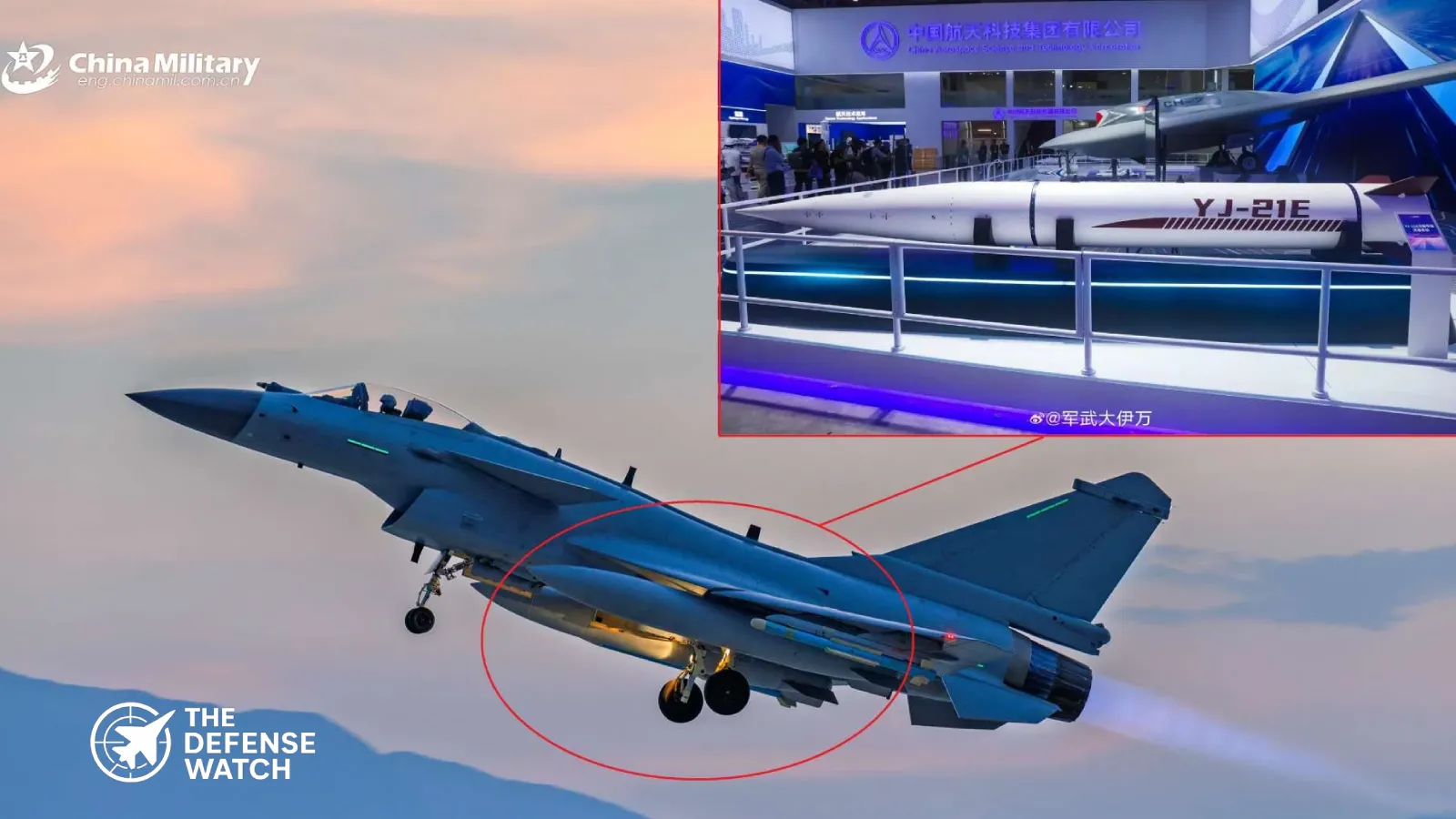
J-10 fighter hypersonic missile
Artillery & Missile SystemsMilitary & Ordnance

China’s J-10 Fighter Spotted Carrying Possible YJ-21E Hypersonic Missile

September 12, 2026
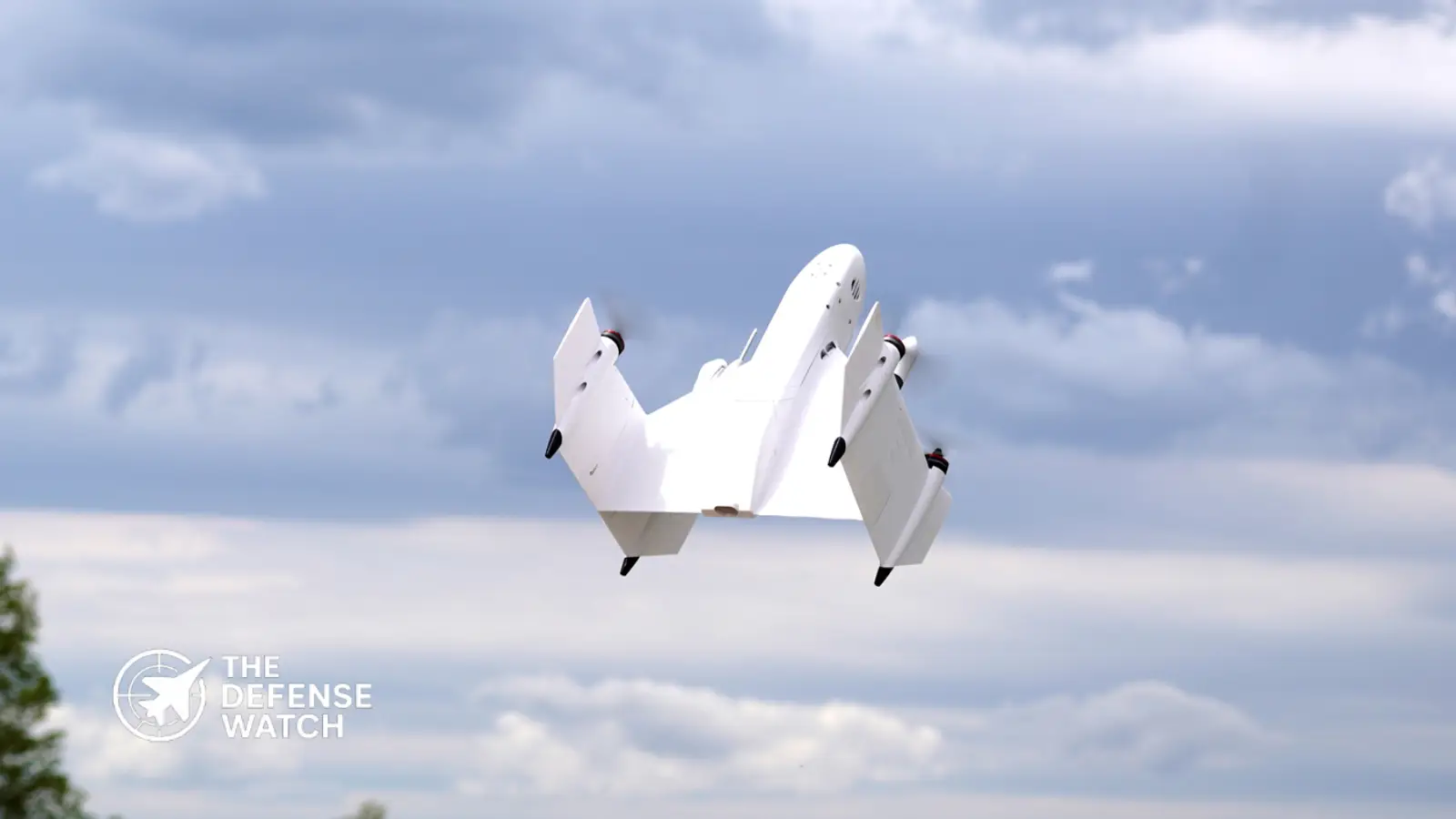
Tycho.AI Halley drone interceptor
Aerospace & AviationDrones & UAVs

Tycho.AI Unveils Halley Drone Interceptor To Counter Shahed-Style Threats

September 7, 2026

Logo

Copyright © 2026 TheDefenseWatch.com

Helpful Links

  • Home
  • About Us
  • Privacy Policy
  • Terms of Use / Disclaimer
  • U.S. Privacy Notice – CCPA Compliance

Defense Systems

  • Defense Systems
  • Comparisons 
  • Manufacturer
  • Tactical Calculators

Popuplar

Which 5 Air Forces Possess the Costliest Fighter Jet Fleets in the World
Evolving Strategic Value: Carrier Strike Groups in the Indo-Pacific’s Future Security Architecture
Autonomous Weapon Systems Spark U.S. Ethics Debate Amid Rapid Military AI Integration

We report on developments involving military forces, governments, defense companies, research organizations, and security institutions around the world. 

Welcome Back!

Sign in to your account

Username or Email Address
Password

Lost your password?