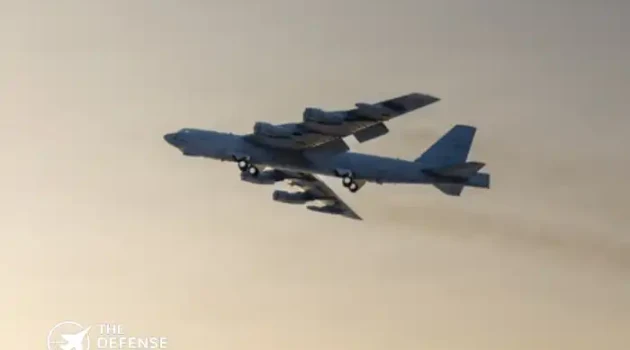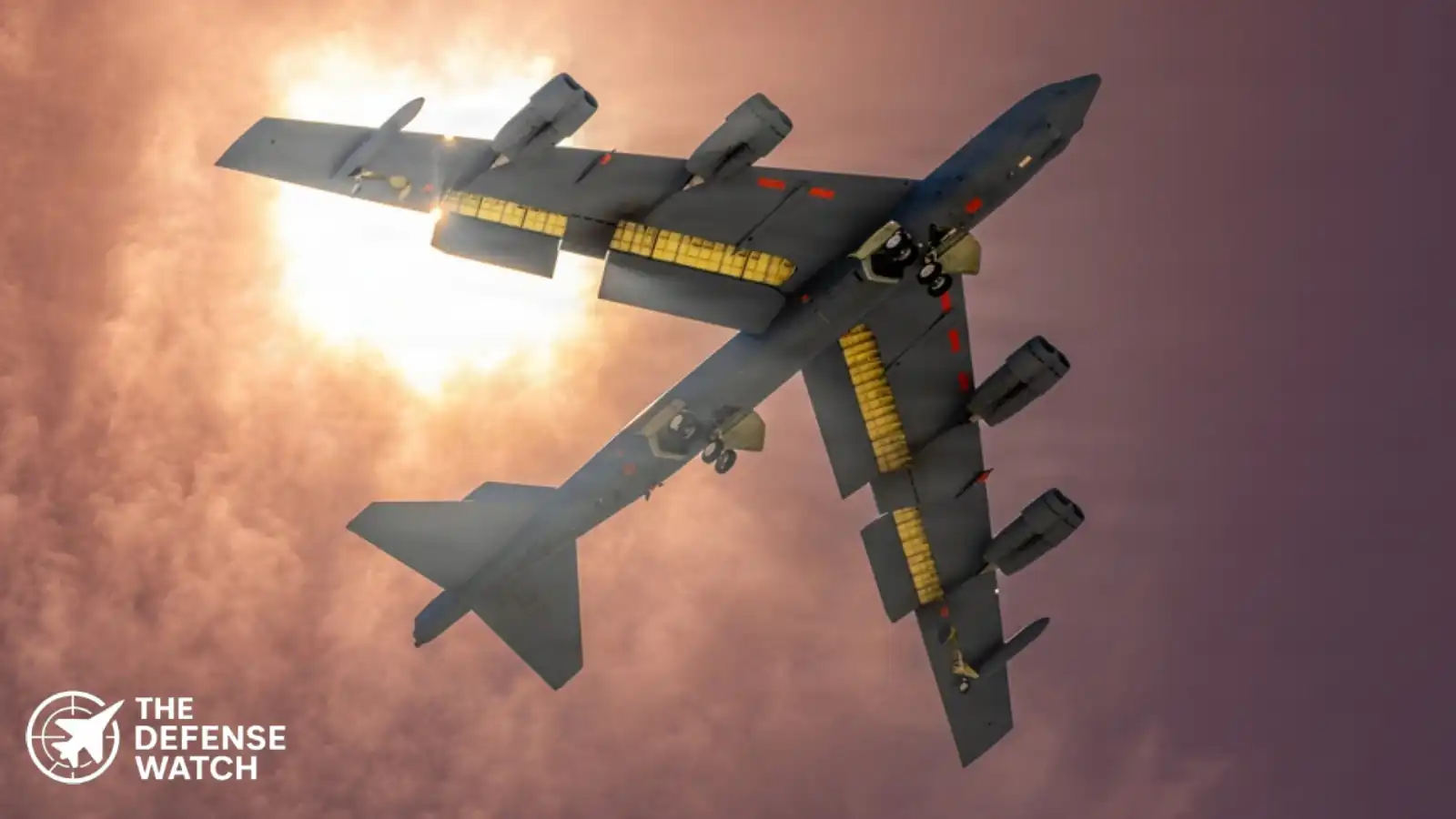
Executive Summary: Rolls-Royce has begun assembling 20 F130 engines intended for flight testing of the U.S. Air Force’s B-52J bomber, with the first deliveries expected in April 2027. The engines are being assembled and tested in Indianapolis as the program moves from design and ground testing toward physical modification of two B-52 aircraft. The F130 will replace the B-52’s TF33-PW-103 engines and is part of a broader modernization effort designed to keep the bomber operational into the middle of the century.
B-52J F130 Engine Assembly Moves Program Toward Flight Testing
The B-52J F130 engine program has entered a new phase, with Rolls-Royce assembling 20 flight-test engines at its Indianapolis, Indiana, facility ahead of planned deliveries to the U.S. Air Force beginning in April 2027. The engines will support aircraft modification and the subsequent flight-test campaign for the B-52J.
The development represents a transition from primarily design and ground-test activity toward hardware integration on the aircraft. The Air Force completed the B-52J Commercial Engine Replacement Program’s Critical Design Review earlier in 2026, while Rolls-Royce has completed altitude, operability and other propulsion-system testing.
The B-52 modernization effort is intended to keep the long-range bomber operational through 2050 and beyond. On September 15, the Air Force said the CERP received Milestone B approval on June 1, allowing the engine modernization program to move into the development phase.
F130 Replaces the B-52’s Legacy TF33 Engines
The B-52 fleet currently relies on Pratt & Whitney TF33-PW-103 engines, a design that has powered the aircraft since the 1960s. The Air Force selected the Rolls-Royce F130 in 2021 under a contract valued at approximately $2.6 billion for 608 military-derivative commercial engines, plus spares, support equipment, engineering data and sustainment activities.
Each B-52 uses eight engines arranged in four twin-engine pods. The F130 is derived from Rolls-Royce’s BR700 commercial engine family and has also been used in U.S. military aircraft including the C-37 and E-11A.
B-52J Propulsion Program Current Status Replacement engine Rolls-Royce F130 Legacy engine Pratt & Whitney TF33-PW-103 Flight-test engines 20 First flight-test engine deliveries April 2027 Full contract quantity 608 engines, plus spares and support Aircraft engines 8 per B-52 Engine assembly location Indianapolis, Indiana Aircraft integration Boeing Planned fleet designation B-52J The F130 was selected partly because it is based on an established commercial engine architecture rather than requiring the Air Force to introduce an entirely new propulsion design. Rolls-Royce says the wider BR engine family has accumulated more than 30 million flight hours.
That commercial heritage, however, does not mean the B-52 installation is a simple engine replacement. Rolls-Royce has modified the engine configuration, accessory gearbox and cooling system, while Boeing is responsible for integrating the propulsion system and designing the associated inlet and nacelle configuration.
Ground Testing Addresses Key B-52 Integration Risks
The F130 has already passed several major test milestones.
Rolls-Royce completed altitude and operability testing at the U.S. Air Force Arnold Engineering Development Complex in Tennessee. The campaign examined sustained engine operation at altitude, airflow distortion and engine stability, while integrated drive generator testing addressed the electrical power requirements of the aircraft.
Testing has also taken place at NASA’s Stennis Space Center in Mississippi. There, the F130 was tested in the B-52’s distinctive dual-pod configuration, including work focused on airflow and crosswind conditions.
The remaining test campaign is particularly important because the propulsion system must operate reliably across conditions that cannot be fully reproduced through computer modeling alone.
Rolls-Royce said ground crosswind testing with the final inlet and nacelle geometry is underway at Stennis, while sea-level operability testing continues in Indianapolis. Water-ingestion testing is planned in Montreal, followed by endurance testing in Indianapolis.
These tests address different engineering risks. Crosswind testing examines airflow behavior during conditions such as taxi and takeoff, while sea-level operability testing helps establish engine stability and stall margin. Water-ingestion testing evaluates performance when the aircraft encounters significant precipitation.
The endurance campaign is also intended to provide additional confidence before flight testing. According to Rolls-Royce, the engines will be exposed to roughly twice the expected use during the flight-test phase.
Electrical Power Is a Major Part of the Upgrade
The B-52J modernization is broader than propulsion.
The Air Force says the CERP includes new generators, engine struts and nacelles, electrical power generation and distribution equipment, cockpit controls and displays, hydraulic and pneumatic systems, flight avionics, and onboard engine-start capability.
The electrical-power upgrade is particularly important for an aircraft expected to operate for decades after its original design era. Modern sensors, communications equipment, defensive systems and other mission technologies place greater demands on onboard power than many legacy systems were designed to provide.
The Air Force’s FY2027 budget documentation states that the F130 installation is expected to improve propulsion-system reliability and maintainability while providing additional electrical-generation capacity for emerging requirements. The document also says the modernization is intended to improve fuel efficiency and extend the B-52’s range and loiter capabilities.
This makes the engine replacement an enabling modernization rather than simply a sustainment measure. The propulsion system has to support the aircraft’s existing missions while providing the electrical and mechanical margins needed for future upgrades.
Boeing Begins Physical B-52J Aircraft Modification
With the design review completed, Boeing is moving toward modification of the first two test aircraft at its facility in San Antonio, Texas.
The Air Force said the first bomber is scheduled to arrive for modification later in 2026. After modification, the two aircraft will undergo extensive testing at Edwards Air Force Base in California.
The flight-test phase will therefore examine the complete aircraft rather than the engine in isolation. That distinction matters because propulsion performance depends on the interaction among the engines, nacelles, inlets, electrical systems, aircraft structures and flight controls.
The B-52’s eight-engine configuration also makes propulsion integration more complex than a conventional twin-engine aircraft upgrade. The new system must maintain consistent airflow and reliable engine operation across multiple pods while meeting structural, electrical and maintenance requirements.
Why the F130 Matters to the B-52’s Long-Term Role
The B-52J is part of a broader U.S. effort to extend the useful life of a bomber first introduced in the 1950s.
The Air Force describes the B-52 as a continuing component of the U.S. long-range strike force and nuclear triad. The aircraft is also being modernized through other programs, including the B-52 Radar Modernization Program, which received Milestone C approval in August 2026.
The propulsion upgrade addresses one of the most fundamental limitations of the legacy aircraft. Maintaining aging engines can become increasingly difficult as suppliers, tooling, technical knowledge and replacement components become harder to sustain.
Replacing the TF33 with the F130 creates a newer propulsion baseline while also supporting improvements in fuel efficiency, maintenance and electrical power. The Air Force expects the modified aircraft to be designated B-52J rather than B-52H, marking the first B-52 designation change since the H-model entered service in 1961.
The strategic value of the upgrade therefore rests less on a dramatic change in the B-52’s basic mission than on keeping the aircraft compatible with a modern force structure. A bomber expected to remain in service into the middle of the century requires propulsion, power generation, avionics and mission systems capable of supporting technologies that were not part of the original aircraft design.
Flight-Test Deliveries Set for April 2027
Rolls-Royce expects to begin delivering the first of the 20 flight-test F130 engines to the Air Force in April 2027.
The engines are being converted from baseline BR725 engines supplied from Rolls-Royce operations in Germany into the F130 configuration in Indianapolis. After assembly, they will undergo final acceptance testing before delivery.
The next major step will be installation on the first two B-52 test aircraft. Flight testing will then provide the data required to validate the complete propulsion installation before broader fleet modification begins.
The Air Force’s current plan calls for the B-52J modernization to support operations through 2050 and beyond. The transition from engine development to flight-test hardware is therefore a significant program milestone, but the ultimate measure will be how the integrated aircraft performs through the upcoming ground and flight-test campaigns.
For now, the start of F130 assembly shows that the B-52J program has moved beyond design work and into the hardware phase that will determine whether the new propulsion system can deliver the reliability, maintainability, power generation and efficiency required from the bomber for the remainder of its planned service life.
Key Facts
Item Detail Aircraft B-52J Stratofortress Program Commercial Engine Replacement Program New engine Rolls-Royce F130 Existing engine Pratt & Whitney TF33-PW-103 Flight-test engines 20 First delivery target April 2027 Full engine contract 608 engines plus spares and support Engine assembly Indianapolis, Indiana Aircraft integration Boeing Flight testing Edwards Air Force Base, California Planned service horizon 2050 and beyond