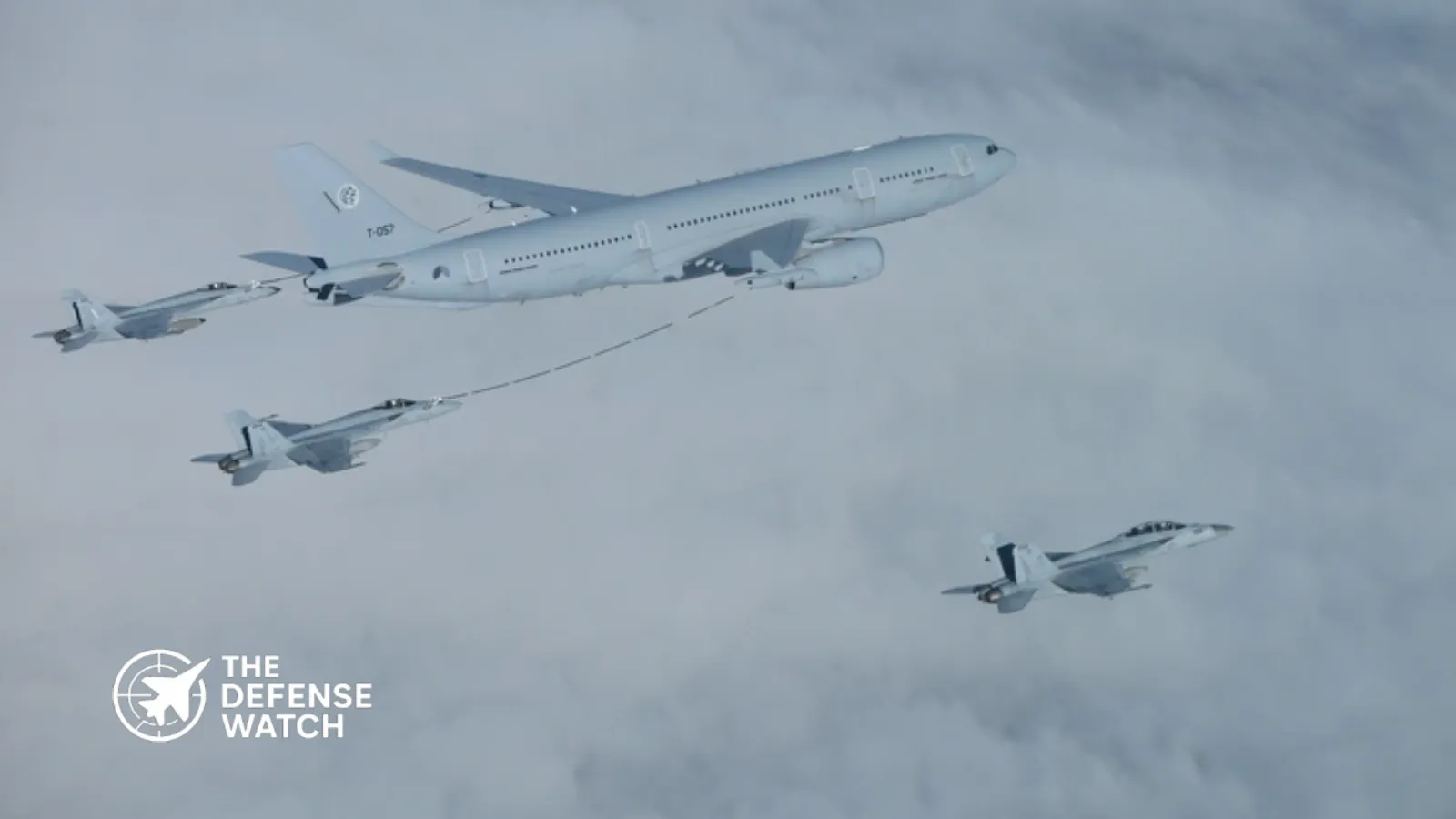
Spain A330 MRTT Procurement Moves Toward Final Contracts
Spain A330 MRTT procurement plans with Poland have reached a major milestone after Madrid approved a seven-year framework agreement valued at an estimated €5.4 billion for the joint acquisition of Multi Role Tanker Transport aircraft.
- Spain A330 MRTT Procurement Moves Toward Final Contracts
- Takeaways
- €5.4 Billion Framework Covers Aircraft and Support
- A330 MRTT Provides More Than Air Refueling
- MRTT+ Could Offer Additional Efficiency
- EU SAFE Financing Supports Joint Procurement
- What the Deal Means for Poland
- Spain Strengthens Its Existing MRTT Fleet
- Final Contracts Remain the Next Major Step
The Spanish Council of Ministers approved the framework on August 25, 2026. The agreement covers the aircraft as well as the logistics and support required to bring them into service. It also incorporates Poland’s participation through the European Union’s Security Action for Europe, or SAFE, financing instrument.
Takeaways
Spain has approved a €5.4 billion framework with Poland for at least seven Airbus A330 MRTT aircraft, with four planned for Poland by 2030.
The framework is not itself the final aircraft purchase contract. Spain and Poland still need to negotiate and sign the implementing agreements that would authorize individual orders.
Poland is expected to receive four aircraft by 2030, while three aircraft are planned for Spain under the current arrangement. Polish Defense Minister Władysław Kosiniak-Kamysz has described the planned acquisition as at least seven aircraft.
€5.4 Billion Framework Covers Aircraft and Support
The Spanish government says the framework has an estimated value of €5.4 billion and will remain in force for seven years after formalization.
Importantly, that figure should not be treated simply as the unit price for seven aircraft. The framework also covers logistical support needed to place the aircraft into operational service, while the final contracts will determine the precise procurement arrangements.
The arrangement gives Poland a path toward establishing its own national air-to-air refueling capability. Until now, Poland has had to rely on allied tanker assets for this type of support.
That capability is particularly relevant as Poland expands its combat aircraft fleet. Polish officials have previously linked the tanker requirement to the operational needs of its F-35 fleet, with aerial refueling allowing fighters to remain airborne longer and operate farther from their bases. Janes reported in June that Poland was already in the final stages of discussions over an MRTT acquisition financed through SAFE.
A330 MRTT Provides More Than Air Refueling
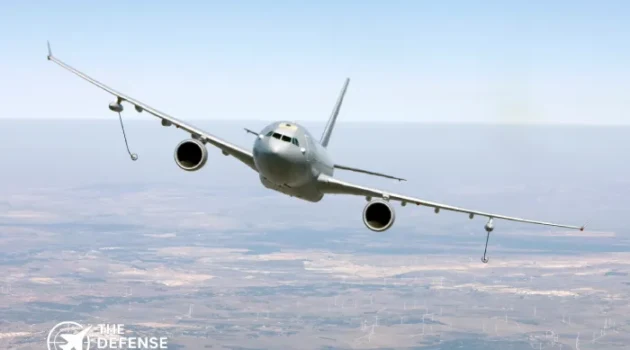
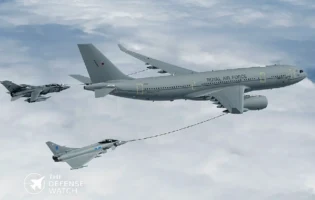
The Airbus A330 MRTT is designed as a multi-mission aircraft rather than a tanker dedicated only to refueling.
Based on the commercial A330 platform, the aircraft can conduct aerial refueling while also supporting strategic transport, passenger movement, cargo operations and medical evacuation.
Airbus says the aircraft has a fuel capacity of 111 tonnes and can be configured with both a refueling boom and underwing hose-and-drogue systems. This allows it to support a broad range of aircraft used by different air forces.
The aircraft can therefore function as a strategic enabler for fighter operations while retaining significant airlift utility.
That flexibility is important for European air forces that are expanding combat aviation fleets but also need additional support aircraft to sustain operations over longer distances.
MRTT+ Could Offer Additional Efficiency
The exact configuration of the aircraft for the Spanish-Polish procurement has not been fully confirmed.
However, reporting has pointed to the possibility of Airbus offering the newer A330 MRTT+ configuration, which incorporates technology from the A330-800neo commercial aircraft. Aviation Week reported that the procurement could involve the latest MRTT configuration, although the final aircraft specification remains subject to the procurement process.
Airbus says the A330 MRTT+ uses Rolls-Royce Trent 7000 engines, revised aerodynamics and updated wingtip technology. These changes are intended to reduce fuel consumption by up to 8 percent compared with the earlier configuration.
The MRTT+ also raises maximum takeoff weight from 233 tonnes to 242 tonnes, providing additional flexibility for fuel, payload and range.
For Poland, the potential acquisition would add a capability that directly supports long-range combat aviation and strategic mobility.
EU SAFE Financing Supports Joint Procurement
The Spanish-Polish arrangement also demonstrates how the EU SAFE instrument is being used to support major defense acquisitions.
SAFE provides up to €150 billion in EU loans for defense investment. The program is designed to encourage member states to conduct common procurement and strengthen Europe’s defense industrial base.
Air-to-air refueling and strategic airlift are specifically identified as eligible strategic capabilities under the SAFE framework.
The common procurement requirement is significant. SAFE is intended to encourage cooperation between European countries, helping reduce duplication and fragmentation while supporting larger procurement programs.
In Spain’s case, the framework with Poland fits that model by combining national requirements into a joint acquisition.
Spain itself has already been granted access to up to €1 billion in SAFE loans under a February 2026 EU Council decision. Poland has also been approved for SAFE financial assistance, creating a broader funding framework for defense procurement by both countries.
What the Deal Means for Poland
For Poland, the most immediate benefit is the creation of a dedicated tanker capability.
The Polish Air Force has undergone a major modernization program centered on new combat aircraft and supporting systems. The addition of A330 MRTTs would address one of the less visible but important requirements of that modernization effort: keeping fighters supplied with fuel during extended operations.
A tanker fleet can also support deployments away from Poland, strategic mobility and wider NATO operations.
The planned delivery of four aircraft by 2030 would give Warsaw a national capability rather than requiring it to depend entirely on multinational tanker arrangements.
The move also fits Poland’s broader defense investment strategy, which has placed substantial emphasis on combat aircraft, air defense, long-range fires and other high-priority capabilities.
Spain Strengthens Its Existing MRTT Fleet
Spain is already an A330 MRTT operator.
The Spanish Air and Space Force operates three converted A330 aircraft, giving Madrid experience with the platform and its associated support infrastructure.
The new framework could therefore expand an existing national capability while creating a common procurement relationship with Poland.
The industrial dimension is also important. Airbus Defence and Space performs the conversion of A330 aircraft into MRTT tankers at its Getafe facility near Madrid, giving Spain a significant role in the aircraft’s European production and support ecosystem.
The joint procurement could consequently support both national operational requirements and Spain’s position within Europe’s defense aerospace industry.
Final Contracts Remain the Next Major Step
The Spanish government approval represents a procurement milestone, not the completion of the aircraft purchases.
The framework establishes the basis for the joint acquisition, but individual implementing contracts still have to be negotiated and signed.
The number of aircraft, final configuration, delivery schedule and other contractual details will therefore become clearer as the procurement moves forward.
For Poland, the key target remains delivery of four MRTTs by 2030. For Spain, the framework provides a mechanism to acquire additional aircraft while sharing the procurement structure with another European operator.
More broadly, the agreement shows how SAFE is beginning to translate EU-level defense financing into specific multinational procurement projects.
The A330 MRTT is particularly suited to that approach because aerial refueling and strategic airlift are capabilities that can provide benefits beyond the country operating the aircraft.
As European air forces expand their fighter fleets and seek greater ability to operate across the continent and beyond, tanker aircraft are becoming an increasingly important part of the supporting force structure.