U.S. Forces Redirect 103 Vessels In Iran Blockade Operations
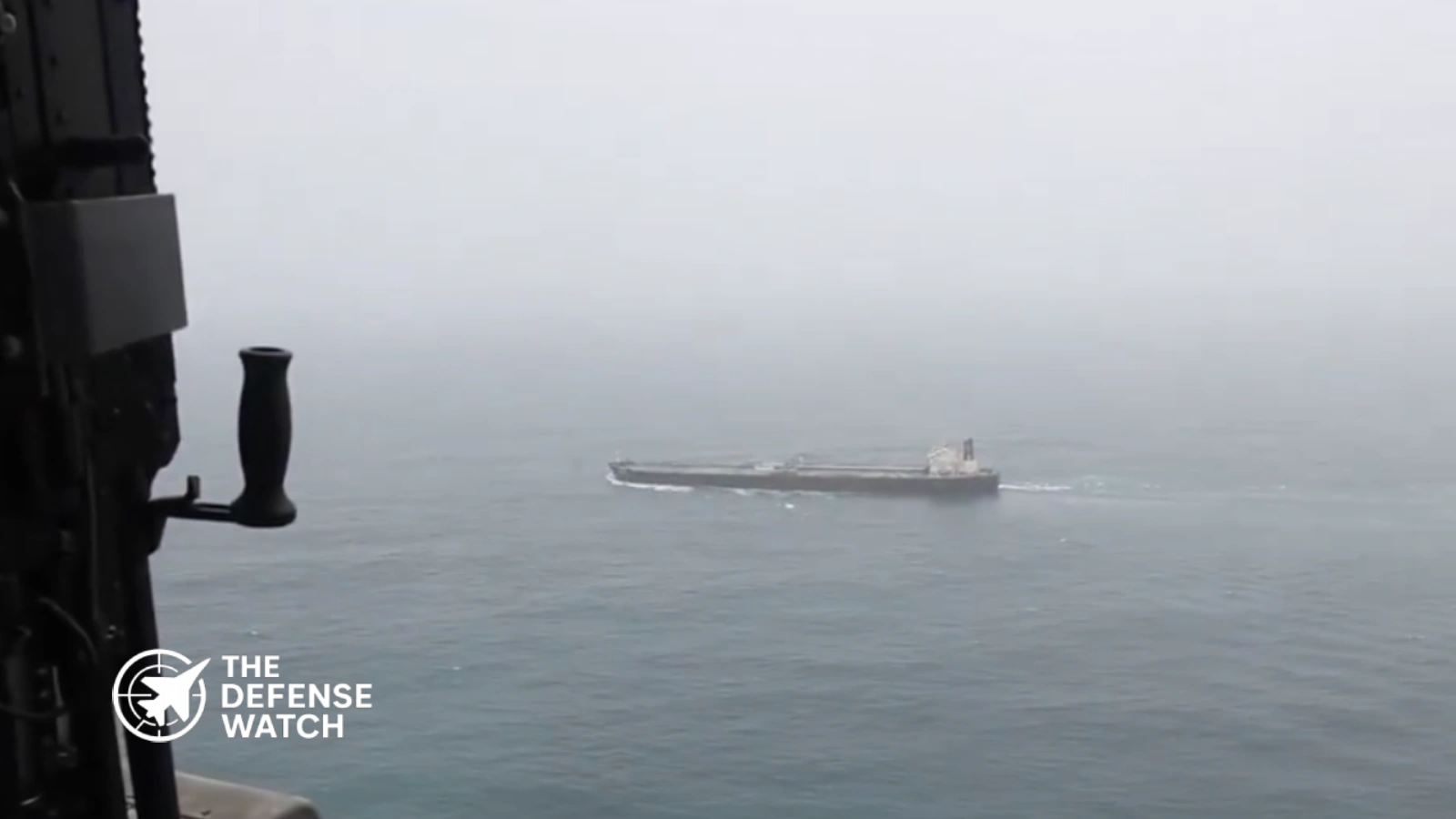
U.S. forces have redirected 103 commercial vessels as part of ongoing Iran blockade operations, according to U.S. Central Command, as American naval forces continue maritime enforcement activities in the Arabian Sea and surrounding waters.
Takeaways
U.S. Central Command says maritime forces have redirected 103 commercial vessels as part of ongoing blockade enforcement measures against Iran.
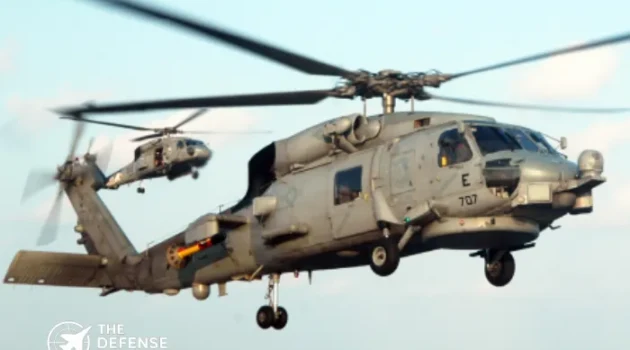
CENTCOM disclosed the latest figure on Sept. 15 while releasing imagery showing an MH-60R Sea Hawk launching from the flight deck of the Arleigh Burke-class guided-missile destroyer USS Rafael Peralta (DDG 115).
The disclosure provides a snapshot of the scale of the maritime enforcement campaign and the naval aviation assets supporting it.
USS Rafael Peralta Supports Maritime Operations
USS Rafael Peralta is a guided-missile destroyer deployed to the U.S. 5th Fleet area of operations. U.S. Naval Forces Central Command imagery released earlier in September showed an MH-60R assigned to Helicopter Maritime Strike Squadron 51 operating from the destroyer.
The MH-60R is the U.S. Navy’s maritime strike variant of the Seahawk family. It is designed for missions including surface warfare, anti-submarine warfare, surveillance and reconnaissance, and other maritime operations.
In the current operation, the presence of the helicopter gives the destroyer an organic aviation capability that can extend its surveillance and maritime response reach beyond the ship itself.
CENTCOM’s Sept. 10 update reported that U.S. forces had redirected 96 commercial vessels at that point. It also said more than 50 vessels supporting humanitarian aid had been allowed to pass.
Five days later, the reported total had risen to 103.
What The 103-Vessel Figure Means
The 103 figure refers to vessels that U.S. forces say they have redirected to ensure compliance with the blockade. It should not be interpreted as 103 ships being seized or detained.
CENTCOM’s terminology is important because the operation involves directing commercial traffic rather than necessarily taking control of every vessel involved.
Earlier reporting on the operation indicated that U.S. measures were focused on commercial vessels associated with Iranian ports, while ships transiting the Strait of Hormuz to or from non-Iranian ports were not intended to be impeded.
The distinction matters because the Strait of Hormuz remains an international maritime route connecting the Persian Gulf with the Gulf of Oman and Arabian Sea.
Maritime Enforcement Comes As Hormuz Traffic Falls
The latest U.S. blockade activity comes as commercial traffic through the Strait of Hormuz remains substantially below normal levels.
Reuters reported on Sept. 16 that only four vessels crossed the Strait of Hormuz on Sept. 15, compared with a recent 10-day average of 18 vessels per day. The data also showed that none of the four vessels were very large crude carriers or LNG tankers.
Reuters separately reported that traffic through the waterway had fallen sharply amid the broader regional conflict. Before the conflict, the strait handled roughly 125 vessel transits per day, according to Kpler data cited by Reuters.
The reduction has implications beyond military operations because the Strait of Hormuz is a major route for global energy shipments.
MH-60R Adds Aviation Reach To Destroyer Operations
The deployment of an MH-60R from USS Rafael Peralta illustrates how U.S. Navy surface combatants can combine shipborne sensors, aviation assets and communications networks during maritime security missions.
The helicopter can operate away from the destroyer while remaining linked to the ship’s broader operational picture. That can help extend observation and response capabilities over a wider area than the ship’s own sensors can cover.
The aircraft’s role should not, however, be equated automatically with every vessel redirection reported by CENTCOM. The command has not publicly attributed each of the 103 individual vessel actions to a specific ship or helicopter.
That distinction is important when assessing the operational picture from publicly released information.
U.S. Naval Presence In The Region
USS Rafael Peralta is one of several U.S. Navy warships operating in the broader Middle East theater.
The U.S. Naval Institute’s Sept. 14 fleet tracker listed Rafael Peralta among independently deployed U.S. Navy warships in the region. The tracker also identified other destroyers and major naval forces operating in the Arabian Sea and wider U.S. 5th Fleet area of operations.
The destroyer’s deployment therefore forms part of a larger U.S. naval presence rather than an isolated ship operation.
For maritime enforcement, that broader force structure provides additional surveillance, air defense, surface warfare and command-and-control capacity.
Operational Significance
The increase from 96 redirected vessels on Sept. 10 to 103 by Sept. 15 indicates that U.S. maritime enforcement activity remains active.
The operational challenge is different from conventional naval combat. Commercial traffic involves numerous civilian vessels, different flag states, cargoes and destinations. U.S. forces therefore have to identify vessels, establish their relationship to the restrictions and communicate directions while operating in a heavily trafficked and strategically important maritime environment.
The presence of an MH-60R aboard Rafael Peralta provides an aviation component to that mission. The helicopter can support maritime surveillance and other shipboard tasks while the destroyer remains capable of conducting its wider naval missions.
At the same time, the declining volume of shipping through Hormuz shows that the wider security environment is already affecting commercial maritime movement. Reuters’ latest traffic data indicates that the waterway is operating far below normal levels.
For now, CENTCOM’s latest public figure is 103 redirected commercial vessels as of Sept. 15. The command has not publicly provided a vessel-by-vessel breakdown of the figure, including the individual ships involved, their cargoes or the precise locations where each redirection occurred.
That limitation is significant when evaluating the scope of the operation from public information.
Bottom Line
U.S. forces have redirected 103 commercial vessels under the Iran blockade measures, according to CENTCOM. The latest announcement coincides with continued operations by USS Rafael Peralta and its embarked MH-60R Sea Hawk in the Arabian Sea and the wider U.S. 5th Fleet area.
The operation is taking place as commercial traffic through the Strait of Hormuz remains sharply reduced, adding a significant maritime-security dimension to the broader regional conflict.