
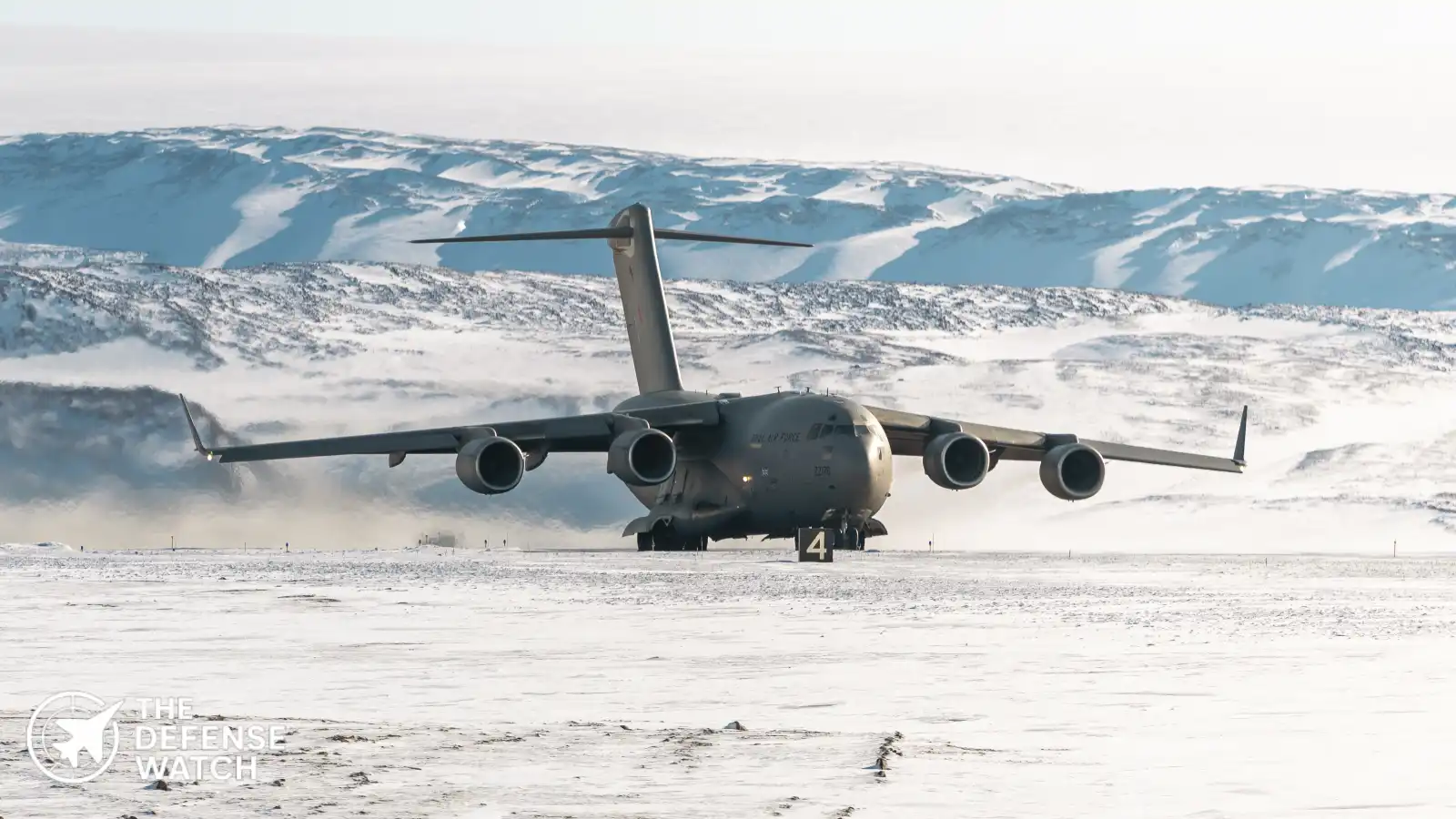
RAF C-17 Globemaster Demonstrates Arctic Reach
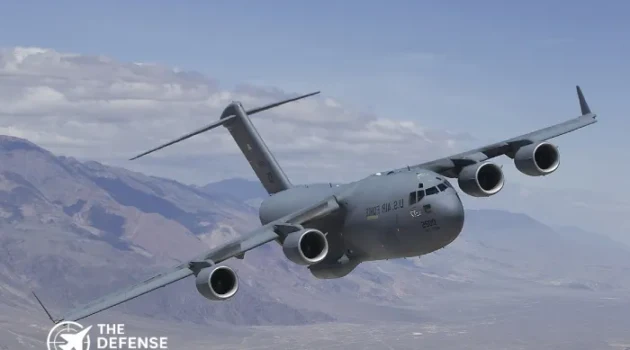
RAF C-17 Globemaster aircraft completed a landmark Arctic mission by landing at the world’s northernmost settlement as part of a joint resupply effort with Canada. The operation highlighted the United Kingdom’s ability to project airlift power into one of the harshest operating environments on earth while supporting allied presence in the High North.
The mission, first reported by Defence Industry Europe, underscores the growing importance of Arctic logistics as NATO nations adapt to changing security conditions and increasing activity across northern sea lanes.
- RAF C-17 Globemaster landed at the world’s northernmost permanent settlement during an Arctic support mission.
- Operation was conducted with Canada, highlighting allied logistics cooperation in extreme conditions.
- Mission demonstrated NATO interest in sustaining operations across the High North.
- C-17 provides heavy-lift transport for cargo, vehicles, personnel, and austere airfield access.
- Arctic mobility is becoming central to future deterrence and readiness planning.
The Big Picture
Arctic access has moved from a niche military concern to a mainstream strategic priority. Melting sea ice, longer seasonal navigation windows, and renewed great power competition have increased attention on the High North.
Russia maintains extensive Arctic military infrastructure, including air bases, radar stations, and northern fleet assets. NATO members, including the United Kingdom, Canada, Norway, Denmark, and the United States, are responding by improving surveillance, mobility, and sustainment networks.
Heavy airlift is central to that effort. Forces cannot maintain credible presence in remote polar regions without reliable cargo movement, fuel delivery, engineering support, and emergency response capacity.
What’s Happening
The Royal Air Force used a C-17 Globemaster III to conduct a resupply mission to the world’s northernmost settlement, widely understood to be Ny-Alesund in Norway’s Svalbard archipelago or a similarly remote High Arctic location depending on mission reporting.
The flight was carried out in cooperation with Canadian partners. Such missions typically transport scientific supplies, operational equipment, food stocks, fuel support items, or rotational personnel.
The RAF operates the Boeing-built C-17 from RAF Brize Norton. The aircraft can carry oversized cargo, armored vehicles, helicopters, palletized freight, or large troop loads over intercontinental ranges.
Why It Matters
Arctic operations expose weaknesses that do not appear in temperate climates. Engines, hydraulics, communications systems, tires, and ground equipment all face stress in extreme cold. Runways may be short, icy, or isolated from repair support.
A successful RAF C-17 Globemaster landing therefore demonstrates more than navigation skill. It shows trained crews, mission planning depth, cold-weather procedures, and confidence in operating a strategic transport aircraft far from normal support hubs.
That matters because military readiness increasingly depends on logistics rather than just combat platforms. Nations able to move supplies quickly can reinforce allies, respond to crises, and sustain forward deployments.
Strategic Implications
The mission supports three major strategic goals.
First, it improves allied interoperability. UK and Canadian coordination in Arctic conditions strengthens practical readiness for future humanitarian, military, or sovereignty tasks.
Second, it reinforces NATO’s northern posture. Visible and routine operations complicate any attempt by rivals to dominate remote access routes or create gray-zone pressure.
Third, it expands options for crisis response. A C-17 can rapidly deliver engineers, communications packages, medical teams, or disaster relief supplies to isolated communities.
Competitor View
Russia will likely view growing allied Arctic air mobility as part of a broader NATO normalization of northern operations. Moscow has long treated the Arctic as a core strategic bastion tied to missile warning systems, submarine access, and resource corridors.
China, while not an Arctic state, has declared itself a near-Arctic stakeholder and invested in polar research, shipping interests, and regional diplomacy. Western mobility demonstrations signal that established Arctic powers retain operational reach.
What To Watch Next
Future indicators worth monitoring include expanded RAF cold-weather exercises, more UK transport rotations to northern bases, and deeper integration with Canadian and Nordic partners.
Observers should also watch infrastructure investment. Arctic readiness depends not only on aircraft, but fuel storage, satellite communications, runway maintenance, and search-and-rescue networks.
Capability Gap
The RAF C-17 Globemaster helps close a critical gap between strategic intent and physical access. Many nations can announce Arctic priorities, but far fewer can sustain forces there.
Still, large transport aircraft depend on weather windows, runway condition, and support planning. Airlift alone cannot replace maritime sealift or permanent infrastructure.
The Bottom Line
The RAF C-17 Globemaster Arctic mission shows that credible High North strategy starts with the ability to land, deliver, and sustain forces where conditions are toughest.