RAF C-17 Globemaster Demonstrates Arctic Reach
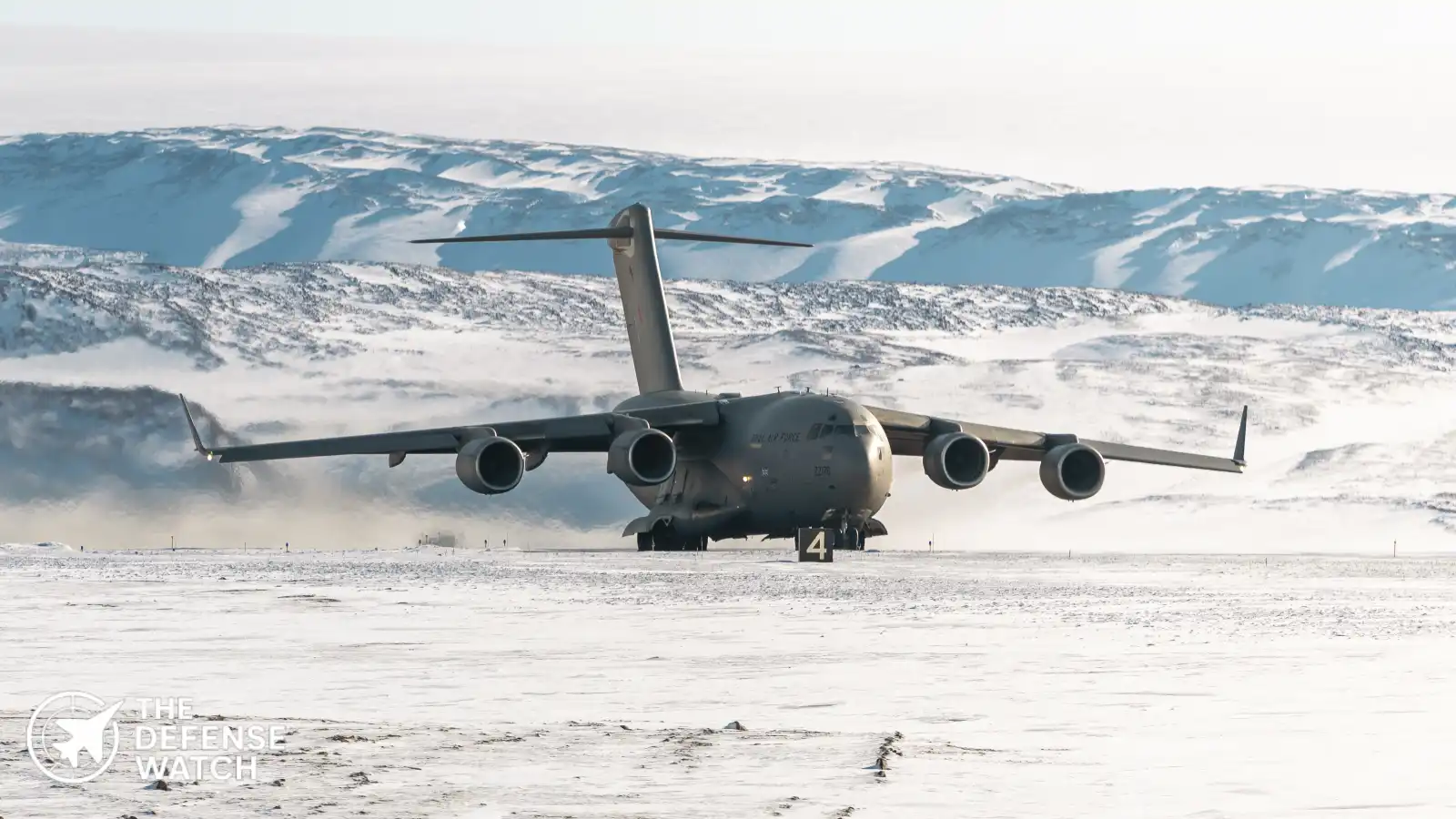
RAF C-17 Globemaster aircraft completed a landmark Arctic mission by landing at the world’s northernmost settlement as part of a joint resupply effort with Canada. The operation highlighted the United Kingdom’s ability to project airlift power into one of the harshest operating environments on earth while supporting allied presence in the High North.
The mission, first reported by Defence Industry Europe, underscores the growing importance of Arctic logistics as NATO nations adapt to changing security conditions and increasing activity across northern sea lanes.
- RAF C-17 Globemaster landed at the world’s northernmost permanent settlement during an Arctic support mission.
- Operation was conducted with Canada, highlighting allied logistics cooperation in extreme conditions.
- Mission demonstrated NATO interest in sustaining operations across the High North.
- C-17 provides heavy-lift transport for cargo, vehicles, personnel, and austere airfield access.
- Arctic mobility is becoming central to future deterrence and readiness planning.
The Big Picture
Arctic access has moved from a niche military concern to a mainstream strategic priority. Melting sea ice, longer seasonal navigation windows, and renewed great power competition have increased attention on the High North.
Russia maintains extensive Arctic military infrastructure, including air bases, radar stations, and northern fleet assets. NATO members, including the United Kingdom, Canada, Norway, Denmark, and the United States, are responding by improving surveillance, mobility, and sustainment networks.
Heavy airlift is central to that effort. Forces cannot maintain credible presence in remote polar regions without reliable cargo movement, fuel delivery, engineering support, and emergency response capacity.
What’s Happening
The Royal Air Force used a C-17 Globemaster III to conduct a resupply mission to the world’s northernmost settlement, widely understood to be Ny-Alesund in Norway’s Svalbard archipelago or a similarly remote High Arctic location depending on mission reporting.
The flight was carried out in cooperation with Canadian partners. Such missions typically transport scientific supplies, operational equipment, food stocks, fuel support items, or rotational personnel.
The RAF operates the Boeing-built C-17 from RAF Brize Norton. The aircraft can carry oversized cargo, armored vehicles, helicopters, palletized freight, or large troop loads over intercontinental ranges.
Why It Matters
Arctic operations expose weaknesses that do not appear in temperate climates. Engines, hydraulics, communications systems, tires, and ground equipment all face stress in extreme cold. Runways may be short, icy, or isolated from repair support.
A successful RAF C-17 Globemaster landing therefore demonstrates more than navigation skill. It shows trained crews, mission planning depth, cold-weather procedures, and confidence in operating a strategic transport aircraft far from normal support hubs.
That matters because military readiness increasingly depends on logistics rather than just combat platforms. Nations able to move supplies quickly can reinforce allies, respond to crises, and sustain forward deployments.
Strategic Implications
The mission supports three major strategic goals.
First, it improves allied interoperability. UK and Canadian coordination in Arctic conditions strengthens practical readiness for future humanitarian, military, or sovereignty tasks.
Second, it reinforces NATO’s northern posture. Visible and routine operations complicate any attempt by rivals to dominate remote access routes or create gray-zone pressure.
Third, it expands options for crisis response. A C-17 can rapidly deliver engineers, communications packages, medical teams, or disaster relief supplies to isolated communities.
Competitor View
Russia will likely view growing allied Arctic air mobility as part of a broader NATO normalization of northern operations. Moscow has long treated the Arctic as a core strategic bastion tied to missile warning systems, submarine access, and resource corridors.
China, while not an Arctic state, has declared itself a near-Arctic stakeholder and invested in polar research, shipping interests, and regional diplomacy. Western mobility demonstrations signal that established Arctic powers retain operational reach.
What To Watch Next
Future indicators worth monitoring include expanded RAF cold-weather exercises, more UK transport rotations to northern bases, and deeper integration with Canadian and Nordic partners.
Observers should also watch infrastructure investment. Arctic readiness depends not only on aircraft, but fuel storage, satellite communications, runway maintenance, and search-and-rescue networks.
Capability Gap
The RAF C-17 Globemaster helps close a critical gap between strategic intent and physical access. Many nations can announce Arctic priorities, but far fewer can sustain forces there.
Still, large transport aircraft depend on weather windows, runway condition, and support planning. Airlift alone cannot replace maritime sealift or permanent infrastructure.
The Bottom Line
The RAF C-17 Globemaster Arctic mission shows that credible High North strategy starts with the ability to land, deliver, and sustain forces where conditions are toughest.
Denmark Defends Greenland as Autonomy Grows
Denmark is confronting a complex defense and political challenge as Greenland steadily moves toward independence, even as U.S. interest in the territory grows. The Arctic region’s strategic importance has made Greenland central to Denmark’s geopolitical relevance.
European allies have expressed solidarity with Denmark after U.S. threats to acquire Greenland, highlighting the broader implications for international law and territorial sovereignty. According to political science professor Mikkel Vedby Rasmussen of the University of Copenhagen, Denmark risks expending foreign policy resources to secure a territory whose population may ultimately choose independence.
Strategic Arctic Position
Greenland’s location is critical, sitting between Europe and North America and hosting key components of U.S. missile defense infrastructure. Copenhagen’s influence in Washington during the Cold War, often referred to as the “Greenland Card,” historically allowed Denmark to maintain lower defense spending while retaining strategic leverage.
However, Greenlanders have been moving toward self-determination since gaining autonomy and a local parliament in 1979. The 2009 agreement reaffirmed Greenlanders’ right to full independence, a goal supported by all major Greenlandic parties.
U.S. Interest and European Solidarity
President Donald Trump’s administration has indicated that all options remain on the table, including purchase or forceful acquisition. This prospect has rallied European nations behind Denmark, as relinquishing Greenland could set a precedent for territorial claims against smaller countries, challenging post-World War II international norms.
Danish Prime Minister Mette Frederiksen and Greenlandic Prime Minister Jens-Frederik Nielsen emphasized that sovereignty and international law underpin national borders. They reinforced that Greenland belongs to its people and cannot be annexed by another nation.
For Denmark, maintaining control of Greenland balances strategic necessity with the territory’s long-term aspirations for independence, a challenge that will shape Arctic geopolitics for years to come.
U.S Air Force Validates F-35A Maritime Strike Role in Extreme Alaska Conditions
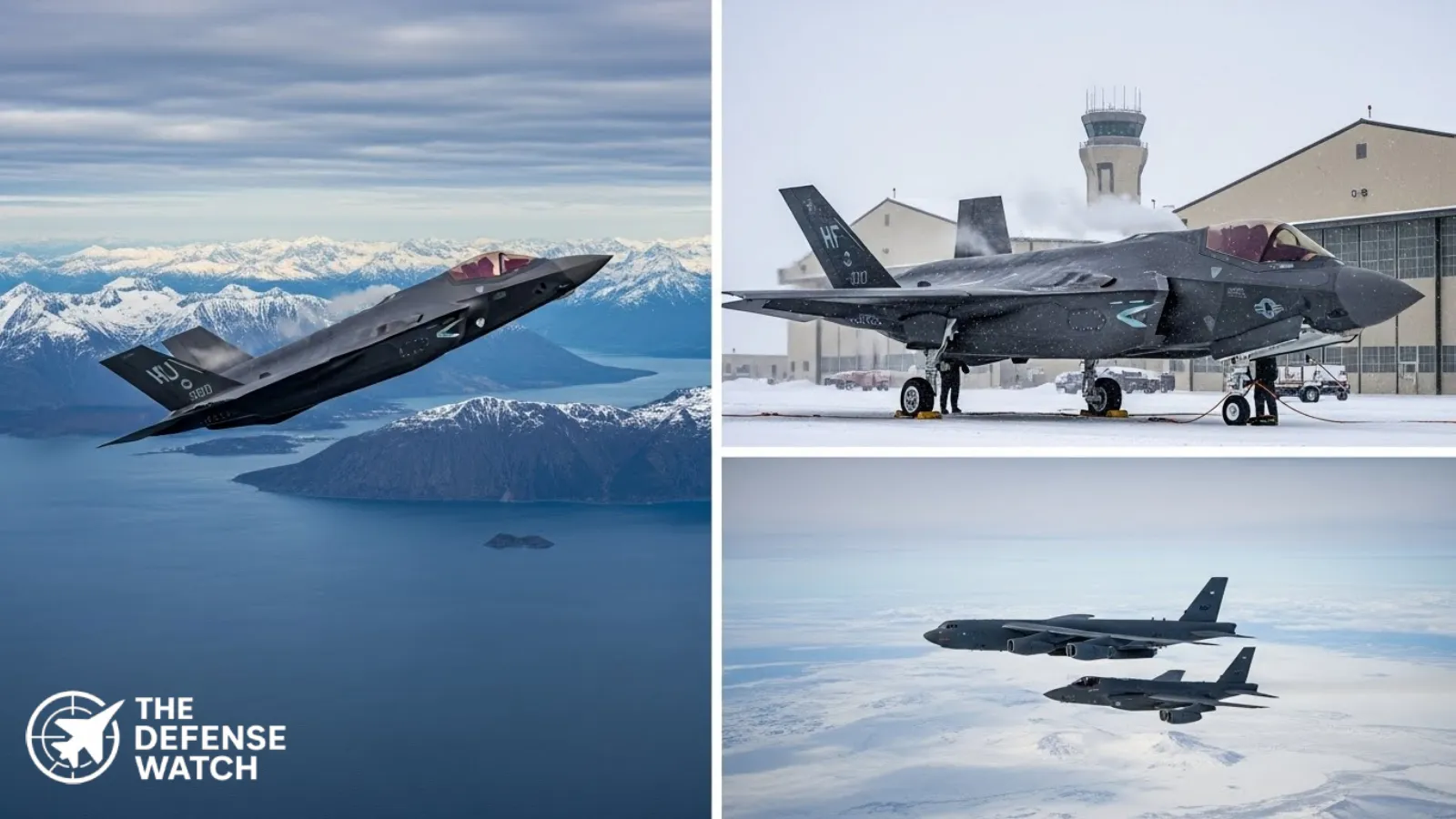
The U.S Air Force on December 9 conducted a major Arctic training exercise in the Gulf of Alaska that demonstrated the F-35A Lightning II’s maritime strike capability under severe weather conditions. The drills were part of Operation Tundra Merlin, a high-intensity joint force simulation led by U.S. Air Force Alaskan Command under the broader oversight of U.S Northern Command.
Operation Tundra Merlin Tests Arctic Strike Readiness
Operation Tundra Merlin took place in the Gulf of Alaska, where sub-zero temperatures, high winds and limited visibility provide some of the harshest conditions for aircraft operations. The exercise integrated F-35A fighters from the 354th Fighter Wing with a range of assets from multiple commands and services.
U.S Air Force officials said the scenario focused on precision maritime strike coordination. The F-35As operated alongside two B-52 Stratofortress bombers in simulated standoff strikes against maritime targets. These missions tested joint command and control, interoperability, threat detection, and strike execution in real-world Arctic conditions.
F-35A Performance in Arctic Environment
The F-35A’s advanced systems were central to the drills, Air Force sources said. The aircraft’s sensor fusion and low-observable features supported situational awareness even where satellite and radar coverage is limited. Onboard thermal management, self-heating components and environmental controls helped the jets handle the extreme cold that challenges legacy aircraft.
Along with strike missions, the F-35s carried out escort and combat air patrols. They shared real-time data with other platforms to strengthen the joint force’s battle picture. This data sharing proved critical in an environment with degraded sensors and challenging weather.
Joint Command and Multi-Domain Integration
Operation Tundra Merlin wasn’t just an air exercise. It involved coordination with U.S Strategic Command, U.S Indo-Pacific Command, the Coast Guard Arctic District, and Alaska Air National Guard units. Maritime forces including a U.S Navy vessel and a U.S Coast Guard cutter took part in simulated targeting and support roles. Tanker aircraft provided aerial refueling and extended flight endurance.
The drill also tested command transitions across combatant commands. Air Operations Centers transferred bomber command authority between units as missions progressed across the Arctic Theater of Operations. These procedures mirror real-world command shifts in dynamic combat scenarios.
Why Alaska Matters to U.S. Defense
Alaska sits at the junction of the Arctic and the Asia-Pacific. That makes it a strategic hub for homeland defense and power projection. Early warning networks, radar systems, and long-range defensive assets are positioned here to guard North America’s northern approaches. Russian and Chinese naval activity in the Arctic and the northern Pacific have increased in recent years, highlighting the need for readiness in these northern seas.
U.S military planners see Arctic operations as integral to deterrence and rapid response. Exercises in this region help forces rehearse detection and interdiction against potential incursions at the edge of U.S sovereign territory.
Arctic Weather Challenges and Aircraft Readiness
Operating aircraft in Arctic weather is complex. Temperatures often fall well below freezing and strong winds raise the risks of ice buildup and mechanical stress. The F-35A’s design helps mitigate some of these difficulties, but drills like Operation Tundra Merlin ensure that crews and commanders understand how to manage cold-weather logistics and missions.
Past tests of F-35s in cold weather have focused on reliability of systems and materials. Arctic operations also push support crews to refine procedures for maintenance and refueling in severe conditions. While not part of this year’s drill, previous reports noted challenges like battery performance and hydraulic systems under extreme temperatures.
What’s Next
Operation Tundra Merlin reinforces the F-35A’s evolving role in joint maritime operations. The Air Force intends to continue integrating fifth-generation fighters into multi-domain strike and surveillance missions. Future exercises will likely expand on Arctic coordination between air, sea and space assets.
As strategic interests in the Arctic grow, so does the importance of proving combat capabilities in the region’s harshest environments. The lessons from these drills will help shape U.S defense posture toward both homeland defense and power projection into contested waters.