

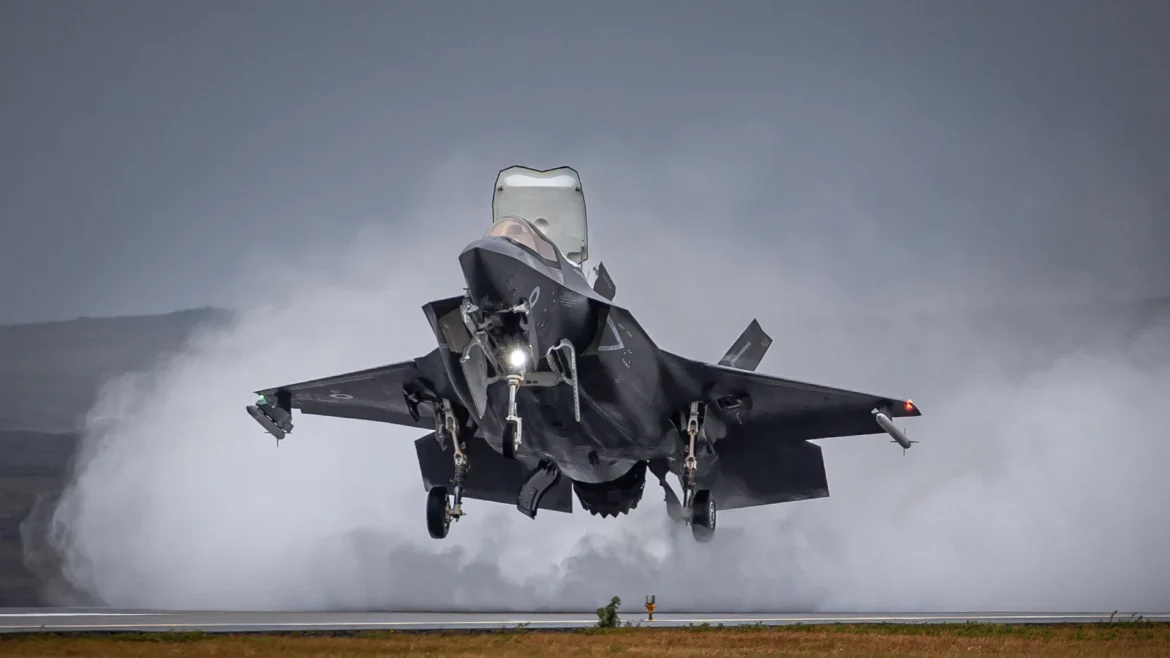
Britain’s combat air fleet spent much of 2025 defined by delay and uncertainty — a slipping F-35B delivery schedule, an unresolved Typhoon retirement debate, and open questions about how much of the original 138-aircraft F-35 ambition would survive contact with budget reality. Several of those threads have now resolved, at least for the moment. Here’s where things actually stand as of August 2026.
The Typhoon Fleet: A Bigger Upgrade Than Planned
The headline shift this year is on the Typhoon side. The UK’s latest Defence Investment Plan commits to upgrading all 107 of the RAF’s Tranche 2 and Tranche 3 Eurofighter Typhoons — a significant expansion from the 40 aircraft originally announced as recently as January 2026. The upgrade package, worth £5.4 billion, covers radar, communications, and software improvements, a new defensive aids system, and enhancements to weapons integration, funded across FY 2026/27 through FY 2029/30. A further £1.1 billion is earmarked to sustain the fleet into the 2040s through the Long Term Evolution programme.
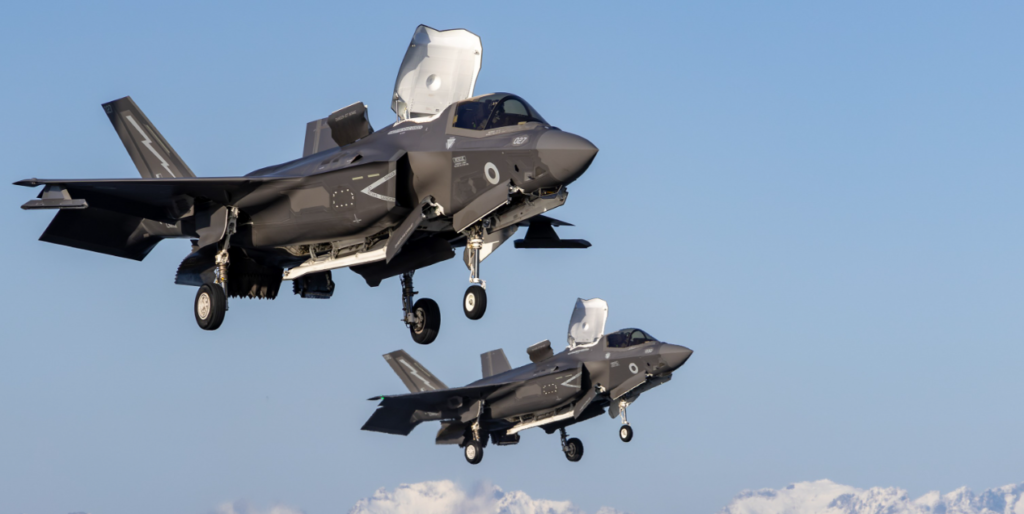
That investment confirms what UK defense officials have signaled for some time: the Typhoon isn’t a bridge aircraft waiting to be replaced, but the core of RAF combat air capability for roughly another 15 years, alongside the F-35B and, eventually, the GCAP/Tempest sixth-generation fighter.
The RAF’s oldest Typhoons haven’t been as fortunate. Of the original 30 Tranche 1 airframes, 26 have been scrapped, stripped for spares, or placed in storage pending disposal. Four remain in active service — but only in the Falkland Islands, flying Quick Reaction Alert duty out of Mount Pleasant Complex, where they’re scheduled to serve until 2027 before final retirement. Unlike the Tranche 2/3 fleet, the Tranche 1 jets lacked the avionics and structural provisions needed for the newer upgrade package, making retention uneconomical despite some earlier industry suggestions that BAE Systems could modernize them.
The F-35B: First Tranche Complete, Long Road Still Ahead
On the Lightning Force side, the UK Ministry of Defence confirmed in late March 2026 that it had received the last of its first 48 contracted F-35B Lightning IIs — a milestone reached roughly 14 years after the first STOVL F-35B was delivered to the MoD in 2012, and eight years after the type’s arrival at RAF Marham in 2018.
That completion came later than planned. Lot 17 aircraft that were originally due by the end of 2025 slipped into early 2026, with the final deliveries landing by April 2026 — a three-to-four month delay attributable to the Joint Program Office’s shared production-lot structure, under which the UK, as sole Tier One international partner, has no contractual mechanism to impose delay penalties on Lockheed Martin.
As of the completed first tranche, the RAF and Royal Navy’s joint Lightning Force — comprising 617 Squadron and 809 Naval Air Squadron, both based at RAF Marham — operates 47 F-35Bs, following the loss of one airframe. The government has confirmed a long-term delivery plan extending well beyond that first batch: a written parliamentary answer in January 2026 set expectations for the UK’s 75th F-35 to arrive by the end of 2033, with deliveries continuing steadily through the 2030s.
That trajectory still falls well short of the UK’s original ambition of 138 F-35Bs, first set out in the 2015 Strategic Defence and Security Review. Analysts and reporting have increasingly described that full order as unaffordable, with some commentary suggesting future purchases may lean toward the cheaper F-35A variant at the B model’s expense — though the UK’s carrier-based, STOVL-dependent force structure makes a wholesale pivot away from the B model operationally complicated.
What the F-35B Still Can’t Do
Delivery numbers are only part of the readiness picture. The RAF’s F-35Bs remain constrained by weapons integration timelines tied to the aircraft’s Block 4 software upgrade. Until Block 4 arrives, UK F-35Bs will continue operating with a more limited weapons set than originally envisioned: SPEAR 3 integration is now targeted for financial year 2028-29, and Meteor beyond-visual-range missile integration isn’t expected until the early 2030s. In the meantime, the aircraft’s stealth, sensor fusion, and electronic-attack capability are doing most of the operational work — its RAF nickname, “the assassin,” reflects that role, working alongside the Typhoon (“the thug”) in a high-low mix where the F-35B clears the way and the Typhoon brings the heavier ordnance load.
Comparing the Two Fleets
Eurofighter Typhoon F-35B Lightning II Current fleet size 111 total (107 Tranche 2/3 active + 4 Tranche 1 in Falklands) 47 operational 2026 development £5.4B upgrade covering all 107 Tranche 2/3 jets First 48-aircraft tranche completed (delayed to April 2026) Out-of-service date Tranche 1: 2027; Tranche 2/3: 2040 Deliveries continuing through the 2030s; 75th aircraft expected by end of 2033 Key limitation Tranche 1 lacked upgrade-compatible avionics Full weapons set (SPEAR 3, Meteor) awaiting Block 4, not expected until 2028-early 2030s Role Heavy ordnance, air defense, core fast-jet mass Stealth, sensor fusion, carrier operations, first-in strike FAQ
How many F-35Bs does the UK have as of 2026?The RAF and Royal Navy’s Lightning Force operates 47 F-35Bs following completion of the first 48-aircraft contracted tranche in March/April 2026, with one airframe lost. The government expects to reach 75 total F-35s by the end of 2033.
Why was the UK’s F-35B delivery delayed?Lot 17 aircraft due by the end of 2025 slipped into early 2026 due to production issues within the Joint Program Office’s shared-lot structure. Because the UK buys through annual international production lots rather than a bespoke bilateral contract, it has no financial remedy or delay penalty available against Lockheed Martin.
Is the RAF still planning to buy 138 F-35Bs?The original 2015 target of 138 F-35Bs is now widely viewed as unaffordable. Current confirmed government planning extends only to a 75th aircraft by 2033, with the long-term fleet size beyond that still unresolved.
What happened to the RAF’s Tranche 1 Typhoons?Of the original 30 Tranche 1 Typhoons, 26 have been scrapped, stripped for parts, or placed in storage. Four remain in service on Quick Reaction Alert duty in the Falkland Islands until 2027, after which the type will be fully retired from RAF service.
When will RAF F-35Bs get their full weapons package?SPEAR 3 integration is targeted for financial year 2028-29, and Meteor missile integration isn’t expected until the early 2030s, both tied to the aircraft’s Block 4 software upgrade.
How much is the UK spending to upgrade the Typhoon fleet?£5.4 billion to upgrade and sustain all 107 Tranche 2 and 3 Typhoons, spread across FY 2026/27 to FY 2029/30, plus a further £1.1 billion for long-term sustainment into the 2040s.
The Loadout Problem, In Gaming Terms
Any player who’s grinded through a live-service shooter’s weapon-unlock tree will recognize the RAF’s current F-35B situation instantly: you’ve got the platform, you’ve got the base kit, but half your loadout is still locked behind a content update that keeps slipping right. SPEAR 3 and Meteor are effectively the F-35B’s endgame weapon unlocks — available on the roadmap, promised for a future patch, but not yet in the loadout menu. Until Block 4 ships, RAF pilots are running a stealth platform that’s already lethal in its current build, but still waiting on the DLC that unlocks its full kit.

Executive Summary:
The Eurofighter Typhoon’s unit cost isn’t one number — it’s a moving target that ranges from a £73.1 million bare flyaway figure to a €187 million all-in Tranche 5 package, depending on what’s bundled into the deal. This breakdown separates the accounting tricks from the real program economics, and explains why the RAF still trusts a jet first sketched on paper as “EF 2000” back in the 1980s.
Ask three different governments what a Eurofighter Typhoon costs and you’ll get three different answers, all technically true. The UK’s own 2011 House of Commons defence committee pegged the bare airframe at £73.1 million. Germany’s October 2025 order for 20 Tranche 5 jets worked out to roughly €187 million each once simulators and support kit were folded in. Neither number is wrong — they’re just measuring completely different things.
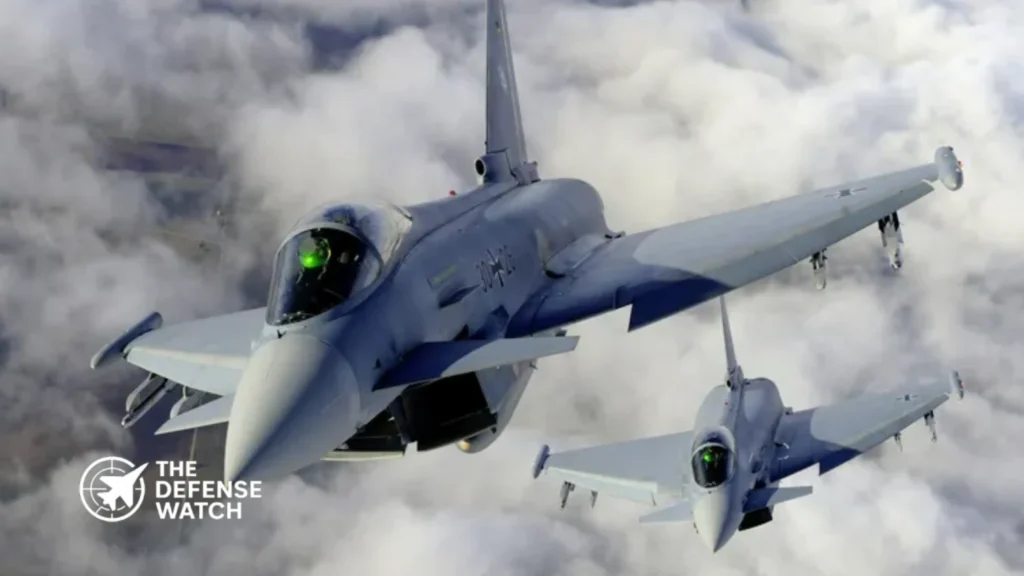
That pricing chaos is the whole story. The Typhoon was born as a four-nation consortium jet, the “EF 2000,” designed to spread cost and workshare across Britain, Germany, Italy, and Spain. Three decades later, that same structure is exactly why nobody can agree on what one aircraft is worth.
The Technical Analysis: Why The Typhoon’s Price Tag Keeps Moving
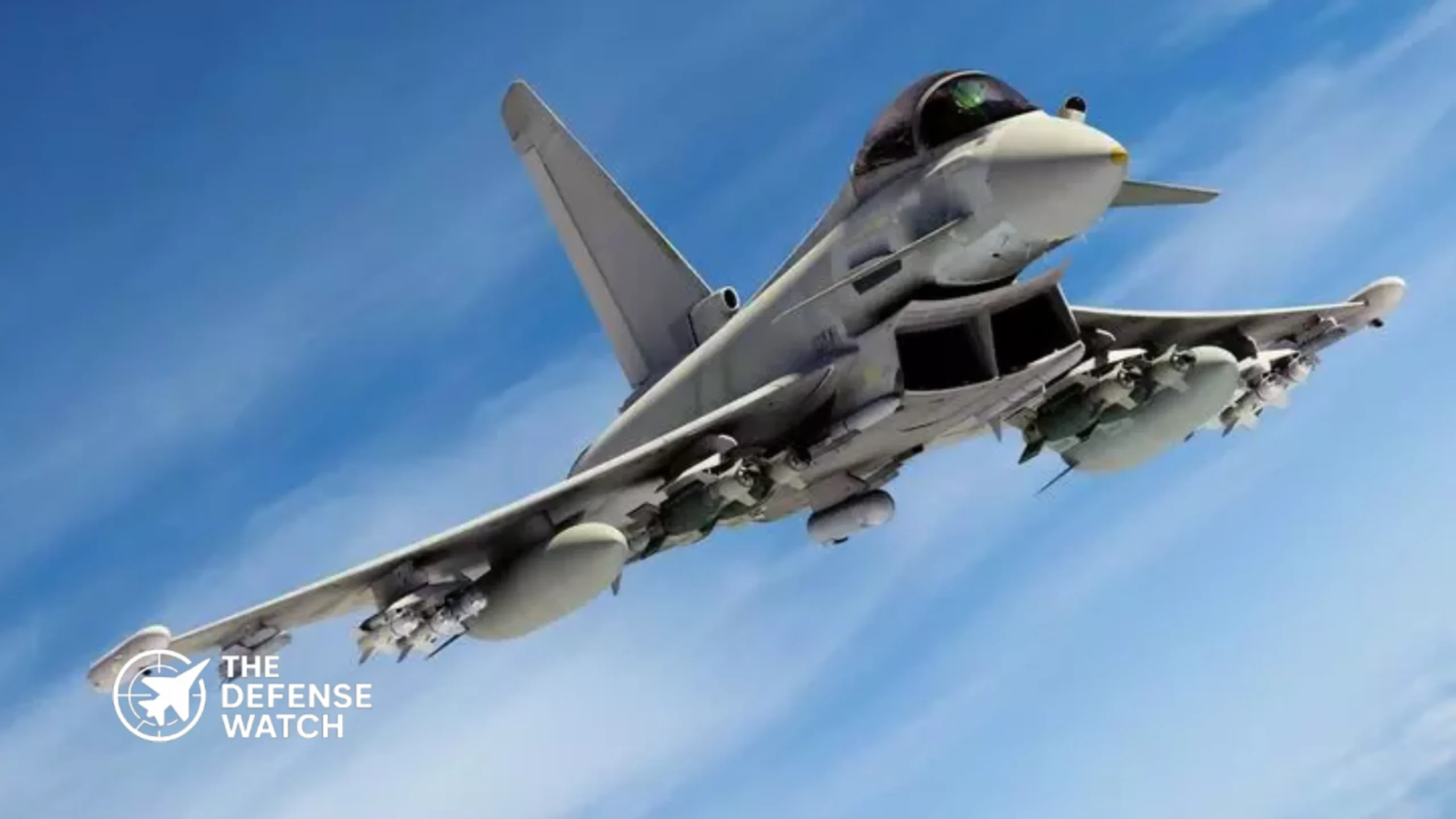
Start with the airframe everyone actually flies. The RAF’s Tranche 3 Typhoon FGR4 carries the Captor-M mechanically scanned radar in most of the fleet, with the newer AESA-based Captor-E rolling into later tranches and retrofits.
Two Eurojet EJ200 turbofans push the jet to Mach 2.35, with supercruise capability that lets it sustain supersonic speeds without afterburner. That matters tactically — it shrinks the infrared signature during a intercept run and extends time-on-station compared to jets that need burner to go supersonic.

The pricing split comes down to what accountants call “recurring flyaway cost” versus “total program cost.” Flyaway cost covers just the airframe, engines, and standard avionics rolling off the line. Total program cost folds in decades of sunk R&D, weapons integration, simulators, and infrastructure — which is why the same jet can be quoted at $117 million or $300 million depending on which invoice you’re reading.
Export contracts make the picture messier still. Qatar’s 2017 order for 24 Typhoons came in at roughly $6.7 billion, or about $280 million per jet — but that figure bundled weapons packages, pilot training, and a support infrastructure buildout from zero. Turkey’s more recent deal covered 20 Typhoons in an agreement valued at up to £8 billion, framed by UK officials as securing thousands of British jobs.
Data Block: Eurofighter Typhoon Cost & Spec Comparison
Metric RAF Tranche 3 (UK) Tranche 5 (Germany, 2025) Export Configuration (Qatar/Turkey) Reported unit cost ~£73.1M–£126M ($117M–$202M) ~€140M–€187M all-in $200M–$300M (with weapons/support) Radar Captor-M (mechanical) Captor-E AESA (GaN) Mix, contract-dependent Max speed Mach 2.35 Mach 2.35 Mach 2.35 Engines 2x Eurojet EJ200 2x Eurojet EJ200 2x Eurojet EJ200 Est. flight-hour cost $60,000–$65,000 Comparable, program-dependent Higher (fleet-scale, no economies) Program origin EF 2000 consortium, 1980s Same consortium architecture License/offset-driven Figures reflect publicly reported program data through late 2025 and early 2026; export pricing varies by offset and support package.
The Insight: What Esports Drafting Strategy Teaches Us About Consortium Fighters
Competitive Call of Duty and Counter-Strike teams live or die by role specialization — an entry fragger, a support player, an anchor holding a chokepoint. No single player is optimized to do everything; the roster wins by combining specialists into one coordinated unit.
The Eurofighter consortium was built on the same logic, just with nations instead of players. The UK leans on Typhoon for air-to-air and rapid intercept, Germany pushes electronic warfare integration, Italy and Spain contribute manufacturing depth and Mediterranean basing flexibility. No partner nation “solos” the program.
The trade-off mirrors a drafted roster with four captains instead of one. Juste retour — dividing manufacturing work by financial contribution rather than by who’s actually best at building a given part — is the aerospace equivalent of picking a lineup by seniority instead of skill. It produces a capable jet, but never the cheapest one.
The Typhoon’s order books are fuller now than they were five years ago — but every one of those orders comes wrapped in an industrial partnership, not just a price tag.” This is the trade nations keep making: paying a premium for technology transfer and sovereign workshare, not just for an airframe.
Conclusion: The Price You Pay Depends On What You’re Actually Buying
The Eurofighter Typhoon isn’t overpriced or underpriced — it’s mispriced by anyone comparing headline numbers without asking what’s actually in the box. A bare RAF flyaway figure and a fully-loaded export contract describe the same airframe but two entirely different transactions.
That distinction matters more now than ever, as the Typhoon’s Captor-E radar upgrade and continued export wins in the Gulf and Southeast Asia keep the EF 2000 lineage flying well into the 2030s. The jet that started as a four-nation compromise is still winning contracts precisely because it never stopped being one.
FAQ
What is the unit cost of a Eurofighter Typhoon?Reported figures range from roughly $117 million (UK flyaway cost, 2011 report) to $300 million for fully-equipped export configurations bundling weapons, training, and support infrastructure.
Why is it called “EF 2000”?EF 2000 was the Eurofighter’s original consortium designation during development in the 1980s and 1990s, before “Typhoon” became the aircraft’s operational name.
Does the RAF still fly the Typhoon?Yes. The Typhoon FGR4 remains a frontline RAF fast-jet, working alongside the F-35B and expected to remain in service into the 2030s pending Tranche upgrades.

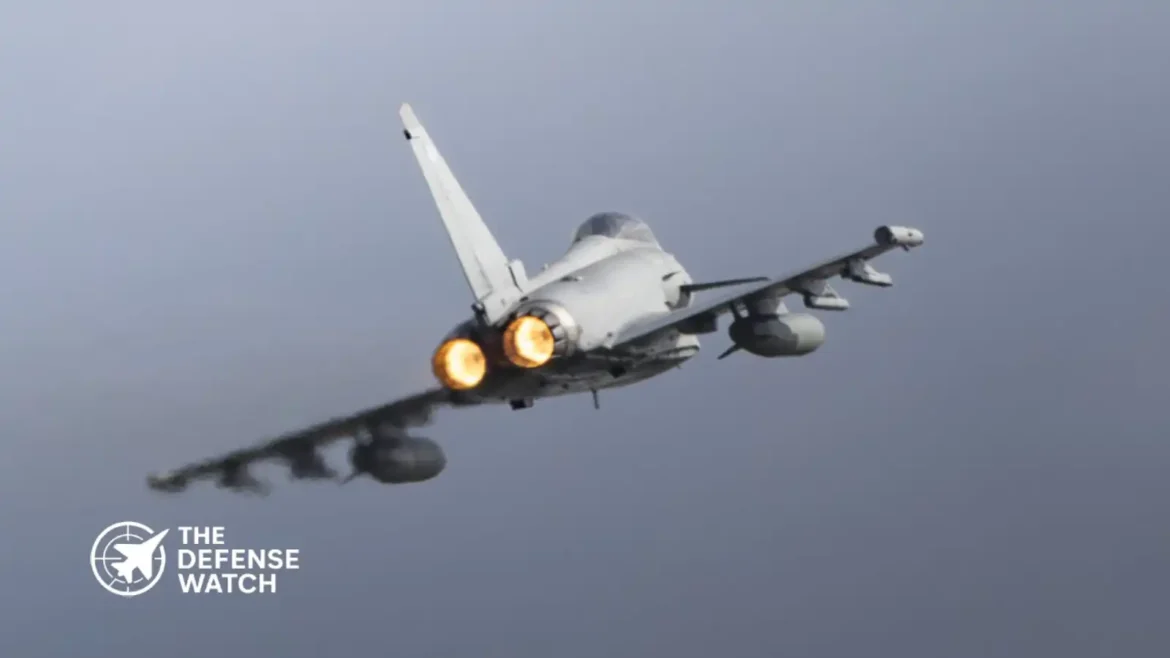
Executive Summary:
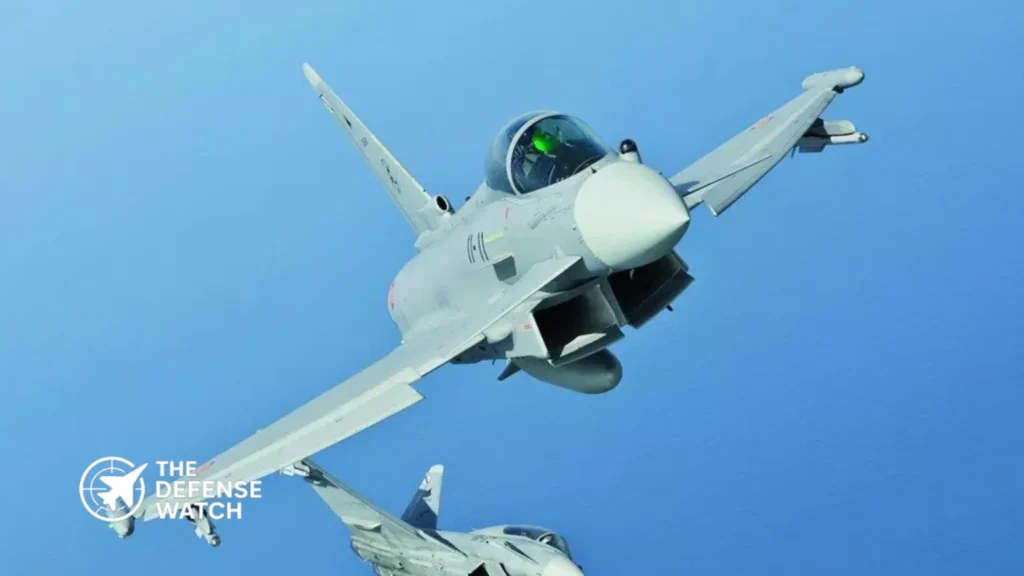
The Royal Air Force has deployed Eurofighter Typhoon jets to patrol NATO’s eastern flank, reinforcing alliance air defense. The missions aim to deter potential airspace violations and reassure member states amid ongoing regional tensions. The deployment reflects NATO’s continued emphasis on rapid response and collective security.
RAF Typhoons Strengthen NATO Air Policing Mission
The Royal Air Force has intensified its contribution to NATO air policing operations by deploying Eurofighter Typhoon fighters to the alliance’s eastern flank. These missions are part of NATO’s standing effort to secure allied airspace and deter unauthorized or hostile aircraft activity near its borders.
Operating from forward bases in Eastern Europe, RAF Typhoons conduct quick reaction alert sorties, intercept missions, and joint training exercises with allied air forces. The deployment comes amid sustained geopolitical tensions, particularly involving Russian military aviation activity near NATO airspace.
Operational Role and Mission Profile
The Typhoon is a cornerstone of NATO’s air defense architecture due to its speed, agility, and advanced sensor suite. RAF crews are tasked with:
- Intercepting unidentified aircraft approaching NATO-controlled airspace
- Conducting air-to-air patrols to maintain persistent presence
- Participating in joint exercises to enhance interoperability
- Supporting quick reaction alert (QRA) readiness at all times
These missions are coordinated through NATO’s integrated air and missile defense system, ensuring seamless communication and rapid response across multiple member states.
Eurofighter Typhoon vs Legacy Air Policing Platforms
Platform Range Payload Status Key Technology Eurofighter Typhoon ~2,900 km ~7,500 kg Active AESA radar, supercruise, advanced EW suite Panavia Tornado F3 ~1,850 km ~6,000 kg Retired Pulse-Doppler radar, legacy avionics F-16 Fighting Falcon ~2,200 km ~7,700 kg Active (NATO) Multirole radar, proven combat record Technical Advantages of the Typhoon Platform
- Supercruise capability, allowing sustained supersonic flight without afterburners
- Advanced Captor radar systems, improving detection and tracking range
- Integrated electronic warfare suite for survivability in contested environments
- High thrust-to-weight ratio, enhancing maneuverability in interception scenarios
- Compatibility with NATO data links, enabling real-time information sharing
Strategic Context: NATO’s Eastern Flank and Deterrence Posture
NATO’s eastern flank has become a focal point of alliance defense planning since the Annexation of Crimea and subsequent tensions between Russia and Western nations. Increased Russian air activity near Baltic and Black Sea regions has prompted NATO to expand its air policing rotations.
The RAF deployment serves several strategic purposes:
- Deterrence: Demonstrates NATO’s readiness to defend its airspace
- Reassurance: Signals commitment to Eastern European allies
- Interoperability: Strengthens coordination among multinational forces
The presence of advanced fighters like the Typhoon complicates any potential adversary’s operational planning, raising the cost of airspace incursions.
Broader Implications for European Air Security
The continued use of Typhoon jets in NATO missions underscores a shift toward high-readiness, technologically advanced air forces capable of rapid deployment. As NATO adapts to evolving threats, including hybrid warfare and advanced aerial platforms, air policing missions are becoming more complex and strategically significant.
The RAF’s role highlights the UK’s ongoing commitment to collective defense, even as broader geopolitical dynamics continue to evolve across Europe.
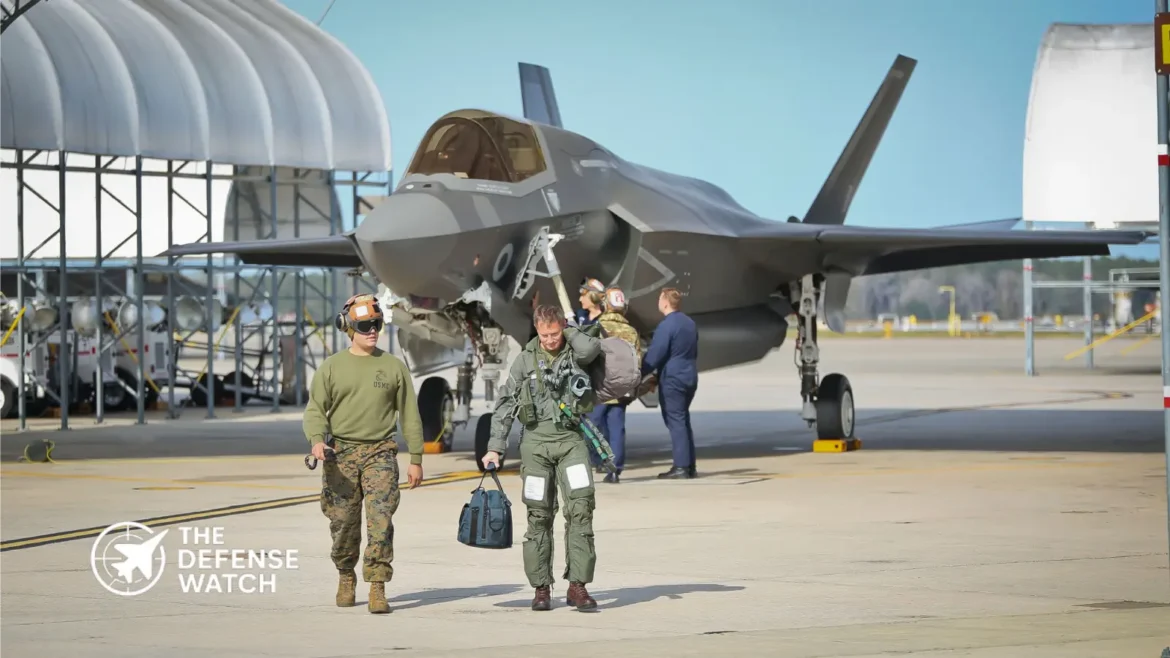
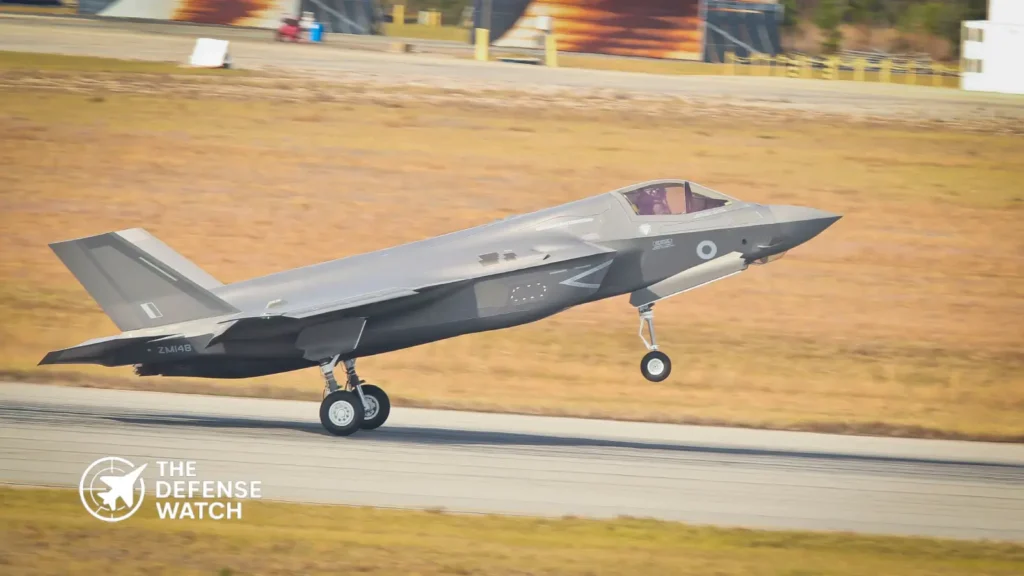
UK F-35B Procurement Reaches First Major Milestone
UK F-35B procurement has entered a new phase after the delivery of the 46th, 47th and 48th aircraft, completing Britain’s first contracted batch of fifth-generation fighters. The milestone marks the end of the initial acquisition phase for the Royal Air Force and Royal Navy Lightning Force.
- The United Kingdom has received aircraft numbers 46, 47 and 48, completing its initial F-35B procurement phase.
- The three jets arrived at RAF Marham, home of Britain’s Lightning Force.
- The F-35B is jointly operated by the Royal Air Force and Royal Navy for land and carrier operations.
- London still states a long-term goal of acquiring up to 138 F-35 aircraft.
- No confirmed timetable has been announced for purchases beyond the first 48 jets.
The aircraft were delivered to RAF Marham in Norfolk, the main operating base for the UK fleet. Britain’s F-35B force is jointly manned by the RAF and Royal Navy and forms the core of the country’s carrier air wing aboard the Queen Elizabeth-class aircraft carriers.
Why The F-35B Matters To Britain
The F-35B variant is the short takeoff and vertical landing model designed for operations from smaller decks and austere runways. That makes it essential to UK carrier strike operations because Britain’s aircraft carriers were built without catapult launch systems.
In practical terms, the jet gives London a modern stealth aircraft able to deploy from sea without relying on foreign bases. That provides political flexibility during crises and supports NATO maritime operations in Europe, the Mediterranean, and beyond.
For the United States and allied planners, Britain’s F-35B fleet is also valuable because it adds another carrier-capable fifth-generation force that can integrate with U.S. Marine Corps and NATO air assets.
Procurement Complete, But Bigger Questions Remain
While the first phase of UK F-35B procurement is now complete, future numbers remain unresolved. Successive British governments have maintained a headline ambition of 138 F-35 aircraft over the life of the program, but no firm contract has yet been announced for the next batch.
Image Source: Royal Air Force That matters because fleet size determines operational tempo. A carrier may deploy 24 or more aircraft during high-end operations, but training, maintenance cycles, and homeland requirements reduce the number available at any given time.
A fleet of 48 delivered aircraft, with one previously lost in a 2021 crash, gives Britain meaningful capability, but limited depth for sustained simultaneous operations.
Upgrade Delays Could Shape Combat Value
Another issue is software modernization. Wider F-35 Block 4 upgrades are needed for expanded weapons integration and future capability growth. British weapons such as Meteor air-to-air missiles and SPEAR 3 precision strike weapons are tied to that roadmap.
That means future combat power depends not only on buying more jets, but on receiving timely upgrades, weapons clearance, and sustainment support.
Strategic Outlook
The completion of the first UK F-35B procurement phase is a clear achievement for London, but it is also a decision point. Britain must now choose whether to expand its carrier air wings, diversify with more land-based fighters, or shift resources toward future programs such as GCAP.
For now, the delivery of jet number 48 confirms that the UK remains one of the leading non-U.S. operators of the F-35 and a key contributor to NATO airpower.

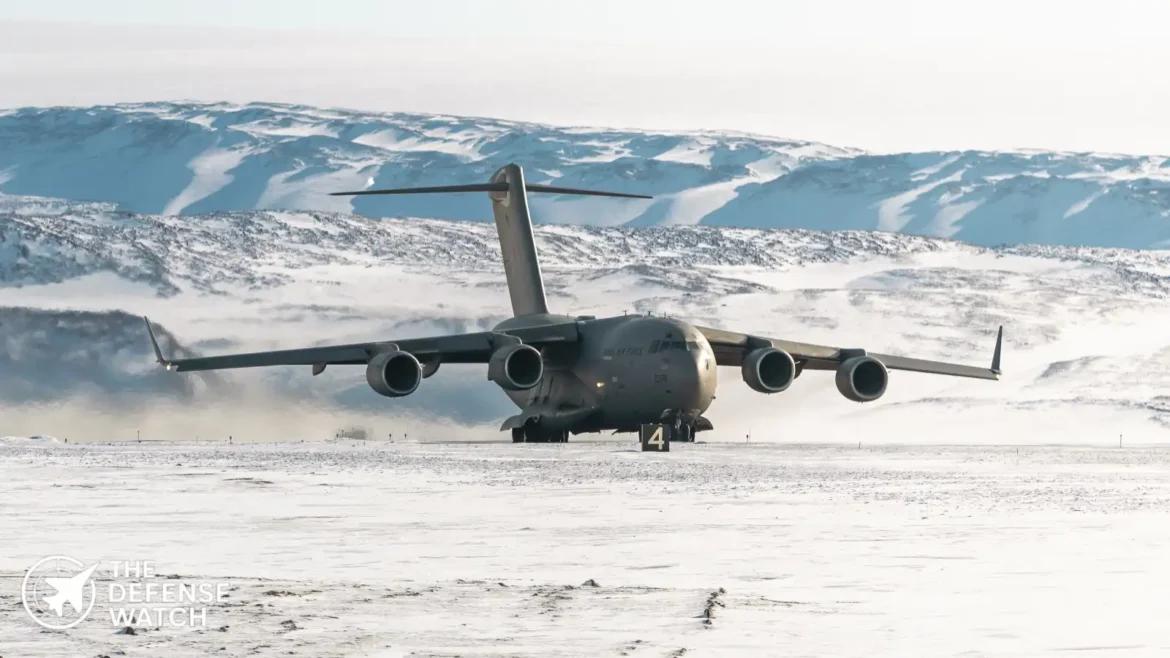
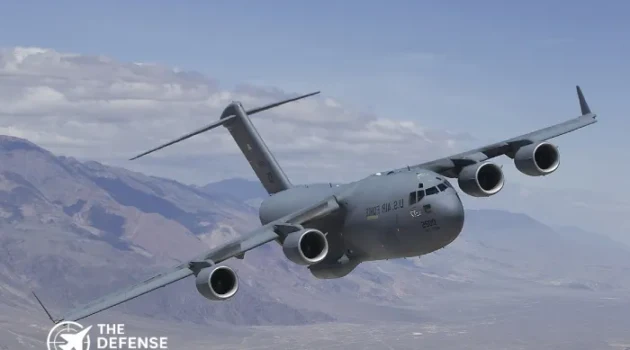
RAF C-17 Globemaster Demonstrates Arctic Reach
RAF C-17 Globemaster aircraft completed a landmark Arctic mission by landing at the world’s northernmost settlement as part of a joint resupply effort with Canada. The operation highlighted the United Kingdom’s ability to project airlift power into one of the harshest operating environments on earth while supporting allied presence in the High North.
The mission, first reported by Defence Industry Europe, underscores the growing importance of Arctic logistics as NATO nations adapt to changing security conditions and increasing activity across northern sea lanes.
- RAF C-17 Globemaster landed at the world’s northernmost permanent settlement during an Arctic support mission.
- Operation was conducted with Canada, highlighting allied logistics cooperation in extreme conditions.
- Mission demonstrated NATO interest in sustaining operations across the High North.
- C-17 provides heavy-lift transport for cargo, vehicles, personnel, and austere airfield access.
- Arctic mobility is becoming central to future deterrence and readiness planning.
The Big Picture
Arctic access has moved from a niche military concern to a mainstream strategic priority. Melting sea ice, longer seasonal navigation windows, and renewed great power competition have increased attention on the High North.
Russia maintains extensive Arctic military infrastructure, including air bases, radar stations, and northern fleet assets. NATO members, including the United Kingdom, Canada, Norway, Denmark, and the United States, are responding by improving surveillance, mobility, and sustainment networks.
Heavy airlift is central to that effort. Forces cannot maintain credible presence in remote polar regions without reliable cargo movement, fuel delivery, engineering support, and emergency response capacity.
What’s Happening
The Royal Air Force used a C-17 Globemaster III to conduct a resupply mission to the world’s northernmost settlement, widely understood to be Ny-Alesund in Norway’s Svalbard archipelago or a similarly remote High Arctic location depending on mission reporting.
The flight was carried out in cooperation with Canadian partners. Such missions typically transport scientific supplies, operational equipment, food stocks, fuel support items, or rotational personnel.
The RAF operates the Boeing-built C-17 from RAF Brize Norton. The aircraft can carry oversized cargo, armored vehicles, helicopters, palletized freight, or large troop loads over intercontinental ranges.
Why It Matters
Arctic operations expose weaknesses that do not appear in temperate climates. Engines, hydraulics, communications systems, tires, and ground equipment all face stress in extreme cold. Runways may be short, icy, or isolated from repair support.
A successful RAF C-17 Globemaster landing therefore demonstrates more than navigation skill. It shows trained crews, mission planning depth, cold-weather procedures, and confidence in operating a strategic transport aircraft far from normal support hubs.
That matters because military readiness increasingly depends on logistics rather than just combat platforms. Nations able to move supplies quickly can reinforce allies, respond to crises, and sustain forward deployments.
Strategic Implications
The mission supports three major strategic goals.
First, it improves allied interoperability. UK and Canadian coordination in Arctic conditions strengthens practical readiness for future humanitarian, military, or sovereignty tasks.
Second, it reinforces NATO’s northern posture. Visible and routine operations complicate any attempt by rivals to dominate remote access routes or create gray-zone pressure.
Third, it expands options for crisis response. A C-17 can rapidly deliver engineers, communications packages, medical teams, or disaster relief supplies to isolated communities.
Competitor View
Russia will likely view growing allied Arctic air mobility as part of a broader NATO normalization of northern operations. Moscow has long treated the Arctic as a core strategic bastion tied to missile warning systems, submarine access, and resource corridors.
China, while not an Arctic state, has declared itself a near-Arctic stakeholder and invested in polar research, shipping interests, and regional diplomacy. Western mobility demonstrations signal that established Arctic powers retain operational reach.
What To Watch Next
Future indicators worth monitoring include expanded RAF cold-weather exercises, more UK transport rotations to northern bases, and deeper integration with Canadian and Nordic partners.
Observers should also watch infrastructure investment. Arctic readiness depends not only on aircraft, but fuel storage, satellite communications, runway maintenance, and search-and-rescue networks.
Capability Gap
The RAF C-17 Globemaster helps close a critical gap between strategic intent and physical access. Many nations can announce Arctic priorities, but far fewer can sustain forces there.
Still, large transport aircraft depend on weather windows, runway condition, and support planning. Airlift alone cannot replace maritime sealift or permanent infrastructure.
The Bottom Line
The RAF C-17 Globemaster Arctic mission shows that credible High North strategy starts with the ability to land, deliver, and sustain forces where conditions are toughest.
RAF Tests Low Cost Typhoon Weapon Against Drone Threats
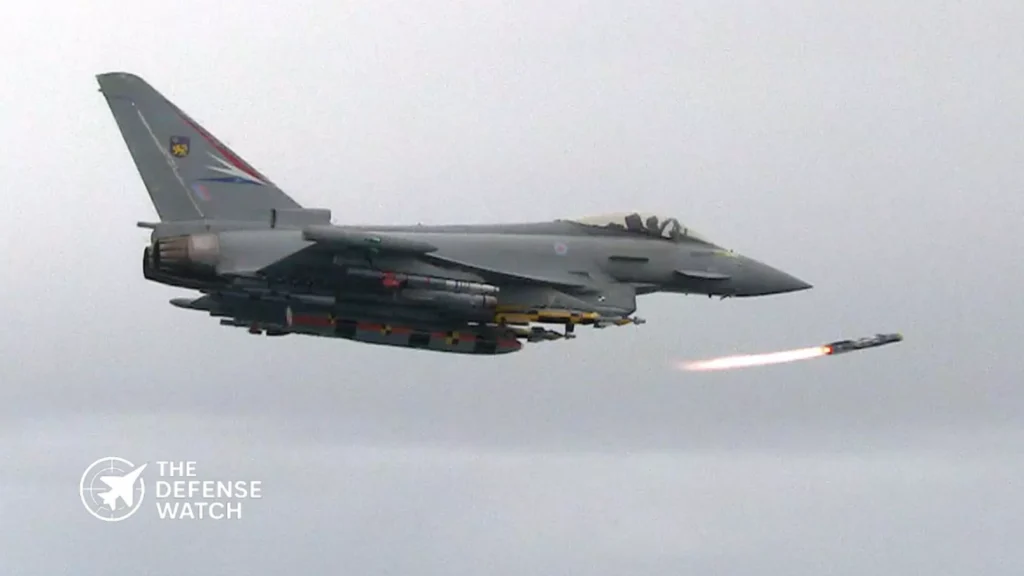
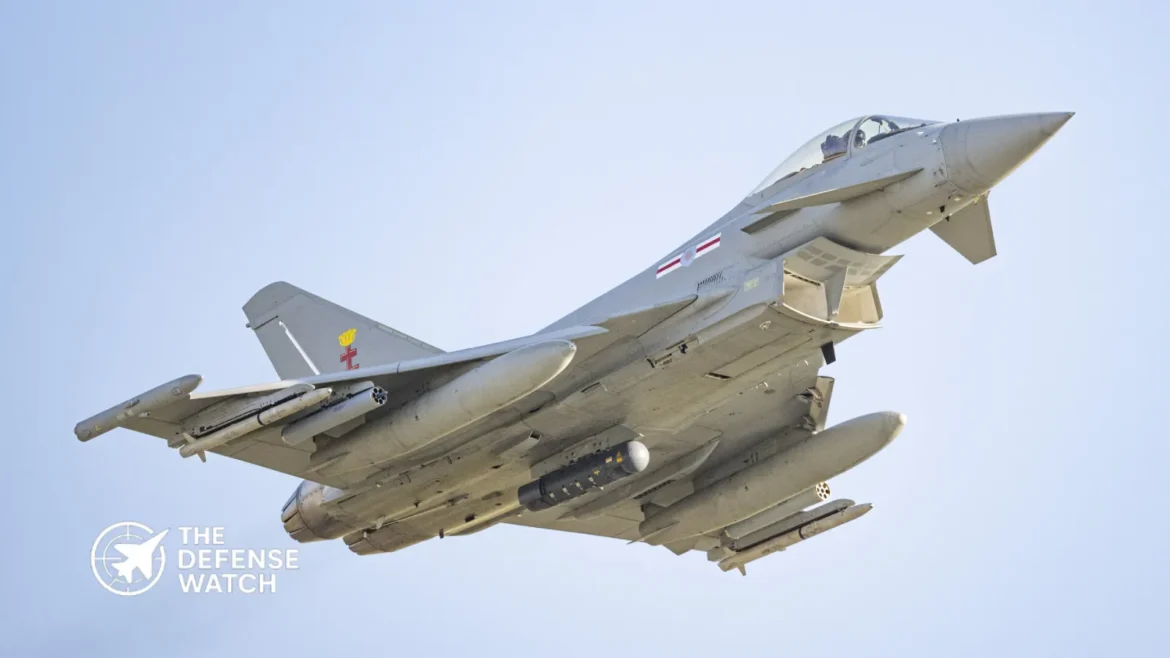
The Typhoon low cost weapon test marks a significant step in adapting modern fighter aircraft to counter the growing threat posed by unmanned aerial systems, according to reporting from UK Defence Journal.
The Royal Air Force has conducted trials of a new low cost weapon integrated onto the Eurofighter Typhoon, aimed specifically at defeating drones in a more cost effective manner. The initiative reflects a broader shift across Western air forces, which are increasingly seeking scalable solutions to counter large numbers of low cost aerial threats.
Unlike traditional air to air missiles, which can cost hundreds of thousands or even millions of dollars per shot, the new system is designed to provide a more economical option when engaging relatively inexpensive drones.
- The RAF has tested a new low cost weapon on the Typhoon to counter emerging drone threats.
- The system is designed to provide an affordable alternative to expensive air to air missiles.
- The test reflects growing concern over mass drone attacks in modern conflicts.
- Typhoon’s integration highlights a shift toward scalable and sustainable air defense solutions.
- The development aligns with broader Western efforts to adapt fighter aircraft to counter UAV swarms.
Addressing The Cost Imbalance In Air Combat
One of the central challenges in modern air defense is the cost imbalance between offensive and defensive systems. Adversaries can deploy large numbers of low cost drones, forcing defenders to expend high value munitions to neutralize them.
The Typhoon low cost weapon test directly addresses this issue. By equipping frontline fighters with cheaper intercept options, the RAF aims to preserve its high end missile inventory for more advanced threats such as enemy aircraft or cruise missiles.
This approach has become increasingly relevant following recent conflicts where drone swarms have overwhelmed traditional air defense systems. Lessons from Ukraine and the Middle East have underscored the need for layered, cost efficient responses.
Expanding Typhoon’s Operational Role
The integration of a low cost weapon also expands the operational flexibility of the Typhoon platform. Traditionally optimized for air superiority and strike missions, the aircraft is now being adapted for persistent counter drone operations.
This evolution reflects a broader trend in airpower doctrine. Fighters are no longer limited to high intensity engagements against peer adversaries. Instead, they are expected to operate across a spectrum of threats, including irregular and asymmetric challenges.
By incorporating affordable interceptors, the Typhoon can remain on station longer and engage multiple targets without rapidly depleting expensive munitions. This is particularly important in scenarios involving sustained drone activity.
Strategic Implications For NATO Air Forces
The Typhoon low cost weapon test has implications beyond the United Kingdom. NATO air forces are facing similar challenges, especially as drone proliferation accelerates across multiple regions.
Developing cost effective countermeasures is becoming a priority. High end systems alone are not sufficient to address the volume and diversity of modern aerial threats. Instead, a layered approach combining advanced missiles, electronic warfare, and low cost interceptors is emerging as the preferred model.
The RAF’s effort could serve as a template for other operators of the Typhoon and similar aircraft. If successfully fielded, the system may be adopted more widely across allied fleets.
Industry And Technology Considerations
While specific technical details of the low cost weapon remain limited, the concept aligns with ongoing industry efforts to develop modular, adaptable munitions. These systems often emphasize reduced unit cost, simplified guidance, and rapid production.
The focus is not necessarily on achieving the same performance as high end missiles, but rather on delivering sufficient capability against lower tier threats. This trade off is increasingly seen as acceptable given the operational context.
Additionally, integrating such weapons onto existing platforms like the Typhoon avoids the need for entirely new systems, accelerating deployment timelines and reducing overall costs.
Analysis: A Shift Toward Sustainable Air Defense
The Typhoon low cost weapon test highlights a broader transformation in air warfare. The emphasis is shifting from purely technological superiority to sustainable combat operations.
Air forces must now consider not only whether they can defeat a threat, but whether they can do so repeatedly and affordably over time. This is especially critical in prolonged conflicts where resupply and production capacity become decisive factors.
In this context, low cost weapons are not just a tactical innovation. They represent a strategic necessity. By enabling fighters to counter drones without exhausting high value munitions, they help ensure long term operational resilience.
The RAF’s initiative suggests that future air combat will be defined as much by economics and scalability as by performance.
RAF Dogfight Exercise Over Britain Demonstrates Modern Air Combat Readiness
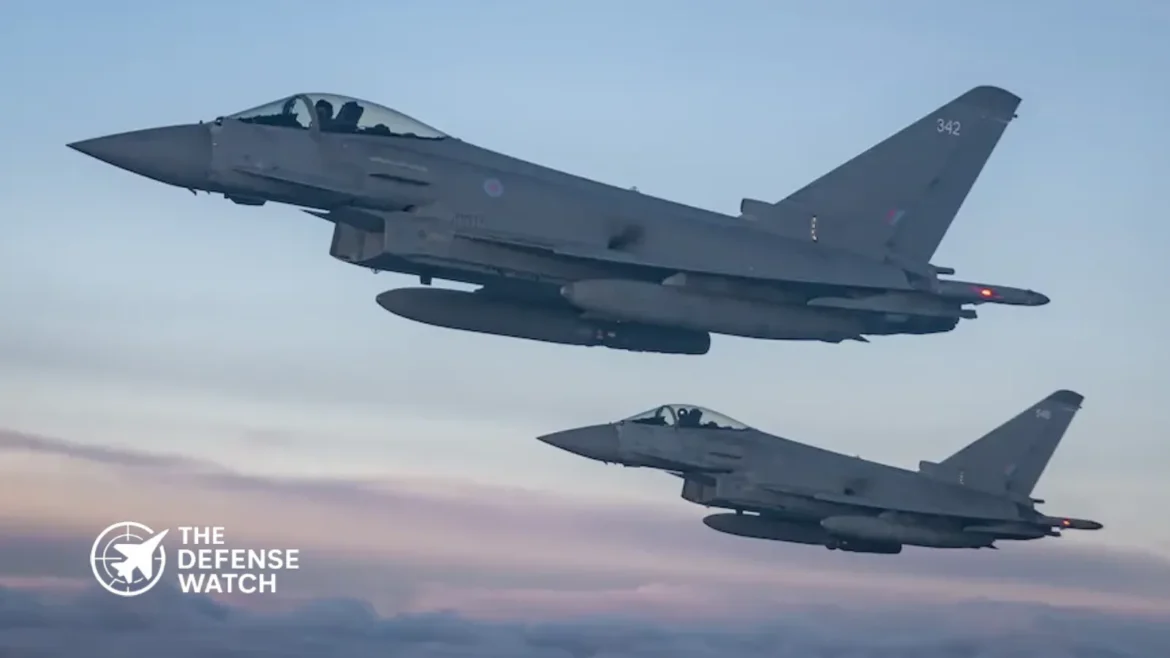
The RAF dogfight exercise over Britain has underscored the United Kingdom’s commitment to maintaining high-end air combat readiness in an increasingly contested security environment. The large-scale aerial engagement brought together multiple fighter aircraft in complex, high-tempo combat scenarios designed to replicate modern peer conflict.
The exercise featured coordinated engagements involving frontline fighter jets, with a particular focus on beyond-visual-range and within-visual-range combat. Such drills are critical as air forces adapt to evolving threats, including advanced enemy aircraft, integrated air defense systems, and electronic warfare environments.
Short, intense dogfighting scenarios were combined with broader mission sets, reflecting how modern air combat is no longer limited to isolated engagements but integrated into networked, multi-domain operations.
- The Royal Air Force conducted a large-scale dogfight exercise over the United Kingdom involving multiple fighter aircraft.
- The drill included complex air combat scenarios simulating high-intensity peer conflict environments.
- Allied aircraft participation highlighted NATO interoperability and joint operational capability.
- Advanced platforms such as Typhoon fighters played a central role in the exercise.
- The exercise reflects growing emphasis on air superiority amid evolving global threats.
High-Intensity Training Reflects Shifting Threat Environment
The scale and complexity of the RAF dogfight exercise over Britain point to a broader strategic shift. Western air forces are increasingly preparing for potential high-end conflict against near-peer adversaries, where air superiority is neither guaranteed nor uncontested.
Exercises of this nature simulate dense threat environments, including contested airspace, electronic jamming, and multi-axis attacks. These conditions mirror operational realities seen in recent conflicts and ongoing geopolitical tensions.
The Royal Air Force’s use of advanced fighter platforms enables pilots to train against both traditional and emerging threats. The Eurofighter Typhoon, for example, continues to receive upgrades in radar, weapons integration, and electronic warfare systems, ensuring its relevance in modern combat scenarios.
From an operational perspective, such exercises help refine tactics, improve pilot decision-making under pressure, and validate command and control structures.
NATO Interoperability and Allied Coordination
A key dimension of the RAF dogfight exercise over Britain was its emphasis on allied integration. Participation or coordination with NATO partners highlights the alliance’s continued focus on collective defense and interoperability.
Modern air operations depend heavily on seamless data sharing, coordinated targeting, and unified command structures. Exercises like this allow participating forces to test communication systems, joint tactics, and interoperability between different aircraft and national doctrines.
This is particularly important in Europe, where NATO air forces must be capable of rapidly integrating in response to emerging crises. The ability to operate as a cohesive unit enhances deterrence by demonstrating readiness and unity.
Operational Lessons and Capability Development
Beyond immediate training value, the RAF dogfight exercise over Britain contributes to long-term capability development. Data collected during these exercises is used to refine tactics, improve training programs, and inform future procurement decisions.
Air combat is becoming increasingly data-driven, with sensor fusion, real-time intelligence, and networked platforms shaping engagement outcomes. Exercises provide a controlled environment to test these systems under realistic conditions.
Additionally, lessons learned feed into broader defense planning, including force structure, readiness cycles, and integration of next-generation technologies such as artificial intelligence and autonomous systems.
Strategic Significance for UK Airpower
The timing of the RAF dogfight exercise over Britain aligns with a period of heightened global security concerns. From Eastern Europe to the Indo-Pacific, airpower remains a critical عنصر in deterrence and rapid response.
For the United Kingdom, maintaining a credible and capable air force is central to both national defense and its role within NATO. Large-scale exercises signal not only preparedness but also resolve, reinforcing the UK’s position as a key contributor to allied airpower.
Moreover, these drills serve as a visible demonstration of capability, sending a clear message to potential adversaries about the readiness and professionalism of Western air forces.
RAF Typhoon FGR4 Heavy Loadout Signals Operational Shift
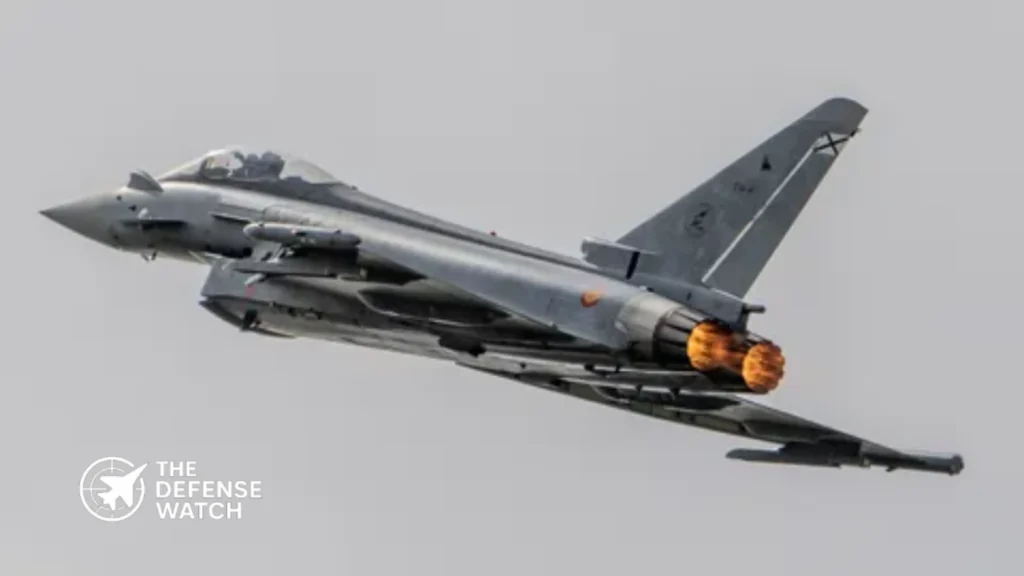
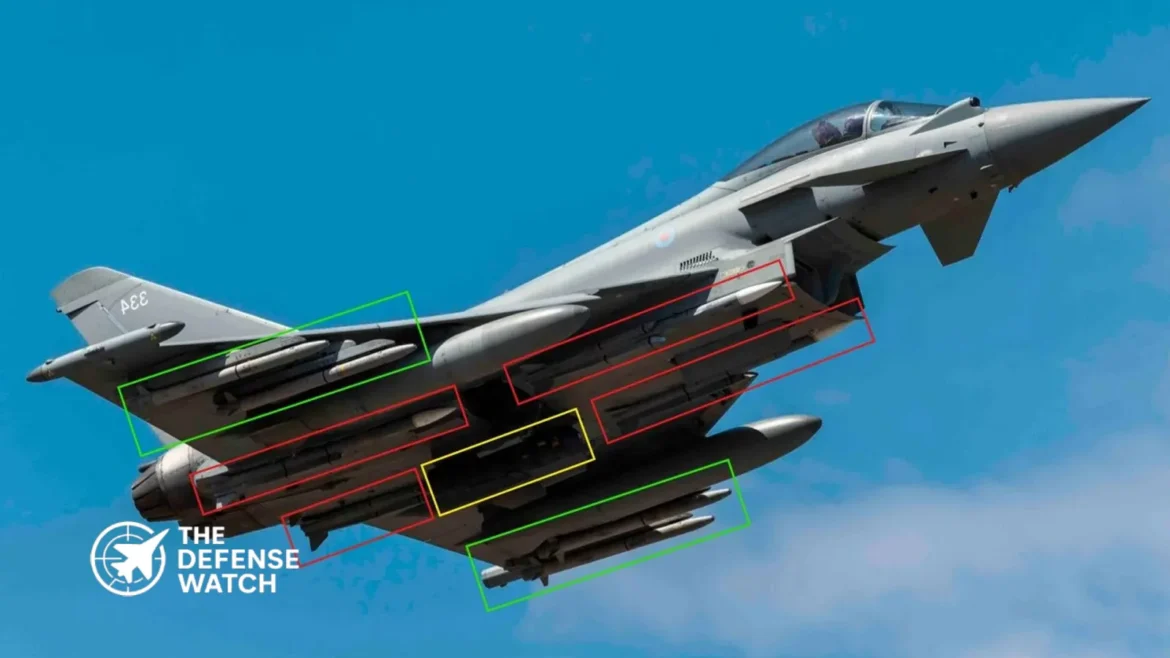
The Typhoon FGR4 heavy loadout is drawing attention as the Royal Air Force strengthens its air defense posture in ongoing Middle East operations. Recent imagery show the aircraft configured with an unusually large number of air-to-air missiles, underscoring a shift toward high-readiness interception and deterrence roles.
(adsbygoogle = window.adsbygoogle || []).push({});The deployment reflects evolving threat dynamics in the region, where unmanned systems, cruise missiles, and potential state-based air threats are increasingly shaping operational planning.
Short, visible changes in aircraft configuration often signal deeper strategic intent. In this case, the Typhoon FGR4 heavy loadout points to a mission set focused less on strike and more on persistent air dominance.
- RAF Typhoon FGR4 deployed with a heavy air-to-air missile loadout during Middle East operations.
- Configuration includes a mix of beyond-visual-range and short-range air defense missiles.
- Deployment supports ongoing coalition operations and regional airspace security missions.
- Loadout highlights focus on countering aerial threats including drones and potential hostile aircraft.
- Reflects RAF emphasis on flexible, high-readiness air defense posture in contested environments.
Expanded Missile Configuration Enhances Air Defense Reach
According to reporting by Army Recognition, the Typhoon FGR4 was observed carrying a combination of beyond-visual-range and short-range air-to-air missiles. This likely includes advanced radar-guided missiles for long-distance engagements and infrared-guided weapons for close-in combat.
Such a configuration allows the aircraft to engage multiple targets across different engagement zones without returning to base. It also increases survivability in contested airspace, where reaction time is critical.
The ability to carry a heavier missile load is a core strength of the Eurofighter platform. Its multiple hardpoints and high thrust-to-weight ratio enable it to maintain performance even when fully armed.
From an operational standpoint, this loadout supports layered air defense. Aircraft can intercept threats at extended ranges while retaining capability for close engagements if required.
Middle East Deployment Reflects Changing Threat Environment
The Typhoon FGR4 heavy loadout aligns with broader coalition efforts to secure airspace across the Middle East. The region has seen a steady rise in drone activity and asymmetric aerial threats, particularly in areas linked to ongoing conflicts and regional tensions.
RAF deployments in the Middle East have historically included both strike and air policing roles. However, the current configuration suggests a stronger emphasis on defensive counter-air missions.
This shift is consistent with trends observed across NATO and allied air forces, where air defense is regaining priority due to the proliferation of low-cost aerial threats.
The presence of heavily armed fighters also serves a deterrent function. It signals readiness to respond rapidly to incursions, reducing the likelihood of escalation.
Platform Flexibility Remains a Key Advantage
One of the defining features of the Typhoon FGR4 is its adaptability. The aircraft can transition between air superiority, ground attack, and reconnaissance roles with minimal reconfiguration.
The heavy air defense loadout highlights this flexibility. While optimized for interception in this configuration, the aircraft can be rapidly re-tasked depending on mission requirements.
This multi-role capability is particularly valuable in the Middle East, where operational demands can shift quickly. Air forces must be prepared to respond to a wide range of scenarios, from counterterrorism operations to state-level threats.
The Typhoon’s advanced radar and sensor suite further enhance its effectiveness. These systems enable pilots to detect and track multiple targets simultaneously, a critical requirement in complex airspaces.
Strategic Implications For RAF And Coalition Forces
The Typhoon FGR4 heavy loadout is more than a technical detail. It reflects a broader strategic adjustment in how air power is applied in the region.
By prioritizing air defense, the RAF is aligning with a growing emphasis on protecting critical infrastructure and maintaining airspace control. This approach complements ground-based air defense systems and provides a mobile, responsive layer of protection.
It also highlights the importance of interoperability within coalition operations. Aircraft configured for air defense can integrate with allied assets, sharing data and coordinating responses to emerging threats.
From a geopolitical perspective, the deployment reinforces the UK’s commitment to regional stability and coalition operations.
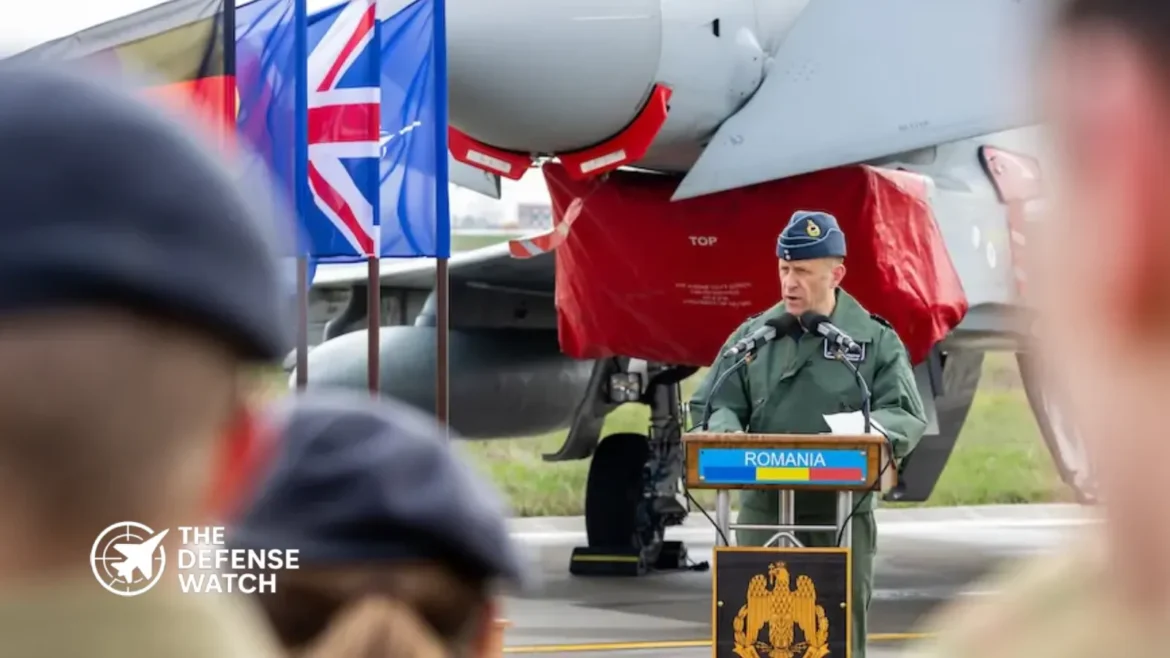
- The Royal Air Force has taken over NATO’s enhanced Air Policing mission in Romania.
- RAF Typhoon fighter jets are deployed to secure NATO airspace along the eastern flank.
- The mission operates from Mihail Kogălniceanu Air Base near the Black Sea.
- The deployment aims to deter potential airspace violations and reassure NATO allies.
- The rotation underscores NATO’s sustained focus on eastern Europe amid ongoing regional tensions.
RAF NATO Air Policing Romania Mission Strengthens Eastern Flank Defense
The RAF NATO air policing Romania mission has officially transitioned to the United Kingdom, reinforcing NATO’s eastern flank as alliance members continue to respond to heightened security pressures near the Black Sea.
The deployment, led by the Royal Air Force, involves advanced Eurofighter Typhoon jets operating under NATO command to secure Romanian airspace and deter potential incursions.
Operating from Mihail Kogălniceanu Air Base, the RAF contingent replaces previous allied rotations as part of NATO’s enhanced Air Policing framework. The mission ensures rapid response capability to unidentified or non-compliant aircraft approaching alliance airspace.
Strategic Context: NATO’s Eastern Flank Under Pressure
The RAF NATO air policing Romania mission reflects a broader strategic shift by NATO to maintain persistent air defense coverage along its eastern perimeter.
Since Russia’s invasion of Ukraine in 2022, NATO has significantly expanded its forward presence across Eastern Europe. Romania, located on the Black Sea and bordering Ukraine, has emerged as a critical node in the alliance’s defensive architecture.
Air policing missions, while not new, have taken on increased operational importance. These deployments now serve not only as deterrence but also as a visible signal of alliance unity and readiness.
From an operational standpoint, RAF Typhoons provide quick reaction alert capabilities, meaning aircraft can be scrambled within minutes to intercept potential threats. This includes unidentified aircraft, military probes, or civilian planes deviating from flight plans.
RAF Typhoon Capability and Mission Role
The RAF NATO air policing Romania mission leverages the Typhoon’s multirole capabilities, particularly its air superiority and interception strengths.
Equipped with advanced radar systems and beyond-visual-range missiles, the Typhoon is optimized for quick interception missions. Its ability to operate in contested environments makes it suitable for NATO’s current threat landscape.
In Romania, the aircraft operate under strict NATO rules of engagement. Missions typically include:
- Airspace surveillance and patrol
- Identification of unknown aircraft
- Interception and escort operations
- Coordination with Romanian and NATO air defense networks
This layered approach ensures that NATO maintains a continuous and credible air defense posture in the region.
Operational Impact on Regional Security
The RAF NATO air policing Romania mission contributes directly to regional stability, particularly in the Black Sea area, where air and naval activity has increased in recent years.
Romania’s geographic position places it at the intersection of several strategic concerns, including proximity to Crimea and key maritime routes. As a result, maintaining secure and monitored airspace is critical.
From a deterrence perspective, the presence of RAF fighters complicates any adversary’s operational planning. It raises the cost and risk of airspace violations while ensuring rapid NATO response.
At the same time, these missions provide reassurance to frontline NATO states. For countries like Romania, visible allied deployments reinforce collective defense commitments under Article 5.
Alliance Integration and Interoperability
Another key dimension of the RAF NATO air policing Romania mission is interoperability. RAF personnel work closely with Romanian forces and other NATO allies to ensure seamless coordination.
This includes joint training, shared command structures, and integrated air defense systems. Such cooperation enhances overall readiness and reduces response times during real-world incidents.
Rotational deployments also allow NATO members to distribute operational burden while maintaining a continuous presence. The UK’s participation highlights its ongoing commitment to European security despite evolving geopolitical dynamics.
Analysis: A Persistent Mission With Growing Importance
While air policing missions have long been part of NATO’s toolkit, their role has evolved significantly. The RAF NATO air policing Romania mission is no longer a routine rotation but a frontline deterrence measure.
Three key trends stand out:
First, frequency and scale have increased. NATO is sustaining more continuous deployments across multiple eastern locations, including the Baltic states and southeastern Europe.
Second, missions are becoming more integrated with broader defense strategies. Air policing is now linked with ground forces, missile defense systems, and intelligence networks.
Third, the geopolitical signaling value has grown. Deployments like this send a clear message to both allies and adversaries about NATO’s readiness to defend its airspace.
In this context, the RAF’s role in Romania is part of a larger pattern of sustained vigilance rather than a temporary response.
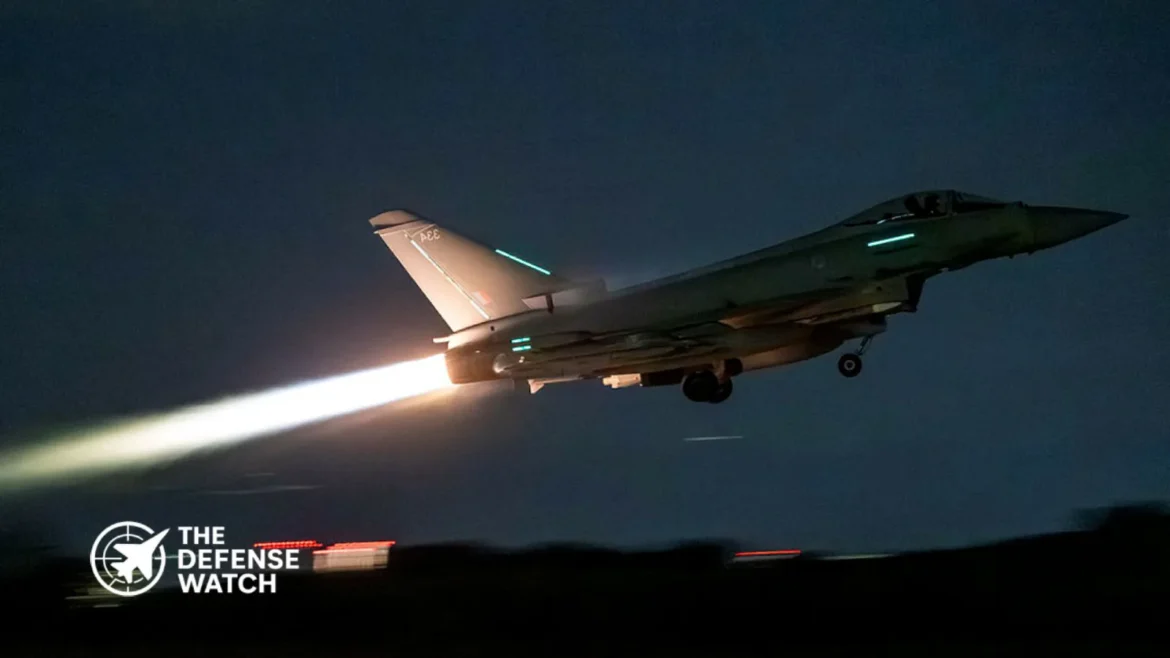
- UK deploys its largest number of combat aircraft to the Middle East in 15 years.
- Deployment includes advanced RAF fighter jets and support aircraft for sustained operations.
- Move aims to strengthen deterrence and support allied operations in a volatile region.
- Deployment reflects ongoing UK military commitments and rapid response capability.
- Marks a significant expansion of British air power projection beyond Europe.
UK Deploys Most Jets To Middle East In 15 Years
The UK deploys most jets to Middle East in 15 years, significantly expanding Royal Air Force operations in the region as part of a broader effort to reinforce allied presence and maintain regional stability.
The Big Picture
Britain’s latest air deployment reflects a wider shift in NATO and allied force posture toward persistent presence in strategically critical regions. The Middle East remains central to global energy flows, maritime security, and counterterrorism operations.
The United Kingdom has steadily reoriented its military strategy toward expeditionary operations since the release of its Integrated Review. Forward basing, rapid deployment, and coalition interoperability now define British defense planning.
This surge in aircraft deployment also aligns with broader Western efforts to maintain operational flexibility across multiple theaters, including Eastern Europe and the Indo-Pacific, without overcommitting ground forces.
What’s Happening
The Royal Air Force has deployed its largest contingent of jets to the Middle East in over 15 years, according to official reporting. The deployment includes frontline combat aircraft supported by tanker and surveillance platforms, enabling sustained air operations across extended distances.
The aircraft are operating from established UK and allied bases in the region. These locations provide strategic reach across key operational zones, including the Persian Gulf and surrounding airspace.
The deployment comes amid heightened regional tensions and ongoing military operations involving coalition forces. British aircraft are expected to support a mix of missions, including air policing, deterrence patrols, and potential strike operations if required.
Why It Matters
The decision to deploy the largest RAF air package in 15 years signals a clear intent to reinforce deterrence without escalating to large-scale ground deployments.
Air power offers flexibility. Fighter jets can conduct surveillance, intercept hostile aircraft, and deliver precision strikes with minimal footprint. This makes them a preferred tool in politically sensitive environments where escalation risks must remain controlled.
The presence of advanced aircraft also enhances interoperability with US and allied forces already operating in the region. Joint operations rely heavily on shared air assets, data links, and coordinated command structures.
Strategic Implications
The expanded RAF presence strengthens coalition air dominance in the Middle East. It ensures rapid response capability against emerging threats, including missile attacks, drone incursions, and maritime security challenges.
The deployment also reinforces the UK’s role as a key security partner in the region. By committing high-end air assets, London signals reliability to allies while maintaining influence in regional security discussions.
From a deterrence standpoint, the visible presence of combat aircraft complicates adversary planning. It reduces the likelihood of opportunistic actions by signaling readiness and capability.
Competitor View
Regional actors such as Iran are likely to interpret the increased air presence as part of a broader Western effort to contain and monitor its military activities. Increased air patrols and surveillance flights can directly impact operational freedom in contested airspace.
Russia, which maintains a military footprint in parts of the Middle East, may view the deployment through the lens of NATO expansion of influence. However, the RAF’s presence remains aligned with coalition operations rather than unilateral action.
China, while not a direct military actor in the region, continues to monitor Western force deployments closely as part of its global strategic assessment.
What To Watch Next
Operational tempo will provide the clearest indicator of the deployment’s intent. Increased sortie rates, joint exercises, or expanded mission sets could signal a longer-term commitment.
Future rotations of aircraft and personnel will also reveal whether this surge represents a temporary response or a sustained posture shift.
Defense planners will watch for integration with US-led command structures, particularly in areas such as air defense coordination and intelligence sharing.
Capability Gap
The deployment addresses a key gap in rapid-response air power availability in the Middle East. While the UK maintains a global presence, sustained high-tempo operations require forward-deployed assets.
However, limitations remain. Air power alone cannot secure territory or address underlying political instability. It must operate as part of a broader strategy that includes diplomacy and regional partnerships.
Logistical constraints also shape the deployment. Sustaining large numbers of aircraft overseas requires significant tanker support, maintenance capacity, and secure basing arrangements.
The Bottom Line
The UK’s largest jet deployment to the Middle East in 15 years underscores a renewed focus on air power as a flexible and credible tool for deterrence and regional stability.