

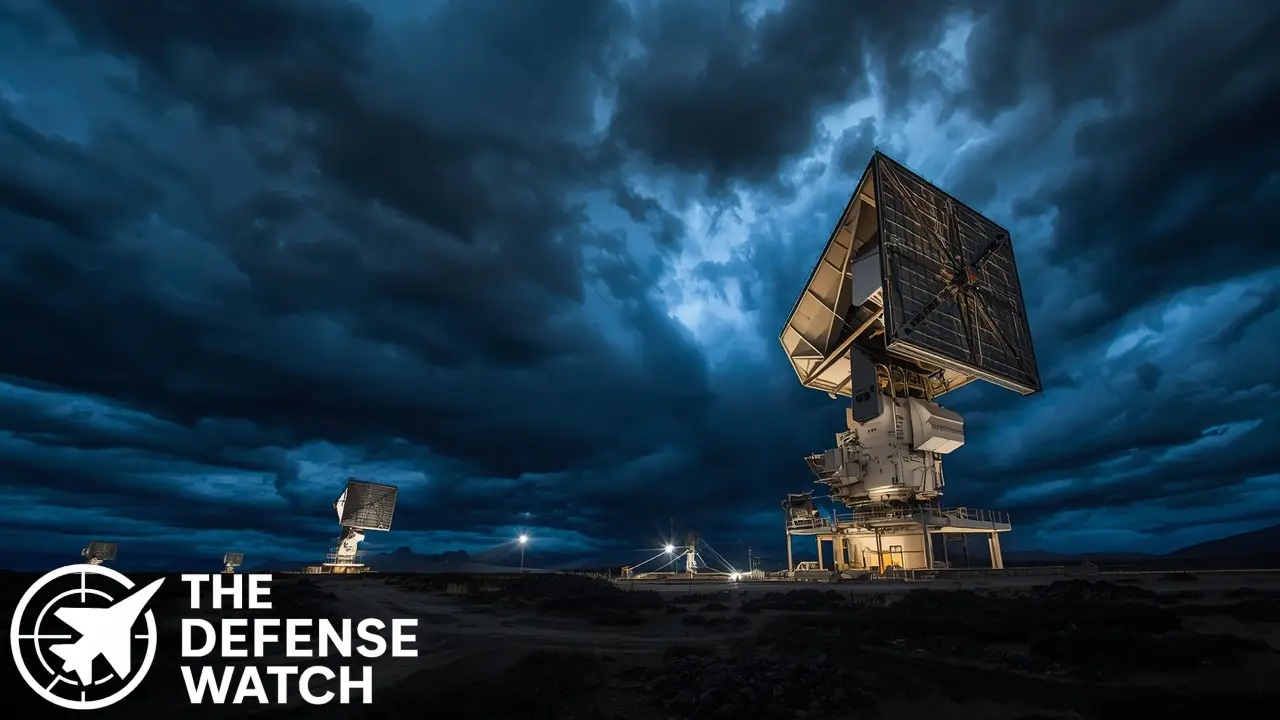
The United States Missile Defense Agency (MDA) has reached a critical milestone in homeland defense. On June 23, 2025, the Long-Range Discrimination Radar (LRDR) at Clear Space Force Station, Alaska, performed its first successful live flight test, tracking an Intercontinental Ballistic Missile (ICBM) reproduction. This event represents a significant leap for U.S. missile defense capabilities.
Background: LRDR’s Role in U.S. Missile Defense
Built by Lockheed Martin, the LRDR is a solid-state AESA radar using gallium nitride (GaN) technology. This design enables scalable, multi-face radar arrays with both high and low frequency capabilities, enhancing search, track, and discrimination performance. Installed at Clear Space Force Station, it forms part of the Ground-Based Midcourse Defense (GMD) system, tasked with distinguishing real warheads from decoys across extreme distances.
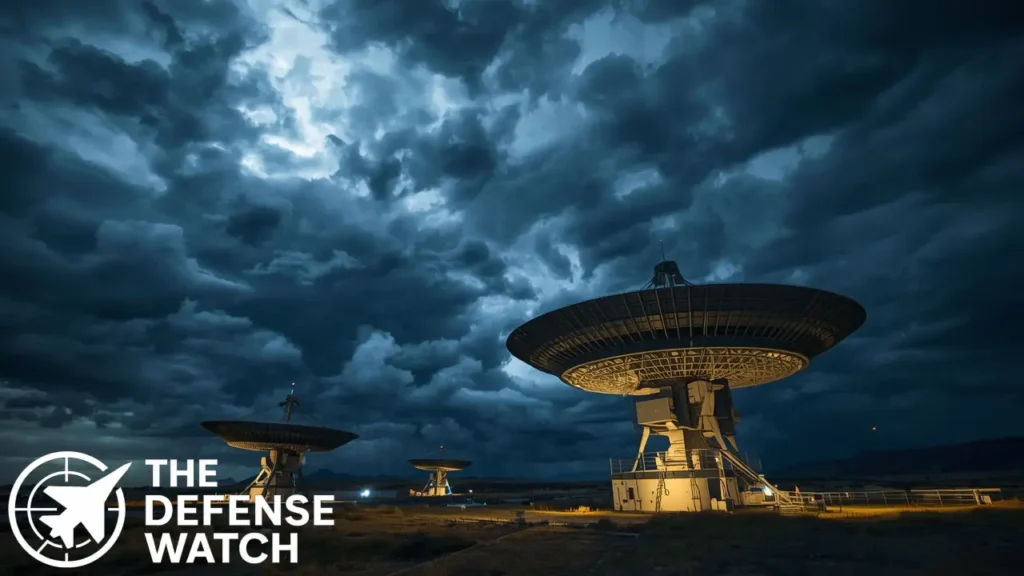
Originally slated for full operational capability by 2023, the program faced significant delays, including pandemic-related disruptions and a canceled test in 2023 due to a target anomaly.
The FTX-26a Flight Test: Key Highlights
The test, officially designated Flight Test Other-26a (FTX-26a), featured an air-launched target over the northern Pacific Ocean, flying more than 2,000 km off Alaska’s southern coast. LRDR successfully acquired, tracked, and relayed missile target data to the Command and Control Battle Management and Communications (C2BMC) system, with supporting data from the Upgraded Early Warning Radar (UEWR) and simulated engagement by the GMD system.
MDA Director Lt. Gen. Heath Collins emphasized the significance: this was LRDR’s first live ICBM representative tracking event. Lockheed Martin’s Rick Cordaro added that the radar demonstrated discrimination in a complex environment and highlighted its open architecture—allowing seamless integration of future technologies.
Strategic Significance and Future Outlook
The LRDR’s successful execution of this mission marks a pivotal moment in U.S. homeland defense. Its advanced target discrimination capabilities will enhance the effectiveness of the GMD interceptor fleet by reducing unnecessary missile launches against decoys.
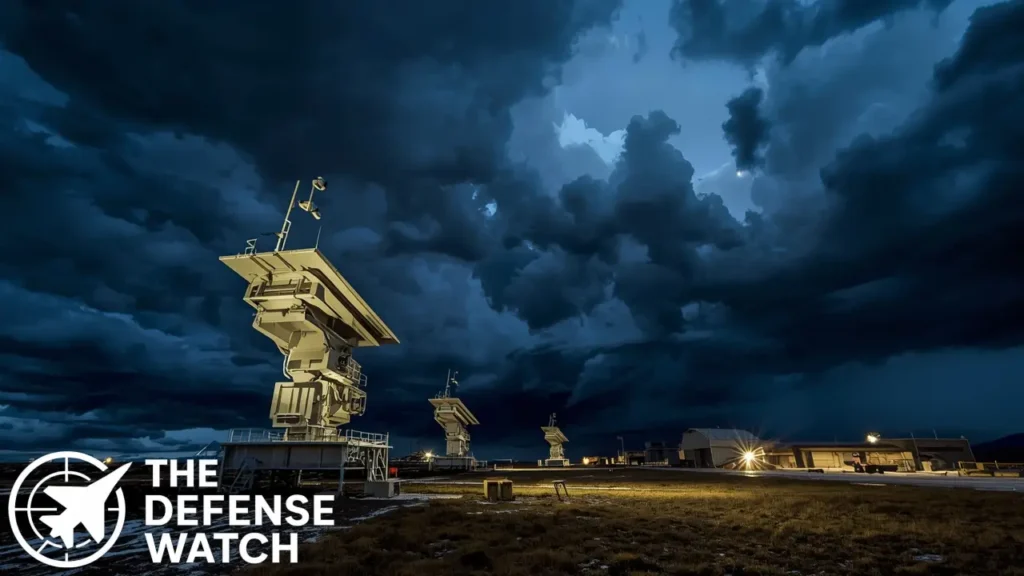
Moreover, LRDR contributes to space domain awareness, tracking satellites, debris, and other orbital objects—a critical capability in an era of increasing space activity and contested space environments.
Looking ahead, the test results will inform MDA’s decision to formally include LRDR in the Operational Capability Baseline (OCB). Once integrated, LRDR will be an operational mainstay, fully integrated into U.S. Northern Command’s layered defense architecture.
Additionally, LRDR is a foundational element of the Pentagon’s long-range vision for Golden Dome—a future-ready missile shield that could integrate space-based sensors and networks to detect threats from Russia, China, or other adversaries.
Analysis & Context
- Why LRDR matters: It enhances detection accuracy and system resilience, crucial in an era of advanced threat tactics involving decoys and hypersonic missiles. Its discrimination capabilities preserve interceptor inventory while improving response quality.
- Strategic location: Embedded in Alaska, LRDR leverages geographic advantage to monitor potential threat trajectories from across the Pacific, providing early warning and critical engagement data.
- Future integration: With missions such as Golden Dome on the horizon, LRDR’s open architecture makes it an ideal node in a distributed sensor network across space and ground domains.
FAQs
LRDR is a GaN-based, solid-state AESA radar system located in Alaska, designed to detect and discriminate incoming ballistic missile threats and provide space domain awareness.
LRDR successfully tracked and reported data on a live ICBM-like target to command systems, marking its first live flight test of this nature.
Development was delayed due to COVID-19 disruptions, construction halts, and a target anomaly in a canceled 2023 test.
It improves target discrimination, preserves interceptor resources, enables real-time tactical response, and helps track space objects for broader domain awareness.
The next step is integration into MDA’s Operational Capability Baseline, moving toward formal warfighter acceptance and potential incorporation into future architectures like Golden Dome.

21 comments
[…] of striking Europe and parts of the U.S. Its long range and speed pose complicating factors for missile defense […]
[…] (specifically Block I and II) to Block III specifications. This includes enhancements in avionics, radar systems, electronic warfare capabilities, and weapons integration. As of mid-2025, a number of Block III […]
[…] The High Mobility Artillery Rocket System (HIMARS) has become one of the most recognizable symbols of U.S. precision strike power, especially after its success in Ukraine. HIMARS provides highly mobile, long-range fires with GPS-guided rockets and ATACMS missiles. […]
[…] in Alaska, injecting additional diplomatic complexity to the region’s security calculus. Russian long-range patrols near Alaska thus carry both symbolic and strategic […]
[…] with advanced Large Aircraft Infrared Countermeasures (LAIRCM), radar warning systems, and hardened systems for contested environments, the Pegasus offers survivability features the […]
[…] ballistic missiles, hypersonic weapons can change course mid-flight, evading radar tracking and missile interceptors designed for predictable […]
[…] principle of “any sensor, best weapon,” meaning it fuses input from multiple sensors (radars, tracking systems, etc.) and dynamically assigns the most effective interceptors. Unlike legacy systems where each […]
[…] aircraft is said to achieve over 2,000 nautical miles of range while carrying a full mission […]
Где найти квартиры, отели и гостевые дома на сутки?
— Через онлайн-платформы аренды.
Можно ли снять жильё посуточно без предоплаты?
— Некоторые хозяева разрешают без предоплаты.
Что выгоднее — квартира или отель?
— Зависит от целей поездки.
Естьли скидки при долгосрочной аренде?
— Чем дольше срок — тем выгоднее цена.
Жильё посуточно
@airbn@b77 https://sutochny.ru
[…] 2026. While major manufacturers are expanding production lines and implementing advanced digital tracking systems, experts caution that meaningful stability will require multi-year investments and stronger […]
[…] the required launch velocity, an internal solid-fuel booster ignites prior to ramjet operation. The missile boasts a range of approximately 600 km (372 miles), an improvement over the earlier ASMPA-A variant’s 500 […]
[…] Export Growth: More countries may seek the PL‑15E or future derivatives, especially those operating Chinese aircraft or seeking affordable alternatives to Western long-range missiles. […]
[…] cost is attractive, ensuring reliability, range, and effectiveness at scale is difficult. Cheaper systems may sacrifice range, guidance, or warhead […]
[…] advanced radar arrays, with the lead ship USS Gerald R. Ford equipped with the Dual Band Radar system featuring six separate AESA arrays providing 360-degree […]
[…] system can track four target channels simultaneously, enabling quick […]
[…] development and deployment of layered counter-UAS architectures. Project FlyTrap 4.5 marks a major milestone in that effort — shifting from conceptual testing to integrated, networked defense drills that […]
[…] uses an active electronically scanned array (AESA) radar capable of tracking many aerial […]
[…] aircraft designed for persistent intelligence, surveillance, and reconnaissance missions. The system offers long range and endurance, wide-area maritime sensors, pole-to-pole satellite control, and cold-climate […]
[…] include day and night sensors, encrypted data links, and low acoustic and visual signatures. The system can operate at ranges exceeding 3 kilometers, depending on terrain and conditions, while providing real time video and […]
[…] ER GMLRS munition uses a GPS-aided inertial navigation system and enhanced propulsion and control mechanisms to achieve longer reach. It is compatible with both HIMARS and M270 launchers already in U.S Army […]
[…] access to verified radar tracks, operational logs, or eyewitness accounts from coalition forces, definitive assessment beyond the […]