

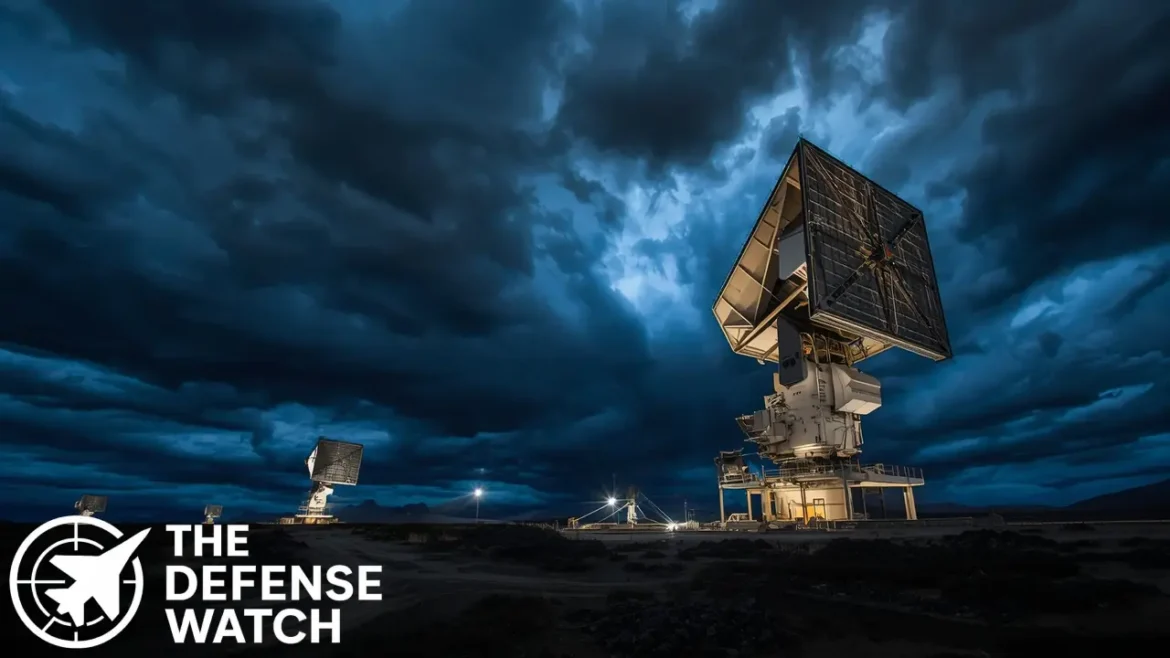
The United States Missile Defense Agency (MDA) has reached a critical milestone in homeland defense. On June 23, 2025, the Long-Range Discrimination Radar (LRDR) at Clear Space Force Station, Alaska, performed its first successful live flight test, tracking an Intercontinental Ballistic Missile (ICBM) reproduction. This event represents a significant leap for U.S. missile defense capabilities.
Background: LRDR’s Role in U.S. Missile Defense
Built by Lockheed Martin, the LRDR is a solid-state AESA radar using gallium nitride (GaN) technology. This design enables scalable, multi-face radar arrays with both high and low frequency capabilities, enhancing search, track, and discrimination performance. Installed at Clear Space Force Station, it forms part of the Ground-Based Midcourse Defense (GMD) system, tasked with distinguishing real warheads from decoys across extreme distances.
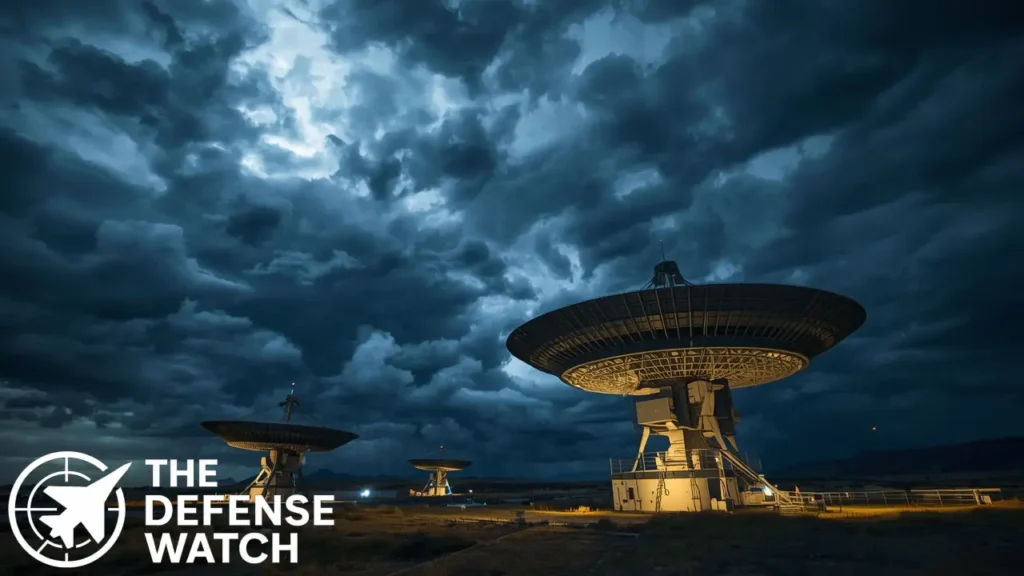
Originally slated for full operational capability by 2023, the program faced significant delays, including pandemic-related disruptions and a canceled test in 2023 due to a target anomaly.
The FTX-26a Flight Test: Key Highlights
The test, officially designated Flight Test Other-26a (FTX-26a), featured an air-launched target over the northern Pacific Ocean, flying more than 2,000 km off Alaska’s southern coast. LRDR successfully acquired, tracked, and relayed missile target data to the Command and Control Battle Management and Communications (C2BMC) system, with supporting data from the Upgraded Early Warning Radar (UEWR) and simulated engagement by the GMD system.
MDA Director Lt. Gen. Heath Collins emphasized the significance: this was LRDR’s first live ICBM representative tracking event. Lockheed Martin’s Rick Cordaro added that the radar demonstrated discrimination in a complex environment and highlighted its open architecture—allowing seamless integration of future technologies.
Strategic Significance and Future Outlook
The LRDR’s successful execution of this mission marks a pivotal moment in U.S. homeland defense. Its advanced target discrimination capabilities will enhance the effectiveness of the GMD interceptor fleet by reducing unnecessary missile launches against decoys.
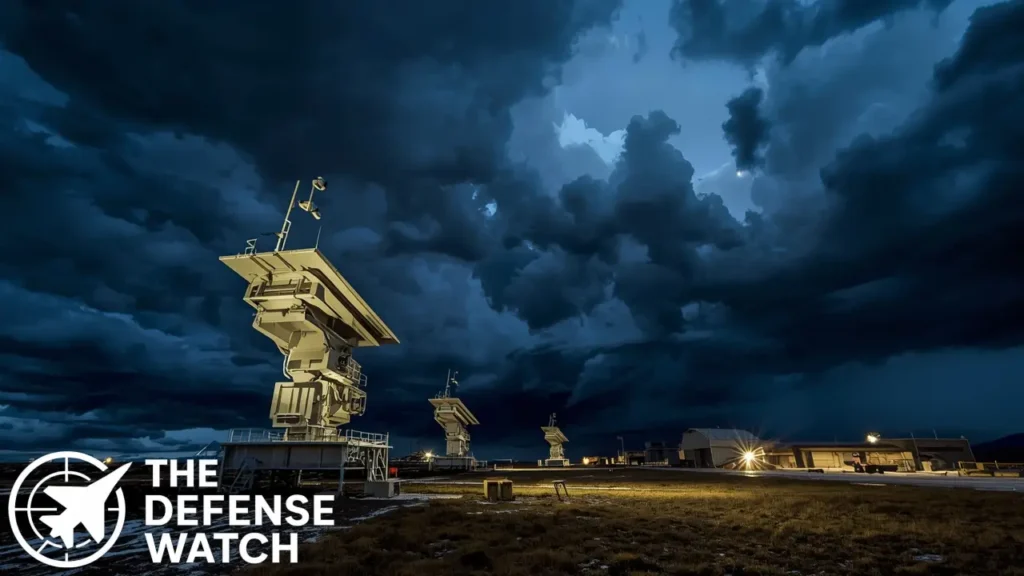
Moreover, LRDR contributes to space domain awareness, tracking satellites, debris, and other orbital objects—a critical capability in an era of increasing space activity and contested space environments.
Looking ahead, the test results will inform MDA’s decision to formally include LRDR in the Operational Capability Baseline (OCB). Once integrated, LRDR will be an operational mainstay, fully integrated into U.S. Northern Command’s layered defense architecture.
Additionally, LRDR is a foundational element of the Pentagon’s long-range vision for Golden Dome—a future-ready missile shield that could integrate space-based sensors and networks to detect threats from Russia, China, or other adversaries.
Analysis & Context
- Why LRDR matters: It enhances detection accuracy and system resilience, crucial in an era of advanced threat tactics involving decoys and hypersonic missiles. Its discrimination capabilities preserve interceptor inventory while improving response quality.
- Strategic location: Embedded in Alaska, LRDR leverages geographic advantage to monitor potential threat trajectories from across the Pacific, providing early warning and critical engagement data.
- Future integration: With missions such as Golden Dome on the horizon, LRDR’s open architecture makes it an ideal node in a distributed sensor network across space and ground domains.
FAQs
LRDR is a GaN-based, solid-state AESA radar system located in Alaska, designed to detect and discriminate incoming ballistic missile threats and provide space domain awareness.
LRDR successfully tracked and reported data on a live ICBM-like target to command systems, marking its first live flight test of this nature.
Development was delayed due to COVID-19 disruptions, construction halts, and a target anomaly in a canceled 2023 test.
It improves target discrimination, preserves interceptor resources, enables real-time tactical response, and helps track space objects for broader domain awareness.
The next step is integration into MDA’s Operational Capability Baseline, moving toward formal warfighter acceptance and potential incorporation into future architectures like Golden Dome.