• Home
  • About
  • Defense Systems
  • Manufacturer
  • Comparisons
  • Compare 
  • Tools
TheDefenseWatch.com
  • Aerospace & Aviation
  • Military & Ordnance
  • Naval & Maritime
  • Cyber & Space Defense
  • Policy & Strategy
  • Global News
  • Tools Library
    • Smart Calculator
    • Drone Flight Time Calculator
    • Drone Range Calculator
    • Counter-Drone Jammer Effective Range Calculator
    • Counter-Battery Radar Detection Calculator
    • Artillery Fire Correction Calculator
    • Thermal Camera Detection Range Calculator
    • Missile Range & Time-of-Flight Calculator
    • Radar Detection Range Calculator
    • FPV Strike Drone Payload vs Range Calculator
    • Loitering Munition Endurance Calculator
    • Sniper Ballistic Drop & Windage Calculator
    • Bullet Drop Calculator
    • U.S. Army Combat Fitness Test (ACFT) Calculator
    • Military Pension Calculator
    • Military Retirement Calculator
    • Military Pension Calculator
    • Large Number Calculator
Font ResizerAa

TheDefenseWatch.com

The Defense Watch | U.S. & Global Defense News, Analysis & Military Updates

Search
  • Home
  • About
  • Defense Systems
  • Manufacturer
  • Comparisons
  • Compare 
  • Tools

Stay Updated

Get the latest update

Subscribe

Explore

  • Drone
  • Fighter Jets & Military Aircraft
  • Hypersonic Weapons
  • Aircraft Carriers
  • Strategic History & Missions
  • Tools Library
Home » NORAD Scrambles Jets to Intercept Russian Aircraft Near Alaska — Ninth ADIZ Incident of 2025
Global News

NORAD Scrambles Jets to Intercept Russian Aircraft Near Alaska — Ninth ADIZ Incident of 2025

TeamDefenseWatch
Last updated: September 8, 2026 5:20 am
TeamDefenseWatch
Share
2 Min Read
Alaska Russian aircraft intercept
Image courtesy of militarytimes.com
SHARE

U.S. Scrambles Jets to Intercept Russian Aircraft Near Alaska

On September 24, 2025, the North American Aerospace Defense Command (NORAD) detected and tracked Russian aircraft in the Alaskan Air Defense Identification Zone (ADIZ). In response, NORAD launched U.S. assets to positively identify and escort the foreign flights.

Contents
  • U.S. Scrambles Jets to Intercept Russian Aircraft Near Alaska
  • What Is the Alaskan ADIZ, and Why It Matters
  • Patterns and Signals: Russian Air Activity Near Alaska
  • Strategic Context & Regional Implications
    • U.S.–Russia Relations and Arctic Competition
    • Stress Test for NORAD & Joint Defense
  • Looking Ahead
  • FAQs

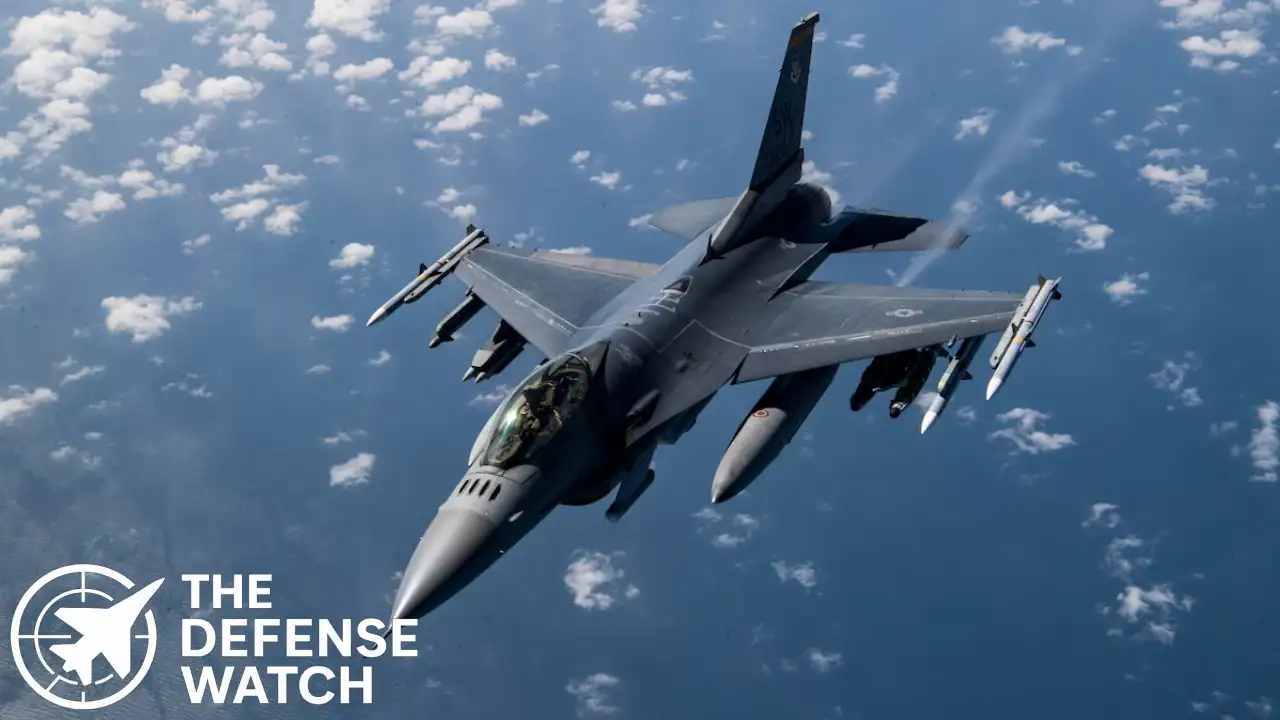
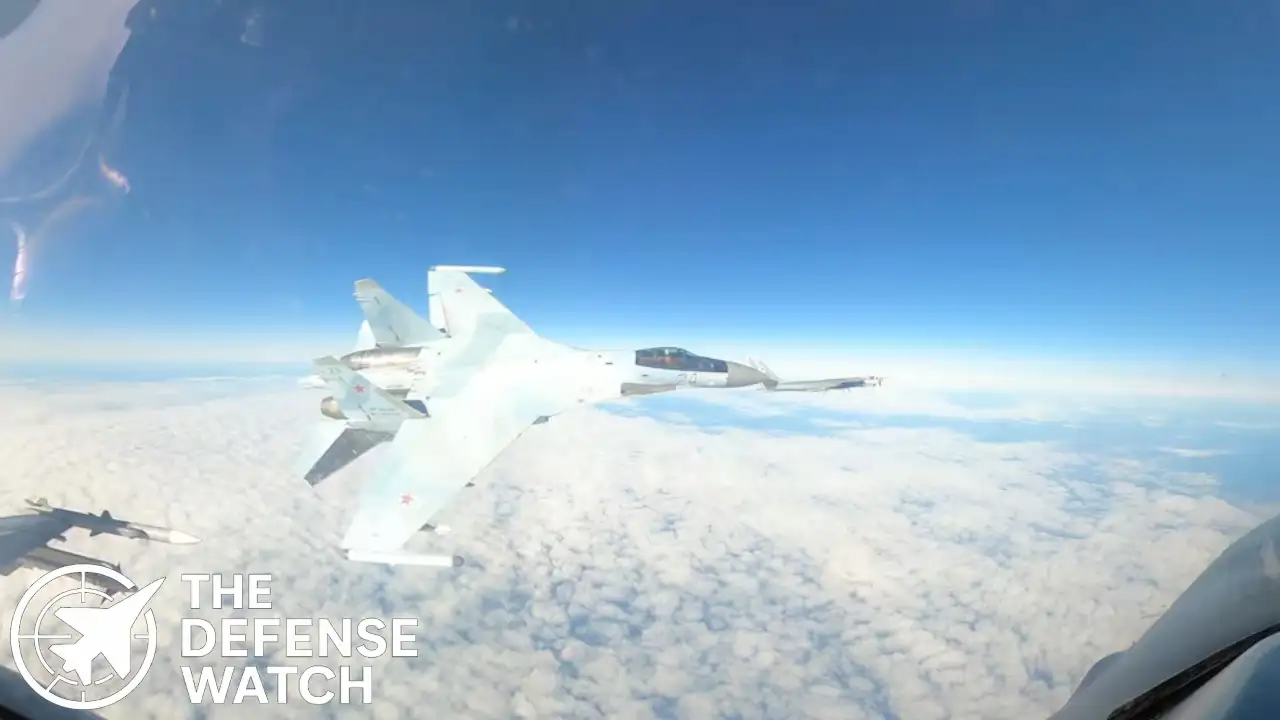
The Russian formation consisted of two Tu-95 “Bear” strategic bombers and two Su-35 “Flanker” fighters. NORAD responded with an E-3 Sentry AWACS, four F-16 fighter jets, and four KC-135 aerial refueling tankers to intercept and monitor the flights.

According to NORAD, the Russian aircraft remained within international airspace and did not cross into U.S. or Canadian sovereign airspace. “This Russian activity in the Alaskan ADIZ occurs regularly and is not seen as a threat,” the statement read.

This marks the ninth Russian ADIZ entry near Alaska in 2025. In recent weeks alone, NORAD has scrambled fighter jets multiple times as Russian surveillance and bomber flights approach the region.

- Advertisement -

What Is the Alaskan ADIZ, and Why It Matters

The Air Defense Identification Zone (ADIZ) is a region of international airspace extending beyond a country’s sovereign airspace. Within the ADIZ, aircraft are expected to identify themselves and allow monitoring by air defense systems, though unauthorized entry into the zone—not outright violation of sovereign airspace—is the threshold for interception.

In the case of Alaska, the ADIZ extends seaward over the Bering Sea region, an area of strategic sensitivity given proximity to the Russian Far East. Because Russian long-range aviation routinely operates in the Arctic and northern Pacific, ADIZ incursions are viewed by U.S. and Canadian authorities as tactical probes rather than immediate threats—so long as they respect international boundaries.

Still, intercepts serve as a readiness test: can U.S. forces detect, respond to, and safely manage foreign flights approaching North American approaches?

Patterns and Signals: Russian Air Activity Near Alaska

The September 24 intercept is not an anomaly. Earlier in 2025, NORAD dispatched jets to intercept Il-20 reconnaissance aircraft multiple times within Alaska’s ADIZ. In 2024, Russian and Chinese bombers were detected together off Alaska, triggering joint tracking by U.S. defenses.

These repeated incursions suggest a pattern of Russian aerial probing—testing North American responses, gathering intelligence, or demonstrating strategic reach. For the United States, these episodes reinforce the importance of maintaining a layered defense posture in the Arctic and northern Pacific.

Yet, analysts caution against overreaction: as long as flights remain in international airspace and do not violate sovereign boundaries, they fall within legal and historical norms of military signaling.

Strategic Context & Regional Implications

U.S.–Russia Relations and Arctic Competition

The intercept comes in the broader context of heightened U.S.–Russia tensions, driven by the ongoing conflict in Ukraine, NATO–Russia provocations over European airspace, and Arctic resource contestation. In August 2025, President Trump and President Putin held a summit in Alaska, injecting additional diplomatic complexity to the region’s security calculus. Russian long-range patrols near Alaska thus carry both symbolic and strategic significance.

Stress Test for NORAD & Joint Defense

For NORAD and U.S. Northern Command, the repeated interceptions provide opportunities to validate command-and-control, radar coverage, fighter readiness, and joint U.S.–Canadian cooperation. Regular Russian ingress also underscores the necessity of persistent surveillance assets, such as AWACS, aerial tankers, and ground radar. Any disruption in that architecture could blunt future response capabilities.

- Advertisement -

Looking Ahead

Given the consistent frequency of these intercepts, future Russian flights near Alaska are almost assured. For TheDefenseWatch’s readers, the key questions are:

  • Will Russia test the limits by entering sovereign airspace?
  • How will U.S. defense posture evolve in response—especially with Arctic basing and sensor upgrades?
  • Could such aircraft flights become leverage in diplomacy or wedge issues in broader strategic competition?

FAQs

Did any Russian aircraft cross into U.S. sovereign airspace?

No. NORAD’s statement confirms all detected aircraft remained in international airspace and did not violate U.S. or Canadian sovereign airspace.

What types of aircraft were intercepted?

The Russian formation included two Tu-95 “Bear” bombers and two Su-35 fighters

What U.S. assets responded?

NORAD launched an E-3 Sentry AWACS, four F-16 fighters, and four KC-135 aerial tankers.

How frequent are Russian entries into the Alaska ADIZ?

This was the ninth such incident in 2025. Similar intercepts have occurred multiple times throughout the year.

Should these incursions be interpreted as provocations?

While generally viewed as normal in defense terms, the pattern suggests strategic signaling by Russia, and U.S. officials treat them as probes of readiness rather than acute threats.


TAGGED:Alaska interceptArctic securityNORADRussia aviationU.S.–Russia tensions
Share This Article
Facebook Copy Link Print
ByTeamDefenseWatch
TeamDefenseWatch is the official editorial byline of TheDefenseWatch.com. Working under one umbrella, TheDefenseWatch.com, the team delivers verified, factual reporting on global defense, military technology, aerospace systems, and security developments. Articles are sourced from official statements, defense industry releases, and trusted media, with editorial review to ensure accuracy and clarity.Contact: info@TheDefenseWtach.com
9 Comments
  • Pingback: Two U.S. Navy Aircraft Crash in South China Sea During Carrier Operations
  • Pingback: NASA’s X-59 Quiet Supersonic Aircraft Completes First Test Flight | TheDefenseWatch.com
  • Pingback: Russian-Operated Il-76 Cargo Plane Makes Unprecedented Flights to Cuba & Nicaragua After Caracas Stop
  • Pingback: Lockheed’s “Improv AI” Push Underscores CJADC2 Drive — Adaptive Battle Management Comes Into Focus | TheDefenseWatch.com
  • Pingback: China’s Fighters Lock Radar onto Japanese Jets — Tokyo Protests | TheDefenseWatch.com
  • Pingback: Russia Fires Hypersonic Missile Near Ukraine EU Border, Second Oreshnik Use in War | TheDefenseWatch.com
  • Pingback: Royal Marines Arctic Training Intensifies Ahead of NATO Cold Response 2026 Exercise in Norway | TheDefenseWatch.com
  • Pingback: Swedish Gripen Fighters Lead First NATO Iceland Air Policing Mission in 2026 | TheDefenseWatch.com
  • Pingback: Royal Marines Launch Arctic Mortar Exercises As UK Doubles Norway Deployment Ahead Of Major NATO Drills | TheDefenseWatch.com

Leave a Reply Cancel reply

Your email address will not be published. Required fields are marked *

F-22 Reptor

Latest Defense Systems

  • B61 Nuclear Bomb B61 Nuclear Bomb
  • Japan E-767 Airborne Japan E-767 Airborne
  • Remington 870 Shotgun Remington 870 Shotgun
  • RUTA B1 Cruise Missile RUTA B1 Cruise Missile
  • XQ-67A Drone XQ-67A Drone
  • B-25 Mitchell Bomber B-25 Mitchell Bomber
  • F-100 Super Sabre F-100 Super Sabre
  • North American F-86 Sabre North American F-86 Sabre
  • North American XB-70 Valkyrie North American XB-70 Valkyrie

Recent Compares

  • J-10C vs JF-17 Thunder: Which Fighter Is More Capable? J-10C vs JF-17 Thunder: Which Fighter Is More Capable? View Comparison →
  • Tejas vs Gripen: Key Differences and Capabilities Tejas vs Gripen: Key Differences and Capabilities View Comparison →
  • Tejas vs MiG-21 Bison: How India Replaced Its Iconic Supersonic Fighter Tejas vs MiG-21 Bison: How India Replaced Its Iconic Supersonic Fighter View Comparison →
  • F-35 vs F-16: Stealth, Sensors and Combat Roles F-35 vs F-16: Stealth, Sensors and Combat Roles View Comparison →
  • Tejas Fighter Jet vs F-16 Fighting Falcon: Capability Compared Tejas Fighter Jet vs F-16 Fighting Falcon: Capability Compared View Comparison →
  • Rafale Fighter Jet vs F-16 Fighting Falcon : Which Fighter Has the Edge? Rafale Fighter Jet vs F-16 Fighting Falcon : Which Fighter Has the Edge? View Comparison →
  • Su-57 Fighter Jet vs J-20 Fighter Jet: Stealth and Air Combat Compared Su-57 Fighter Jet vs J-20 Fighter Jet: Stealth and Air Combat Compared View Comparison →
  • Mirage 2000 vs Tejas Mk1A: Legacy Combat Power vs Indigenous Modernization Mirage 2000 vs Tejas Mk1A: Legacy Combat Power vs Indigenous Modernization View Comparison →
  • Rafale Fighter Jet vs F-22 Raptor: Which Air Dominance Fighter Has the Edge? Rafale Fighter Jet vs F-22 Raptor: Which Air Dominance Fighter Has the Edge? View Comparison →
  • Tejas Fighter Jet vs. Rafale Fighter Jet: India’s Indigenous Fighter Meets France’s Proven Multirole Combat Aircraft Tejas Fighter Jet vs. Rafale Fighter Jet: India’s Indigenous Fighter Meets France’s Proven Multirole Combat Aircraft View Comparison →

Recent Posts

  • Remington 870 in Military Service: Mark 1 to MCS
  • Boeing Receives $16.9 Million Contract Modification for Japan’s E-767 AWACS Support
  • Lockheed Martin Wins $80 Million Air Force Mission Planning Software Contract
  • Pakistan Tests Indigenous Fa’az Air-to-Air Missile for First Time
  • Operation Unified Resolve Reports 70% Drop in Rio Grande Valley Border Crossings

You Might Also Like

US Air Force F-15 crash
Global News

US Air Force F-15 Jet Reportedly Crashes In Kuwait Amid Regional Tensions

September 7, 2026
U.S. Special Operations Forces
Global News

U.S. Special Operations Forces Expand Arctic Reach With Polar Dagger 2026

September 17, 2026
USS Ted Stevens
Global News

USS Ted Stevens Completes Sea Trials with Advanced SPY-6 Radar, Marking New Era in U.S. Naval Defense

September 8, 2026
F-16 fighter jet
Global News

U.S. Moves To Deploy F-16 Fighters As Strait Of Hormuz Security Pressures Rise

May 5, 2026

Logo

Copyright © 2026 TheDefenseWatch.com

Helpful Links

  • Home
  • About Us
  • Privacy Policy
  • Terms of Use / Disclaimer
  • U.S. Privacy Notice – CCPA Compliance

Defense Systems

  • Defense Systems
  • Comparisons 
  • Manufacturer
  • Tactical Calculators

Popuplar

Which 5 Air Forces Possess the Costliest Fighter Jet Fleets in the World
Evolving Strategic Value: Carrier Strike Groups in the Indo-Pacific’s Future Security Architecture
Autonomous Weapon Systems Spark U.S. Ethics Debate Amid Rapid Military AI Integration

We report on developments involving military forces, governments, defense companies, research organizations, and security institutions around the world. 

Welcome Back!

Sign in to your account

Username or Email Address
Password

Lost your password?