
U.S. Naval Blockade of Iran Enters Full Effect After Islamabad Talks Collapse
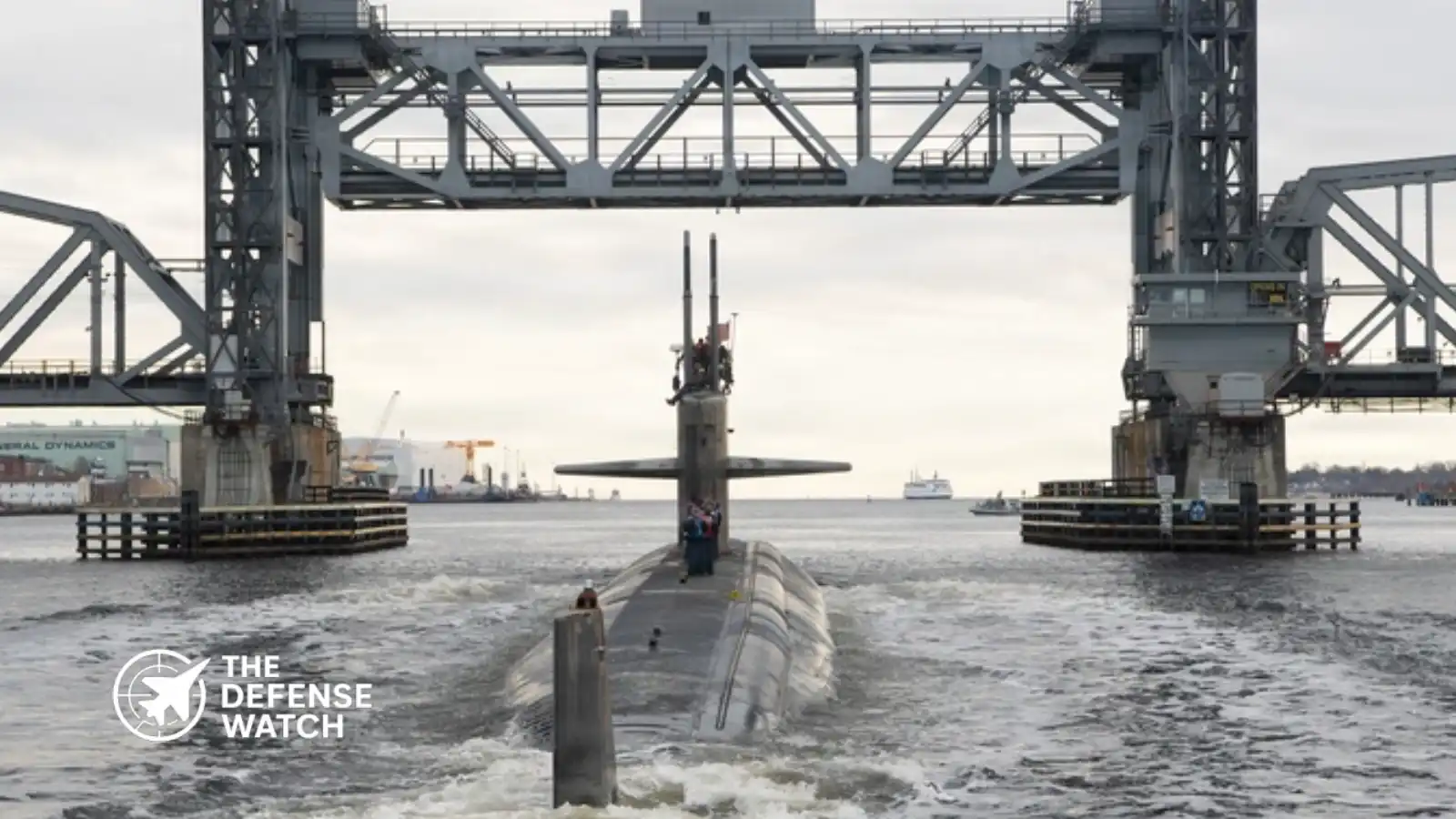
The U.S. naval blockade of Iran entered full force on April 13, 2026, following the breakdown of peace negotiations in Islamabad and a direct order from President Donald Trump to the U.S. Navy to interdict all maritime traffic linked to Iranian ports. U.S. Central Command confirmed the operation effective at 10:00 a.m. ET, deploying more than 15 warships to enforce what constitutes the most expansive American maritime interdiction operation since the Gulf War era.
- U.S. Central Command activated a full naval blockade of Iran on April 13, 2026, covering all Iranian ports along the Arabian Gulf and Gulf of Oman, effective at 10:00 a.m. ET.
- More than 15 U.S. warships are currently enforcing the blockade; vessels entering or departing Iranian ports without authorization are subject to interception, diversion, and capture.
- NATO allies, the United Kingdom, and most Western partners have declined to participate, limiting the blockade to a largely unilateral U.S. military operation backed by Israel.
- Over 60 percent of Iran’s IRGC fast-attack craft fleet remains intact, posing an ongoing operational challenge to full enforcement of the blockade at the strait level.
- Operation Epic Fury, which began February 28, has cost an estimated $25–$35 billion; mediators from Pakistan, Egypt, and Turkey continue efforts to broker a ceasefire deal.
The Big Picture
The naval blockade of Iran does not exist in a vacuum. It is the latest escalation in a military conflict — Operation Epic Fury — that began February 28, 2026, following coordinated U.S.-Israeli strikes against Iranian targets. The strait has been effectively closed to most commercial traffic since Iran deployed mines and leveraged its Revolutionary Guard Corps (IRGC) fleet to control access, choking off roughly 20 percent of the world’s seaborne oil supply. This blockade represents Washington’s attempt to turn Iran’s own chokepoint strategy against Tehran — using naval power to deny Iran the economic leverage it has wielded through control of the Strait of Hormuz.
For the United States, the Strait of Hormuz has long been identified as the most critical maritime vulnerability in the Persian Gulf theater. The decision to enforce a full blockade rather than simply contest Iran’s access represents a significant doctrinal escalation: the U.S. is no longer seeking to reopen the strait for all traffic — it is actively closing it to Iranian commerce.
What’s Happening
CENTCOM announced it would enforce the blockade starting April 13, 2026, at 10:00 a.m. ET, targeting all maritime traffic connected to Iranian ports along both the Arabian Gulf and Gulf of Oman.
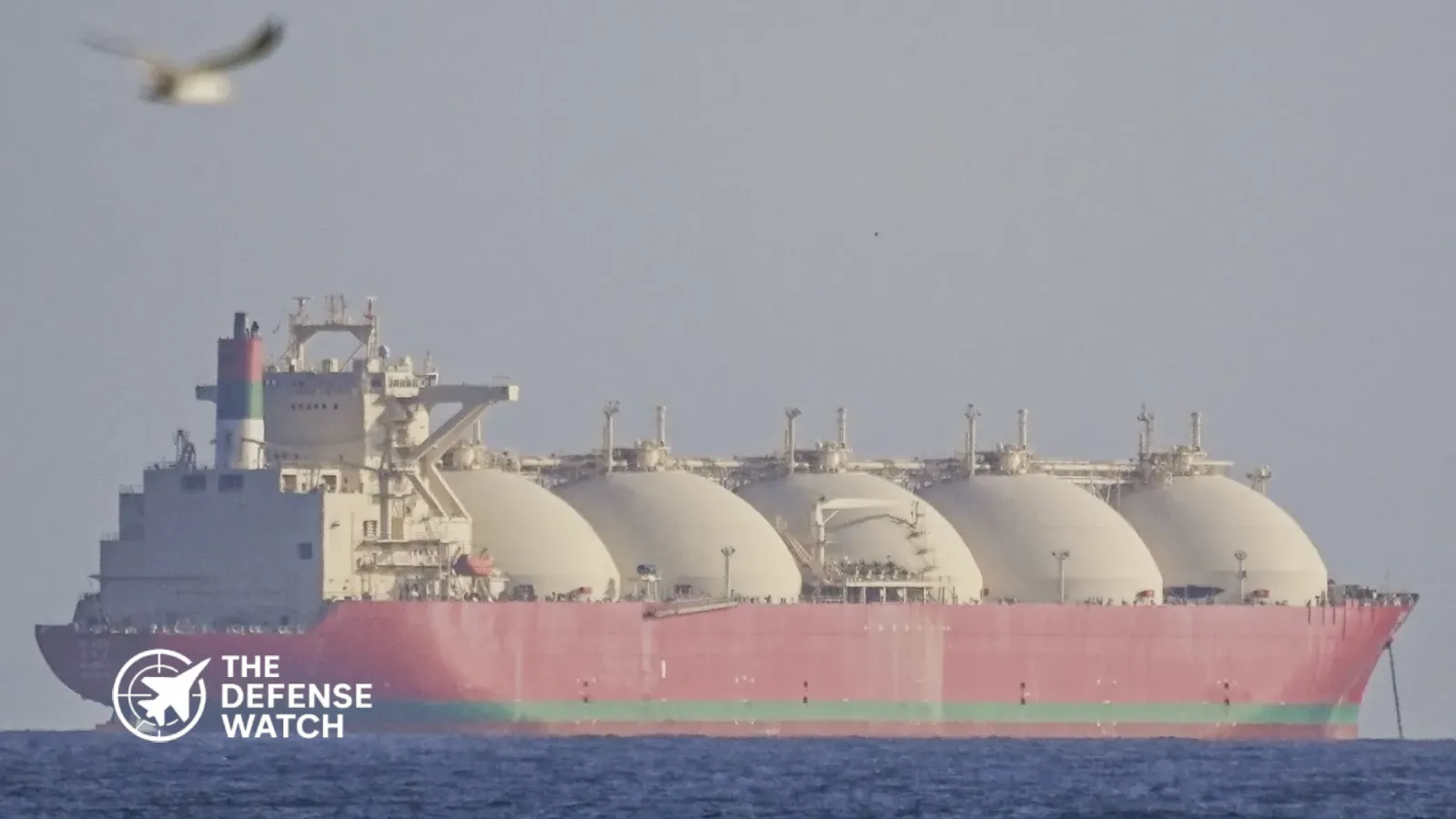
Any vessel entering or departing the blockaded area without authorization is subject to interception, diversion, and capture, according to a notice sent to mariners. CENTCOM clarified that neutral transit passage through the Strait of Hormuz to non-Iranian destinations remains permitted, though vessels may encounter U.S. military forces, directed communications, or boarding procedures.
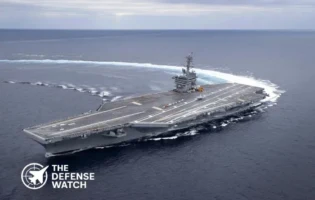
The Wall Street Journal reported that more than 15 U.S. warships are currently participating in the enforcement operation. The aircraft carrier USS George H.W. Bush is transiting through the Strait of Gibraltar and is expected to reach the eastern Mediterranean before the end of the week, reinforcing the third carrier strike group now moving toward the CENTCOM area of responsibility.
Lloyd’s List Intelligence confirmed that shipping through the Strait of Hormuz came to a standstill following Trump’s announcement of the blockade.
Why It Matters
The imposition of a formal naval blockade carries enormous legal, operational, and geopolitical weight. Under international law, a blockade is an act of war — a fact that Iran’s armed forces were quick to invoke. An Iranian Armed Forces spokesperson stated that restricting vessels in international waters is illegal and described the action as amounting to piracy.
From a military standpoint, the blockade targets Iran’s two remaining economic lifelines: oil export revenues and the toll income Tehran has been collecting from commercial vessels seeking safe passage through the strait. Iran’s parliamentary speaker Mohammad Bagher Ghalibaf publicly warned that the blockade would drive U.S. gasoline prices significantly higher, suggesting Iran views energy price inflation as a retaliatory lever against domestic American opinion.
The blockade also places the U.S. in direct confrontation with Chinese energy interests. Chinese Defense Minister Adm. Dong Jun stated that China has trade and energy agreements with Iran, that Chinese ships are actively transiting the strait, and that Beijing expects those agreements to be honored. This is not a peripheral concern. Iran supplies a significant share of China’s oil imports, and Beijing’s economy faces mounting stress as the strait closure drags on.
Strategic Implications
The naval blockade of Iran is simultaneously a military operation and a coercive bargaining tool. Analysts tracking the Islamabad negotiations believe Washington is using the blockade to force Tehran into an agreement on American terms — particularly regarding uranium enrichment. According to Axios, the U.S. demanded a 20-year moratorium on uranium enrichment during the Islamabad talks, while Iran countered with a proposal measured in single digits.
Netanyahu confirmed that the core U.S. demand is the removal of all enriched material from Iran and a prohibition on further enrichment lasting potentially decades.
The strategic calculus for the Trump administration rests on a dual-pressure model: economic isolation through the blockade combined with the threat of resumed strikes. The Wall Street Journal reported that Trump and his advisers are considering resuming limited military strikes, while characterizing a full-scale bombing campaign as less likely given concerns about regional destabilization and the administration’s stated aversion to prolonged conflict.
Whether the blockade constitutes genuine strategic coercion or primarily serves as a domestic political signal depends on enforcement depth. A blockade that stops a trickle of vessels while leaving IRGC fast-attack craft free to operate will not decisively alter Iran’s economic calculus. The hard military question is whether 15-plus warships can enforce meaningful interdiction across the entirety of Iran’s Gulf and Gulf of Oman coastline — a substantial operational footprint that dwarfs the narrow Strait of Hormuz chokepoint.
Competitor View
Beijing’s response to the blockade carries the most significant long-term implications. China has not simply issued a diplomatic protest — its defense minister explicitly stated that Chinese vessels are transiting the strait and that Beijing will honor its commitments to Iran. CENTCOM declined to clarify its rules of engagement regarding Chinese vessels that might attempt to pass through the blockaded area.
This ambiguity is strategically dangerous. If a Chinese-flagged vessel or PLAN escort attempts to break the blockade, CENTCOM will face a real-time decision that could rapidly escalate beyond the Iran conflict. Beijing, for its part, faces its own pressure: every day the strait remains disrupted deepens Chinese energy insecurity and tests the credibility of the Sino-Iranian relationship.
Russia signaled a potential off-ramp by indicating readiness to accept Iran’s highly enriched uranium as part of a peace settlement, a move that — if genuine — could reduce the hardest U.S. demand: the removal of Iran’s nuclear material. Moscow’s offer may reflect less altruism toward Tehran than a calculated attempt to insert itself into the final settlement architecture and gain leverage over any post-conflict regional order.
Iran’s IRGC continues to threaten reciprocal action. The IRGC warned that approaching U.S. military vessels near the Strait of Hormuz constitutes a ceasefire violation, and Iranian state media threatened that no port in the region would be safe if the blockade continues.
What To Watch Next
The most immediate operational flashpoint is the status of IRGC fast-attack craft. According to Farzin Nadimi of the Washington Institute for Near East Policy, more than 60 percent of the IRGC’s fast-attack and speedboat fleet remains operational — the asymmetric force Iran uses to contest the strait through harassment, mining, and missile threats. Trump has threatened to destroy any IRGC vessel approaching the blockade perimeter.
The USS George H.W. Bush Carrier Strike Group’s arrival in the eastern Mediterranean this week will provide additional naval depth, though its primary role will likely be airpower projection rather than maritime interdiction.
Pakistani, Egyptian, and Turkish mediators plan to continue talks between Washington and Tehran in the coming days in an effort to bridge remaining gaps. Iran reportedly made contact with U.S. officials on April 13, signaling possible willingness to negotiate further. Whether these overtures translate into substantive movement on the uranium enrichment issue remains the decisive variable.
Mine clearance operations are the other critical near-term requirement. Trump indicated that NATO countries and the United Kingdom would provide minesweepers to clear the strait, though the U.K. government has since distanced itself from blockade participation. The operational timeline for clearing Iranian mines — which currently define the navigable routes through the strait — remains unknown.
Capability Gap
The blockade exposes a structural gap in U.S. maritime strategy: the difficulty of enforcing comprehensive interdiction against an adversary that relies on asymmetric, shallow-water naval tactics. The U.S. Navy excels at blue-water operations and carrier-strike power projection. Contesting IRGC fast-attack swarms in confined littoral waters — particularly in an environment seeded with mines — requires a different force mix: minesweepers, small surface combatants, maritime patrol aircraft, and persistent ISR coverage.
Trump claimed U.S. forces destroyed approximately 158 Iranian naval vessels since the conflict began, but the IRGC’s asymmetric fleet — specifically designed to survive attrition through dispersion and low signature — remains the primary threat to blockade enforcement. The administration’s acknowledgment that IRGC fast-attack craft were not considered a major threat may reflect confidence in U.S. surveillance and strike capabilities, but it also understates the operational complexity of policing hundreds of miles of Iranian coastline against a motivated irregular naval force.
The Bottom Line
The U.S. naval blockade of Iran represents the most consequential American maritime operation in decades — a high-stakes coercive gamble that will either force Tehran back to the negotiating table on Washington’s terms or trigger the next escalatory rung in a conflict that has already cost over $30 billion and drawn in the interests of China, Russia, and a fractured Western alliance.