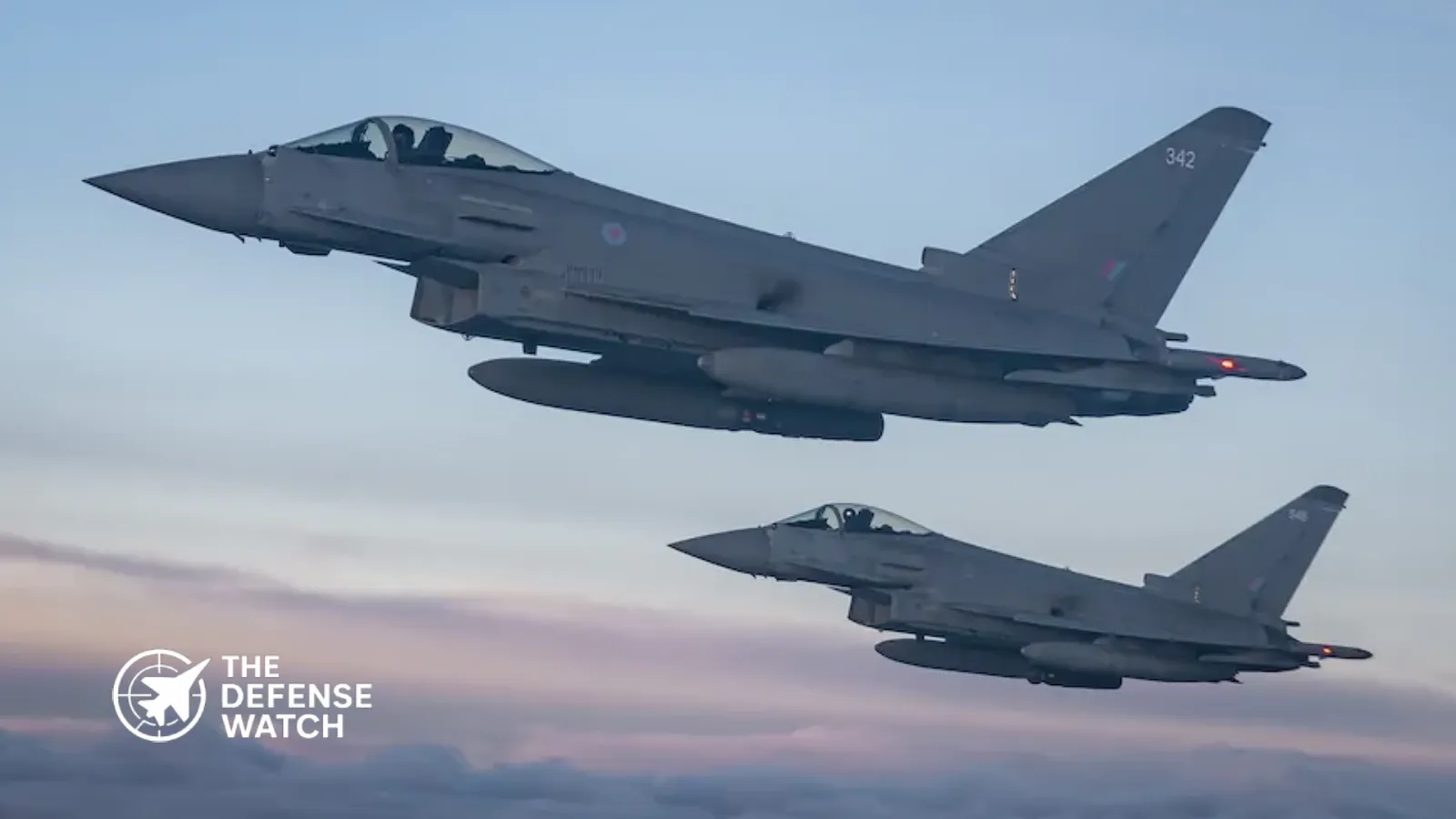
RAF Dogfight Exercise Over Britain Demonstrates Modern Air Combat Readiness
The RAF dogfight exercise over Britain has underscored the United Kingdom’s commitment to maintaining high-end air combat readiness in an increasingly contested security environment. The large-scale aerial engagement brought together multiple fighter aircraft in complex, high-tempo combat scenarios designed to replicate modern peer conflict.
The exercise featured coordinated engagements involving frontline fighter jets, with a particular focus on beyond-visual-range and within-visual-range combat. Such drills are critical as air forces adapt to evolving threats, including advanced enemy aircraft, integrated air defense systems, and electronic warfare environments.
Short, intense dogfighting scenarios were combined with broader mission sets, reflecting how modern air combat is no longer limited to isolated engagements but integrated into networked, multi-domain operations.
- The Royal Air Force conducted a large-scale dogfight exercise over the United Kingdom involving multiple fighter aircraft.
- The drill included complex air combat scenarios simulating high-intensity peer conflict environments.
- Allied aircraft participation highlighted NATO interoperability and joint operational capability.
- Advanced platforms such as Typhoon fighters played a central role in the exercise.
- The exercise reflects growing emphasis on air superiority amid evolving global threats.
High-Intensity Training Reflects Shifting Threat Environment
The scale and complexity of the RAF dogfight exercise over Britain point to a broader strategic shift. Western air forces are increasingly preparing for potential high-end conflict against near-peer adversaries, where air superiority is neither guaranteed nor uncontested.
Exercises of this nature simulate dense threat environments, including contested airspace, electronic jamming, and multi-axis attacks. These conditions mirror operational realities seen in recent conflicts and ongoing geopolitical tensions.
The Royal Air Force’s use of advanced fighter platforms enables pilots to train against both traditional and emerging threats. The Eurofighter Typhoon, for example, continues to receive upgrades in radar, weapons integration, and electronic warfare systems, ensuring its relevance in modern combat scenarios.
From an operational perspective, such exercises help refine tactics, improve pilot decision-making under pressure, and validate command and control structures.
NATO Interoperability and Allied Coordination
A key dimension of the RAF dogfight exercise over Britain was its emphasis on allied integration. Participation or coordination with NATO partners highlights the alliance’s continued focus on collective defense and interoperability.
Modern air operations depend heavily on seamless data sharing, coordinated targeting, and unified command structures. Exercises like this allow participating forces to test communication systems, joint tactics, and interoperability between different aircraft and national doctrines.
This is particularly important in Europe, where NATO air forces must be capable of rapidly integrating in response to emerging crises. The ability to operate as a cohesive unit enhances deterrence by demonstrating readiness and unity.
Operational Lessons and Capability Development
Beyond immediate training value, the RAF dogfight exercise over Britain contributes to long-term capability development. Data collected during these exercises is used to refine tactics, improve training programs, and inform future procurement decisions.
Air combat is becoming increasingly data-driven, with sensor fusion, real-time intelligence, and networked platforms shaping engagement outcomes. Exercises provide a controlled environment to test these systems under realistic conditions.
Additionally, lessons learned feed into broader defense planning, including force structure, readiness cycles, and integration of next-generation technologies such as artificial intelligence and autonomous systems.
Strategic Significance for UK Airpower
The timing of the RAF dogfight exercise over Britain aligns with a period of heightened global security concerns. From Eastern Europe to the Indo-Pacific, airpower remains a critical عنصر in deterrence and rapid response.
For the United Kingdom, maintaining a credible and capable air force is central to both national defense and its role within NATO. Large-scale exercises signal not only preparedness but also resolve, reinforcing the UK’s position as a key contributor to allied airpower.
Moreover, these drills serve as a visible demonstration of capability, sending a clear message to potential adversaries about the readiness and professionalism of Western air forces.
Get real time update about this post category directly on your device, subscribe now.