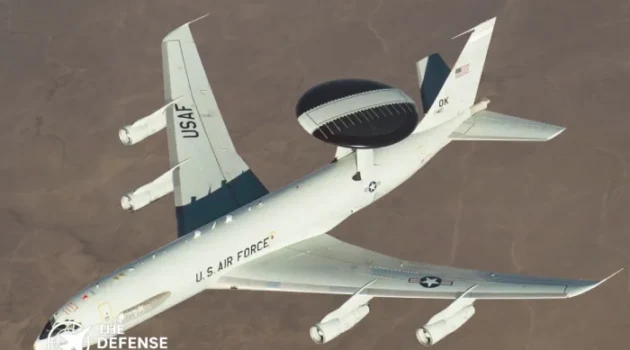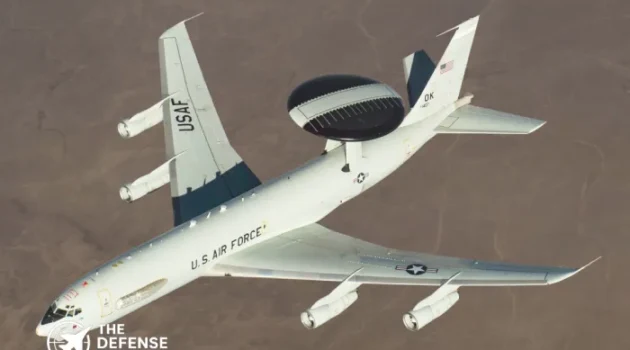
- Iranian attack reportedly damaged a U.S. E-3 Sentry AWACS aircraft at Prince Sultan Air Base in Saudi Arabia.
- The E-3 Sentry provides airborne early warning, battle management, and command and control capabilities.
- The strike highlights growing risks from missile and drone threats to high-value air assets in the Middle East.
- Prince Sultan Air Base hosts U.S. forces and serves as a key hub for regional air operations.
- Damage to AWACS platforms could impact situational awareness and command capabilities in contested environments.
Iranian Attack Damages U.S. E-3 Sentry AWACS Aircraft At Saudi Base
Iranian attack on AWACS aircraft has reportedly damaged a U.S. Air Force E-3 Sentry at Prince Sultan Air Base in Saudi Arabia, marking a rare strike against one of the most critical airborne command and control assets in the U.S. military inventory.
The reported incident, cited by defense industry sources, underscores the evolving threat posed by Iranian missile and drone capabilities and raises new questions about the survivability of high-value air assets in forward-deployed environments.
The Big Picture
U.S. airborne early warning and control platforms remain central to modern air warfare. The E-3 Sentry enables real-time surveillance, battle management, and coordination of air operations across large theaters.
The United States relies heavily on these aircraft to maintain air superiority, particularly in regions such as the Middle East where multiple actors operate advanced missile and drone systems.
Prince Sultan Air Base has served as a critical hub for U.S. air operations in Saudi Arabia, supporting coalition missions and regional deterrence efforts. Any disruption to assets based there carries broader implications for U.S. force posture and readiness.
What’s Happening
Reports indicate that an Iranian attack damaged a U.S. E-3 Sentry AWACS aircraft stationed at Prince Sultan Air Base.
The strike appears to be part of a broader pattern of Iranian use of long-range precision strike systems, including ballistic missiles and one-way attack drones.
While specific details on the extent of the damage remain limited, the targeting of an AWACS aircraft represents a notable escalation in terms of both intent and capability.
The E-3 Sentry is a high-value asset with limited numbers in service, making any damage operationally significant even if the aircraft is repairable.
Why It Matters
The Iranian attack on AWACS aircraft matters because the E-3 Sentry functions as a force multiplier.
The platform provides:
- Airspace surveillance over hundreds of miles
- Early warning of incoming threats
- Command and control for fighter aircraft and air defense systems
Damage to such an aircraft reduces situational awareness and complicates coordinated responses to threats.
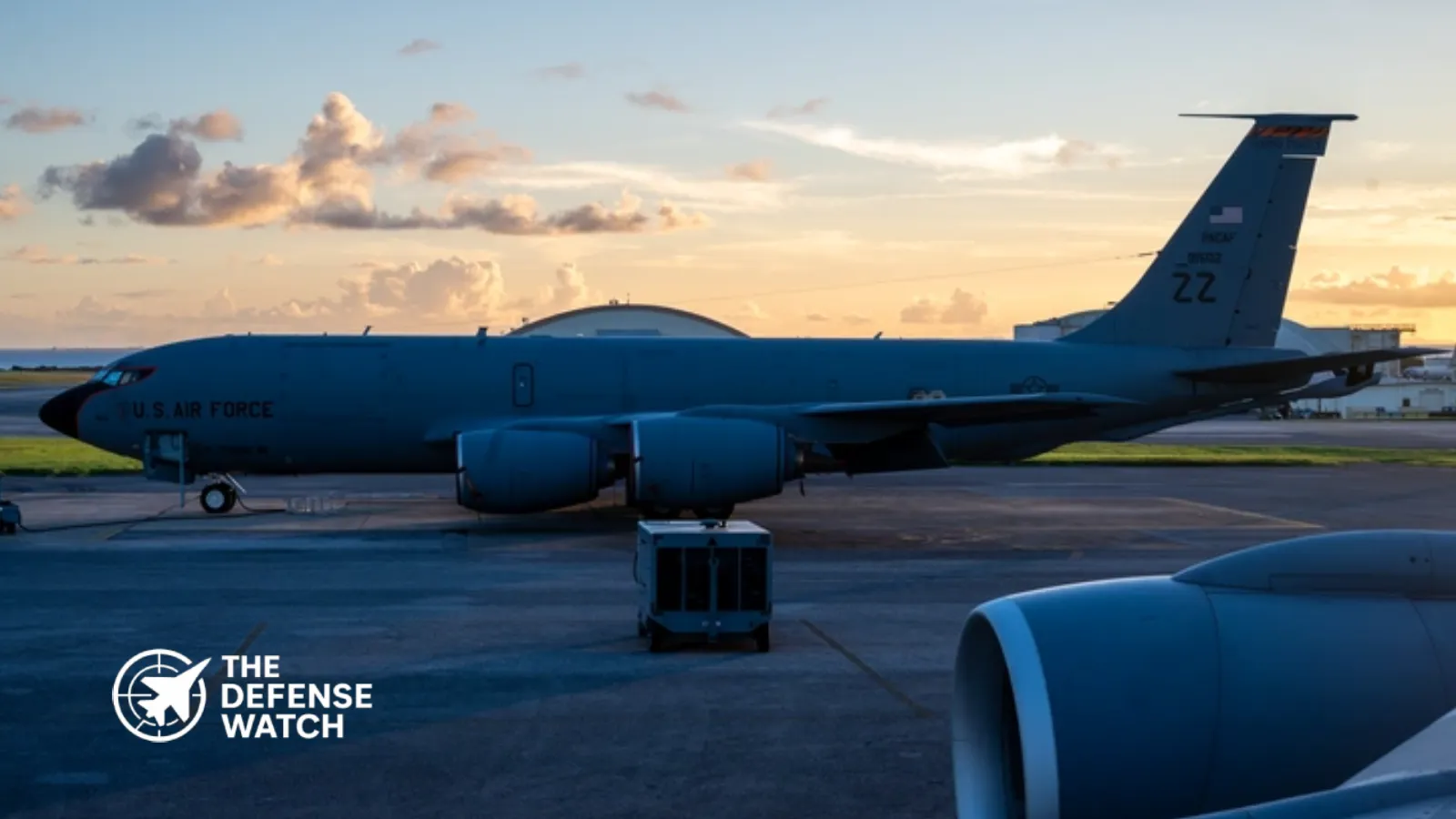
The incident also highlights the vulnerability of large, non-stealthy aircraft on the ground. Unlike hardened shelters or dispersed assets, parked AWACS platforms present high-value targets that are difficult to conceal.
Strategic Implications
The strike has immediate implications for U.S. military readiness in the Middle East.
Reduced availability of AWACS coverage can affect:
- Air defense coordination
- Missile warning timelines
- Joint force integration across air and ground units
The incident also reinforces the importance of layered air and missile defense systems to protect forward operating bases.
From a deterrence perspective, the ability of Iranian systems to reach and damage such assets signals a growing capability to challenge U.S. operational freedom in the region.
Competitor View
Iran likely views this development as validation of its investment in asymmetric strike capabilities.
Tehran has prioritized missile and drone systems that can bypass traditional air defenses and target high-value assets at long range.
Russia and China may also study the incident as a case example of how to degrade U.S. command and control infrastructure in a conflict scenario.
Both countries have emphasized targeting enabling systems such as AWACS, tankers, and ISR platforms as part of their anti-access and area denial strategies.
What To Watch Next
U.S. response measures will be critical in the near term.
Key areas to monitor include:
- Deployment of additional air defense systems to regional bases
- Increased dispersal of high-value aircraft
- Potential acceleration of next-generation airborne early warning platforms
Maintenance and repair timelines for the damaged E-3 Sentry will also indicate how quickly the U.S. can restore full operational capability.
Capability Gap
The Iranian attack on AWACS aircraft highlights a persistent gap in base defense against low-cost, high-impact threats.
While advanced systems such as Patriot and THAAD provide strong ballistic missile defense, they are less optimized for:
- Low-flying drones
- Saturation attacks
- Precision strikes on parked aircraft
The incident underscores the need for integrated air defense solutions that combine kinetic interceptors with electronic warfare and directed energy systems.
It also points to the importance of operational practices such as dispersal, hardening, and deception to protect critical assets.
The Bottom Line
Iranian attack on AWACS aircraft exposes a critical vulnerability in U.S. forward air operations, reinforcing the need for stronger base defense and asset protection in contested regions.