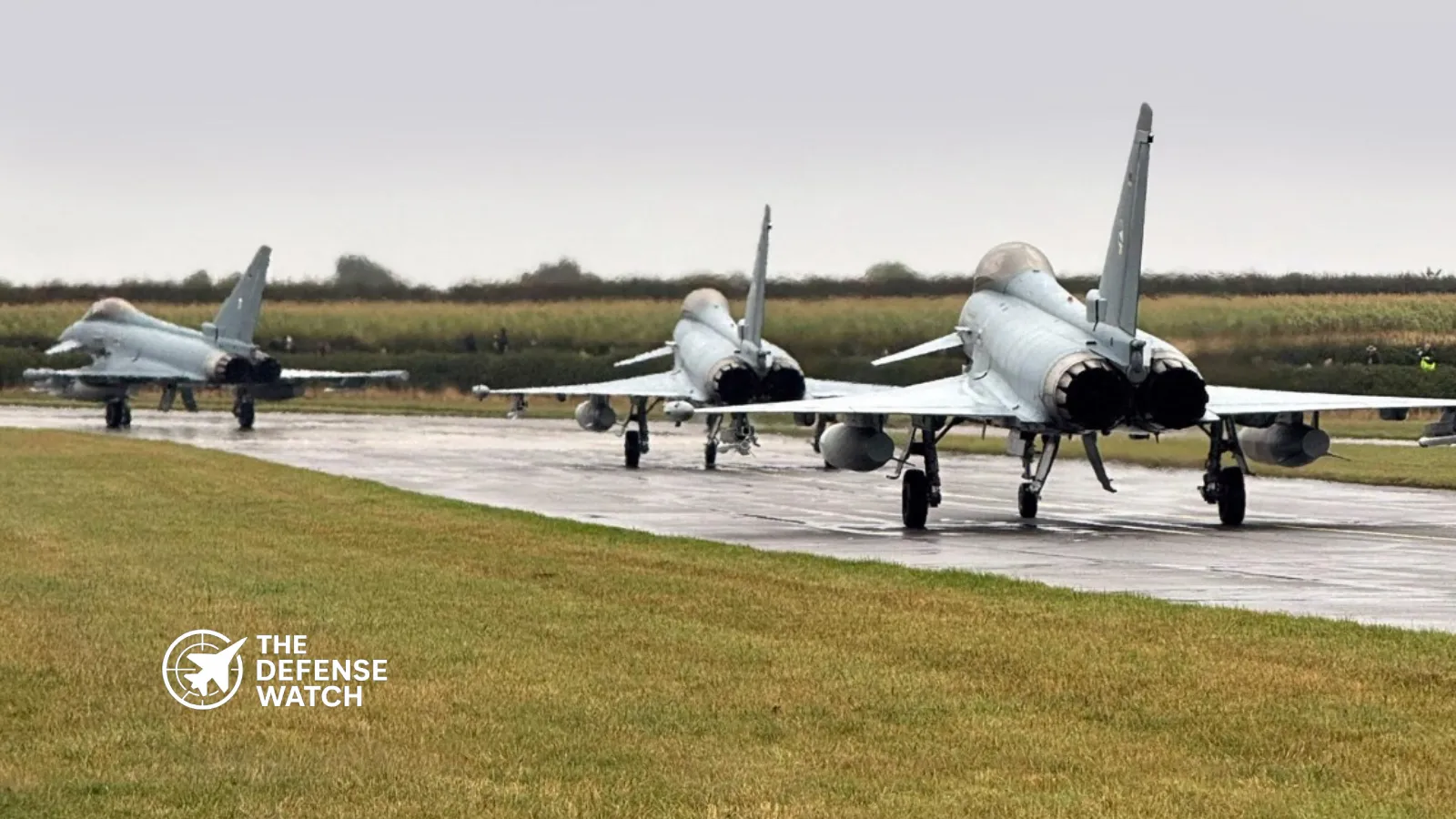
- ► British fighter jets have deployed to Romania as part of NATO’s enhanced air policing mission.
- ► RAF Typhoon aircraft will conduct quick reaction alert duties and joint training operations.
- ► Deployment reinforces NATO’s eastern flank amid continued regional security tensions.
- ► UK forces will operate alongside Romanian and allied air units to improve interoperability.
- ► The mission highlights sustained allied commitment to deterrence and collective defense.
British Fighter Jets Deploy To Romania Under NATO Mission
British fighter jets deploying to Romania mark the latest step in NATO’s effort to strengthen air defense along its eastern flank, as regional security concerns remain elevated.
The United Kingdom has deployed Royal Air Force Typhoon fighter aircraft to Romania to support NATO’s enhanced Air Policing mission. The deployment places advanced multi-role fighters closer to the alliance’s southeastern frontier, enabling faster response times and improved situational awareness.
The mission is part of NATO’s long-standing rotational air policing framework, designed to safeguard the airspace of member states and deter potential incursions.
RAF Typhoons Take On Air Policing And Deterrence Role
The deployed aircraft are Eurofighter Typhoon jets operated by the Royal Air Force, one of NATO’s most capable quick reaction alert platforms.
These jets are tasked with intercepting unidentified aircraft, conducting patrols, and maintaining constant readiness. Operating from Romanian airbases, they will integrate with local and allied air defense networks.
Air policing missions typically involve round-the-clock alert status, ensuring aircraft can scramble within minutes if required. This rapid response capability is central to NATO’s deterrence posture, particularly in regions close to contested airspace.
Strategic Importance Of Romania In NATO’s Eastern Flank
Romania has become a critical hub for NATO operations in Eastern Europe. Its geographic position near the Black Sea places it at the intersection of key strategic corridors.
The deployment of British fighter jets to Romania underscores the growing importance of the region in alliance planning. NATO has steadily increased its presence across Eastern Europe since 2014, with air, land, and maritime forces rotating through frontline states.
From a strategic perspective, Romania offers several advantages:
- Proximity to potential flashpoints
- Established NATO infrastructure
- Access to Black Sea operational areas
This makes it a natural location for forward-deployed air assets.
Interoperability And Joint Training With Allies
Beyond air policing, the deployment also supports joint training with Romanian and other NATO forces. These exercises are designed to improve interoperability, a key requirement for multinational operations.
Pilots and ground crews will operate in integrated environments, sharing data, tactics, and procedures. This ensures that forces from different nations can function seamlessly during real-world contingencies.
Such training also enhances readiness across the alliance, reducing response times and improving coordination in complex scenarios.
Analysis: Reinforcing Deterrence Through Forward Presence
The British fighter jets deployment to Romania reflects a broader shift in NATO’s operational posture toward persistent forward presence.
Rather than relying solely on reinforcement from Western Europe, NATO is positioning high-end capabilities closer to potential areas of concern. This approach shortens decision cycles and strengthens deterrence by demonstrating immediate readiness.
From a military standpoint, deploying Typhoon aircraft provides several advantages:
- High-performance air superiority capability
- Advanced radar and sensor integration
- Flexibility for both defensive and offensive roles
At the same time, the rotational nature of these deployments allows NATO to distribute operational burden among member states while maintaining a continuous presence.
The move also signals political commitment. By deploying frontline assets, the UK reinforces its role as a leading contributor to NATO operations and underscores alliance cohesion.
Broader Geopolitical Context
The deployment comes amid ongoing tensions in Eastern Europe and increased military activity in the Black Sea region. NATO has responded by expanding its air policing missions and increasing the frequency of multinational exercises.
British participation in these missions aligns with broader alliance objectives, including deterrence, reassurance of member states, and maintaining stability in contested regions.
While air policing is defensive in nature, its visibility plays a significant role in signaling resolve. Regular patrols and rapid intercept capabilities serve as a clear message of readiness.
Operational Outlook
The British fighter jets in Romania are expected to remain on rotation for a defined period, during which they will conduct patrols, training sorties, and joint exercises.
Future deployments are likely to continue as part of NATO’s rotational model, ensuring sustained coverage of the alliance’s eastern airspace.
As NATO adapts to evolving threats, forward deployments like this are expected to remain a central component of its defense strategy.