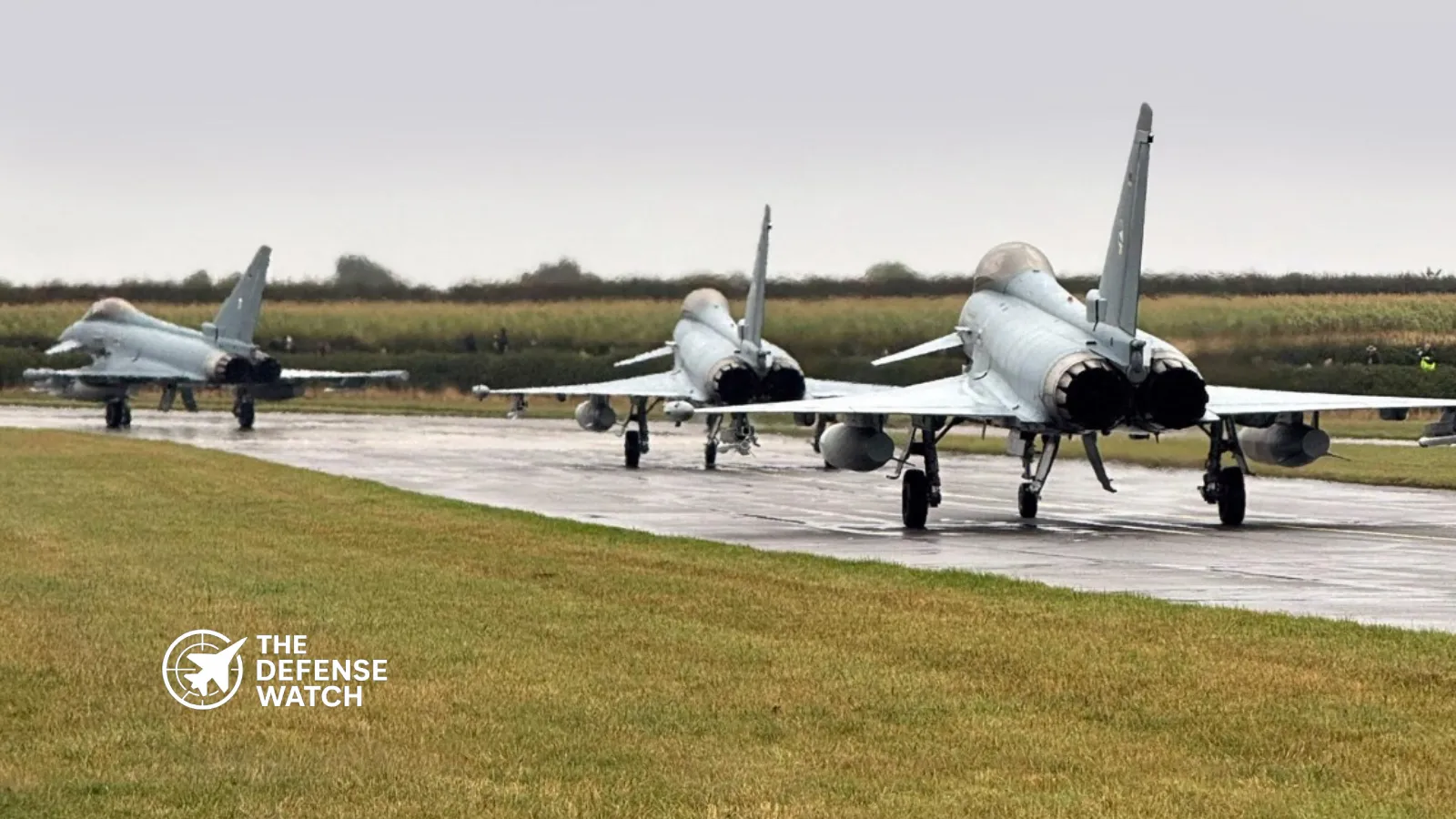
- ► British fighter jets have deployed to Romania as part of NATO’s enhanced air policing mission.
- â–º RAF Typhoon aircraft will conduct quick reaction alert duties and joint training operations.
- ► Deployment reinforces NATO’s eastern flank amid continued regional security tensions.
- â–º UK forces will operate alongside Romanian and allied air units to improve interoperability.
- â–º The mission highlights sustained allied commitment to deterrence and collective defense.
British Fighter Jets Deploy To Romania Under NATO Mission
British fighter jets deploying to Romania mark the latest step in NATO’s effort to strengthen air defense along its eastern flank, as regional security concerns remain elevated.
The United Kingdom has deployed Royal Air Force Typhoon fighter aircraft to Romania to support NATO’s enhanced Air Policing mission. The deployment places advanced multi-role fighters closer to the alliance’s southeastern frontier, enabling faster response times and improved situational awareness.
The mission is part of NATO’s long-standing rotational air policing framework, designed to safeguard the airspace of member states and deter potential incursions.
RAF Typhoons Take On Air Policing And Deterrence Role
The deployed aircraft are Eurofighter Typhoon jets operated by the Royal Air Force, one of NATO’s most capable quick reaction alert platforms.
These jets are tasked with intercepting unidentified aircraft, conducting patrols, and maintaining constant readiness. Operating from Romanian airbases, they will integrate with local and allied air defense networks.
Air policing missions typically involve round-the-clock alert status, ensuring aircraft can scramble within minutes if required. This rapid response capability is central to NATO’s deterrence posture, particularly in regions close to contested airspace.
Strategic Importance Of Romania In NATO’s Eastern Flank
Romania has become a critical hub for NATO operations in Eastern Europe. Its geographic position near the Black Sea places it at the intersection of key strategic corridors.
The deployment of British fighter jets to Romania underscores the growing importance of the region in alliance planning. NATO has steadily increased its presence across Eastern Europe since 2014, with air, land, and maritime forces rotating through frontline states.
From a strategic perspective, Romania offers several advantages:
- Proximity to potential flashpoints
- Established NATO infrastructure
- Access to Black Sea operational areas
This makes it a natural location for forward-deployed air assets.
Interoperability And Joint Training With Allies
Beyond air policing, the deployment also supports joint training with Romanian and other NATO forces. These exercises are designed to improve interoperability, a key requirement for multinational operations.
Pilots and ground crews will operate in integrated environments, sharing data, tactics, and procedures. This ensures that forces from different nations can function seamlessly during real-world contingencies.
Such training also enhances readiness across the alliance, reducing response times and improving coordination in complex scenarios.
Analysis: Reinforcing Deterrence Through Forward Presence
The British fighter jets deployment to Romania reflects a broader shift in NATO’s operational posture toward persistent forward presence.
Rather than relying solely on reinforcement from Western Europe, NATO is positioning high-end capabilities closer to potential areas of concern. This approach shortens decision cycles and strengthens deterrence by demonstrating immediate readiness.
From a military standpoint, deploying Typhoon aircraft provides several advantages:
- High-performance air superiority capability
- Advanced radar and sensor integration
- Flexibility for both defensive and offensive roles
At the same time, the rotational nature of these deployments allows NATO to distribute operational burden among member states while maintaining a continuous presence.
The move also signals political commitment. By deploying frontline assets, the UK reinforces its role as a leading contributor to NATO operations and underscores alliance cohesion.
Broader Geopolitical Context
The deployment comes amid ongoing tensions in Eastern Europe and increased military activity in the Black Sea region. NATO has responded by expanding its air policing missions and increasing the frequency of multinational exercises.
British participation in these missions aligns with broader alliance objectives, including deterrence, reassurance of member states, and maintaining stability in contested regions.
While air policing is defensive in nature, its visibility plays a significant role in signaling resolve. Regular patrols and rapid intercept capabilities serve as a clear message of readiness.
Operational Outlook
The British fighter jets in Romania are expected to remain on rotation for a defined period, during which they will conduct patrols, training sorties, and joint exercises.
Future deployments are likely to continue as part of NATO’s rotational model, ensuring sustained coverage of the alliance’s eastern airspace.
As NATO adapts to evolving threats, forward deployments like this are expected to remain a central component of its defense strategy.
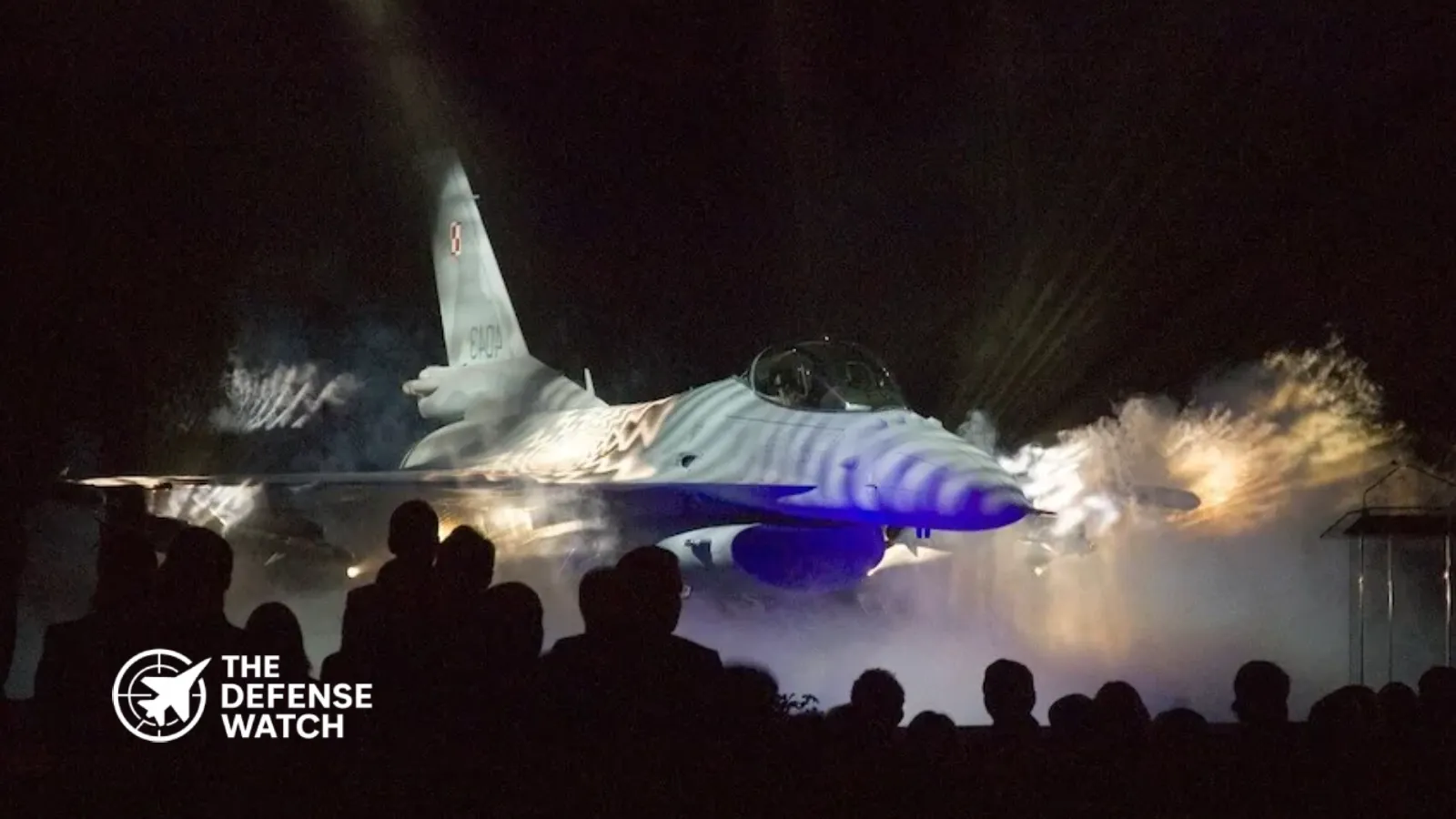
- Poland has operated F-16 fighter jets for 20 years, forming the backbone of its modern air force.
- The fleet supports NATO missions, including air policing and joint exercises in Eastern Europe.
- Lockheed Martin highlights interoperability and modernization as key advantages of the platform.
- Polish F-16s have been upgraded to maintain compatibility with evolving NATO standards.
- The milestone reflects Poland’s growing role in NATO’s eastern flank defense strategy.
Polish F-16 Service Strengthens NATO Airpower
The Polish F-16 service NATO milestone has reached a significant point as Poland marks 20 years of operating its F-16 fighter fleet, with Lockheed Martin emphasizing the aircraft’s role in strengthening NATO airpower and regional security. Since entering service in the mid-2000s, Poland’s F-16s have become a central pillar of its air defense and a key contributor to alliance operations across Eastern Europe.
According to the original report, Lockheed Martin highlighted how Poland’s investment in the F-16 platform has enhanced interoperability within NATO while ensuring a credible deterrent posture along the alliance’s eastern flank.
Two Decades of Polish F-16 Operations
Poland introduced the F-16 Fighting Falcon as part of a broader modernization effort to transition from Soviet-era platforms to NATO-compatible systems. The aircraft quickly became a cornerstone of the Polish Air Force, enabling the country to participate fully in allied missions and joint operations.
Over the past two decades, Polish F-16s have taken part in air policing missions, multinational exercises, and deterrence operations. Their presence has been particularly important in reinforcing NATO’s eastern defenses, especially amid heightened tensions in Eastern Europe.
The aircraft’s multirole capability allows Poland to conduct air superiority, ground attack, and reconnaissance missions using a single platform. This flexibility has proven critical as NATO adapts to a more complex threat environment that includes both conventional and hybrid warfare.
Interoperability and NATO Integration
One of the most important aspects of the Polish F-16 service NATO framework is interoperability. From the outset, Poland’s F-16 fleet was designed to integrate seamlessly with NATO command structures, communication systems, and operational procedures.
This compatibility allows Polish pilots to operate alongside other NATO air forces without technical or procedural barriers. Joint exercises, such as large-scale air drills across Europe, have further strengthened coordination and readiness.
Lockheed Martin noted that the F-16 platform continues to evolve through upgrades in avionics, weapons integration, and data-sharing capabilities. These enhancements ensure that the aircraft remains relevant in modern network-centric warfare environments.
Modernization and Capability Enhancements
To maintain operational effectiveness, Poland has pursued continuous upgrades to its F-16 fleet. These improvements include advanced radar systems, precision-guided munitions, and enhanced electronic warfare capabilities.
Modernization efforts also focus on improving survivability and mission effectiveness in contested environments. As threats evolve, particularly in the form of advanced air defense systems and electronic warfare, maintaining a technological edge remains essential.
The ongoing upgrades align with NATO’s broader push to modernize its air forces and ensure collective defense capabilities remain credible. Poland’s commitment to upgrading its F-16s reflects a long-term strategy to sustain high readiness levels.
Strategic Importance for Eastern Europe
Poland’s geographic position places it at the center of NATO’s eastern flank, making its airpower capabilities especially critical. The Polish F-16 service NATO framework contributes directly to regional stability by providing rapid response and deterrence capabilities.
The presence of a capable and modern air force helps deter potential adversaries and reassures neighboring NATO members. In recent years, the importance of airpower in Eastern Europe has grown significantly due to shifting geopolitical dynamics.
Poland’s F-16 fleet also supports rotational deployments and allied exercises, reinforcing NATO’s collective defense posture. This role has become increasingly important as the alliance seeks to maintain readiness in a rapidly changing security environment.
Analysis: Why the F-16 Still Matters in NATO
Even as fifth-generation aircraft like the F-35 Lightning II enter service, the F-16 remains a critical asset for NATO. Its proven reliability, lower operating costs, and upgrade potential make it a practical choice for many member states.
For Poland, the F-16 provides a balance between capability and affordability. While newer platforms offer advanced stealth features, the F-16 continues to deliver strong performance in most operational scenarios, especially when supported by modern upgrades.
This layered approach, combining legacy platforms with next-generation systems, reflects NATO’s broader strategy. It allows the alliance to maintain a large, capable force while gradually integrating more advanced technologies.
Analysis: Long-Term Implications for NATO Airpower
Looking ahead, Poland’s experience with the F-16 highlights the importance of sustained investment in airpower. Rather than relying solely on new acquisitions, continuous modernization of existing fleets can deliver significant strategic value.
The Polish F-16 service NATO model demonstrates how mid-life upgrades can extend the operational life of aircraft while maintaining high levels of readiness. This approach is particularly relevant for countries balancing budget constraints with growing security demands.
At the same time, Poland’s ongoing defense investments, including future integration of advanced platforms, suggest a dual-track strategy. Maintaining a strong F-16 fleet while preparing for next-generation capabilities ensures long-term resilience within NATO.
FAQs
How long has Poland operated F-16 fighter jets?Poland has operated F-16 aircraft for approximately 20 years since their introduction in the mid-2000s.
Why are Polish F-16s important for NATO?They enhance interoperability, support joint missions, and strengthen NATO’s eastern flank defense.
Are Poland’s F-16s still modern?Yes, they have undergone continuous upgrades to remain compatible with modern NATO standards.
Will Poland replace its F-16 fleet?Poland is adding newer platforms but is expected to keep upgraded F-16s in service for years.
What role do F-16s play in modern warfare?They provide multirole capabilities including air defense, strike missions, and reconnaissance.
Belarus Receives Su 30SM2 Fighter Jets
Belarus has received upgraded Su 30SM2 fighter jets as part of ongoing military cooperation with Russia, marking another step in the modernization of the Belarusian Air Force. The Su 30SM2 fighter jets were delivered under a bilateral defense agreement that expands operational integration between the two countries, according to Russian and Belarusian defense officials.
The aircraft were transferred to Belarusian air bases following factory upgrades in Russia. State media in Minsk confirmed the delivery, while Russian defense industry sources highlighted the role of the program in strengthening allied air combat capabilities.
What the Su 30SM2 Brings
The Su 30SM2 fighter jets represent an improved version of the Su 30SM platform, featuring upgraded avionics, improved radar performance, and compatibility with newer Russian air to air and air to ground weapons. The aircraft is powered by AL 41F 1S derived engines, similar to those used on the Su 35, offering increased thrust and reliability.
Russian officials have stated that the Su 30SM2 fighter jets share greater systems commonality with frontline Russian aircraft, simplifying logistics and training. This is intended to allow closer joint operations between Russian and Belarusian air units.
Impact on Belarus Air Power
For Belarus, the arrival of Su 30SM2 fighter jets strengthens air defense and strike capabilities at a time of heightened military activity in Eastern Europe. The aircraft replace older Soviet era platforms and enhance the country’s ability to conduct air patrols, interception missions, and joint exercises with Russian forces.
Belarus has already deployed Su 30 aircraft for air policing and combined drills under the Union State framework. Defense analysts note that the upgraded Su 30SM2 fighter jets improve situational awareness and combat readiness without requiring a complete overhaul of existing infrastructure.
Broader Strategic Context
The delivery underscores Russia’s continued use of defense exports to reinforce strategic partnerships. Western defense analysts cited by Janes and Aviation Week have noted that such transfers deepen interoperability and signal long term security alignment.