
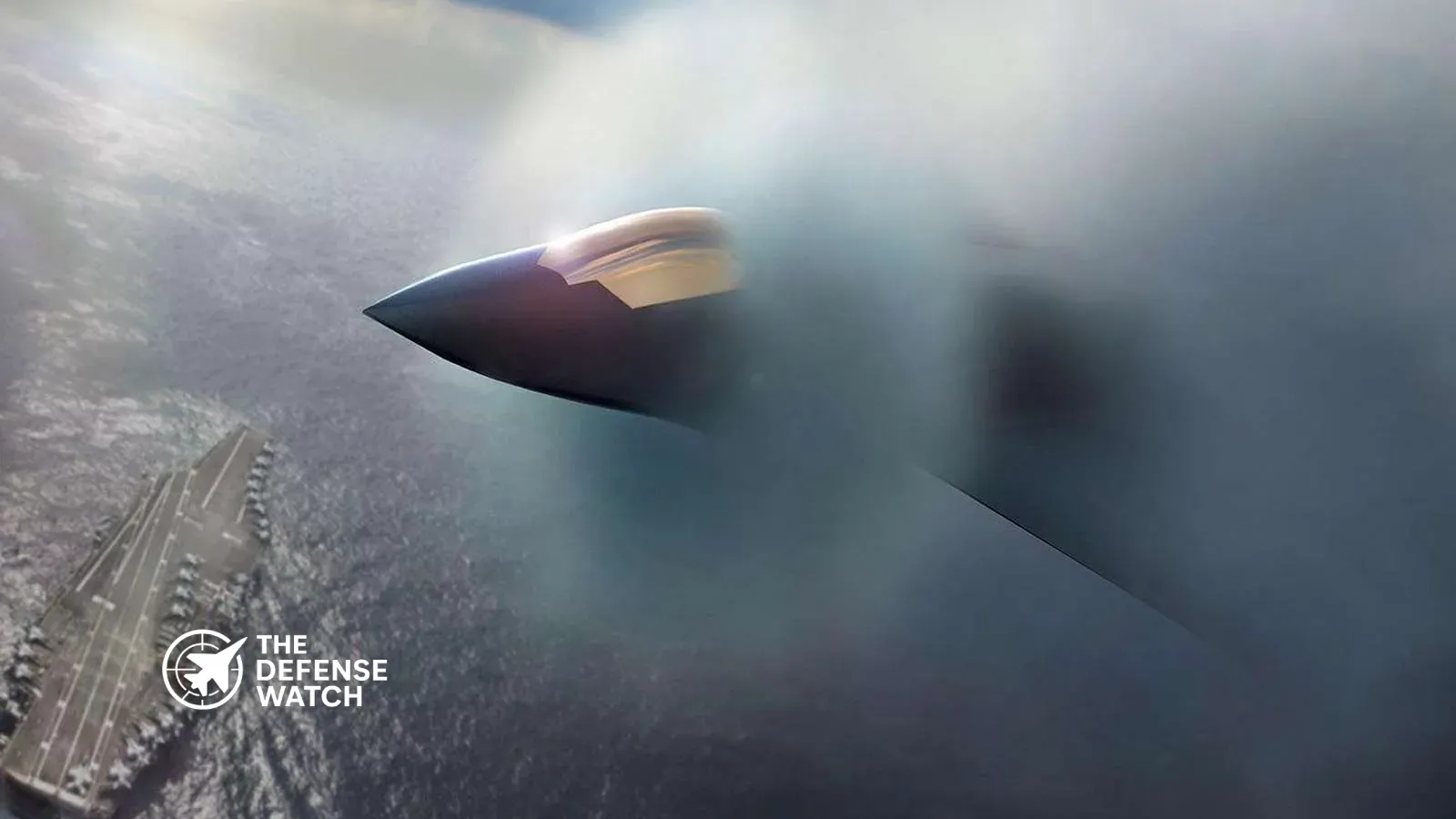
- ► U.S. Navy is accelerating development of the F A XX sixth generation fighter under its Next Generation Air Dominance effort.
- ► Program aims to counter China long range anti ship ballistic and cruise missile capabilities targeting carrier strike groups.
- ► F A XX will replace the F A 18E F Super Hornet beginning in the 2030s.
- ► Aircraft expected to integrate advanced stealth, long range sensors, and manned unmanned teaming.
- ► Move reflects growing Pentagon focus on high end conflict in the Indo Pacific.
U.S. Navy Accelerates F A XX Sixth Generation Fighter Program
The F A XX sixth generation fighter is moving ahead at a faster pace as the U.S. Navy responds to China long range missile threat against aircraft carriers and forward deployed forces.
According to Bloomberg, the Navy is prioritizing development of its carrier based next generation fighter under the broader Next Generation Air Dominance, or NGAD, initiative. The effort is designed to maintain air superiority in contested environments, particularly in the Indo Pacific.
The F A XX program will eventually replace the aging F A 18E F Super Hornet fleet, which has served as the backbone of carrier air wings for more than two decades.
Responding To China Long Range Missile Threat
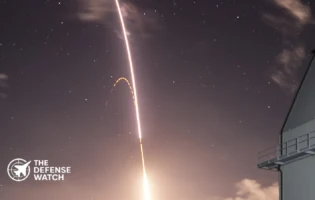
The central driver behind the accelerated timeline is China long range missile threat. The People Liberation Army has fielded anti ship ballistic missiles such as the DF 21D and the DF 26, both designed to hold U.S. carrier strike groups at risk at extended ranges.
These systems are part of a broader anti access area denial strategy aimed at limiting U.S. military freedom of movement in the Western Pacific. According to U.S. Department of Defense assessments in its annual China Military Power Report, Beijing continues to expand its missile inventory, sensor networks, and long range targeting capabilities.
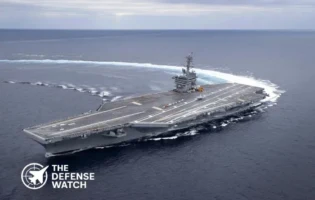
This evolving threat environment has forced the Navy to reconsider how close carriers can safely operate to contested coastlines. A longer range, more survivable fighter is seen as essential to restoring operational flexibility.
(adsbygoogle = window.adsbygoogle || []).push({});What F A XX Is Expected To Deliver
While detailed specifications remain classified, Navy officials have outlined several core attributes for the F A XX sixth generation fighter.
First, extended range. Analysts note that range is now as critical as stealth. A carrier air wing must be able to strike from outside the reach of advanced anti ship missiles.
Second, advanced survivability. The aircraft is expected to feature next generation low observable design, electronic warfare capabilities, and improved networking for operations in heavily contested airspace.
Third, integration with unmanned systems. The Navy has signaled that the future carrier air wing will combine manned aircraft with collaborative combat aircraft, or CCA type drones, enabling distributed operations and greater mission endurance.
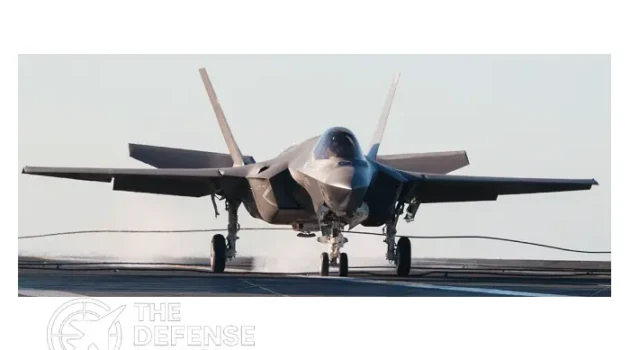
(adsbygoogle = window.adsbygoogle || []).push({});The F A XX sixth generation fighter is also expected to operate alongside the F 35C Lightning II, which provides fifth generation stealth and sensor fusion today.
Strategic Implications For The Indo Pacific
Accelerating the F A XX program reflects a broader Pentagon shift toward preparing for high intensity conflict with a peer adversary. The Indo Pacific theater presents unique challenges, including vast distances, dense air defenses, and advanced missile systems.
The U.S. Navy remains committed to maintaining credible deterrence in the region. However, China long range missile threat has complicated traditional carrier strike group concepts.
By pushing forward the F A XX sixth generation fighter, the Navy aims to extend the effective reach of carrier based aviation. That could allow U.S. forces to operate from safer standoff distances while still holding targets at risk.
(adsbygoogle = window.adsbygoogle || []).push({});This approach aligns with guidance from the U.S. National Defense Strategy, which emphasizes integrated deterrence and the ability to project power in contested domains.
Budget And Industrial Considerations
The timeline acceleration will depend on sustained funding from Congress. The F A XX effort competes with other major modernization priorities, including the Columbia class ballistic missile submarine and next generation surface combatants.
Industry teams are expected to compete for the program, though the Navy has not publicly detailed its acquisition strategy. The outcome will shape the future of U.S. naval aviation for decades.
From an industrial base perspective, the F A XX sixth generation fighter could anchor advanced aerospace manufacturing and propulsion development well into the 2040s.
Analysis: A Necessary Evolution
The decision to accelerate the F A XX sixth generation fighter is not simply about replacing an aging platform. It reflects a structural change in how the Navy must fight.
(adsbygoogle = window.adsbygoogle || []).push({});Carrier air power once assumed relative freedom of maneuver near hostile shores. That assumption no longer holds against a state actor with precision guided long range missile systems, integrated air defenses, and space based targeting support.
In that context, range becomes protection. Survivability becomes endurance. And networked operations become decisive.
The F A XX sixth generation fighter represents an attempt to adapt carrier aviation to this new reality. Whether it succeeds will depend on technology maturation, stable funding, and realistic testing against high end threat scenarios.
For now, the message from the Pentagon is clear. Maintaining air dominance in the Indo Pacific requires faster modernization, not incremental upgrades.