U.S. Navy C-2A Greyhound Retirement Ends A Six-Decade Logistics Era
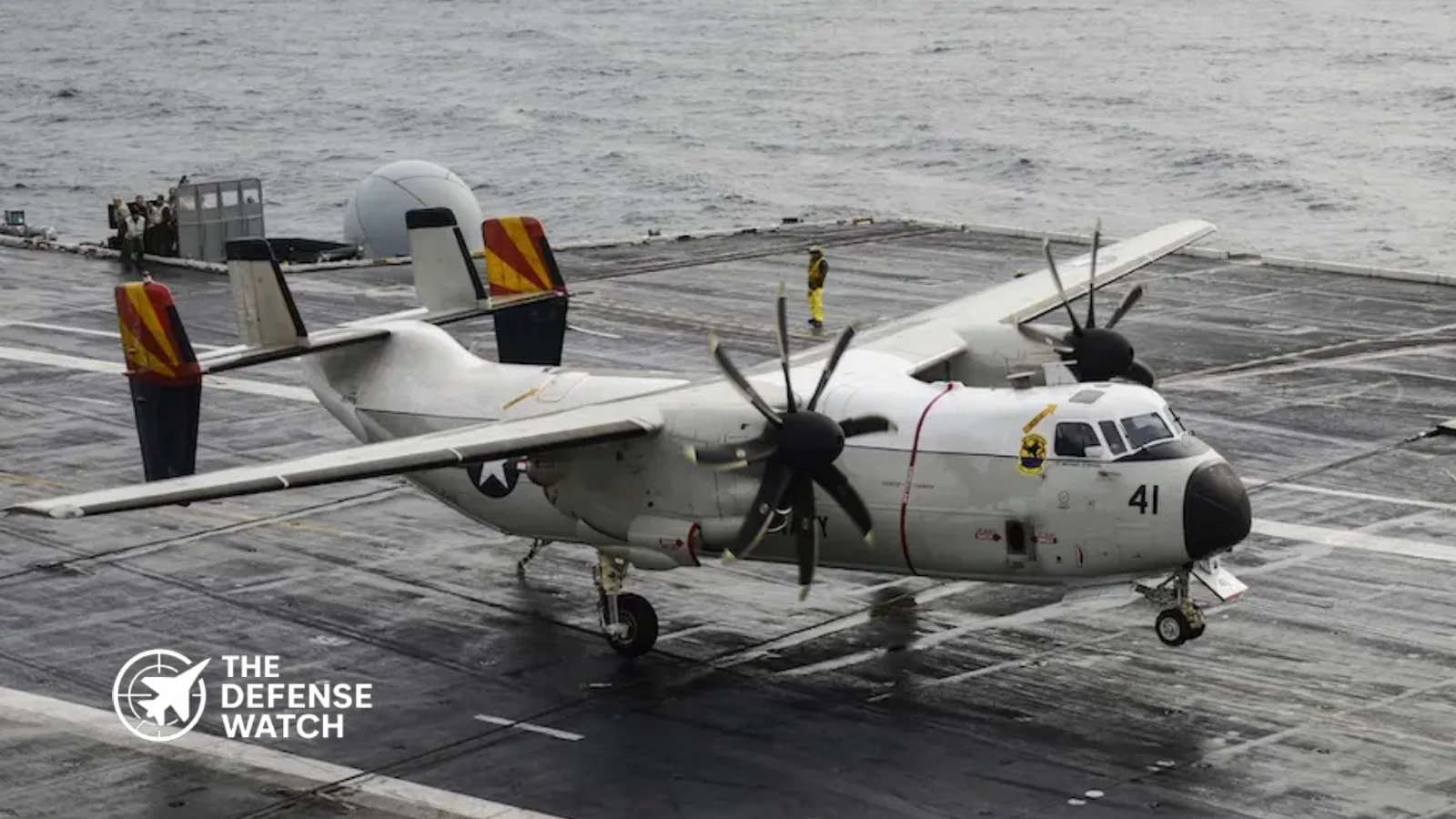
The C-2A Greyhound retirement marks the end of nearly 60 years of U.S. Navy carrier onboard delivery operations, closing the career of a specialized aircraft that routinely carried personnel, mail, aircraft parts and priority supplies between shore bases and aircraft carriers at sea.
Takeaways
The C-2A Greyhound has completed nearly six decades of U.S. Navy carrier logistics operations.
1. Six Decades Of Service
The C-2A Greyhound entered the Navy’s Carrier Onboard Delivery role in the 1960s and remained a key link between carriers and shore bases for nearly 60 years.
2. Final Carrier Landing In June
A C-2A assigned to VRC-40 made the platform’s final arrested landing and catapult launch from USS Nimitz on June 25, 2026.
3. More Than 250,000 Carrier Landings
The Navy says the Greyhound fleet accumulated more than 250,000 carrier landings and transported millions of personnel and more than 100 million pounds of cargo.
4. CMV-22B Takes Over
The Navy is replacing the fixed-wing C-2A with the CMV-22B Osprey, a tiltrotor designed to provide greater flexibility for maritime logistics operations.
5. Final Aircraft Goes To Museum
The final operational Greyhound was transferred to the National Naval Aviation Museum at Naval Air Station Pensacola for preservation and future display.
The Navy’s final C-2A, assigned to Fleet Logistics Support Squadron 40, or VRC-40 Rawhides, completed its final in-service flight at Naval Air Station Pensacola, Florida, on July 28, 2026. The aircraft subsequently joined the National Naval Aviation Museum collection.
The retirement represents a significant transition in naval aviation logistics. The C-2A has been replaced in the Carrier Onboard Delivery mission by the Navy’s CMV-22B Osprey tiltrotor, shifting the service from a conventional carrier-based transport aircraft to an aircraft capable of vertical and short takeoffs and landings.
Final C-2A Carrier Operations
The last carrier chapter for the U.S. Navy C-2A Greyhound came on June 25, when Greyhounds from VRC-40 conducted their final arrested landings and catapult launches aboard the Nimitz-class aircraft carrier USS Nimitz during Fleet Exercise 250.
The event ended the Greyhound’s carrier operations after decades of routine launches and recoveries aboard U.S. aircraft carriers. The final aircraft later flew from Norfolk, Virginia, to Pensacola for its last Navy flight.
The July Pensacola flight also provided a formal farewell. The final Greyhound flew with the U.S. Navy Blue Angels before landing at Sherman Field, where it was transferred for preservation.
The Navy said the aircraft accumulated more than 250,000 carrier landings during its service. Across its operational career, the C-2A transported millions of personnel and more than 100 million pounds of cargo.
A Purpose-Built Carrier Logistics Aircraft
The C-2A was developed from the Grumman E-2 Hawkeye design. Unlike the E-2, which was optimized for airborne early warning, the Greyhound featured a widened fuselage and rear cargo ramp for transporting people and equipment.
NAVAIR describes the aircraft as a high-wing, twin-engine Carrier Onboard Delivery aircraft. Its configuration allowed crews to move priority cargo, passengers, litter patients and critical aircraft components directly between shore facilities and carriers.
The aircraft could carry a payload of up to 10,000 pounds, making it particularly useful when carriers required urgent delivery of heavy or specialized equipment. Its rear loading ramp also allowed ground crews to load and unload cargo quickly.
The C-2A’s mission went beyond routine resupply. The aircraft also transported mail and personnel and could support medical evacuation requirements. For sailors deployed aboard carriers for months at a time, the arrival of a Greyhound could also mean the arrival of mail, replacement personnel or urgently needed equipment.
Keeping The Greyhound In Service
The aircraft’s long career required extensive maintenance and structural work.
NAVAIR began a Service Life Extension Program to address structural and electrical issues as the C-2A fleet approached its original service-life limits. The program included structural enhancements and electrical rewiring intended to extend the aircraft’s useful life.
That work helped keep the Greyhound available while the Navy developed and fielded a replacement.
The C-2A first flew in 1964, with the aircraft entering the Navy’s operational Carrier Onboard Delivery role in the following years. The platform became a familiar presence aboard carrier strike groups and supported Navy operations across multiple decades.
The aircraft also supported operations during major U.S. military campaigns, including Operations Desert Shield and Desert Storm, as well as later operations in Afghanistan and Iraq.
CMV-22B Osprey Takes Over Carrier Logistics
The C-2A carrier onboard delivery mission is now being performed by the CMV-22B Osprey.
The CMV-22B is a Navy variant of the V-22 tiltrotor family. It can take off and land vertically like a helicopter while using its engines and rotors in a forward-flight configuration for longer-distance transportation. NAVAIR identifies the aircraft as the replacement for the C-2A in the COD mission.
The change gives the Navy different operating options. Unlike the C-2A, the CMV-22B does not depend exclusively on conventional runway operations or carrier catapults for its basic takeoff and landing capability.
NAVAIR lists a cargo and personnel capacity of up to 6,000 pounds and a range of up to 1,150 nautical miles. The Navy variant also includes features such as a beyond-line-of-sight high-frequency radio, improved fuel dump capability, a passenger public-address system and improved cargo-loading lighting.
The aircraft is also designed to support the F-35C-equipped carrier air wing. One important requirement for the CMV-22B was the ability to transport the F-35’s F135 engine power module, an item that can be difficult to move through conventional maritime logistics channels.
The CMV-22B reached Initial Operational Capability in 2021, and the Navy has continued expanding its operational use as the Greyhound fleet approached retirement.
What The Retirement Means For Carrier Operations
The C-2A Greyhound retirement is more than the withdrawal of an aging aircraft. It changes how the Navy moves time-sensitive personnel and cargo between shore bases and carrier strike groups.
The Greyhound’s fixed-wing design was closely tied to carrier catapult and arresting gear operations. The Osprey brings a different operating model, combining tiltrotor performance with vertical and short takeoff and landing capability.
That flexibility can allow logistics aircraft to operate from a wider range of locations and interact with other elements of a carrier strike group without relying exclusively on conventional fixed-wing carrier launch and recovery procedures. NAVAIR describes the CMV-22B as a long-range, medium-lift element of the Navy’s intra-theater aerial logistics capability.
The transition also closes a distinctive chapter in naval aviation. The Navy’s final Greyhound flight marked the end of an aircraft type that had become closely associated with carrier life, from the delivery of aircraft components and supplies to the movement of sailors and mail.
The C-2A will now continue its service in a different form as a preserved aircraft. The final Greyhound transferred to the National Naval Aviation Museum, where it is planned for public display after rehabilitation.
The End Of The Greyhound Era
The C-2A Greyhound remained in service far longer than many of the aircraft that operated alongside it, adapting through structural upgrades and sustained maintenance to meet the Navy’s carrier logistics requirements.
Its retirement on July 28, 2026, formally closes that operational chapter. The CMV-22B Osprey now carries the responsibility for the Navy’s carrier onboard delivery mission, bringing a different combination of range, vertical landing capability and cargo flexibility to a role that remains essential to carrier operations.
For nearly six decades, the Greyhound’s job was straightforward but critical: connect the carrier at sea with the shore. Its final flight marks the end of that mission for the C-2A, but not the end of the Navy’s requirement for rapid, reliable aerial logistics.
- â–º U.S. Navy is accelerating development of the F A XX sixth generation fighter under its Next Generation Air Dominance effort.
- â–º Program aims to counter China long range anti ship ballistic and cruise missile capabilities targeting carrier strike groups.
- â–º F A XX will replace the F A 18E F Super Hornet beginning in the 2030s.
- â–º Aircraft expected to integrate advanced stealth, long range sensors, and manned unmanned teaming.
- â–º Move reflects growing Pentagon focus on high end conflict in the Indo Pacific.
U.S. Navy Accelerates F A XX Sixth Generation Fighter Program
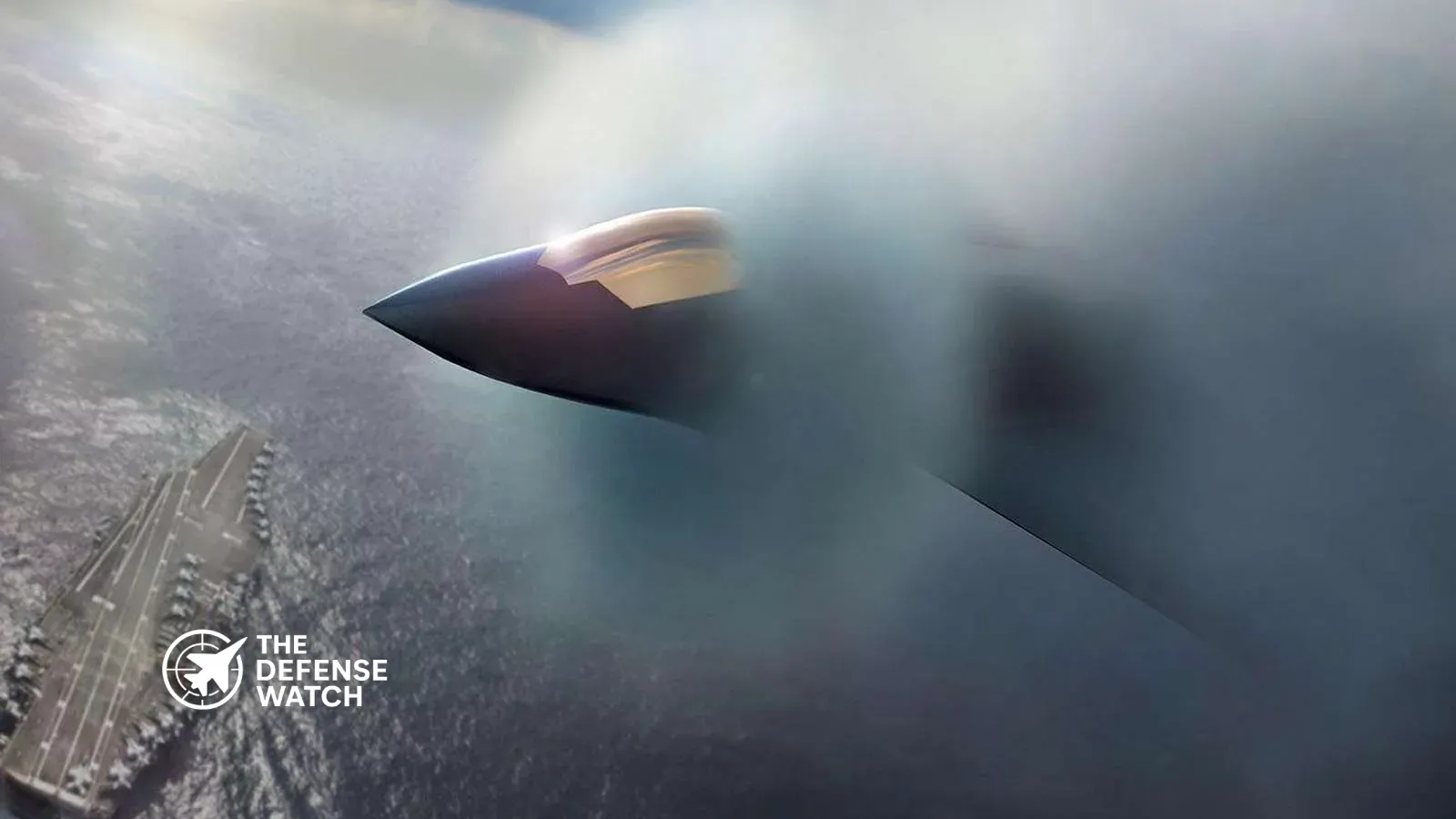
The F A XX sixth generation fighter is moving ahead at a faster pace as the U.S. Navy responds to China long range missile threat against aircraft carriers and forward deployed forces.
According to Bloomberg, the Navy is prioritizing development of its carrier based next generation fighter under the broader Next Generation Air Dominance, or NGAD, initiative. The effort is designed to maintain air superiority in contested environments, particularly in the Indo Pacific.
The F A XX program will eventually replace the aging F A 18E F Super Hornet fleet, which has served as the backbone of carrier air wings for more than two decades.
Responding To China Long Range Missile Threat
The central driver behind the accelerated timeline is China long range missile threat. The People Liberation Army has fielded anti ship ballistic missiles such as the DF 21D and the DF 26, both designed to hold U.S. carrier strike groups at risk at extended ranges.
These systems are part of a broader anti access area denial strategy aimed at limiting U.S. military freedom of movement in the Western Pacific. According to U.S. Department of Defense assessments in its annual China Military Power Report, Beijing continues to expand its missile inventory, sensor networks, and long range targeting capabilities.
This evolving threat environment has forced the Navy to reconsider how close carriers can safely operate to contested coastlines. A longer range, more survivable fighter is seen as essential to restoring operational flexibility.
What F A XX Is Expected To Deliver
While detailed specifications remain classified, Navy officials have outlined several core attributes for the F A XX sixth generation fighter.
First, extended range. Analysts note that range is now as critical as stealth. A carrier air wing must be able to strike from outside the reach of advanced anti ship missiles.
Second, advanced survivability. The aircraft is expected to feature next generation low observable design, electronic warfare capabilities, and improved networking for operations in heavily contested airspace.
Third, integration with unmanned systems. The Navy has signaled that the future carrier air wing will combine manned aircraft with collaborative combat aircraft, or CCA type drones, enabling distributed operations and greater mission endurance.
The F A XX sixth generation fighter is also expected to operate alongside the F 35C Lightning II, which provides fifth generation stealth and sensor fusion today.
Strategic Implications For The Indo Pacific
Accelerating the F A XX program reflects a broader Pentagon shift toward preparing for high intensity conflict with a peer adversary. The Indo Pacific theater presents unique challenges, including vast distances, dense air defenses, and advanced missile systems.
The U.S. Navy remains committed to maintaining credible deterrence in the region. However, China long range missile threat has complicated traditional carrier strike group concepts.
By pushing forward the F A XX sixth generation fighter, the Navy aims to extend the effective reach of carrier based aviation. That could allow U.S. forces to operate from safer standoff distances while still holding targets at risk.
This approach aligns with guidance from the U.S. National Defense Strategy, which emphasizes integrated deterrence and the ability to project power in contested domains.
Budget And Industrial Considerations
The timeline acceleration will depend on sustained funding from Congress. The F A XX effort competes with other major modernization priorities, including the Columbia class ballistic missile submarine and next generation surface combatants.
Industry teams are expected to compete for the program, though the Navy has not publicly detailed its acquisition strategy. The outcome will shape the future of U.S. naval aviation for decades.
From an industrial base perspective, the F A XX sixth generation fighter could anchor advanced aerospace manufacturing and propulsion development well into the 2040s.
Analysis: A Necessary Evolution
The decision to accelerate the F A XX sixth generation fighter is not simply about replacing an aging platform. It reflects a structural change in how the Navy must fight.
Carrier air power once assumed relative freedom of maneuver near hostile shores. That assumption no longer holds against a state actor with precision guided long range missile systems, integrated air defenses, and space based targeting support.
In that context, range becomes protection. Survivability becomes endurance. And networked operations become decisive.
The F A XX sixth generation fighter represents an attempt to adapt carrier aviation to this new reality. Whether it succeeds will depend on technology maturation, stable funding, and realistic testing against high end threat scenarios.
For now, the message from the Pentagon is clear. Maintaining air dominance in the Indo Pacific requires faster modernization, not incremental upgrades.