

CENTCOM Chief Israel Visit Signals Heightened U.S. Military Posture in Middle East
The CENTCOM chief Israel visit is set to take place this Saturday, underscoring Washington’s deepening military engagement in the Middle East as tensions rise across multiple fronts.
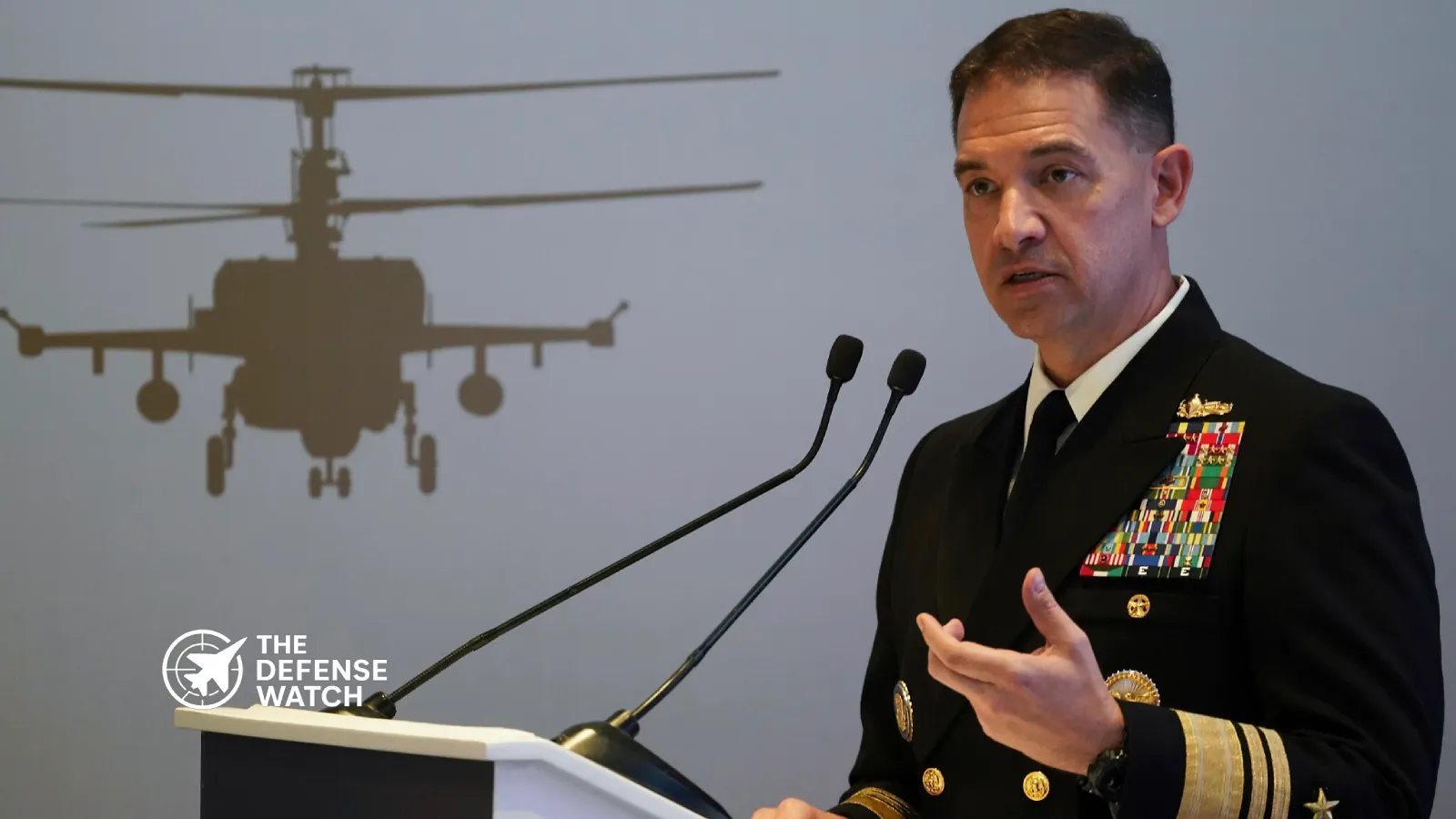
According to Israeli media reports, U.S. Central Command (CENTCOM) commander Adm. Brad Cooper is scheduled to arrive in Israel for high-level security talks with senior Israeli defense officials. The visit comes amid an expanding U.S. military buildup in the region, driven by concerns over Iran, proxy threats, and broader regional instability.
The trip reflects the growing urgency of U.S.-Israeli coordination as American forces continue to reposition major combat assets, reinforce air and missile defense coverage, and enhance deterrence across the CENTCOM area of responsibility.
High-Level Talks Amid Escalating Regional Threat Environment
During his visit, Adm. Cooper is expected to meet with Israel Defense Forces (IDF) Chief of Staff Lt. Gen. Eyal Zamir and Israeli Air Force Commander Maj. Gen. Tomer Bar, focusing on shared threat assessments, operational coordination, and regional contingency planning.
Israeli defense officials have reportedly raised growing concerns about the risk of a potential Iranian preemptive strike, as well as possible U.S.-led military action targeting Iranian military or nuclear infrastructure.
Israeli Channel 12 reported that Israel’s air force remains on elevated alert status, reflecting heightened readiness across multiple operational theaters.
This latest CENTCOM chief Israel visit follows a series of intensive U.S.-Israeli defense engagements aimed at strengthening combined preparedness and ensuring rapid operational coordination should tensions escalate.
U.S. Military Buildup Across CENTCOM Theater
The visit coincides with a broader U.S. military buildup across the Middle East, involving naval deployments, air power repositioning, and enhanced missile defense integration.
In recent months, the Pentagon has deployed additional naval strike groups, long-range bombers, and air defense assets across strategic locations in the Gulf, Red Sea, and Eastern Mediterranean. These deployments are designed to bolster deterrence, protect U.S. forces and allies, and maintain freedom of navigation in critical maritime corridors.
Senior U.S. defense officials have emphasized that these moves are defensive in nature, aimed at countering threats from Iran and its network of regional proxies, including Hezbollah, the Houthis in Yemen, and various militia groups in Iraq and Syria.
See also: U.S. Expands Naval Presence in Red Sea to Counter Houthi Missile Threats
Deepening U.S.-Israel Defense Integration
Since Israel’s inclusion under CENTCOM’s operational umbrella, U.S.-Israeli military coordination has expanded significantly. The integration has enabled closer real-time intelligence sharing, joint air defense planning, and coordinated operational responses across multiple domains.
Recent exercises have focused on integrated air and missile defense, counter-drone operations, and joint strike planning, reflecting the evolving complexity of regional threats.
The CENTCOM chief Israel visit highlights Washington’s strategic emphasis on maintaining Israel’s qualitative military edge while strengthening coalition defense architecture involving Gulf partners.
Defense analysts note that CENTCOM’s engagement with Israel now plays a central role in shaping U.S. regional posture, particularly as concerns grow over Iran’s missile capabilities, UAV programs, and proxy warfare strategy.
Iran Factor Driving Strategic Calculations
Iran remains at the center of U.S. and Israeli strategic planning. Western intelligence agencies continue to monitor Tehran’s missile development, drone production, and nuclear program, all of which factor heavily into CENTCOM’s operational priorities.
Israeli security officials fear that Iran could attempt a preemptive regional escalation in response to mounting international pressure, sanctions, and covert operations targeting its strategic infrastructure.
At the same time, Washington seeks to balance deterrence with crisis management, attempting to prevent localized conflicts from spiraling into full-scale regional war.
Strategic Implications for Middle East Stability
The timing of the CENTCOM commander’s visit underscores growing uncertainty across the Middle East, where overlapping crises — from Gaza and Lebanon to Yemen and the Gulf — continue to strain regional security.
By reinforcing military coordination and maintaining forward-deployed combat power, the United States aims to preserve deterrence while reassuring allies of its long-term commitment to regional stability.
For Israel, the visit reinforces the depth of U.S. security backing at a moment when multi-front operational planning has become increasingly complex.
Outlook
As regional tensions remain elevated, the CENTCOM chief Israel visit is expected to produce renewed operational alignment between U.S. and Israeli defense leadership, particularly in air defense, missile interception, and contingency planning.
Further U.S. force posture adjustments across the CENTCOM theater remain possible, depending on developments involving Iran and its regional allies.
