
U.S. Shipbuilding Budget 2027 Signals Strategic Naval Expansion
The U.S. shipbuilding budget 2027 proposal, set at $65.8 billion, marks a decisive shift in American naval strategy, reflecting a renewed focus on fleet expansion and industrial capacity. The proposal, reported by Defence Industry Europe, represents the highest level of shipbuilding investment in decades.
This funding surge comes at a time when the U.S. Navy faces increasing pressure to maintain maritime superiority, particularly against rapidly modernizing naval forces in the Indo-Pacific.
- The U.S. Department of Defense has proposed a $65.8 billion shipbuilding budget for fiscal year 2027.
- The funding represents the largest U.S. naval shipbuilding investment in decades.
- The plan focuses on expanding fleet size and accelerating construction of key surface combatants and submarines.
- The proposal reflects growing concerns over peer naval competitors, particularly in the Indo-Pacific region.
- The budget aligns with long-term U.S. Navy goals to maintain maritime dominance and global deterrence.
Largest Investment In Decades Targets Fleet Growth
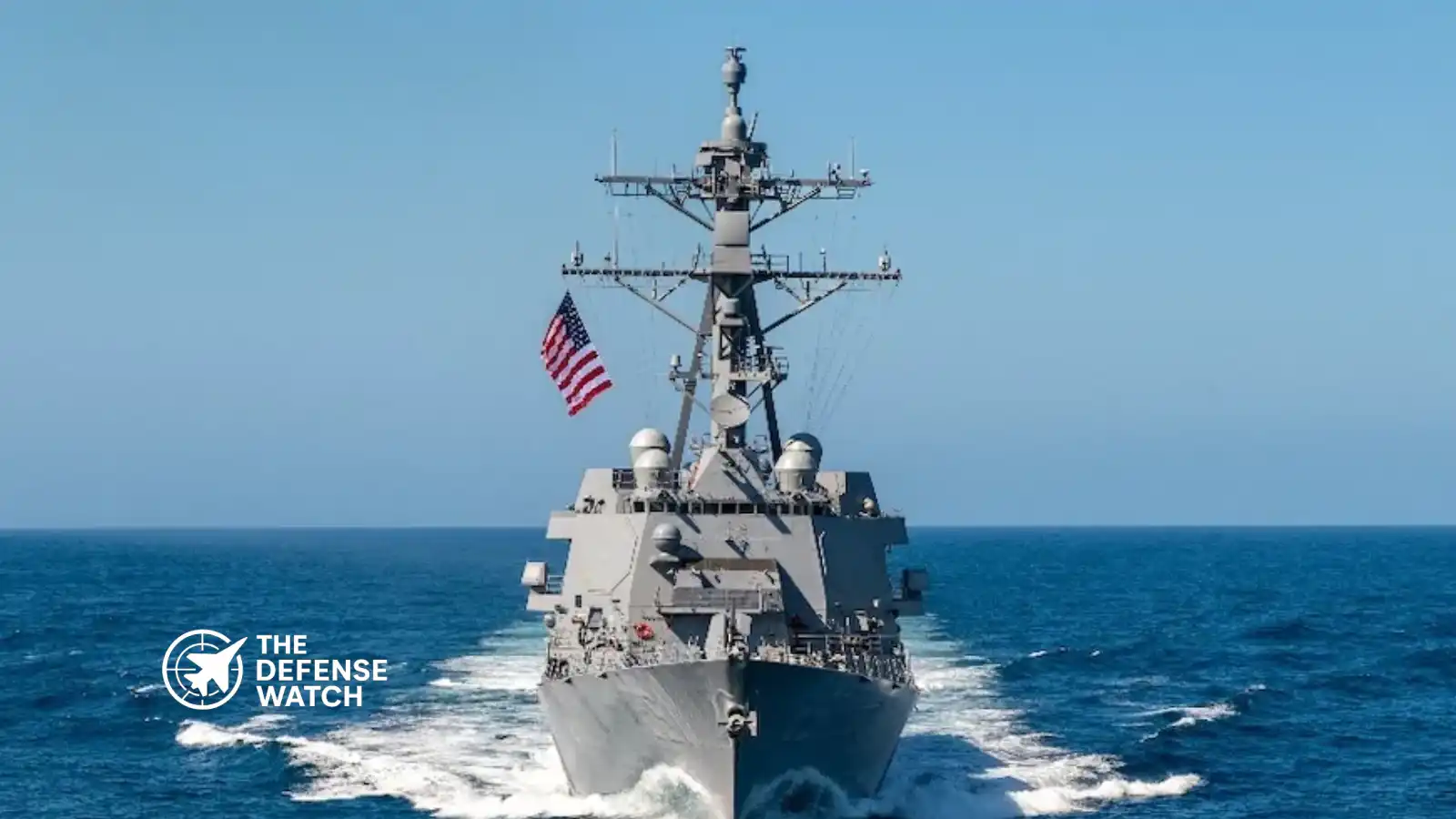
The proposed U.S. shipbuilding budget 2027 significantly exceeds recent annual allocations, signaling urgency in rebuilding fleet size and readiness. The funding is expected to support the procurement of new destroyers, submarines, and potentially next-generation platforms.
A key priority remains the expansion of the submarine fleet, widely viewed as a critical advantage in contested maritime environments. Attack submarines and ballistic missile submarines continue to anchor U.S. deterrence strategy.
Surface combatants, including guided missile destroyers, are also expected to receive increased funding. These vessels play a central role in air defense, missile interception, and power projection.
Industrial Base And Production Capacity Under Pressure
One of the central challenges tied to the U.S. shipbuilding budget 2027 is the capacity of the American shipbuilding industrial base. While funding levels are rising, production constraints remain a limiting factor.
Shipyards have struggled in recent years with workforce shortages, supply chain disruptions, and delays in major programs. Increasing funding alone does not immediately translate into faster ship delivery.
This raises a key strategic question. Whether the U.S. can effectively convert budget growth into operational fleet expansion within required timelines.
The proposed budget appears to address this by not only funding ship procurement but also supporting infrastructure and workforce development across shipyards.
Strategic Drivers: Indo-Pacific And Great Power Competition
The timing of the U.S. shipbuilding budget 2027 reflects intensifying geopolitical competition, particularly in the Indo-Pacific. The U.S. Navy is under pressure to maintain a credible presence across vast maritime regions where potential adversaries are expanding their naval capabilities.
China’s naval growth, including its expanding fleet of surface ships and submarines, remains a primary driver behind U.S. planning. The scale and pace of Chinese shipbuilding have prompted concerns in Washington about long-term balance of power at sea.
In this context, the proposed budget is not just about modernization. It is about maintaining numerical and technological parity, or advantage, in future maritime conflict scenarios.
Balancing Quantity And Capability
While increasing fleet size is a clear objective, the U.S. shipbuilding budget 2027 also reflects a balance between quantity and advanced capability.
Next-generation systems, including unmanned surface and underwater vessels, are expected to play a growing role. These platforms offer the potential to extend reach and reduce operational risk.
However, integrating these emerging technologies alongside traditional shipbuilding programs adds complexity. Budget allocation decisions must balance near-term readiness with long-term innovation.
This dual-track approach highlights a broader shift in naval doctrine. One that blends conventional fleet expansion with distributed and networked maritime operations.
Budget Signals Long-Term Strategic Commitment
The scale of the U.S. shipbuilding budget 2027 underscores a long-term commitment to naval power as a cornerstone of U.S. defense strategy.
Sustained investment at this level would reshape the future fleet, but it also raises questions about affordability and budget sustainability. Shipbuilding remains one of the most capital-intensive areas of defense spending.
Congressional approval will be a critical next step. Lawmakers are expected to scrutinize program timelines, cost controls, and industrial readiness before finalizing the budget.
Outlook: Execution Will Define Impact
The proposed U.S. shipbuilding budget 2027 sets an ambitious target. Its success will depend less on funding levels and more on execution.
If effectively implemented, the plan could reverse years of fleet stagnation and strengthen U.S. maritime dominance. If not, structural challenges in shipbuilding capacity could limit its impact.
In either case, the proposal signals a clear strategic direction. The United States is preparing for sustained naval competition in an increasingly contested global maritime environment.
Get real time update about this post category directly on your device, subscribe now.
