- The United States ranks #1 on the 2026 Global Firepower Index with a PowerIndex score of 0.0741 and a defense budget exceeding $895 billion.
- Russia holds #2 with a score of 0.0788, maintaining the world’s largest nuclear arsenal and over 1.3 million active personnel.
- China ranks #3 with 2+ million active troops, 3 aircraft carriers, and a defense budget of approximately $266 billion — the fastest-growing navy in the world.
- India holds #4 globally, backed by 1.45 million active personnel, nuclear deterrence, and a $75 billion defense budget.
- The 2026 index evaluated 145 nations across 60+ indicators including manpower, air power, naval strength, logistics, and financial capacity.
Which Country Has the Strongest Army in the World in 2026?
The question of which country possesses the strongest army in the world in 2026 is not answered by a single number. It is a composite picture drawn from defense budgets, technological depth, nuclear deterrence, logistics infrastructure, and the hard-won credibility of real-world combat experience. The 2026 Global Firepower Index draws on more than 60 individual factors — ranging from unit quantities and financial standing to logistical capacity and geography — to calculate each nation’s PowerIndex score across 145 countries. The lower the score, the more powerful the force.
By every available metric in 2026, the United States of America holds that top position — as it has for two decades. But the gap between Washington and its nearest competitors is narrowing in ways that should concern defense planners across the Western alliance.
#1 United States — The Undisputed Standard
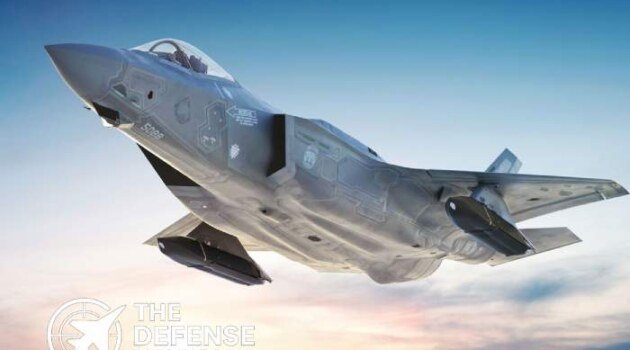
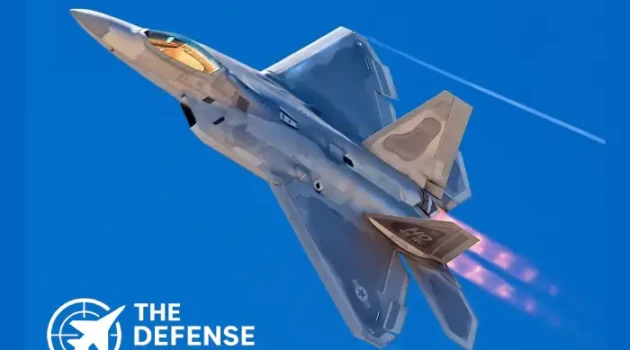
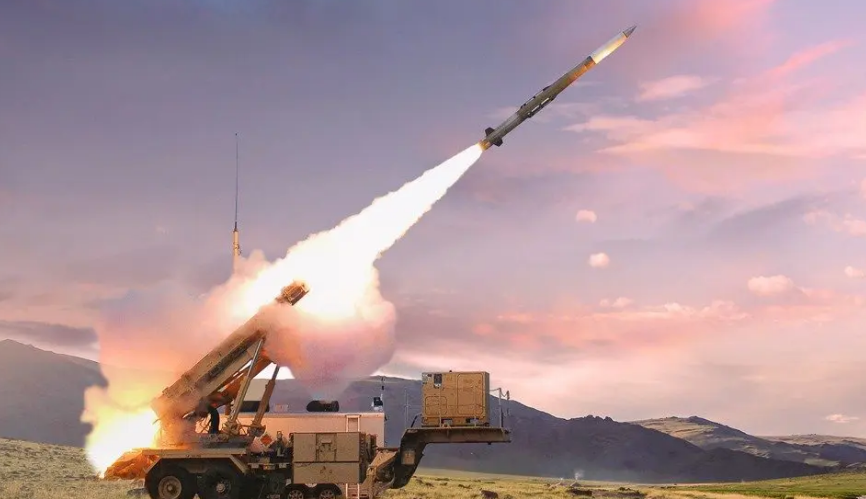
Ranked as the world’s most powerful military since 2005, the U.S. tops the 2026 Global Firepower Index with a score of 0.0741. Its dominance rests on unmatched defense spending, global force projection, nuclear capabilities, advanced air and naval power, and an extensive network of overseas bases.
The U.S. fields 1,328,000 active personnel and 2,127,000 in reserve, backed by a defense budget of $895 billion — a figure that eclipses the combined spending of most of the world’s top militaries. Its technological edge — spanning fifth-generation stealth fighters, nuclear-powered carrier strike groups, satellite-based command networks, and a rapidly expanding drone and cyber warfare apparatus — remains unmatched in scale and integration.
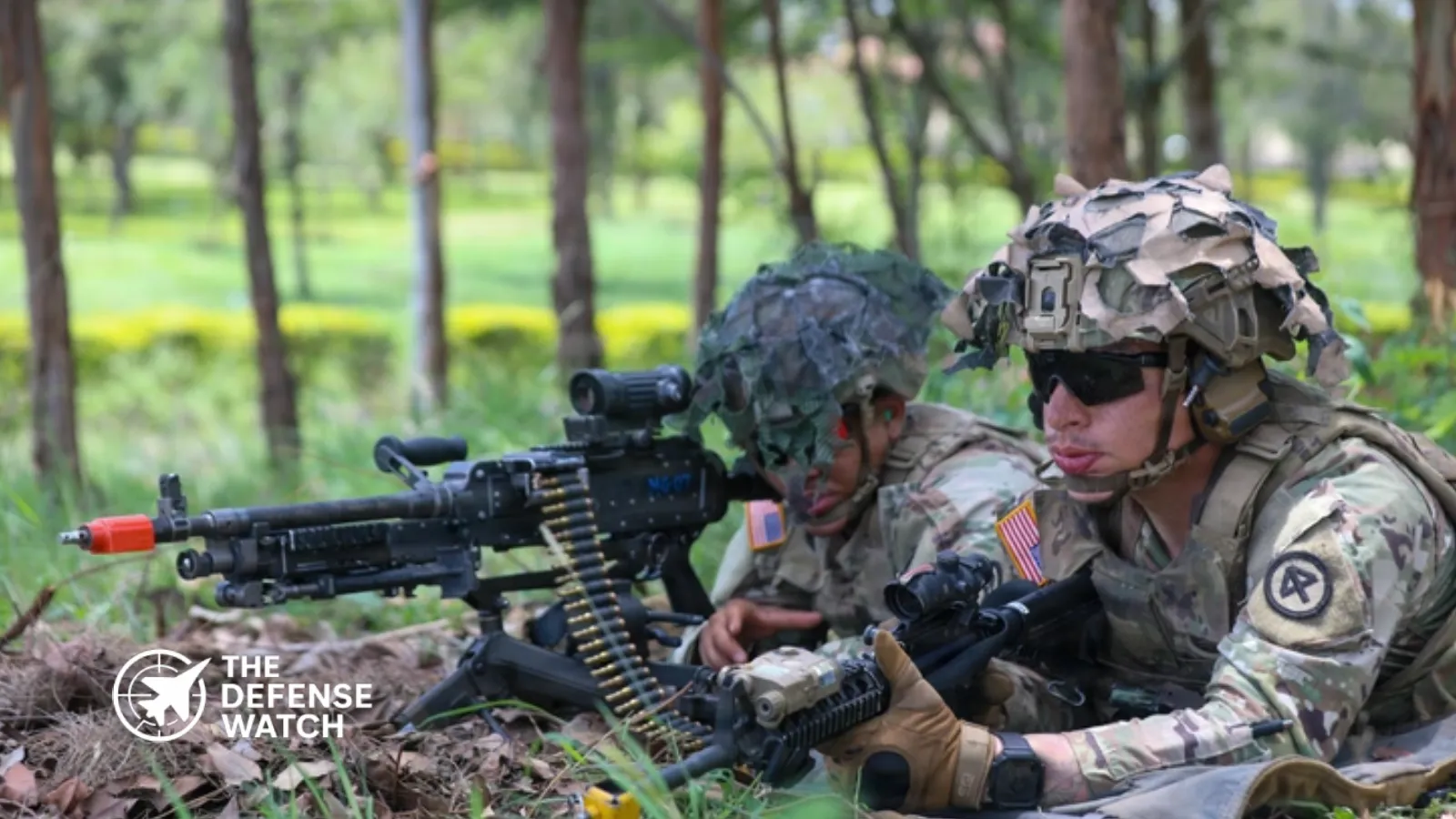
The United States Army alone maintains 485,000 active-duty soldiers, 336,000 Army National Guard personnel, and 189,500 Army Reserve personnel, constituting the most battle-tested ground force in modern history.
TheDefenseWatch Analysis: The United States’ primary advantage in 2026 is not merely hardware — it is systemic. Decades of joint warfare doctrine, interoperability with NATO partners, and an unbroken chain of institutional learning from conflicts in Iraq, Afghanistan, and Syria give the U.S. military an adaptive quality that raw numbers cannot capture. However, high operational tempo and congressional debates over defense appropriations continue to create friction within the force’s long-term readiness picture.
#2 Russia — Nuclear Colossus Under Strain
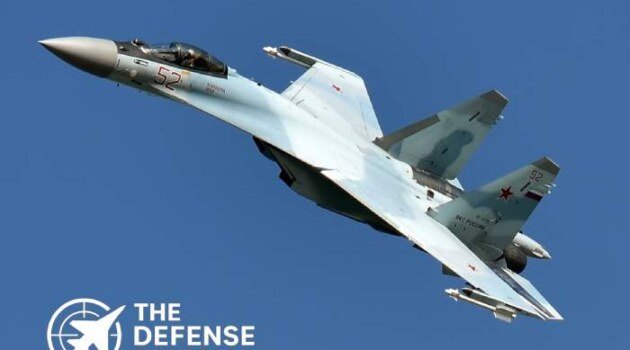
Russia holds second place with a Power Index score of 0.0791. Its strength lies in vast nuclear arsenals, long-range missile forces, a large standing military, and significant land warfare capabilities.
Moscow fields 1,320,000 active personnel and a reserve pool of 3,570,000 troops, with a defense budget of $126 billion. Russia’s strategic deterrent — anchored by thousands of nuclear warheads and an array of intercontinental ballistic missiles, including the Sarmat ICBM — gives it a geopolitical weight that its conventional performance in Ukraine has, in some ways, challenged.
The ongoing war in Ukraine has exposed critical weaknesses in Russian logistics, precision-strike capability, and combined-arms coordination. Yet Russia continues to invest heavily in electronic warfare, hypersonic missile systems, and long-range aviation, ensuring it cannot be dismissed as a declining power.
TheDefenseWatch Analysis: Russia’s 2026 ranking reflects a military that remains dangerous at the strategic level even as it bleeds manpower and equipment in Eastern Ukraine. Moscow’s ability to reconstitute its ground forces while simultaneously sustaining a war economy is being tested in real time — the outcome of which will define Russia’s military standing well into the 2030s.
#3 China — The Fastest-Rising Challenger
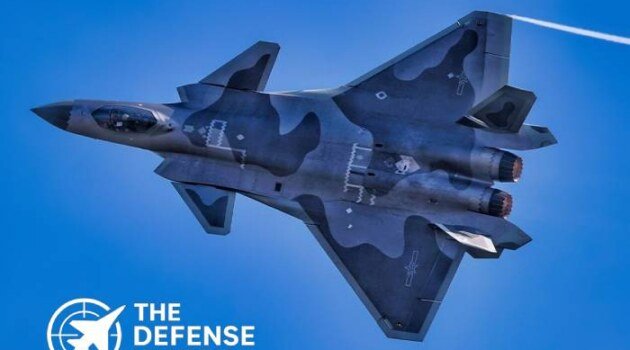
China commands the world’s largest standing army with expanding naval and air capabilities. Heavy investment in technology and modernization underpins its global military ambitions. China fields 2,035,000 active personnel, 3,045,000 in reserve, and a defense budget of $266.85 billion.
At a crossroads, 2027 is set to become a pivotal year for Chinese military aspirations — a reference to the People’s Liberation Army’s (PLA) self-imposed deadline to become a “world-class military” capable of fighting and winning a modern war. Beijing has invested massively in carrier-based aviation, hypersonic glide vehicles, space warfare capabilities, and artificial intelligence-driven command systems.
China’s navy now operates three aircraft carriers, with additional hulls under construction. Its ballistic missile submarine fleet continues to grow, and its anti-access/area denial (A2/AD) strategy presents a credible challenge to U.S. naval operations throughout the Western Pacific.
#4 India — South Asia’s Nuclear Giant
India holds the 4th position with a score of 0.1346. As South Asia’s leading military power, India combines large manpower, nuclear deterrence, expanding indigenous defense production, strong missile forces, and growing air and naval capabilities.
India maintains 1,455,550 active personnel — more than either Russia or the United States — and a reserve force of 5,137,000 troops, all supported by a $75 billion defense budget. New Delhi’s ambitious “Atmanirbhar Bharat” (self-reliant India) defense manufacturing initiative is steadily reducing dependence on foreign arms imports while building domestic production capacity across fighters, missiles, and warships.
India’s ongoing border friction with China and long-standing tensions with Pakistan ensure that its military investment is not abstract — it is operationally driven and geopolitically consequential.
#5 Through #10 — The Rest of the Top Tier
South Korea secures fifth place, focusing on advanced technology, a strong reserve force, and defense readiness structured to counter regional threats — particularly from North Korea. Its active force of 600,000 is backed by 3,800,000 reserves and a $50 billion budget.
The United Kingdom placed sixth, maintaining nuclear deterrence, a capable navy, and forces designed for global deployment alongside allies. France followed closely with a versatile military, modern aircraft, and the capacity to conduct overseas operations independently. Japan ranked eighth, with a focus on maritime security, missile defense, and advanced technology reinforced by strategic partnerships.
Türkiye maintains a sizeable active and reserve force, growing domestic production, drone capability, and regional influence in the Middle East, while Italy fields a modern NATO-standard military with aircraft carriers, cyber defense, and participation in multinational operations and peacekeeping missions.
What Separates the World’s Strongest Armies in 2026?
The 2026 rankings make one thing unmistakably clear: military power today is multidimensional. Raw troop counts alone no longer determine strategic outcomes.
Modern warfare increasingly favors countries investing in advanced technology. Artificial intelligence systems, drones, cyber warfare capabilities, and satellite surveillance are now decisive factors in determining global military strength.

In 2026, military effectiveness depends more on training, modern equipment, and strategic coordination than sheer numbers. Highly skilled, technologically advanced forces consistently outperform larger, less-modern armies.
Personnel-wise, China’s two million active troops provide numerical superiority, while the United States and Israel lead in drones, cyber warfare, and missile defense systems. On the nuclear dimension, Russia and the United States each dominate with over 5,000 warheads.
The Emerging Challenge: Technology, Alliances, and Budget Pressure
Perhaps the most consequential shift in 2026 is not who holds the top spot — it is the structural change in how military power is being built and projected. Rising powers including France, Germany, Israel, and South Korea are showing consistent growth due to technological upgrades, modernization programs, and strategic alliances.
Alliance architecture is increasingly central. NATO’s combined firepower, AUKUS’s trilateral submarine technology transfer, and the Quad’s Indo-Pacific security framework all multiply the effective deterrent power of member states beyond what individual rankings suggest.

Meanwhile, critics of standard military indexes note that the lack of precision in weighting asset capability can lead to oversized scores for armies with plentiful but outdated equipment. A destroyer built in 1993 and a carrier launched in 2023 are not equivalent — yet both count as a single unit in many composite rankings.
TheDefenseWatch Analysis: The real story of global military power in 2026 is a world fragmenting into competing technological blocs. The United States leads — but the margin is slimmer than headline budgets suggest. China’s PLA is acquiring not just weapons, but doctrines, space assets, and cyber capabilities that were, until recently, the exclusive domain of Washington. Russia, despite its Ukraine losses, retains a strategic deterrent that keeps it in the conversation. And mid-tier powers like South Korea, Turkey, and India are investing with a discipline and urgency that is reshaping regional balances faster than traditional assessments capture. The next decade will not be defined by who has the biggest army — it will be defined by who can best integrate AI, unmanned systems, and real-time data into a cohesive fighting force.
FAQs
Which country has the strongest army in the world in 2026?The United States holds the top position on the 2026 Global Firepower Index with a PowerIndex score of 0.0741, supported by an $895 billion defense budget, over 13,000 aircraft, 460 naval vessels, and more than 800 overseas military installations.
Where does China rank in global military strength in 2026?China ranks third on the 2026 Global Firepower Index. It fields the world’s largest standing army with over two million active personnel and is rapidly expanding its blue-water navy and aerospace capabilities ahead of its stated 2027 military modernization deadline.
How is military strength measured by Global Firepower?The Global Firepower Index uses more than 60 individual indicators including manpower, defense budget, air power, naval assets, land forces, logistics, geographic factors, and natural resource capacity. Nuclear capability is factored in through special modifiers rather than direct scoring.
Is Russia still a top military power despite the Ukraine war?Yes. Russia remains ranked #2 globally in 2026. While the war in Ukraine has exposed logistical and coordination weaknesses in its conventional forces, Russia’s nuclear arsenal, long-range missile systems, and electronic warfare capabilities continue to position it as a major strategic power.
Which military is growing fastest in 2026?China’s PLA represents the most rapid large-scale military build-up in the world. Its naval expansion — now including three aircraft carriers — combined with hypersonic missile development, AI integration, and space warfare programs makes it the most consequential rising military force in the 2026 rankings.
Get real time update about this post category directly on your device, subscribe now.

Privacy & Cookies PolicyThis website uses cookies to improve your experience. We'll assume you're ok with this, but you can opt-out if you wish. Accept Read More