
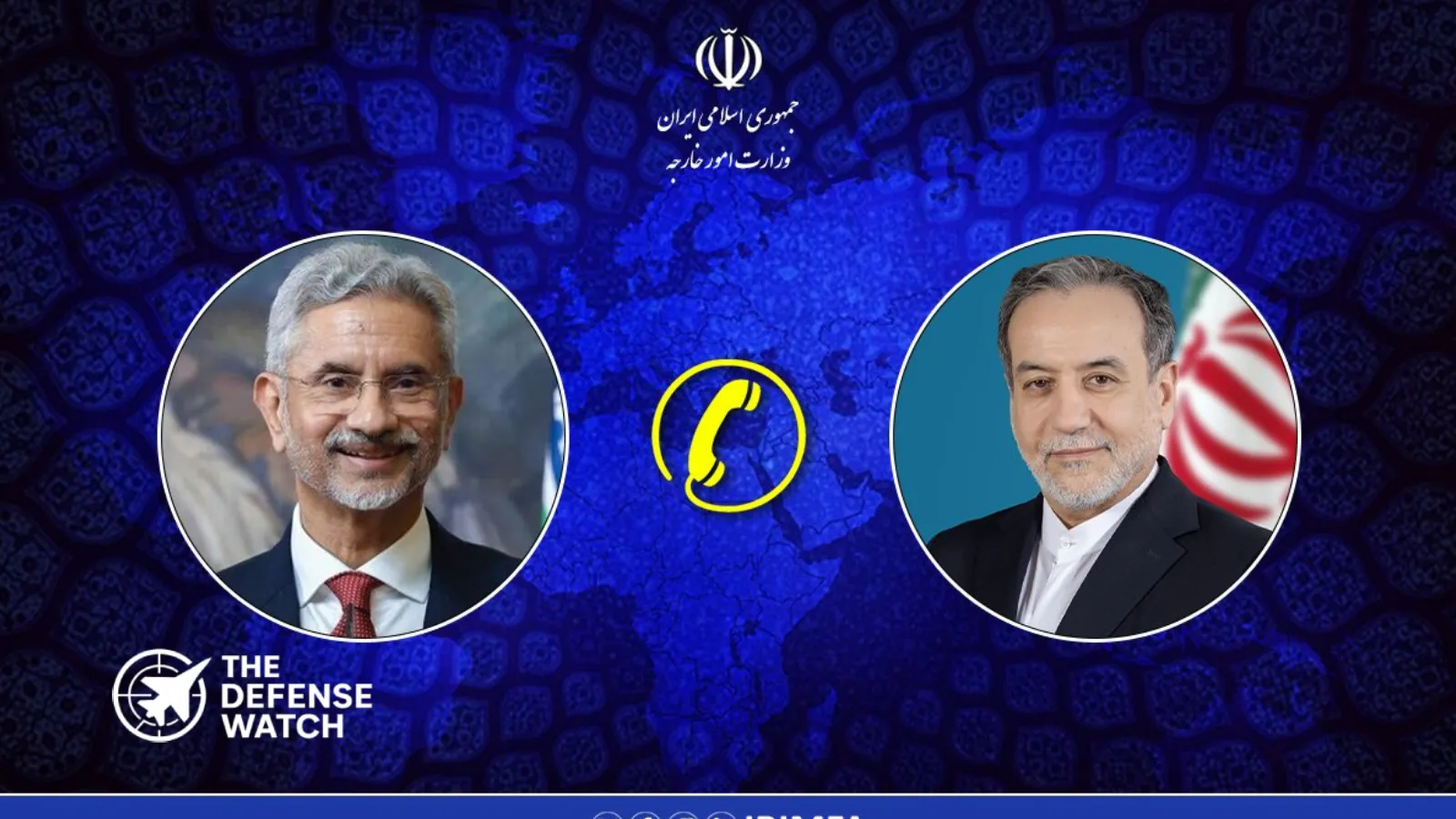
- Iran and India’s foreign ministers held a phone call to discuss escalating regional tensions.
- Talks included concerns about maritime security and shipping traffic through the Strait of Hormuz.
- Iran accused the United States and Israel of military aggression and destabilizing regional security.
- India emphasized continued diplomatic consultations and maintaining bilateral relations with Tehran.
- The discussion highlights growing international concern over energy supply routes and Gulf stability.
Iran India Foreign Ministers Discuss Regional Tensions And Strait Of Hormuz Security
The Iran India foreign ministers call highlighted growing concerns over regional stability and maritime security as tensions involving the United States, Israel, and Iran continue to affect the Middle East security environment. During the phone conversation, Indian Foreign Minister Subrahmanyam Jaishankar and Iranian Foreign Minister Seyed Abbas Araghchi reviewed recent developments and discussed the implications for shipping routes through the Strait of Hormuz.
Both sides emphasized the importance of diplomatic engagement and maintaining bilateral communication during a period of heightened geopolitical risk in the Gulf region.
The Big Picture
The diplomatic exchange between India and Iran reflects the broader strategic importance of the Persian Gulf and its maritime corridors to global energy markets and military operations.
The Strait of Hormuz remains one of the world’s most critical maritime chokepoints. Roughly one fifth of global oil trade moves through the narrow waterway connecting the Persian Gulf to the Arabian Sea. Any disruption in the corridor can rapidly affect energy prices, naval deployments, and global supply chains.
Recent military tensions involving the United States, Israel, and Iran have raised concerns among regional states and major energy consumers. Countries such as India depend heavily on Gulf energy supplies and maritime trade routes. Maintaining secure shipping lanes is therefore a central priority for New Delhi’s foreign and defense policy.
The Iran India foreign ministers call comes at a time when international attention is focused on the potential risk of escalation in the Middle East and its impact on global security.
What’s Happening
Iranian Foreign Minister Seyed Abbas Araghchi used the call to brief India on what Tehran described as attacks conducted by the United States and Israel during recent military operations involving Iranian territory.
According to Iran’s account of the conversation, Araghchi cited incidents including missile strikes and attacks on civilian infrastructure. He stated that Iran remains determined to defend its territorial integrity and sovereignty.
Tehran also argued that U.S. and Israeli military actions violate principles outlined in the United Nations Charter and international law. Iranian officials have repeatedly called on other governments to condemn what they describe as unlawful aggression.
The discussion also focused on maritime security in the Persian Gulf, particularly the safety of commercial shipping and tanker traffic moving through the Strait of Hormuz.
Iran told India that it maintains a principled approach to protecting shipping security in the region but argued that current instability results from U.S. military activity and broader geopolitical tensions.
India’s foreign minister emphasized the importance of continued diplomatic consultations between Tehran and New Delhi. Jaishankar also highlighted the need to preserve regional stability and maintain bilateral cooperation.
Why It Matters
The Iran India foreign ministers call underscores how military developments in the Middle East affect countries far beyond the region.
India is one of the world’s largest energy importers and depends heavily on oil shipments passing through the Strait of Hormuz. Any disruption to maritime traffic could affect India’s economy, energy prices, and industrial supply chains.
The Indian Navy also monitors the Gulf region closely because of the large number of Indian merchant vessels and seafarers operating in the area.
Diplomatic engagement with Iran allows India to manage risk while maintaining strategic autonomy in its foreign policy. New Delhi has historically balanced relations with both Western partners and regional powers such as Iran.
Maintaining open communication channels becomes particularly important when tensions threaten global maritime trade routes.
Strategic Implications
The Iran India foreign ministers call reflects a broader concern among major powers about the stability of the Persian Gulf maritime domain.
Military tensions in the region often trigger increased naval deployments by the United States and allied countries. The U.S. Navy’s Fifth Fleet operates extensively in the Gulf to secure shipping lanes and deter attacks on commercial vessels.
At the same time, Iran maintains significant naval and missile capabilities designed to influence traffic through the Strait of Hormuz. These include anti ship missiles, fast attack craft, and coastal defense systems operated by the Islamic Revolutionary Guard Corps Navy.
Because of the narrow geography of the strait, even limited military activity can create uncertainty for shipping companies and insurers.
India’s diplomatic engagement with Iran helps reduce the risk of miscommunication and supports broader international efforts to keep the sea lanes open.
Competitor View
Regional and global powers closely watch diplomatic exchanges such as the Iran India foreign ministers call.
China has expanded its strategic and economic presence in the Gulf region through energy investments and infrastructure projects. Beijing relies heavily on Gulf oil imports and supports stability in maritime routes.
Russia also maintains strategic ties with Iran and has expressed opposition to unilateral military actions in the region.
For the United States and its allies, maintaining freedom of navigation in the Strait of Hormuz remains a core strategic objective. Washington has repeatedly emphasized the need to prevent any disruption to international shipping.
India’s position reflects a balancing strategy. New Delhi maintains security cooperation with the United States while also preserving diplomatic ties with Iran.
What To Watch Next
Several developments will shape the regional security outlook in the coming months.
Diplomatic consultations between Iran and regional powers may expand as countries attempt to prevent escalation.
Naval deployments in the Gulf region could increase if tensions continue to affect shipping lanes.
Energy markets will also closely track developments involving the Strait of Hormuz, given its role in global oil exports.
Additional international mediation efforts could emerge if military tensions continue to rise.
Capability Gap
The conversation between Iran and India highlights a broader security challenge in the Middle East maritime domain.
The Persian Gulf lacks a unified regional maritime security framework that includes all major stakeholders. Instead, the region relies on overlapping military presences and bilateral arrangements.
This fragmented structure creates potential gaps in coordination, crisis management, and communication during periods of tension.
Countries such as India increasingly rely on diplomatic engagement and naval monitoring to mitigate these risks and protect their maritime interests.
The Bottom Line
The Iran India foreign ministers call reflects growing international concern that escalating military tensions in the Middle East could threaten one of the world’s most critical maritime energy corridors.
Get real time update about this post category directly on your device, subscribe now.
