

India’s Nuclear Arsenal Reaches 190 Warheads
India is estimated to have an inventory of about 190 nuclear warheads as of January 2026, according to the Stockholm International Peace Research Institute. The figure places India ahead of Pakistan’s estimated 170 warheads, but the more important development is the continued modernization of the delivery systems used to support India’s nuclear deterrent.
A separate 2026 assessment by the Federation of American Scientists estimates that more than 160 Indian warheads are associated with operational delivery systems, with roughly 30 additional warheads produced for missiles still in production. Because India does not publicly disclose the size of its nuclear stockpile, these figures remain open-source estimates rather than official inventory data.
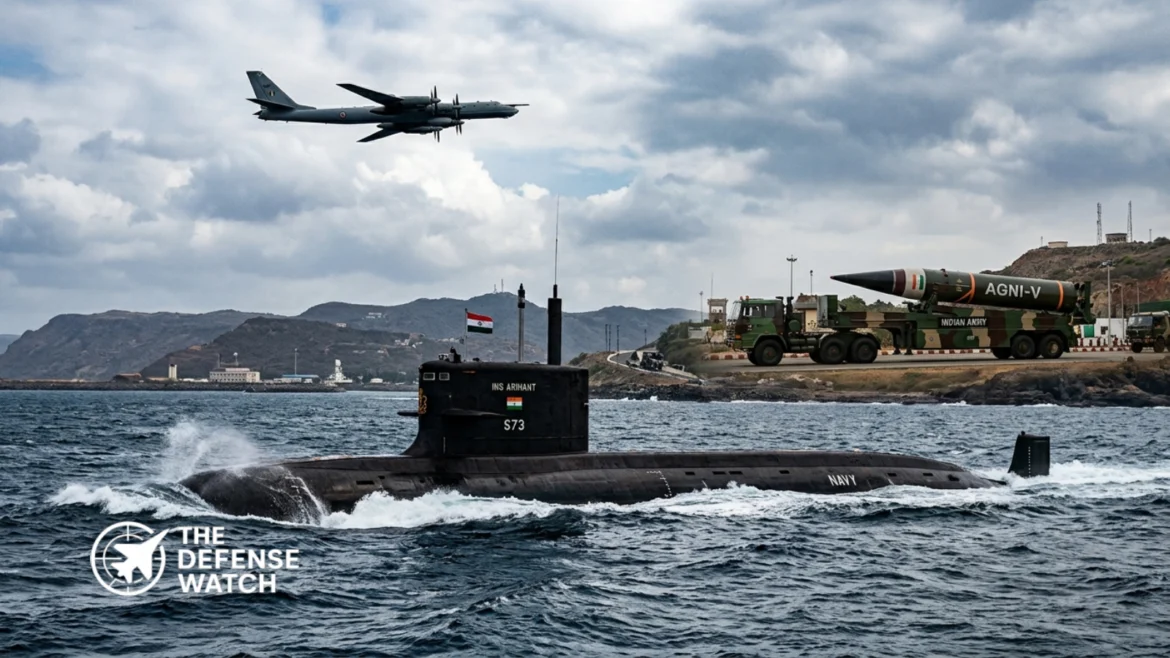
The distinction matters. India’s nuclear posture is not defined simply by the number of warheads. Its strategic direction is increasingly visible through the development of land based ballistic missiles, nuclear capable aircraft and ballistic missile submarines, giving New Delhi the three legs of a nuclear triad.
The 190 warhead figure is an estimate, not an official count
SIPRI’s 2026 assessment puts India’s total nuclear inventory at approximately 190 warheads. Its methodology distinguishes between deployed warheads, the broader military stockpile and the total inventory.
SIPRI assessed 12 Indian warheads as deployed at the beginning of 2026, while the total inventory was estimated at 190. The organization also cautions that its nuclear force figures are estimates and are revised as new information becomes available.
That makes the 190 figure useful for assessing the direction of India’s nuclear modernization, but it should not be presented as a number confirmed by the Indian government.
The Federation of American Scientists reached a similar overall figure through a different open-source assessment. Its Nuclear Notebook analysis estimates that India has more than 160 warheads for operational launchers, with additional warheads being produced for newer delivery systems.
India’s triad is becoming more credible at sea
The naval component is particularly important because ballistic missile submarines provide a survivable platform for a retaliatory nuclear force.
India commissioned its second Arihant class nuclear powered ballistic missile submarine, INS Arighaat, at Visakhapatnam on August 29, 2024. India’s Ministry of Defence said the submarine would strengthen the country’s nuclear triad and nuclear deterrence.
The significance of the submarine force is less about the number of missiles carried by an individual boat and more about survivability. A submarine operating undetected at sea is harder for an adversary to locate and destroy than a fixed facility or a known land based launcher.
India therefore does not need to match the much larger submarine forces operated by the United States, Russia or China for the sea based leg to have strategic value. Its purpose is to ensure that an adversary cannot assume that a first strike could eliminate India’s ability to retaliate.
The Federation of American Scientists estimates that India operates one sea based ballistic missile system and identifies additional submarines as part of the country’s continuing nuclear force development.
Land based missiles remain the backbone
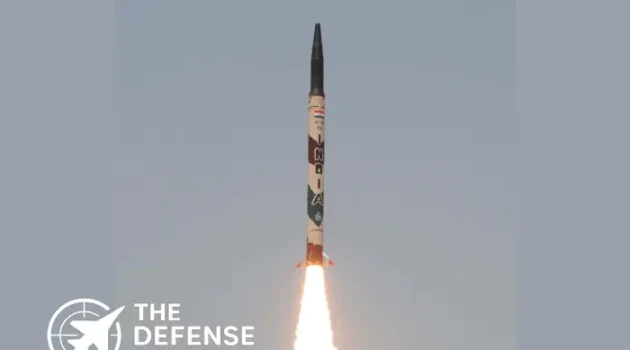
India’s land based nuclear force remains centered on the Agni family of ballistic missiles, which provides the country with a range of delivery options.
One of the most consequential developments has been India’s work on multiple independently targetable reentry vehicle, or MIRV, technology.
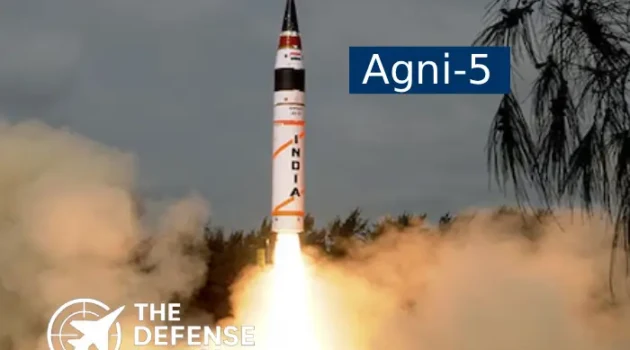
India’s Defence Research and Development Organisation conducted the first flight test of an Agni 5 missile equipped with MIRV technology in March 2024. The Indian government said telemetry and radar stations tracked multiple reentry vehicles during the Mission Divyastra test.
MIRV technology can allow a single ballistic missile to deliver multiple independently targeted reentry vehicles. It can therefore increase the number of potential targets covered by a missile and complicate missile defense planning.
However, the 2024 test should not automatically be interpreted as evidence that India’s operational Agni 5 force has already been equipped with MIRVs at scale. Public information does not establish the number of operational MIRV equipped missiles or the number of nuclear warheads assigned to them.
That distinction is important when assessing India’s nuclear modernization. A successful technology demonstration is not the same thing as a fully deployed operational capability.
The China factor is becoming harder to ignore
India’s nuclear strategy has historically been closely linked to Pakistan, but the geography of its missile modernization increasingly points toward a second requirement: maintaining a credible deterrent against China.
SIPRI’s 2026 assessment specifically notes that India’s modernization program is increasingly focused on developing longer range weapons capable of reaching targets throughout China, while planning continues to address the country’s longstanding rivalry with Pakistan.
This is a significant change in the strategic context.
Pakistan remains India’s most immediate nuclear rival and possesses an estimated 170 warheads, according to SIPRI. China, however, has a vastly larger and rapidly expanding arsenal. SIPRI estimated China’s nuclear inventory at about 620 warheads at the beginning of 2026, compared with India’s 190.
India therefore faces two different deterrence problems.
Against Pakistan, geography permits shorter range delivery systems to cover potential targets. Against China, India needs systems capable of reaching targets across a much larger geographic area. That requirement helps explain why India’s nuclear modernization is increasingly associated with longer range missiles and a more capable submarine force.
Air power provides the third leg
India’s nuclear triad also includes nuclear capable aircraft. The air component provides a different form of flexibility from ballistic missiles.
Aircraft can be dispersed, recalled before weapon release and used to signal readiness without necessarily committing to a missile launch. They can also provide a degree of ambiguity that is more difficult to achieve with fixed missile forces.
The tradeoff is survivability. Aircraft operating from known bases can be vulnerable during a major conflict, particularly if an adversary has the ability to strike airfields and supporting infrastructure.
This is one reason the development of the sea based component is strategically important. A more credible submarine force can reduce reliance on vulnerable land and air bases for maintaining a retaliatory capability.
What the 190 warhead estimate does not tell us
The headline number should not be confused with India’s immediately available nuclear striking power.
Open-source estimates cannot establish the precise allocation of individual warheads among aircraft, land based missiles and submarine launched systems. Nor do they provide a complete picture of India’s readiness procedures, storage arrangements or command and control architecture.
SIPRI’s assessment of 12 deployed warheads is therefore particularly significant, but it should also be treated as an external assessment rather than an official declaration by New Delhi.
India’s stated nuclear doctrine continues to emphasize credible minimum deterrence and a no first use posture. The Indian Ministry of External Affairs has publicly described its nuclear doctrine in those terms.
The modernization of delivery systems does not, by itself, prove a change in that doctrine.
A smaller force with increasingly sophisticated delivery systems
India’s nuclear arsenal remains much smaller than those of the United States, Russia and China. Its modernization program is instead aimed at improving the survivability, reach and credibility of a relatively limited deterrent.
The combination of Agni ballistic missiles, nuclear capable aircraft and Arihant class ballistic missile submarines gives India the basic structure required for a triad. The addition of MIRV technology and newer submarine capabilities indicates that modernization is moving beyond simply maintaining legacy delivery systems.
The strategic challenge for New Delhi is balancing this modernization against its stated objective of credible minimum deterrence.
For Pakistan, India’s growing capabilities reinforce an already established nuclear competition. For China, the development of longer range systems and a more survivable sea based force gives India’s deterrent a broader geographic purpose.
The available evidence does not establish that India is seeking numerical parity with either country. Instead, the 190 warhead estimate and ongoing delivery system modernization point toward a force designed to preserve a credible retaliatory capability while giving Indian planners greater flexibility across land, air and sea based systems.
Executive Summary:
India has completed the maiden flight trial of the Tactical Advanced Range Augmentation (TARA) glide weapon system, developed by DRDO with support from the Indian Air Force. The low cost precision guidance kit is designed to convert conventional unguided bombs into stand off precision weapons, strengthening India’s domestic smart munitions capability.
India Tests Indigenous TARA Glide Bomb Capability
India has tested a new low cost glide bomb capability aimed at expanding the precision strike reach of the Indian Air Force (IAF). The country’s Defence Research and Development Organisation (DRDO), working alongside the IAF, successfully conducted the first flight trial of the Tactical Advanced Range Augmentation (TARA) weapon system off the coast of Odisha on May 7.
According to India’s Ministry of Defence, the TARA system is the country’s first indigenous glide weapon kit designed to convert conventional unguided bombs into precision guided munitions.
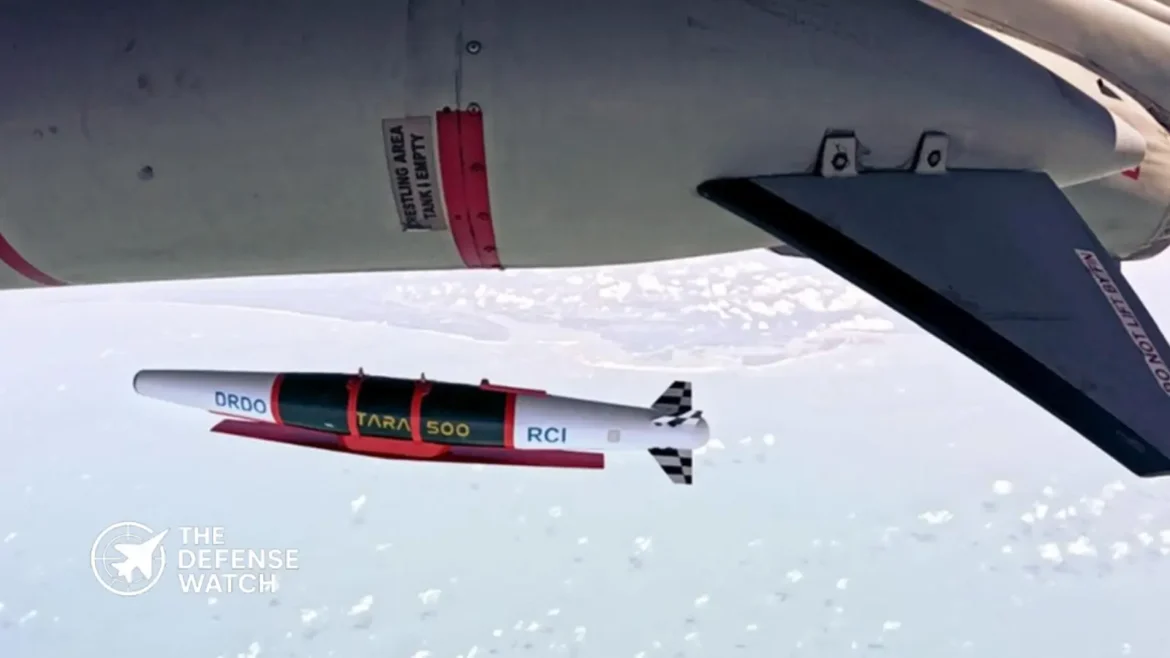
The flight trial involved an IAF SEPECAT Jaguar strike aircraft launching a 500 kg class bomb fitted with the TARA modular guidance and glide kit. The system was developed by DRDO’s Hyderabad based Research Centre Imarat (RCI) with support from other DRDO laboratories and Indian industry partners.
Low Cost Precision Weapons Gain Strategic Importance
The TARA glide bomb program reflects a broader shift in military airpower doctrine toward affordable precision strike weapons that can be deployed in large numbers.
Modern air campaigns increasingly rely on stand off munitions capable of striking targets from outside heavily defended airspace. However, high end cruise missiles and advanced smart weapons remain expensive and difficult to mass produce during prolonged conflict scenarios.
India’s approach mirrors efforts by several major military powers to convert existing “dumb bombs” into guided stand off weapons using modular kits. Similar concepts include the American JDAM family, Russia’s UMPK glide kits, and Turkey’s HGK precision guidance systems.
What makes the TARA program notable is its emphasis on low cost production and domestic manufacturing. Indian officials stated that production activities have already started with development and production partners from the private sector.
That production strategy could allow the IAF to expand its inventory of precision weapons without relying heavily on imported systems.
Designed For Multiple Aircraft Platforms
Although the maiden test was conducted using the Jaguar strike aircraft, Indian defense reports indicate the TARA kit is also intended for integration with several frontline IAF combat platforms.
These reportedly include the Sukhoi Su-30MKI, Mirage 2000, and the indigenous Light Combat Aircraft (LCA) Tejas fleet.
The flexibility of the modular kit is operationally important. Rather than developing entirely new missile systems, the TARA concept allows existing bomb inventories to be upgraded into precision stand off weapons.
According to information presented by Indian industry during Aero India 2025, the weapon may achieve strike ranges between 80 and 100 kilometers when released from high altitude at near transonic speed.
Open source reporting also suggests the system could be offered in different guidance configurations. One version reportedly uses satellite aided navigation with an accuracy under 20 meters circular error probable (CEP), while another variant may employ imaging infrared terminal guidance for significantly greater accuracy.
Expanding India’s Indigenous Precision Strike Portfolio
The TARA test comes amid a wider Indian push to strengthen domestic missile and guided weapon production under the government’s long running defense self reliance strategy.
India has already fielded several indigenous stand off weapon systems in recent years, including the Smart Anti Airfield Weapon (SAAW), BrahMos cruise missile variants, and the long range Gaurav glide bomb program.
TARA appears positioned as a lower cost option within that growing precision strike ecosystem. Its role may focus on enabling mass deployment against fixed ground targets while preserving more expensive missile inventories for higher value targets.
The system could also provide operational flexibility during regional contingencies where large quantities of precision guided munitions may be required over extended periods.
Analysts note that affordable glide bomb kits have gained renewed military relevance following lessons observed in conflicts in Ukraine and the Middle East, where cost effective stand off strike systems have been used extensively against fixed infrastructure and battlefield targets.
Regional Security Context
India’s continued investment in stand off strike weapons reflects broader regional military modernization trends across Asia.
China has rapidly expanded its inventory of precision guided munitions and long range air launched weapons, while Pakistan has also pursued precision strike capabilities through both imported and indigenous systems.
For the IAF, systems such as TARA may help improve survivability by allowing aircraft to release munitions farther from contested air defense zones.
The ability to retrofit existing bomb stockpiles also offers logistical and economic advantages during sustained military operations.
Defense Minister Rajnath Singh described the TARA trial as an important milestone for India’s indigenous defense capabilities, while DRDO Chairman Samir V Kamat congratulated the teams involved in the successful test campaign.
Executive Summary:
MBDA and the Indian Air Force have signed an agreement to establish local support and overhaul capabilities for MICA air-to-air missiles in India. The move is designed to improve missile availability, reduce turnaround times, and strengthen India’s long-term defense sustainment infrastructure.
India Expands MICA Missile Support Infrastructure
The Indian Air Force (IAF) and European missile manufacturer MBDA have signed an agreement to establish an in-country support and overhaul capability for the MICA missile system, according to reporting from European Security & Defence.
The agreement marks another step in India’s broader defense modernization and localization strategy, particularly in sustainment and lifecycle management of advanced weapons systems. The new arrangement will allow the Indian Air Force to conduct maintenance, repair, overhaul, and technical support operations for MICA missiles within India rather than relying entirely on overseas support channels.
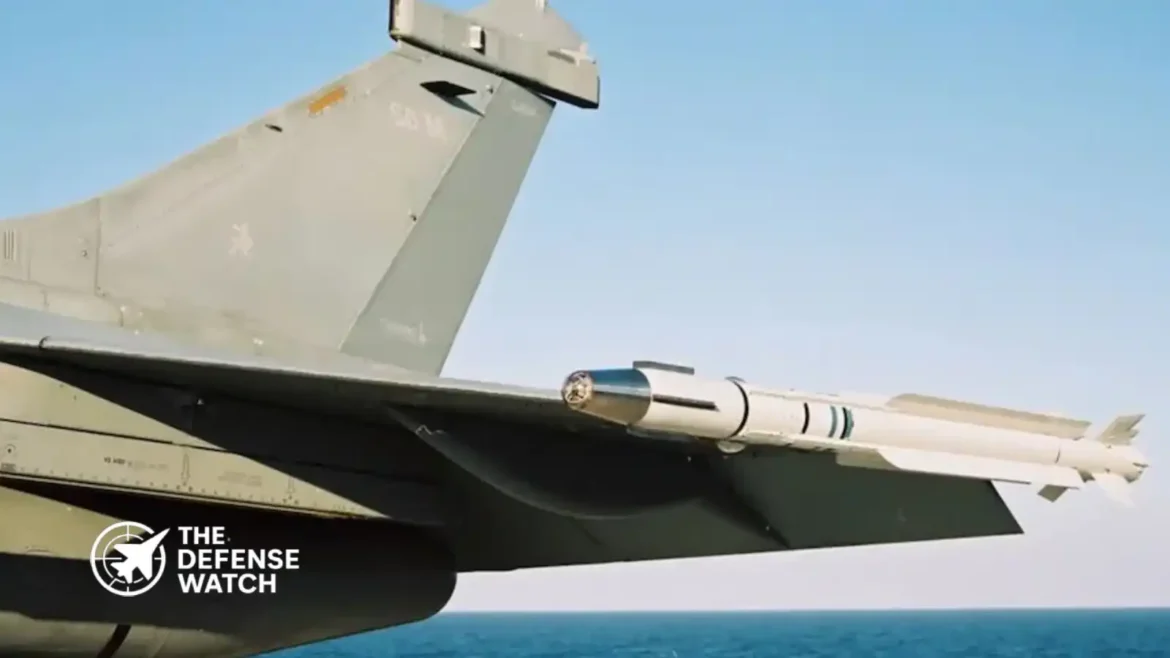
The MICA missile family is widely used on the Indian Air Force’s fleet of Dassault Mirage 2000 fighter aircraft and is also integrated with the Dassault Rafale platform operated by India.
Why The Agreement Matters
The new MICA missile support capability is strategically important because missile sustainment directly affects operational readiness and fleet availability. Air forces operating modern precision-guided munitions increasingly require local maintenance ecosystems to ensure rapid turnaround during peacetime operations and potential conflict scenarios.
By establishing domestic overhaul capability, the Indian Air Force could reduce dependency on foreign repair cycles, improve inventory management, and shorten maintenance timelines. The agreement also aligns with India’s long-running push for defense self-reliance under its indigenous manufacturing and sustainment initiatives.
While the announcement did not disclose the financial value of the agreement, the operational implications are significant. Sustainment infrastructure is often less visible than new procurement contracts, but it plays a critical role in maintaining combat effectiveness over the lifespan of advanced missile inventories.
The MICA missile itself remains a key component of India’s air combat capability. Developed by MBDA, the weapon is available in both infrared and radar-guided variants and is designed for beyond-visual-range and close-combat engagements. The missile has been exported to several countries and integrated onto multiple fighter aircraft platforms globally.
India’s Broader Air Power Modernization Effort
The MICA missile support agreement comes as India continues investing heavily in fighter aircraft modernization, weapons integration, and domestic defense industrial capacity.
The Indian Air Force is currently balancing several parallel modernization priorities, including Rafale fleet expansion, indigenous fighter development programs, upgraded air defense systems, and improvements in logistics infrastructure.
Local maintenance and overhaul agreements have become increasingly important for countries seeking to ensure operational continuity during geopolitical uncertainty and supply chain disruptions. Establishing domestic support capability for missile systems can help mitigate delays associated with overseas transportation, export approvals, and industrial bottlenecks.
India has pursued similar localization efforts across other defense sectors, including aircraft maintenance, naval systems support, armored vehicle production, and missile manufacturing partnerships. The latest MBDA agreement fits into this wider policy direction.
From MBDA’s perspective, the deal strengthens its long-term relationship with one of its largest international defense customers. India remains a major market for European aerospace and missile manufacturers, particularly in combat aviation and precision-guided weapons.
Operational Benefits For The Indian Air Force
The establishment of local MICA missile overhaul capability could provide several operational advantages for the Indian Air Force.
First, improved sustainment capacity may increase missile serviceability rates across frontline fighter squadrons. Faster inspection and refurbishment cycles can help ensure weapons remain available for training and operational deployments.
Second, local technical expertise development supports long-term force readiness. Building indigenous maintenance knowledge reduces reliance on external technical support and strengthens domestic defense engineering capabilities.
Third, in-country support infrastructure can provide greater flexibility during periods of heightened regional tension. Nations operating imported weapon systems often prioritize local sustainment capacity to avoid operational vulnerabilities tied to external supply chains.
The agreement also reflects a growing trend in global defense procurement where sustainment, technology transfer, and industrial participation are becoming as important as the original weapons purchase itself.
Strategic Implications In The Region
India’s continued investment in air-launched missile support infrastructure comes amid ongoing regional military modernization efforts across Asia.
Air combat capabilities, including beyond-visual-range missile systems, remain central to maintaining air superiority and deterrence. Sustainment readiness therefore becomes a key component of overall combat capability, particularly for high-tempo air operations.
Although the agreement is focused on maintenance and overhaul rather than new missile procurement, it demonstrates how support infrastructure is increasingly viewed as a strategic asset in modern military planning.
For India, improving local sustainment capacity supports both operational resilience and broader national defense industrial objectives.
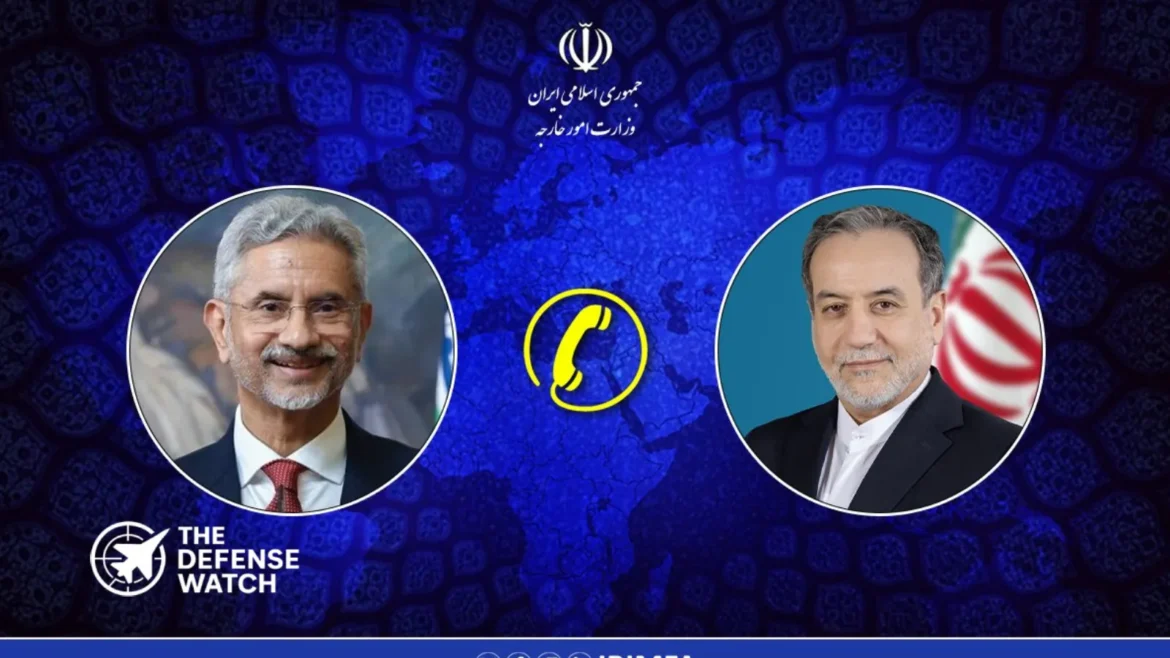
- Iran and India’s foreign ministers held a phone call to discuss escalating regional tensions.
- Talks included concerns about maritime security and shipping traffic through the Strait of Hormuz.
- Iran accused the United States and Israel of military aggression and destabilizing regional security.
- India emphasized continued diplomatic consultations and maintaining bilateral relations with Tehran.
- The discussion highlights growing international concern over energy supply routes and Gulf stability.
Iran India Foreign Ministers Discuss Regional Tensions And Strait Of Hormuz Security
The Iran India foreign ministers call highlighted growing concerns over regional stability and maritime security as tensions involving the United States, Israel, and Iran continue to affect the Middle East security environment. During the phone conversation, Indian Foreign Minister Subrahmanyam Jaishankar and Iranian Foreign Minister Seyed Abbas Araghchi reviewed recent developments and discussed the implications for shipping routes through the Strait of Hormuz.
Both sides emphasized the importance of diplomatic engagement and maintaining bilateral communication during a period of heightened geopolitical risk in the Gulf region.
The Big Picture
The diplomatic exchange between India and Iran reflects the broader strategic importance of the Persian Gulf and its maritime corridors to global energy markets and military operations.
The Strait of Hormuz remains one of the world’s most critical maritime chokepoints. Roughly one fifth of global oil trade moves through the narrow waterway connecting the Persian Gulf to the Arabian Sea. Any disruption in the corridor can rapidly affect energy prices, naval deployments, and global supply chains.
Recent military tensions involving the United States, Israel, and Iran have raised concerns among regional states and major energy consumers. Countries such as India depend heavily on Gulf energy supplies and maritime trade routes. Maintaining secure shipping lanes is therefore a central priority for New Delhi’s foreign and defense policy.
The Iran India foreign ministers call comes at a time when international attention is focused on the potential risk of escalation in the Middle East and its impact on global security.
What’s Happening
Iranian Foreign Minister Seyed Abbas Araghchi used the call to brief India on what Tehran described as attacks conducted by the United States and Israel during recent military operations involving Iranian territory.
According to Iran’s account of the conversation, Araghchi cited incidents including missile strikes and attacks on civilian infrastructure. He stated that Iran remains determined to defend its territorial integrity and sovereignty.
Tehran also argued that U.S. and Israeli military actions violate principles outlined in the United Nations Charter and international law. Iranian officials have repeatedly called on other governments to condemn what they describe as unlawful aggression.
The discussion also focused on maritime security in the Persian Gulf, particularly the safety of commercial shipping and tanker traffic moving through the Strait of Hormuz.
Iran told India that it maintains a principled approach to protecting shipping security in the region but argued that current instability results from U.S. military activity and broader geopolitical tensions.
India’s foreign minister emphasized the importance of continued diplomatic consultations between Tehran and New Delhi. Jaishankar also highlighted the need to preserve regional stability and maintain bilateral cooperation.
Why It Matters
The Iran India foreign ministers call underscores how military developments in the Middle East affect countries far beyond the region.
India is one of the world’s largest energy importers and depends heavily on oil shipments passing through the Strait of Hormuz. Any disruption to maritime traffic could affect India’s economy, energy prices, and industrial supply chains.
The Indian Navy also monitors the Gulf region closely because of the large number of Indian merchant vessels and seafarers operating in the area.
Diplomatic engagement with Iran allows India to manage risk while maintaining strategic autonomy in its foreign policy. New Delhi has historically balanced relations with both Western partners and regional powers such as Iran.
Maintaining open communication channels becomes particularly important when tensions threaten global maritime trade routes.
Strategic Implications
The Iran India foreign ministers call reflects a broader concern among major powers about the stability of the Persian Gulf maritime domain.
Military tensions in the region often trigger increased naval deployments by the United States and allied countries. The U.S. Navy’s Fifth Fleet operates extensively in the Gulf to secure shipping lanes and deter attacks on commercial vessels.
At the same time, Iran maintains significant naval and missile capabilities designed to influence traffic through the Strait of Hormuz. These include anti ship missiles, fast attack craft, and coastal defense systems operated by the Islamic Revolutionary Guard Corps Navy.
Because of the narrow geography of the strait, even limited military activity can create uncertainty for shipping companies and insurers.
India’s diplomatic engagement with Iran helps reduce the risk of miscommunication and supports broader international efforts to keep the sea lanes open.
Competitor View
Regional and global powers closely watch diplomatic exchanges such as the Iran India foreign ministers call.
China has expanded its strategic and economic presence in the Gulf region through energy investments and infrastructure projects. Beijing relies heavily on Gulf oil imports and supports stability in maritime routes.
Russia also maintains strategic ties with Iran and has expressed opposition to unilateral military actions in the region.
For the United States and its allies, maintaining freedom of navigation in the Strait of Hormuz remains a core strategic objective. Washington has repeatedly emphasized the need to prevent any disruption to international shipping.
India’s position reflects a balancing strategy. New Delhi maintains security cooperation with the United States while also preserving diplomatic ties with Iran.
What To Watch Next
Several developments will shape the regional security outlook in the coming months.
Diplomatic consultations between Iran and regional powers may expand as countries attempt to prevent escalation.
Naval deployments in the Gulf region could increase if tensions continue to affect shipping lanes.
Energy markets will also closely track developments involving the Strait of Hormuz, given its role in global oil exports.
Additional international mediation efforts could emerge if military tensions continue to rise.
Capability Gap
The conversation between Iran and India highlights a broader security challenge in the Middle East maritime domain.
The Persian Gulf lacks a unified regional maritime security framework that includes all major stakeholders. Instead, the region relies on overlapping military presences and bilateral arrangements.
This fragmented structure creates potential gaps in coordination, crisis management, and communication during periods of tension.
Countries such as India increasingly rely on diplomatic engagement and naval monitoring to mitigate these risks and protect their maritime interests.
The Bottom Line
The Iran India foreign ministers call reflects growing international concern that escalating military tensions in the Middle East could threaten one of the world’s most critical maritime energy corridors.

India Reportedly Eyes Israel’s LORA Missile System for Long-Range Precision Strikes
New Delhi, November 2025 — India is reportedly in talks with Israel to acquire and co-produce the LORA (Long Range Artillery) tactical ballistic missile, a precision-strike system developed by Israel Aerospace Industries (IAI).
According to reports from Israeli media, a Memorandum of Understanding (MoU) was signed between Indian Defense Secretary Rajesh Kumar Singh and Israeli Defense Director General Amir Baram to expand defense collaboration between the two nations.
Expanding India-Israel Defense Ties
The potential acquisition comes amid growing India–Israel defense cooperation. Data from the Stockholm International Peace Research Institute (SIPRI) indicates that India accounted for roughly 34% of Israel’s total defense exports between 2020 and 2024, making it Israel’s largest defense customer.
LORA: Capabilities and Strategic Utility
Developed by IAI’s MLM Division, the LORA missile system offers an operational range of up to 400 kilometers, significantly extending strike capabilities compared to India’s existing Rampage air-launched missile (approximately 250 km). LORA’s solid-fuel propulsion, satellite-based guidance system, and fire-and-forget functionality make it suitable for precision engagements against fortified targets.
The missile, weighing around 1,600 kilograms, travels at supersonic speeds and is capable of deploying multiple warhead types — including high-explosive and penetration variants — for tactical and strategic missions.
Why LORA Matters to India
India’s reported interest in the LORA system may stem from operational experiences with the Rampage missile, used during regional tensions with Pakistan. While Rampage provides accurate standoff strike capability, its shorter range exposes launch aircraft to hostile air defenses. LORA, by contrast, allows Indian forces to strike from well beyond enemy radar coverage, aligning with India’s doctrine of deep precision strikes and networked warfare.
Broader Defense Collaboration
Beyond LORA, reports indicate that India is also exploring Israel’s Ice Breaker cruise missile — a 300 km-range precision weapon designed for both land and naval operations. The Ice Breaker employs AI-assisted infrared navigation and is built to function in electronic warfare-saturated environments, underscoring India’s interest in next-generation missile systems.
Strategic Outlook
If the deal progresses, it could represent a significant milestone in India’s missile modernization efforts, complementing indigenous systems such as BrahMos, Agni, and Prithvi. Collaboration with Israel could further enhance India’s precision-strike capabilities, particularly in contested or high-threat regions.
No official confirmation has been made by the Indian Ministry of Defence or Israel Aerospace Industries regarding the LORA deal. However, defense observers note that such cooperation fits into India’s broader push for self-reliance in advanced weapon technologies under its ‘Make in India’ initiative.
What’s Next
If finalized, the LORA partnership would strengthen bilateral defense production and potentially position India as a co-producer of advanced tactical ballistic systems for regional and global markets. Both nations are expected to issue formal statements if the MoU leads to a production agreement.
LORA Tactical Ballistic Missile System – Full Specifications
- Guidance System: GPS/INS
- Maximum Speed: Mach 4.5
- Launch Compatibility: Ground and Naval Platforms
- Warhead Technology: High-Explosive or Penetration
