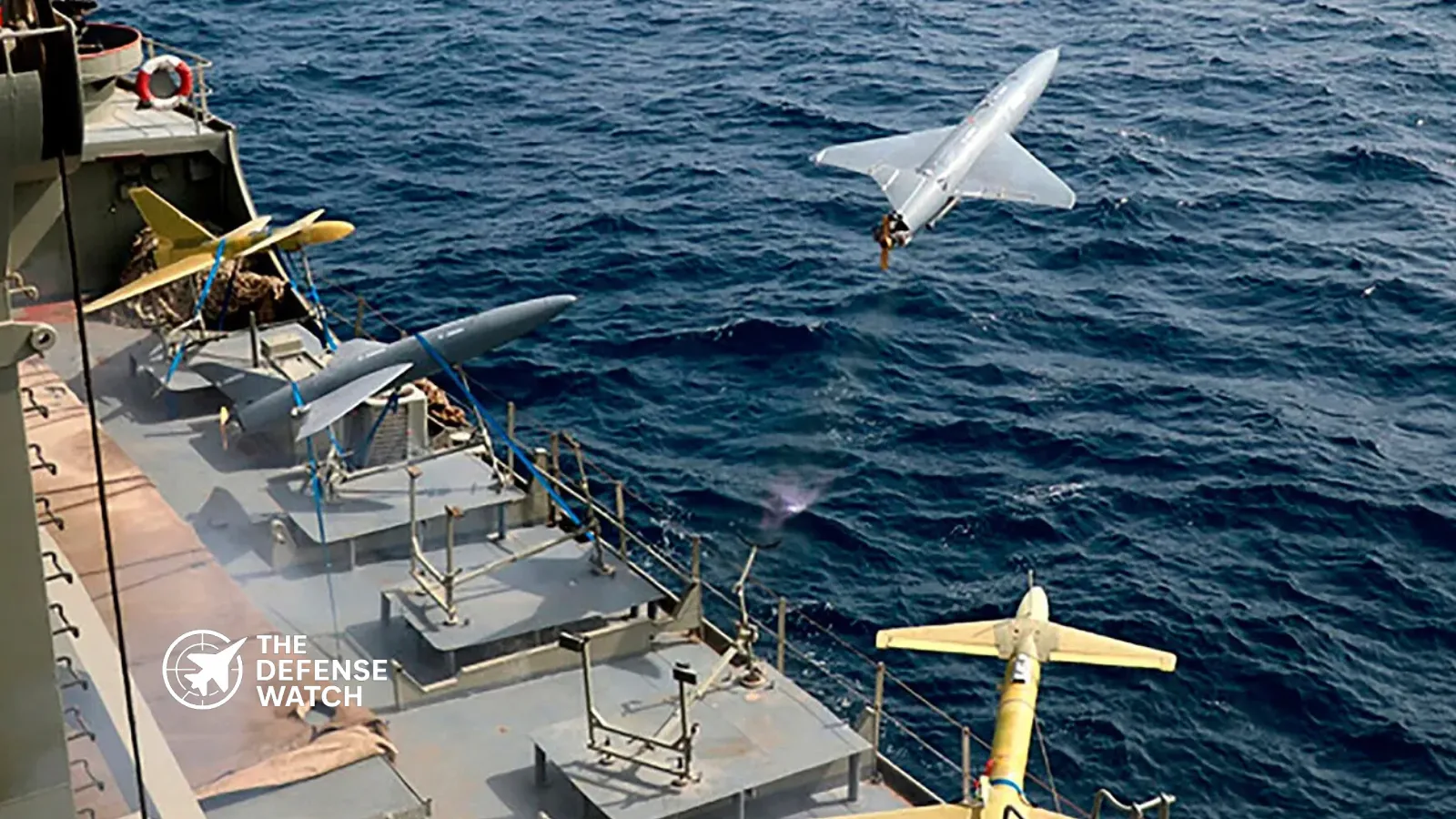
- Intelligence reporting has warned that adversaries could launch drones from maritime vessels to strike U.S. targets along the coast.
- Small unmanned aerial systems can be deployed from commercial ships, fishing vessels, or containerized launch systems.
- Experts warn maritime drone attacks could bypass traditional homeland air defense focused on large aircraft or missiles.
- Similar tactics have already appeared in conflicts involving Iran aligned groups and maritime drone operations.
- The evolving threat highlights the need for layered coastal defenses and improved counter drone capabilities.
Drone Attacks On U.S. From The Sea Raise Security Concerns
Drone attacks on U.S. from the sea are increasingly viewed by security analysts as a plausible method for adversaries to target American territory while avoiding traditional air defense systems. The concept involves launching unmanned aerial systems from maritime platforms positioned near the U.S. coastline.
Defense analysts warn that relatively small drones launched from ships or other maritime platforms could threaten military installations, ports, energy infrastructure, or densely populated coastal cities. The idea has gained renewed attention amid evolving drone warfare tactics seen in multiple modern conflicts.
Recent intelligence discussions have included the possibility that hostile actors could attempt such operations as a form of asymmetric retaliation. However, U.S. officials emphasize that no credible imminent threat to the homeland has been confirmed.
The Big Picture
Unmanned systems are rapidly reshaping the character of warfare. Cheap, widely available drones now provide state and non state actors with capabilities once limited to advanced militaries.
Modern conflicts have demonstrated how drones can be used for reconnaissance, precision strikes, and coordinated swarm attacks. These systems can be launched from land, air, or maritime platforms, expanding their operational reach.
For homeland defense planners, this trend creates a complex challenge. Traditional air defense networks were designed primarily to detect and intercept aircraft, ballistic missiles, and cruise missiles. Small drones operating at low altitude present a different type of threat.
Launching drones from maritime platforms further complicates detection because commercial shipping traffic operates continuously along U.S. coastal waters.
What’s Happening
Security concerns about maritime drone launches surfaced after intelligence reporting suggested adversaries had explored using vessels to launch drones against U.S. targets along the West Coast.
The concept involves positioning a vessel offshore and launching multiple drones toward coastal infrastructure or military facilities. The drones could fly at low altitude, potentially avoiding radar coverage optimized for larger threats.
The alert circulated among law enforcement and intelligence agencies but was based on limited information and a single unverified tip, according to government officials. Authorities stressed there was no credible indication of an imminent attack against the United States.
Nevertheless, the warning highlighted the growing recognition of maritime drone threats.
Why It Matters
Drone attacks launched from maritime platforms represent a classic asymmetric warfare tactic.
Instead of relying on expensive missiles or aircraft, an attacker could employ relatively inexpensive drones launched from civilian vessels or disguised platforms. The approach could exploit gaps between maritime surveillance systems and homeland air defense networks.
This concept mirrors tactics already seen in recent conflicts. Iranian aligned groups and other actors have repeatedly used drones and unmanned surface vessels to attack shipping and military targets in the Middle East.
These incidents demonstrate how unmanned systems can operate in maritime environments with limited warning.
For the United States, the threat is particularly significant because of the concentration of critical infrastructure along coastal regions.
Strategic Implications
The possibility of drone attacks on U.S. from the sea underscores a broader shift in how adversaries may attempt to challenge U.S. security.
Rather than attempting traditional military strikes against heavily defended targets, adversaries could focus on unconventional attack vectors that exploit the openness of commercial maritime traffic.
Major U.S. naval bases, logistics hubs, and ports are located near large population centers. Facilities such as San Diego, Norfolk, and Pearl Harbor sit close to civilian maritime traffic lanes.
A small number of drones launched from offshore could potentially create operational disruption even without causing large scale destruction.
The psychological and economic effects of such an attack could also be significant.
Competitor View
Strategic competitors and regional adversaries closely study how unmanned systems perform in current conflicts.
Iran and its network of aligned groups have demonstrated growing expertise in drone warfare across the Middle East. Several incidents have involved drone or missile attacks against U.S. forces and partners in the region.
The broader trend is not limited to Iran. Russia’s war in Ukraine has shown how drones can be used to strike strategic targets deep inside defended territory.
For competitors observing these developments, maritime launched drones could appear as an attractive low cost option to challenge U.S. power without triggering a direct conventional confrontation.
Capability Gap
The emerging threat highlights several capability gaps in homeland defense.
First, the United States lacks a fully integrated coastal counter drone architecture. Existing air defense systems focus primarily on high altitude threats such as aircraft and missiles.
Second, commercial shipping traffic creates a dense maritime environment where hostile platforms could hide among legitimate vessels.
Third, small drones flying low over water are difficult for traditional radar systems to detect.
The Department of Defense and the Department of Homeland Security have begun expanding counter drone technologies, including radar optimized for small targets, electronic warfare systems, and layered detection networks.
However, integrating these capabilities across maritime, air, and law enforcement agencies remains a complex challenge.
What To Watch Next
Several developments will shape how the United States addresses the maritime drone threat.
First, U.S. military and homeland security agencies are expanding counter drone testing and deployment around key installations.
Second, policymakers are exploring regulatory changes to allow broader use of counter drone systems within U.S. territory.
Third, naval and coast guard forces are evaluating how maritime surveillance tools can detect suspicious vessels capable of launching drones.
Finally, the Pentagon continues to study how lessons from conflicts in Ukraine and the Middle East apply to U.S. homeland defense.
The Bottom Line
Drone attacks on U.S. from the sea remain a theoretical threat today, but the rapid evolution of unmanned warfare means homeland defense planners can no longer ignore the possibility.
Get real time update about this post category directly on your device, subscribe now.