Golden Dome Moves From Concept to Contract
The Golden Dome missile defense program cleared a critical credibility threshold on April 23, when senior Pentagon leaders publicly confirmed three concrete milestones for the first time: a completed architecture blueprint, a functioning Command-and-Control Consortium, and active procurement contracts for system components. The event at Joint Expeditionary Base Little Creek-Fort Story in Virginia marked the Defense Department’s most substantive public update on the program since President Trump signed the founding executive order in January 2025.
- Senior Pentagon and defense industry leaders gathered at Joint Expeditionary Base Little Creek-Fort Story on April 23, 2026, for a formal Golden Dome for America (GDA) progress update — the program’s most substantive public showcase to date.
- Three key milestones confirmed: initial architecture blueprint completed, a Command-and-Control (C2) Consortium established, and active contracts awarded for critical system components.
- GDA is designed as a layered “system of systems” integrating space-based persistent sensors, advanced interceptors, and AI-enabled automated battle management — targeting ballistic, hypersonic, and cruise missile threats.
- Congress allocated $24.4 billion through the FY2025 reconciliation law, with another $13 billion designated for FY2026 — representing roughly 2.2% of annual federal discretionary spending. Independent cost estimates range from $175 billion (White House) to $3.6 trillion (AEI).
- Despite officials declaring the program “ahead of schedule and on budget,” defense analysts warn that fielding meaningful new interceptor capacity before the end of President Trump’s term in January 2029 is not technically feasible given current production realities.
Speakers included Gen. Mike Guetlein, the Senate-confirmed director of Golden Dome for America; Emil Michael, Under Secretary of War for Research and Engineering and the Department’s Chief Technology Officer; and Maj. Gen. Mark Piper, Deputy Director of Operations at NORAD and NORTHCOM. The audience included representatives from both the U.S. government and the defense industrial base, signaling that the program is entering an active acquisition phase.
The Big Picture: Rethinking Homeland Missile Defense
Golden Dome represents the most ambitious restructuring of U.S. homeland missile defense since the Ground-Based Midcourse Defense (GMD) system was first fielded in 2004. The strategic logic driving the program is a recognized shift in the threat environment. Adversaries including China and Russia have deployed hypersonic glide vehicles, fractional-orbit bombardment systems, and advanced cruise missiles that existing U.S. missile defenses were not designed to counter.
The 44-interceptor GMD system — the current backbone of U.S. homeland defense — is optimized for rogue-state ballistic missile threats. A 2025 report by the American Physical Society noted that the system cannot reliably distinguish between a warhead and its decoys, significantly constraining its operational effectiveness against even limited peer-level strikes. Golden Dome is designed to correct that gap by emphasizing boost-phase intercept, where missiles are still climbing, predictable, and radiating heat — before they can release decoys or maneuvering warheads.
What’s Happening: Three Milestones Confirmed
The April 23 event was structured around three specific programmatic achievements that the Department of War characterized as proof of momentum.
Architecture Blueprint: The initial GDA architecture has been completed. This document defines the system’s layered structure — integrating a persistent space-based sensor network, a portfolio of interceptors operating at multiple engagement altitudes and ranges, and a unified command-and-control layer. The Department stated the architecture would be “socialized” with key stakeholders, though full public disclosure of the classified design remains uncertain.
Command-and-Control Consortium: A multi-contractor C2 Consortium has been formally established. This is a foundational step — effective battle management for a system this complex requires interoperable data links, automated threat discrimination, and machine-speed decision-making across sensors and shooters that may be operated by different services and agencies. The C2 challenge is arguably the most technically complex element of the entire program.
Active Contracts Awarded: The Department confirmed that active contracts for critical system components have been placed with defense industry partners. Specific contractors and values were not disclosed in the public release, but the Army Long-Range Persistent Surveillance (ALPS) terrestrial sensor system — being tested in the Hampton Roads region — was highlighted as a key component feeding data into the broader architecture.
Why It Matters: Automation at Machine Speed
Gen. Guetlein framed the program’s urgency in operational terms. “We are moving with purpose and urgency to forge a shield that is layered, integrated, and automated,” he said at the event. “The progress on display today is tangible proof that this is not a future concept, but a reality we must build now.”
Maj. Gen. Piper of NORAD and NORTHCOM reinforced the battlefield logic. The existing architecture of U.S. air and missile defense — multiple legacy systems that do not share data natively and rely on human decision cycles — cannot operate at the speed required to counter advanced hypersonic threats. A hypersonic glide vehicle traveling at Mach 5 or above compresses decision timelines to seconds. Automated battle management is not optional for this mission — it is a fundamental design requirement.
Under Secretary Michael emphasized the program’s commercial technology integration strategy. We are embracing an open architecture that harnesses the full power of American innovation — from artificial intelligence to the commercial space industry,” he said. This approach matters for cost control and adaptability, allowing the government to compete and upgrade components without lock-in to a single prime contractor’s closed ecosystem.
Strategic Implications: Deterrence, Arms Control, and Alliance Friction
Golden Dome introduces strategic complications that extend well beyond its engineering challenges. The program represents a deliberate departure from the post-2002 U.S. missile defense posture, which was explicitly scoped to counter rogue-state threats — not peer adversaries. By explicitly targeting hypersonic and advanced ballistic threats from “any foe,” GDA sends a clear signal to Moscow and Beijing that the U.S. intends to erode the strategic utility of their nuclear deterrents.
The space-based interceptor layer is particularly consequential. These would be the first offensive-capable U.S. weapons systems in orbit. While the Outer Space Treaty prohibits weapons of mass destruction in space, kinetic interceptors occupy a legal gray zone. Multiple U.N. Security Council permanent members have already raised objections, citing concerns about strategic stability and the spirit of arms control norms.
For U.S. allies, especially in NATO and the Indo-Pacific, a robust Golden Dome could alter extended deterrence calculations. If the homeland becomes more defensible, it potentially strengthens the credibility of U.S. commitments — but it may also create friction if allies perceive the system as shifting Washington’s risk calculus toward retrenchment from forward-deployed commitments.
Competitor View: How Beijing and Moscow Are Reading This
China and Russia have both publicly characterized U.S. missile defense expansion as destabilizing. From their perspective, a homeland shield that can intercept retaliatory strikes reduces the credibility of their nuclear deterrents — and creates an asymmetric incentive to expand offensive arsenals to overwhelm any defensive system. China’s rapid expansion of its ICBM force, including road-mobile missiles and fractional-orbit bombardment systems, tracks directly with this logic.
Russia’s investment in hypersonic systems — the Avangard hypersonic glide vehicle and the Kinzhal air-launched ballistic missile — are explicitly designed to defeat missile defenses. Moscow’s response to Golden Dome will likely include further development of these penetration aids, plus diplomatic pressure in multilateral forums to constrain U.S. space-based interceptor deployment.
Iran, while a less capable adversary, may also accelerate its ballistic missile programs in response, viewing a future Golden Dome capability as reducing the coercive value of its existing missile arsenal against U.S. regional interests and allies.
What To Watch Next: Architecture Release and Acquisition Decisions
The Department of War indicated the full GDA architecture will be “socialized” with stakeholders in the coming months. Whether a meaningful unclassified summary reaches Congress and the public will shape the program’s legislative support and industrial base response.
The critical near-term milestone is the release of acquisition funding to the executing agencies. An industry executive interviewed by National Defense Magazine in April 2026 noted that defense firms are cautiously waiting until they “see the dollars in their wallet” before accelerating investment — meaning the spending plan’s impact on production capacity will lag the policy announcements by months.
Watch for THAAD, Patriot, and Aegis Ballistic Missile Defense interceptor procurement actions. These represent the fastest available pathway to increasing actual interceptor inventory, but even orders placed today face multi-year production and delivery timelines. Space-based interceptor development and testing milestones will also be key indicators of whether the program’s most ambitious elements are advancing beyond concept.
Capability Gap: What GDA Aims to Fix — and Where the Limits Are
The operational case for Golden Dome is well-founded. Current U.S. homeland defenses have four compounding weaknesses: limited interceptor inventory, poor discrimination against decoys, no credible boost-phase capability, and a sensor architecture that does not provide global persistent tracking. GDA addresses all four.
The boost-phase focus is particularly significant. Destroying a missile during its powered ascent eliminates the warhead before it separates, before decoys are deployed, and when the target is moving slowly and predictably. The challenge is positioning interceptors close enough to adversary launch points — which is geographically impractical from ground-based sites — making space-based interceptors a logical but technically and financially demanding solution.
The program’s realistic limitations are substantial. Independent cost estimates from the American Enterprise Institute place the total program cost at up to $3.6 trillion over 20 years, dwarfing the White House’s $175 billion figure. The Congressional Budget Office estimated that even a limited space-based interceptor system sized only to counter rogue threats would cost more than $500 billion. Historically, major missile defense programs have exceeded both initial cost estimates and scheduled timelines. Critics also note that placing a large interceptor constellation in low Earth orbit creates orbital decay and replenishment costs that compound over time.
Defense analyst Todd Harrison, whose AEI study produced the high-end cost estimate, has stated bluntly that fielding significant new Golden Dome capacity before the end of Trump’s term in January 2029 is not feasible — but that demonstrations and the redeployment of existing assets to visible locations are achievable short-term outcomes.
The Bottom Line
Golden Dome for America has cleared its first programmatic gates — architecture, C2 framework, and initial contracts — but the gap between bureaucratic milestones and operational interceptor capacity is measured in years and hundreds of billions of dollars, making independent verification of progress as important as Pentagon assurances.
Pentagon Presents Golden Dome Blueprint as Adversary Missile Arsenals Grow More Lethal
The Golden Dome missile defense initiative moved from concept to formal congressional testimony on April 15, 2026, as senior Pentagon officials detailed architecture, threat drivers, and operational timelines to the House Armed Services Committee. The hearing marked the most substantive public accounting of the program to date, confirming that U.S. defense leaders view the current homeland missile defense posture as dangerously insufficient against modernized adversary arsenals.
¦ KEY FACTS AT A GLANCE- The Pentagon presented the Golden Dome missile defense initiative to the House Armed Services Committee’s Strategic Forces Subcommittee on April 15, 2026.
- The system is designed to counter ballistic missiles, hypersonic weapons, advanced cruise missiles, and emerging nuclear threats in a layered defense architecture.
- Joint Task Force Gold has been activated under U.S. Northern Command to serve as the operational arm of the Golden Dome program.
- Program manager Vice Adm. Michael Guetlein stated the strategy prioritizes speed, affordability, and defense industry partnerships to rapidly field next-generation intercept capability.
- Assistant Secretary Marc Berkowitz warned Congress that current U.S. homeland defense capability is limited and its effectiveness is actively eroding against modern threat systems.
The Big Picture
For decades, U.S. homeland missile defense relied primarily on the Ground-Based Midcourse Defense system, designed to intercept a limited number of intercontinental ballistic missiles from rogue states such as North Korea. That calculus has fundamentally changed.
China has deployed a significantly expanded nuclear force alongside hypersonic glide vehicles and fractional orbital bombardment systems. Russia has fielded the Avangard hypersonic glide vehicle and the Kinzhal air-launched hypersonic missile. Both capabilities strain or outpace legacy intercept systems that were not engineered to counter maneuvering hypersonic threats traveling at speeds exceeding Mach 5.
Golden Dome represents Washington’s formal institutional response to this strategic shift — a program that acknowledges the gap between current capability and the threat environment and commits to closing it through a layered, integrated architecture.
What’s Happening
The U.S. Department of War outlined plans for the Golden Dome missile defense initiative during a hearing before the House Armed Services Committee’s Strategic Forces Subcommittee on April 15.
Marc Berkowitz, Assistant Secretary of War for Space Policy, said the initiative responds to an evolving threat environment marked by rapid advances in missile and aerial weapon capabilities.
Berkowitz delivered a direct and unambiguous assessment to lawmakers. “Golden Dome will protect our homeland, citizens, critical infrastructure and second-strike capability,” he said. “Today, our capability to defend the nation is limited, and its effectiveness is eroding against an increasingly advanced set of threats.”
Berkowitz said the system is designed to counter ballistic, hypersonic and advanced cruise missiles, as well as emerging aerial and nuclear threats, and added that the cost of the program is significant but necessary to safeguard national security.
Gen. Gregory M. Guillot, commander of U.S. Northern Command and NORAD, said his commands maintain continuous readiness to intercept potential threats, noting that forces routinely track and intercept long-range bombers and remain prepared to respond to missile attacks at all times.
Guillot also highlighted the activation of Joint Task Force Gold, intended to serve as the operational arm for future layered defense systems associated with the Golden Dome initiative.
Vice Adm. Michael A. Guetlein, the program manager for Golden Dome, said emerging threats are becoming more advanced in speed, scale and lethality. He emphasized that the program aims to integrate existing systems with next-generation technologies to improve response capabilities, and that the strategy is built on speed, affordability and partnerships.
Air Force Lt. Gen. Heath Collins, director of the Missile Defense Agency, and Army Lt. Gen. Sean A. Gainey, commander of U.S. Army Space and Missile Defense Command, also provided testimony during the hearing.
Why It Matters
The April 15 hearing was not a routine budget presentation. It was a structured admission by the Pentagon’s most senior missile defense officials that the existing architecture is outpaced by adversary investment.
The significance of Berkowitz’s testimony — that current U.S. homeland defense effectiveness “is eroding” — cannot be understated. Such language from a confirmed political appointee before a congressional committee signals both urgency and a deliberate effort to build bipartisan support for what will be a major, multi-decade funding commitment.
Guetlein’s emphasis on cost-per-intercept reduction is also operationally significant. One of the persistent criticisms of existing missile defense systems is the cost asymmetry — adversaries can field offensive missiles far more cheaply than defenders can field interceptors. A program that explicitly targets this imbalance reflects lessons absorbed from the Ukraine conflict, where Ukrainian air defense units burned through expensive interceptor stocks against waves of cheaper drones and cruise missiles.
The activation of Joint Task Force Gold adds an important institutional dimension. Standing up a dedicated command structure before the system achieves full operational capability signals that the Pentagon is treating Golden Dome as a persistent mission area, not a procurement program with a defined end date.
Strategic Implications
Golden Dome carries implications well beyond its technical specifications.
For nuclear deterrence, the program directly addresses second-strike survivability — a cornerstone of strategic stability. Berkowitz specifically cited protection of “second-strike capability” as a Golden Dome objective. This is a notable public commitment, acknowledging that adversary advances now threaten the credibility of U.S. nuclear retaliation. A credible second strike deters first strikes; eroding that credibility invites coercive behavior.
For conventional deterrence, a layered homeland defense reduces an adversary’s confidence that a large-scale missile barrage could achieve strategic objectives before a U.S. military response is fully mobilized. This matters most in scenarios involving potential conflict in the Indo-Pacific, where the distances and timelines favor adversary long-range strike systems.
The program’s explicit integration of existing platforms with next-generation technologies also points toward a networked sensor-shooter architecture. Space-based sensors, ground-based radars, sea-based interceptors, and directed-energy systems are all candidate components. A unified command and control layer — which Guetlein described as a central program element — is essential to managing engagement decisions across those disparate platforms in time-compressed intercept windows measured in minutes.
Competitor View
China’s People’s Liberation Army Rocket Force will almost certainly monitor Golden Dome’s development trajectory closely. Beijing has invested heavily in hypersonic glide vehicles and maneuvering re-entry vehicles specifically because they exploit gaps in legacy midcourse intercept systems. A credible U.S. layered defense that closes those gaps would require China to invest further in penetration aids, decoys, and saturation tactics — raising the cost and complexity of its coercive options.
Russia’s response is likely to be rhetorical and doctrinal rather than immediately material. Moscow has historically framed U.S. missile defense expansion as destabilizing to strategic balance, using it as justification for its own offensive modernization. Golden Dome will almost certainly feature prominently in future Russian arms control arguments.
Iran and North Korea present a different calculus. Both rely on ballistic missile arsenals that represent their most credible strategic leverage. A functional Golden Dome architecture that intercepts even a limited salvo from either state would significantly degrade their deterrent posture and complicate their coercive options against U.S. forces and allies.
What To Watch Next
Several near-term milestones will indicate how quickly Golden Dome moves from concept to hardware.
The first is the fiscal year 2027 budget request, which will reveal how much funding the administration is prepared to commit and which program elements receive priority investment. Trump’s previously proposed $1.5 trillion defense budget included Golden Dome funding, but detailed line-item appropriations will determine program velocity.
Second, the Missile Defense Agency’s development roadmap for next-generation intercept technologies — particularly boost-phase intercept and space-based sensors — will shape how rapidly the architecture can address hypersonic threats. Boost-phase intercept, which targets missiles shortly after launch before they can release maneuvering glide vehicles, remains technically challenging but has attracted renewed research investment.
Third, industry selection decisions will be closely watched. Lockheed Martin has publicly positioned itself for Golden Dome work. Northrop Grumman, RTX, Boeing, and L3Harris are all credible contributors across sensors, interceptors, and command-and-control domains.
Capability Gap
The core gap Golden Dome targets is structural: the United States currently fields no credible capability to defend the homeland against a large-scale hypersonic missile attack, a maneuvering glide vehicle salvo, or an advanced cruise missile strike below radar coverage.
The Ground-Based Midcourse Defense system fields 44 interceptors at Fort Greely, Alaska, and Vandenberg Space Force Base, California. That inventory is designed for small-scale ICBM threats, not the volume or diversity of attacks that Russia or China could credibly generate.
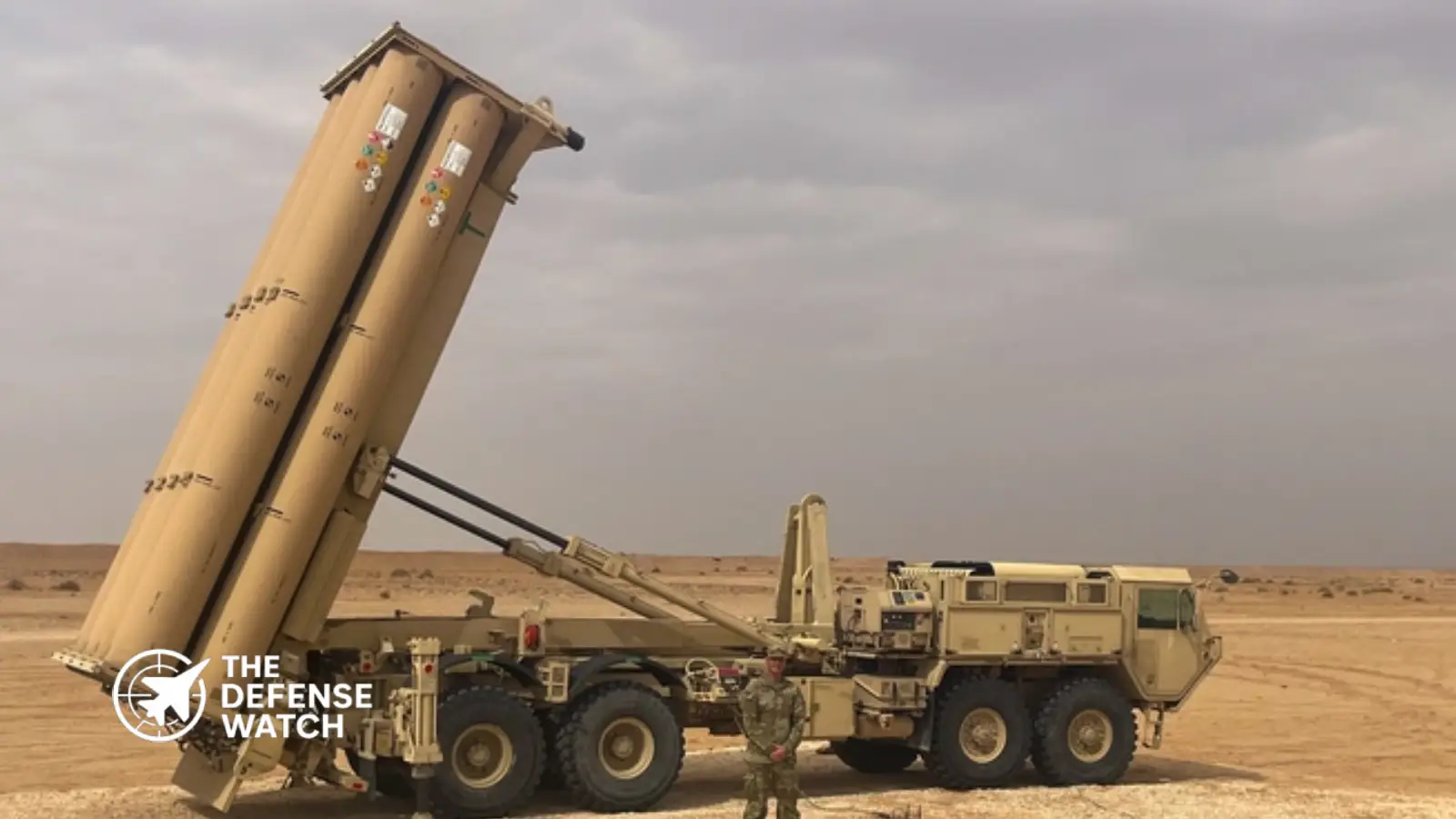
The Terminal High Altitude Area Defense system provides regional defense for deployed forces and allies but was not designed for continental homeland defense at scale. The same applies to Patriot, which operates at shorter ranges and lower altitudes.
Filling this gap requires both new interceptor capacity and improved sensor architecture to achieve reliable early tracking of hypersonic threats. Space-based persistent infrared sensors are a priority enabler — ground-based radars alone cannot provide adequate track quality on low-observable, maneuvering targets at hypersonic speeds.
Realistic constraints remain. Cost, schedule risk, and the technical immaturity of some candidate intercept modalities — particularly directed-energy and boost-phase systems — mean Golden Dome will require sustained political will and appropriations discipline over multiple administrations to achieve its stated objectives.
The Bottom Line
Golden Dome signals a generational shift in U.S. homeland defense strategy — but its credibility will ultimately be measured not by congressional testimony, but by interceptors fielded, sensors deployed, and adversary options denied.
KEY FACTS AT A GLANCE- Intelligence reporting has warned that adversaries could launch drones from maritime vessels to strike U.S. targets along the coast.
- Small unmanned aerial systems can be deployed from commercial ships, fishing vessels, or containerized launch systems.
- Experts warn maritime drone attacks could bypass traditional homeland air defense focused on large aircraft or missiles.
- Similar tactics have already appeared in conflicts involving Iran aligned groups and maritime drone operations.
- The evolving threat highlights the need for layered coastal defenses and improved counter drone capabilities.
Drone Attacks On U.S. From The Sea Raise Security Concerns
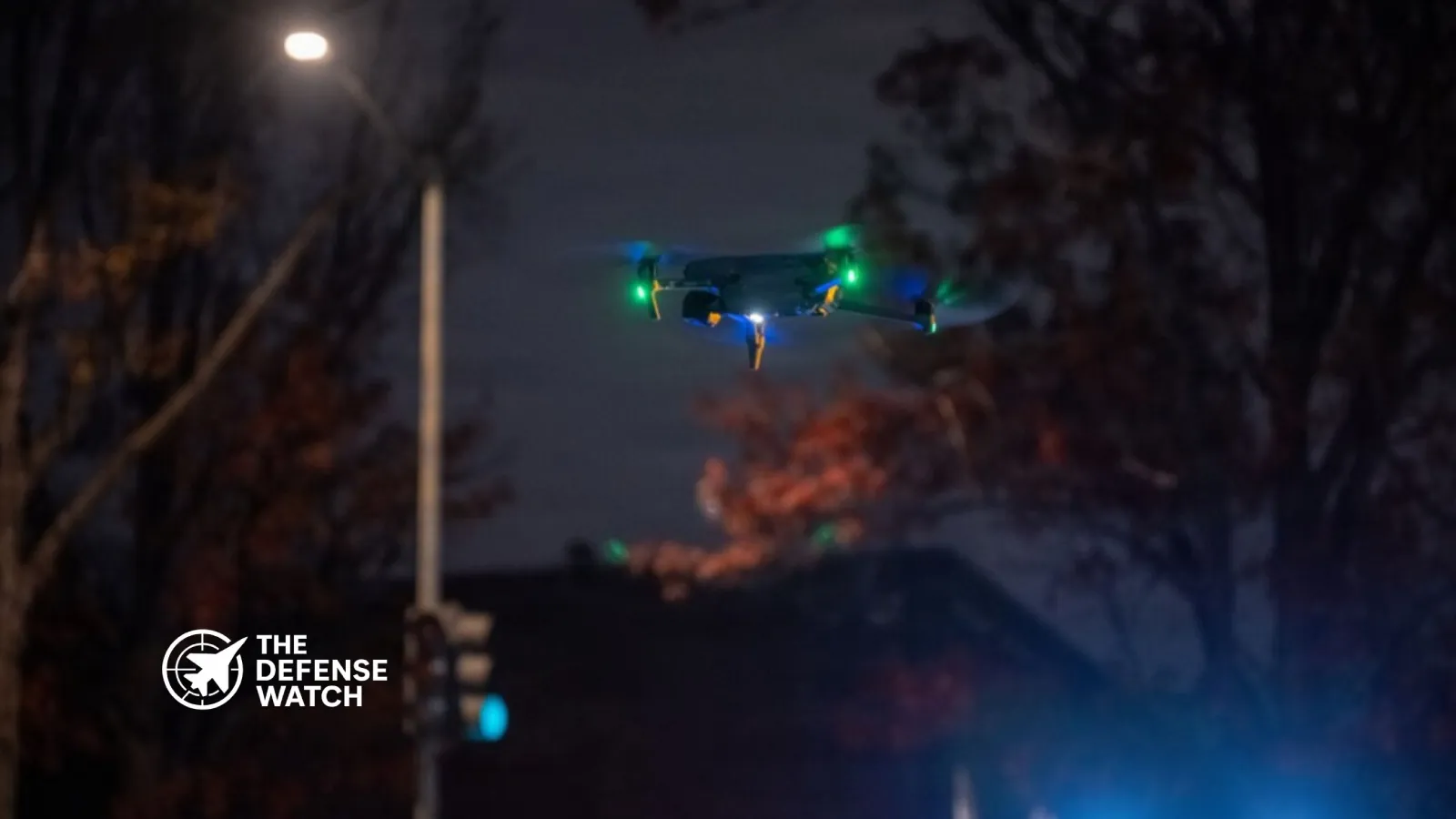
Drone attacks on U.S. from the sea are increasingly viewed by security analysts as a plausible method for adversaries to target American territory while avoiding traditional air defense systems. The concept involves launching unmanned aerial systems from maritime platforms positioned near the U.S. coastline.
Defense analysts warn that relatively small drones launched from ships or other maritime platforms could threaten military installations, ports, energy infrastructure, or densely populated coastal cities. The idea has gained renewed attention amid evolving drone warfare tactics seen in multiple modern conflicts.
Recent intelligence discussions have included the possibility that hostile actors could attempt such operations as a form of asymmetric retaliation. However, U.S. officials emphasize that no credible imminent threat to the homeland has been confirmed.
The Big Picture
Unmanned systems are rapidly reshaping the character of warfare. Cheap, widely available drones now provide state and non state actors with capabilities once limited to advanced militaries.
Modern conflicts have demonstrated how drones can be used for reconnaissance, precision strikes, and coordinated swarm attacks. These systems can be launched from land, air, or maritime platforms, expanding their operational reach.
For homeland defense planners, this trend creates a complex challenge. Traditional air defense networks were designed primarily to detect and intercept aircraft, ballistic missiles, and cruise missiles. Small drones operating at low altitude present a different type of threat.
Launching drones from maritime platforms further complicates detection because commercial shipping traffic operates continuously along U.S. coastal waters.
What’s Happening
Security concerns about maritime drone launches surfaced after intelligence reporting suggested adversaries had explored using vessels to launch drones against U.S. targets along the West Coast.
The concept involves positioning a vessel offshore and launching multiple drones toward coastal infrastructure or military facilities. The drones could fly at low altitude, potentially avoiding radar coverage optimized for larger threats.
The alert circulated among law enforcement and intelligence agencies but was based on limited information and a single unverified tip, according to government officials. Authorities stressed there was no credible indication of an imminent attack against the United States.
Nevertheless, the warning highlighted the growing recognition of maritime drone threats.
Why It Matters
Drone attacks launched from maritime platforms represent a classic asymmetric warfare tactic.
Instead of relying on expensive missiles or aircraft, an attacker could employ relatively inexpensive drones launched from civilian vessels or disguised platforms. The approach could exploit gaps between maritime surveillance systems and homeland air defense networks.
This concept mirrors tactics already seen in recent conflicts. Iranian aligned groups and other actors have repeatedly used drones and unmanned surface vessels to attack shipping and military targets in the Middle East.
These incidents demonstrate how unmanned systems can operate in maritime environments with limited warning.
For the United States, the threat is particularly significant because of the concentration of critical infrastructure along coastal regions.
Strategic Implications
The possibility of drone attacks on U.S. from the sea underscores a broader shift in how adversaries may attempt to challenge U.S. security.
Rather than attempting traditional military strikes against heavily defended targets, adversaries could focus on unconventional attack vectors that exploit the openness of commercial maritime traffic.
Major U.S. naval bases, logistics hubs, and ports are located near large population centers. Facilities such as San Diego, Norfolk, and Pearl Harbor sit close to civilian maritime traffic lanes.
A small number of drones launched from offshore could potentially create operational disruption even without causing large scale destruction.
The psychological and economic effects of such an attack could also be significant.
Competitor View
Strategic competitors and regional adversaries closely study how unmanned systems perform in current conflicts.
Iran and its network of aligned groups have demonstrated growing expertise in drone warfare across the Middle East. Several incidents have involved drone or missile attacks against U.S. forces and partners in the region.
The broader trend is not limited to Iran. Russia’s war in Ukraine has shown how drones can be used to strike strategic targets deep inside defended territory.
For competitors observing these developments, maritime launched drones could appear as an attractive low cost option to challenge U.S. power without triggering a direct conventional confrontation.
Capability Gap
The emerging threat highlights several capability gaps in homeland defense.
First, the United States lacks a fully integrated coastal counter drone architecture. Existing air defense systems focus primarily on high altitude threats such as aircraft and missiles.
Second, commercial shipping traffic creates a dense maritime environment where hostile platforms could hide among legitimate vessels.
Third, small drones flying low over water are difficult for traditional radar systems to detect.
The Department of Defense and the Department of Homeland Security have begun expanding counter drone technologies, including radar optimized for small targets, electronic warfare systems, and layered detection networks.
However, integrating these capabilities across maritime, air, and law enforcement agencies remains a complex challenge.
What To Watch Next
Several developments will shape how the United States addresses the maritime drone threat.
First, U.S. military and homeland security agencies are expanding counter drone testing and deployment around key installations.
Second, policymakers are exploring regulatory changes to allow broader use of counter drone systems within U.S. territory.
Third, naval and coast guard forces are evaluating how maritime surveillance tools can detect suspicious vessels capable of launching drones.
Finally, the Pentagon continues to study how lessons from conflicts in Ukraine and the Middle East apply to U.S. homeland defense.
The Bottom Line
Drone attacks on U.S. from the sea remain a theoretical threat today, but the rapid evolution of unmanned warfare means homeland defense planners can no longer ignore the possibility.
Pentagon Consolidates Counter-Drone Policy Framework
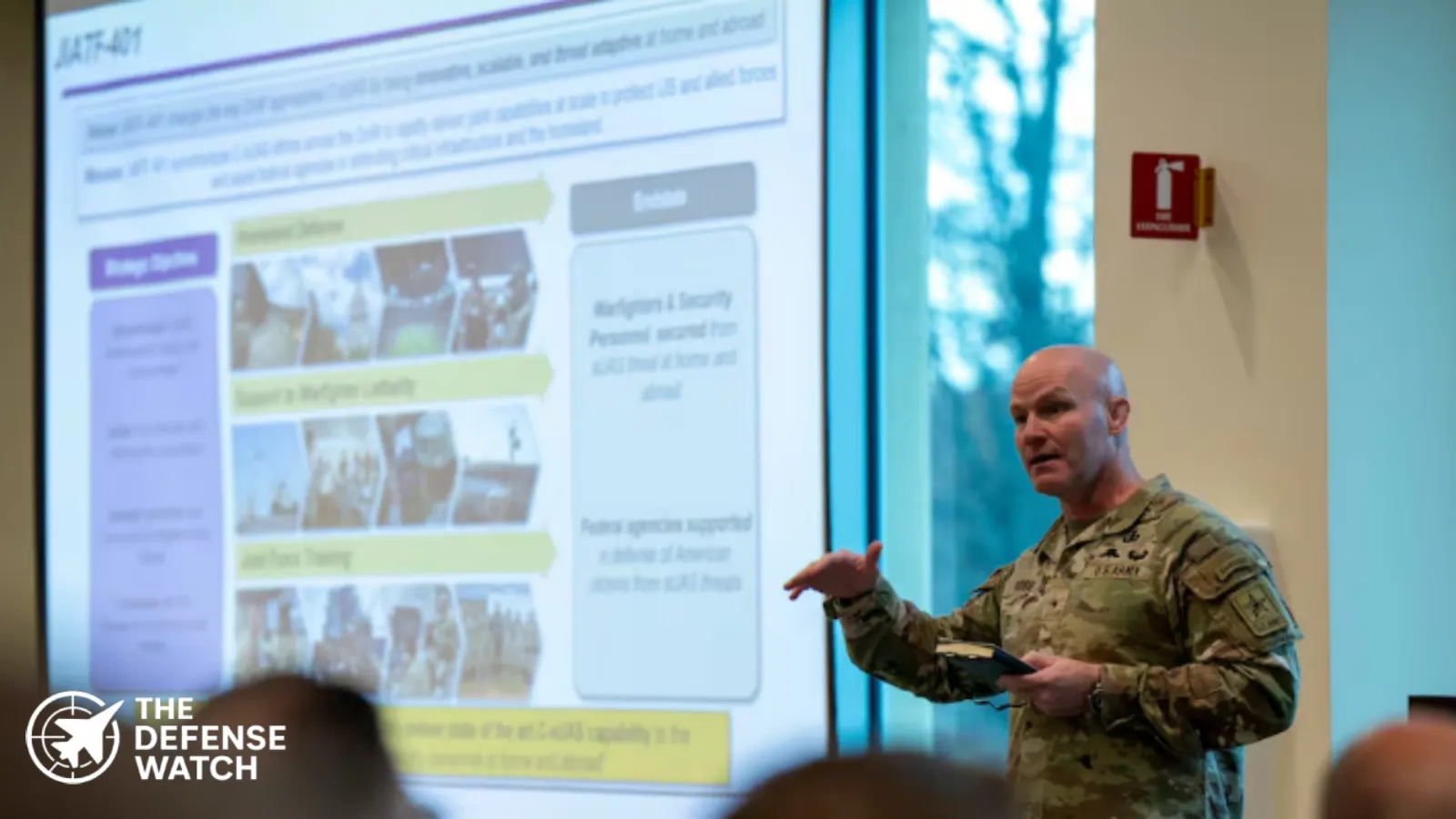
The Department of Defense’s Joint Interagency Task Force 401 announced the release of updated counter-drone guidance on December 8, 2025, providing installation commanders with streamlined authority to detect and mitigate unmanned aerial system threats to military facilities across the United States.
The guidance, signed by the Secretary of Defense, consolidates existing policies for countering unmanned aircraft systems under the authority of 10 U.S. Code Section 130i. The comprehensive framework addresses what military officials describe as a direct and growing threat posed by the proliferation of inexpensive, capable, and weaponizable UAS by both peer competitors and non-state actors.
“Drones are a defining threat for our time,” said Brigadier General Matt Ross, Director of JIATF-401. “Technology is evolving fast and our policies and counter-UAS strategy here at home must adapt to meet this reality.”
Expanding Commander Authority Beyond Installation Perimeters
The updated guidance provides commanders with expanded authority and flexibility to dominate the airspace above their installations. According to defense officials, the policy recognizes that drone threats do not begin and end at installation fence lines.
“Countering drones does not start and stop at the fence line,” Ross explained. With this new guidance, installation commanders are empowered to address threats as they develop, and the guidance makes clear that unauthorized drone flights are a surveillance threat even before they breach an installation perimeter.
The framework empowers installation commanders to take decisive action to protect military facilities, assets, and personnel from the evolving threat landscape. Installation commanders are now directed to issue installation-specific operating procedures within 60 days of the guidance release.
Enhanced Interagency Data Sharing Capabilities
The updated policy incorporates provisions from the Fiscal Year 2026 National Defense Authorization Act, authorizing the sharing of UAS track and sensor data among interagency partners. The guidance specifically enables data sharing with the Department of Homeland Security and the Department of Justice, facilitating a more coordinated whole-of-government approach to counter-drone operations.
The policy also permits the use of trained and certified contractor personnel as counter-UAS operators, addressing workforce capacity challenges in defending military installations. This provision expands the available pool of personnel capable of operating defensive counter-drone systems.
“Hardware alone is not sufficient,” Ross stated. “We need to train service members and work in concert with interagency partners so that we’re all pulling together toward the same mission.”
Clear Authority Delegation Structure
Service Secretaries are now authorized to designate covered facilities or assets based on comprehensive risk assessments. This authority can be delegated to Service Chiefs, ensuring protection is applied where it is needed most across the military enterprise.
The guidance consolidates what had been multiple separate memoranda and directives into a single authoritative document. This streamlining effort addresses longstanding concerns about clarity and consistency in counter-UAS policy implementation across different military installations and service branches.
According to defense officials, the consolidation provides installation commanders with clear decision-making authority regarding when and how to engage drone threats approaching or operating near their installations.
Proactive Defense Posture Requirements
The guidance emphasizes a proactive approach, directing military leaders to assess vulnerabilities, conduct rigorous training drills, and develop robust defensive postures to deter and defeat aerial threats. This represents a shift from reactive measures to anticipatory defense planning.
JIATF-401 stands ready to assist commanders in implementing the new framework and developing installation-specific procedures. The task force, established in August 2025, serves as the Department of Defense’s lead organization for synchronizing counter-small UAS efforts across the department and rapidly delivering joint capabilities.
Addressing the Proliferation Challenge
The proliferation of inexpensive and capable unmanned aerial systems presents unique challenges to military installation security. Commercial drone technology has advanced rapidly, providing potential adversaries with surveillance and reconnaissance capabilities at minimal cost.
Defense officials have noted that adversaries are actively testing U.S. resolve, seeking to exploit perceived gaps in defenses to surveil operations, harass American forces, and undermine homeland security. The updated guidance aims to close those gaps through clearer authorities and standardized procedures.
The policy addresses threats from both peer competitors and non-state actors who have demonstrated increasing sophistication in employing drone technology against U.S. interests domestically and abroad.
Implementation Timeline and Training Requirements
Installation commanders have 60 days from the guidance release date to develop and issue installation-specific operating procedures. The procedures must address local threat assessments, available counter-UAS capabilities, coordination mechanisms with local and federal law enforcement, and rules of engagement.
The guidance mandates that all officers assuming command of military installations in the United States receive pre-briefings on counter-UAS authorities and policies. This requirement ensures continuity and consistent understanding of counter-drone authorities across command changes.
JIATF-401 has committed to providing support materials, training resources, and technical assistance to installation commanders as they implement the new framework. The task force has already conducted site assessments at key installations to identify and address defense gaps.
Integration with Broader Defense Initiatives
The updated guidance supports the Department of Defense’s Replicator 2 initiative, which focuses on rapidly fielding affordable counter-drone capabilities to protect U.S. personnel and facilities. JIATF-401 has developed a prioritized list of asset locations to guide resource allocation under this initiative.
The task force marked its 100th day of operations in December 2025, demonstrating rapid progress in delivering state-of-the-art counter-drone equipment and revamping policy frameworks. Since its establishment, JIATF-401 has delivered counter-UAS capabilities to forces on the southern border and enhanced protections for installations in the National Capital Region.
From day one, our mission has been to move with speed and purpose to keep pace with this evolving threat,” Ross said. “In just over three months, we have demonstrated our ability to rapidly integrate across the department and within the interagency.”
National Capital Region Coordination
In the National Capital Region, JIATF-401 has played an instrumental role in coordinating with interagency partners to improve integrated air defense capabilities. The task force is working to integrate sensors, effectors, and mission command systems into a responsive, interoperable network.
“Our goal is to integrate sensors, effectors, and mission command systems into a responsive, interoperable network that protects service members and American citizens alike,” Ross explained. “Countering drones is not just a battlefield problem—it’s a homeland defense imperative.”
The updated guidance provides the policy foundation for these technical integration efforts, ensuring that legal authorities align with operational capabilities.
Congressional Mandate Fulfillment
The updated guidance fulfills congressional mandates outlined in the FY2025 National Defense Authorization Act, which directed the Secretary of Defense and the C-UAS Task Force to review and consolidate all Department of Defense counter-UAS memoranda and directives within 90 days.
The legislation required providing clarity and an expedited decision-making process for commanders regarding counter-UAS operations at military installations in the United States. The consolidated guidance directly addresses these congressional concerns.
Congress has expressed sustained interest in the Department of Defense’s ability to detect and mitigate UAS threats to military personnel and installations, both domestically and abroad. The FY2026 NDAA further codified JIATF-401’s authority and responsibilities in statute.
Addressing Group 1 and Group 2 Threats
Defense officials have emphasized the particular challenge posed by small drones classified as Group 1 and Group 2 systems. While many defensive systems exist to defeat larger Group 3 drones, protecting against smaller, more agile systems requires different technologies and tactics.
“I want to make sure that we have just as robust protection against Group 1 and Group 2 systems that are smaller and much more likely to be seen over a heavily attended gathering, stadium, or watch party,” Ross noted in recent remarks.
The updated guidance provides the policy framework for deploying counter-UAS systems optimized for these smaller threat vectors, which are increasingly accessible to both sophisticated adversaries and opportunistic actors.
Future Capability Development
JIATF-401 continues to engage with venture capitalists, technology startups, and nontraditional defense firms as critical partners in developing next-generation counter-UAS capabilities. The task force is designed to move at the speed of relevance, cutting through traditional acquisition bureaucracy.
“We have just one measure of effectiveness: to deliver state-of-the-art counter-UAS capabilities to our warfighters both at home and abroad,” Ross stated.
The task force recently announced its first Replicator 2 purchase, acquiring DroneHunter systems—reusable, artificial intelligence-driven interceptor drones designed for use in homeland settings where minimizing risk to civilian populations is paramount.
Interagency Coordination Framework
The guidance establishes clear protocols for interagency coordination on counter-drone operations. In the event of a drone incident on U.S. soil, the Department of Homeland Security and local law enforcement would lead the response, with the Department of Defense providing support as requested.
JIATF-401 is working to ensure seamless information sharing and coordinated responses across federal agencies. The task force hosted an interagency meeting at the White House in November 2025 to strengthen cooperation across the U.S. government.
“JIATF-401 is an entirely joint, interagency endeavor dedicated to defeating small UAS,” Ross emphasized. The task force brings together representatives from nearly 50 federal agencies, including DHS, DOJ, FBI, FAA, and others.
Long-Term Strategic Implications
The updated counter-drone guidance represents a significant evolution in how the Department of Defense approaches homeland airspace defense. By providing installation commanders with clear, consolidated authorities, the policy aims to create a more agile and responsive defense posture.
Defense officials have characterized the drone threat as evolving faster than any other contemporary security challenge. The guidance framework is designed to be adaptive, allowing for updates as technology and threat vectors continue to develop.
“Small unmanned aircraft systems are changing the character of modern warfare and homeland defense,” Secretary of the Army Dan Driscoll stated. “Adversaries are exploiting inexpensive and adaptable drone technology faster than our current acquisition system can handle.”
The Department of Defense’s initiative underscores its commitment to continuously adapting amid a rapidly evolving operational landscape, ensuring the Joint Force maintains technological and tactical superiority in contested airspace environments.
The Pentagon’s main counter-drone unit, Joint Interagency Task Force 401 (JIATF 401), plans to share threat data with the Golden Dome missile defense project to help detect and counter larger unmanned aircraft. The announcement was made by Brigadier General Matt Ross at a media briefing on December 22, 2025. The effort centers on drones the size of an Army RQ-7B Shadow and larger, known as Group 3 drones.
The task force, created by Defense Secretary Pete Hegseth in August, will link its counter-unmanned systems (counter-UAS) data with the Golden Dome project. This data sharing aims to give both sides a clearer picture of airborne threats over U.S. territory.
General Ross said the U.S. must connect its counter-UAS defenses with the Golden Dome architecture. He told reporters that seamless data sharing is key and that both sides should be able to “see each other’s threat picture.”
Adam Scher, a JIATF 401 spokesperson, described how the task force supports interagency partners with threat information and helps streamline counter-drone efforts with other authorities.
Background Information
Counter-Drone Tasks
JIATF 401 is the Pentagon’s lead body for counter-drone work. It tracks, detects, and assesses small and larger unmanned systems threats for the U.S military. Drones are grouped by size and capability; Group 3 drones are larger and can carry heavier payloads.Golden Dome Project
Golden Dome is a broad U.S. homeland defense plan to build layers of missile and aerial threat detection and interception across the country. It uses satellites, ground sensors, and other systems to spot and defeat missiles or hostile aircraft before they can strike. The project was directed by a presidential order earlier in 2025 and is led by U.S. Space Force leaders.Strategic or Broader Context
Officials see drones as a rising threat to U.S. forces and civilians. Small and midsize drones are now used in conflicts worldwide and can enter U.S. airspace near military bases, major events, or critical infrastructure. Better sharing of threat data across agencies is meant to strengthen defense layers.
Linking counter-drone data with the broader Golden Dome defenses may help improve overall watch-and-respond ability against a range of aerial threats. That includes traditional missiles and drones that could penetrate airspace over populated areas.
At this time no public statement from critics or independent experts was available. Some analysts have previously noted that the Golden Dome project is ambitious and expensive, raising questions about cost and technical challenges