
U.S. Navy Moves Forward with New Medium Landing Ship Program
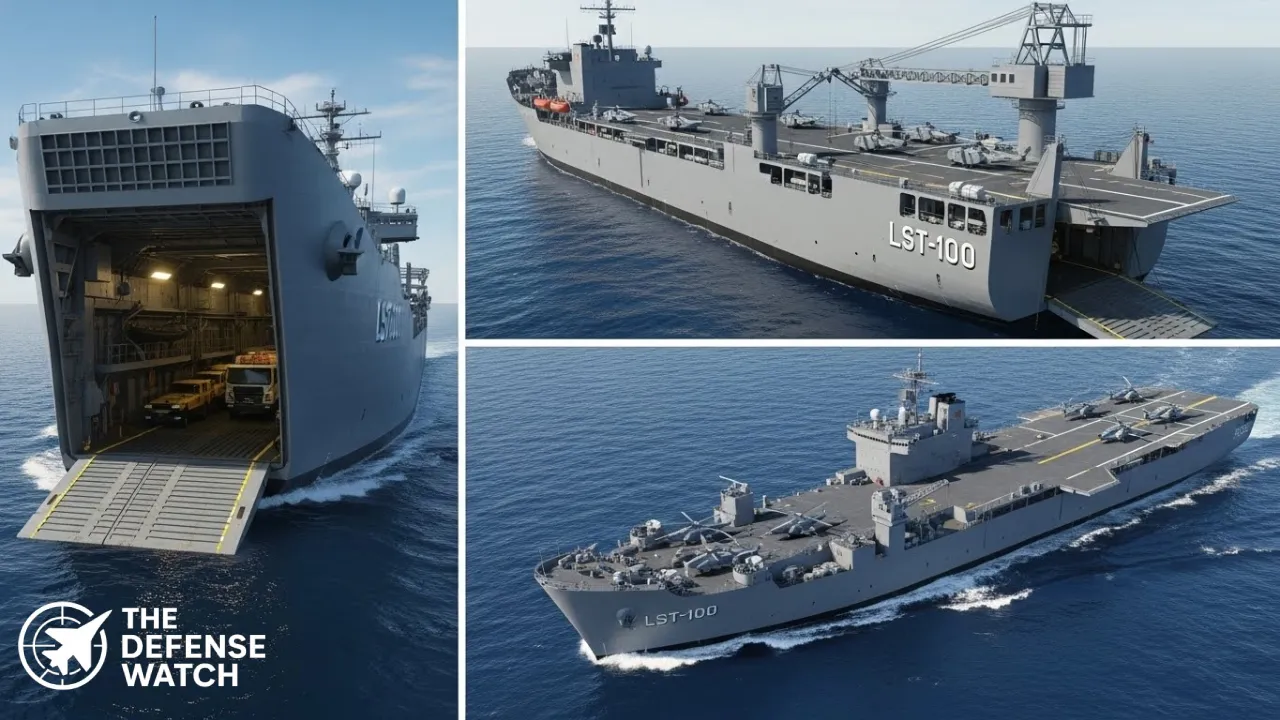
The U.S. Navy has officially selected the LST-100 design from Dutch shipbuilder Damen as the basis for its new class of Medium Landing Ships (LSMs), aiming to take delivery of the first vessel by 2029. The announcement, made via a social media video on December 5, 2025, marks a key milestone in the Navy’s efforts to modernize its amphibious capabilities and support evolving Marine Corps expeditionary concepts.
Background: Strengthening Amphibious and Distributed Operations
The LSM initiative is part of a broader push to enhance the Navy and Marine Corps’ ability to operate in dispersed, contested environments—particularly in the Indo-Pacific region. Historically, Navy shipbuilding programs have faced delays and cost overruns, prompting officials to emphasize operational efficiency and fiscal discipline in the selection of the LST-100 platform. The planned fleet will eventually include 35 LSMs designed to transport smaller Marine units across islands and coastal regions without relying on established port infrastructure.
Design and Capabilities of the LST-100-Based LSM
The LST-100 measures roughly 328 feet (100 meters) in length with a beam of 52.5 feet (16 meters) and can reach speeds of up to 14 knots. The vessel features clamshell doors in the bow and a stern loading ramp for direct beach access, allowing rapid deployment of personnel, vehicles, and cargo. A deck-mounted crane at the bow facilitates handling of large payloads within the hull, while a flight deck at the stern supports rotary-wing aircraft such as the NH-90.
The ship can accommodate up to 234 troops and offers approximately 11,000 square feet (1,020 square meters) of roll-on/roll-off cargo space. Standard operations are managed by a crew of 18 personnel, ensuring a balance of efficiency and capability for extended missions.
Secretary of the Navy John Phelan highlighted the LST-100’s suitability for the Navy’s requirements, stating, “This is an operationally driven, fiscally disciplined choice that puts capability in the fleet on a responsible timeline.” Chief of Naval Operations Adm. Daryl Caudle and Marine Corps Commandant Gen. Eric Smith also endorsed the selection as a key step in implementing distributed maritime operations.
Strategic Impact and Next Steps
Construction of the first LST-100-based LSM is expected to begin in 2026, with delivery targeted for 2029. The new class of ships will significantly expand the Navy’s amphibious transport capacity, enabling rapid movement of Marine forces in geographically dispersed theaters. By integrating medium landing ships into fleet operations, the Navy aims to provide more flexible support for expeditionary operations and improve responsiveness in regional contingencies.
The LSM program also reflects a shift toward modular, multi-role platforms capable of supporting a variety of missions beyond traditional amphibious assaults, including humanitarian assistance, disaster relief, and joint exercises with allied forces.
Closing
The Navy’s selection of the LST-100 for its Medium Landing Ship program underscores the service’s commitment to operational readiness and modernized amphibious capabilities. As the first ships enter production in 2026, analysts and policymakers will closely monitor their integration into fleet operations and their impact on distributed maritime strategy.
Get real time update about this post category directly on your device, subscribe now.

11 comments
[…] immediate across‑the‑board replacement of the M4A1, but represents a targeted effort to provide select units with a platform tailored to modern mission […]
[…] engineering support, integration planning, and sustainment activities that are essential to keeping platforms operational for U.S. partner […]
[…] handover ceremony took place aboard the Dutch landing platform dock HNLMS Johan de Witt at Den Helder Naval Base. Commodore Arjen Warnaar of the Royal Netherlands […]
[…] Anadolu (L-400): A 232-meter amphibious assault ship based on the Spanish Juan Carlos I design, featuring a full-length flight deck, well deck for […]
[…] Industry posting highlighted scale models and concepts for landing helicopter docks and medium landing craft designed for amphibious assault and coastal […]
[…] vehicle’s design incorporates lessons learned from decades of amphibious operations. Its enhanced survivability features include improved mine and improvised explosive device […]
[…] Newsweek reported that dredging focused on the eastern and southern edges of the reef’s lagoon, with January 2026 imagery revealing new infrastructure and specialized berthing facilities designed to accommodate heavy construction equipment. These roll-on/roll-off capabilities enable efficient transport of dredging machinery and materials necessary for land reclamation operations. […]
[…] sensors, and a high explosive warhead optimized for anti personnel and light vehicle targets. The platform is designed to operate in both human in the loop and autonomous […]
[…] has increasingly deployed realistic aircraft decoys at airfields to draw fire away from operational platforms. With F 16 fighters now entering Ukrainian service, these decoys are intended to complicate Russian […]
[…] warfare systems, and weapon integration. Partner nations are investing in enhancements to keep the platform operationally relevant through the 2030s and […]
[…] Despite these adjustments, the program maintains strong support within Marine Corps leadership. The Pentagon’s fiscal year 2026 budget confirms procurement of 59 ACV-30 gun variants and funds the first 32 ACV-R recovery vehicles, signaling the platform’s status as a foundational system for future amphibious operations. […]