Royal Navy Establishes First Autonomous Squadron to Operate Drone Boats Alongside Warships
The Royal Navy has formally commissioned its first autonomous naval squadron, creating a dedicated unit to operate uncrewed surface vessels (USVs) alongside conventional warships and allied maritime forces.
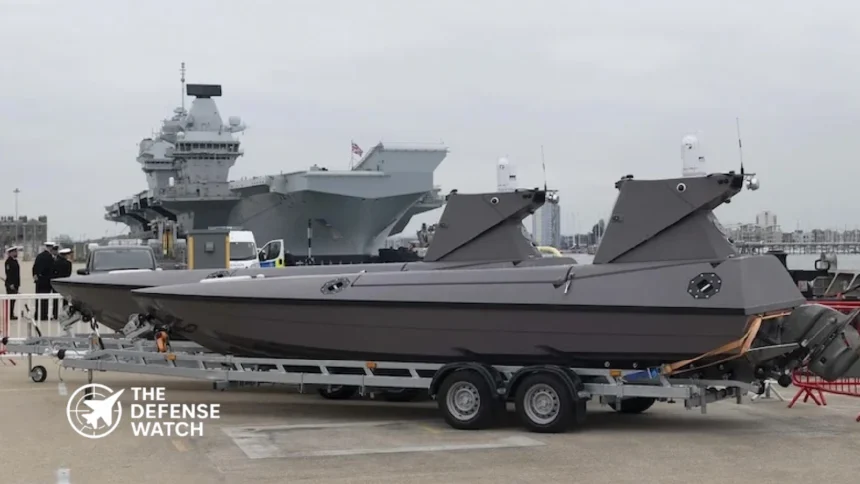
The 1st Autonomous Squadron was commissioned on November 5, 2026, at His Majesty’s Naval Base Portsmouth. The unit will initially operate Kraken and Rattler uncrewed boats, which were demonstrated moving through Portsmouth Harbour under remote control during the commissioning event. The Royal Navy announced the formation on November 9.
The new squadron gives autonomous surface vessels a permanent organizational role within the British fleet. Rather than treating uncrewed boats primarily as experimental equipment, the Royal Navy intends to develop their use in frontline operations, including missions conducted independently and alongside crewed naval task groups.
The initiative forms part of Britain’s broader hybrid navy strategy, which seeks to combine conventional ships, submarines and aircraft with remotely operated and autonomous systems.
A Dedicated Naval Unit for Uncrewed Operations
Based in Portsmouth, the 1st Autonomous Squadron comprises approximately 180 personnel, a workforce comparable in size to the crew of a Type 23 frigate.
The personnel are divided into two watches to support continuous operations. This arrangement indicates that the Royal Navy is establishing a permanent operational organization rather than relying exclusively on temporary trial teams or personnel assigned to individual technology programmes.
Commander Helen Coxon leads the squadron. Its responsibilities include operating existing uncrewed surface vessels, developing tactics, training personnel and introducing additional autonomous platforms into the fleet.
According to the Royal Navy, the unit will operate independently and as part of task groups involving other organizations and allied navies. It will also work with Navy Develop, the Disruptive Capabilities and Technologies Office and the Capability Accelerator to expand the service’s uncrewed maritime capabilities.
The squadron succeeds Project Beehive, an earlier Royal Navy initiative established to acquire and test autonomous boats as part of the development of a hybrid naval force.
The transition from Project Beehive to a permanent squadron is important because it moves the programme beyond technology experimentation towards the development of operational procedures, personnel skills and fleet integration.
Kraken and Rattler Boats Form the Initial Equipment
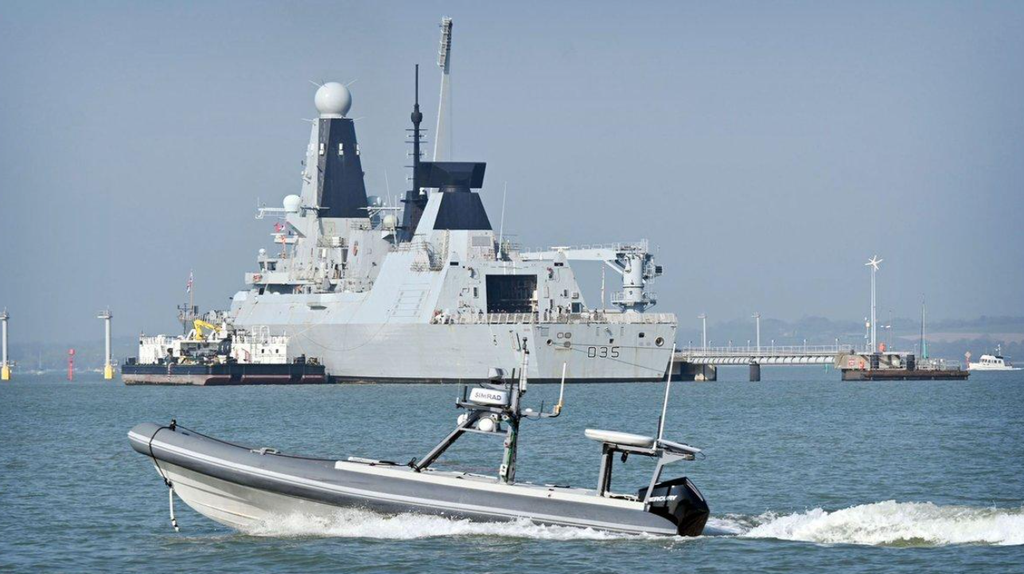
Two types of uncrewed surface vessels featured in the squadron’s commissioning demonstration: the Kraken and Rattler.
The Kraken K3 Scout, developed by Kraken Technology Group, is an uncrewed maritime platform intended for military and security applications. Its inclusion provides the Royal Navy with a platform for developing operational uses of remotely operated boats.
The Rattler, another uncrewed surface vessel, is also part of the squadron’s initial equipment. Both systems were demonstrated in Portsmouth Harbour under control from a shore-based hub.
The Royal Navy describes these boats as examples of commercially available technology adapted for military operations. This approach allows the service to introduce existing industrial solutions without necessarily waiting for the development of entirely new naval platforms.
However, the commissioning announcement does not provide a complete inventory, detailed technical specifications or a confirmed number of boats assigned to the squadron.
It also does not establish that every vessel will operate with the same level of autonomy. Remote-controlled operation and autonomous navigation are different capabilities, and the precise division between human control and automated functions will depend on the individual platform and mission.
Why the Royal Navy Is Moving Towards a Hybrid Fleet
The operational rationale for uncrewed boats is closely linked to the growing demands placed on conventional naval forces.
Modern surface fleets must conduct surveillance, protect maritime infrastructure, monitor suspicious vessel movements and maintain a presence across large maritime areas. These activities can consume substantial ship time and require trained crews, fuel and maintenance resources.
Uncrewed surface vessels could help distribute some of these tasks across a larger number of platforms.
For example, smaller boats could potentially support:
- Maritime surveillance and reconnaissance.
- Monitoring approaches to naval bases and ports.
- Force protection around deployed warships.
- Inspection and observation of maritime activity.
- Distributed operations alongside conventional naval task groups.
These are potential mission areas for the wider USV concept, not a confirmed list of operational assignments for every Kraken or Rattler vessel.
The principal advantage is the ability to distribute sensors and maritime presence without requiring a crewed warship for every individual task.
A frigate could remain available for missions requiring its combat systems, command facilities and larger crew, while smaller uncrewed platforms support selected surveillance or force-protection activities.
However, autonomous boats will not eliminate the need for conventional naval vessels. They lack the full range of capabilities provided by frigates, destroyers and other crewed warships, particularly in sustained operations requiring substantial weapons, logistics, damage control and onboard personnel.
The Royal Navy’s stated approach is therefore integration rather than replacement.
Project Beehive Demonstrated the Potential for Faster Deployment
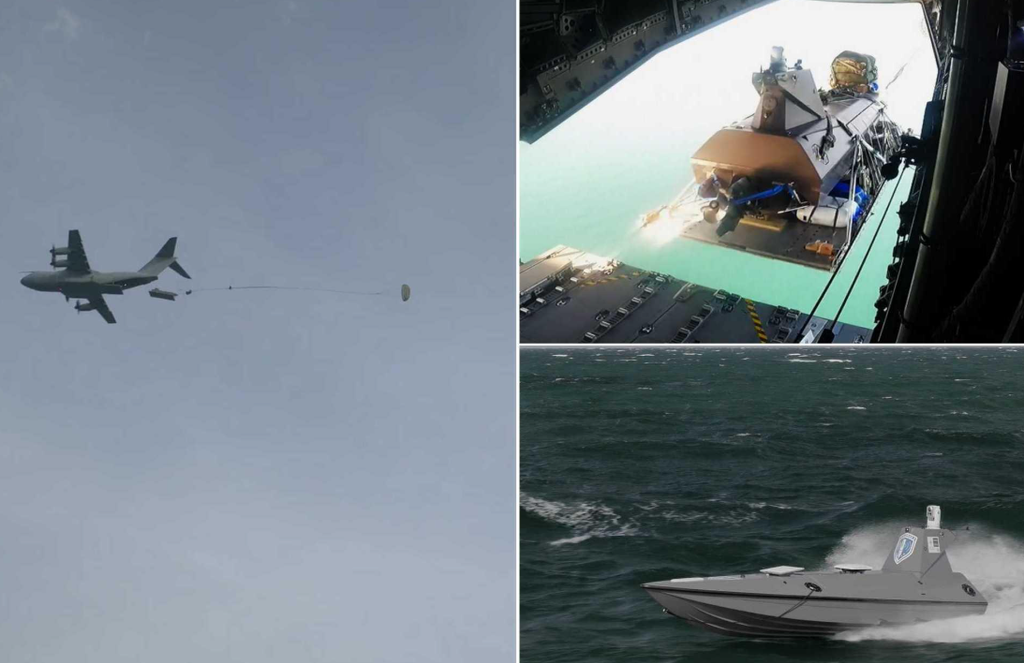
Project Beehive provided an important foundation for the new squadron by allowing the Royal Navy to experiment with uncrewed maritime systems and their deployment methods.
One example came in July 2026, when an uncrewed surface vessel was dropped by parachute from an Airbus A400M military transport aircraft over the North Sea.
The trial involved four parachute drops from an altitude of 1,300 feet. According to the Royal Navy, the demonstrations showed that a crewless vessel could survive the airdrop and subsequently operate without requiring a nearby port or support ship.
The work was conducted by Kraken Technology Group and Capewell, with Royal Navy support under Project Beehive.
The trial has implications beyond conventional harbour deployment. Airdrop capability could provide additional options for delivering uncrewed maritime platforms to areas where access to naval bases or support vessels is limited.
Nevertheless, the July demonstration should not be interpreted as proof that the new squadron routinely deploys boats by air. The Royal Navy has not announced such an operational arrangement.
The establishment of the squadron provides an organization through which lessons from these trials can be developed into repeatable procedures and operational capabilities.
Britain’s £1.5 Billion Hybrid Navy Investment
The autonomous squadron is part of a wider British defence investment programme supporting the development of a hybrid navy.
The UK government has identified £1.5 billion in investment over four years for this broader effort. The funding is intended to support the integration of autonomous and uncrewed technologies with traditional naval capabilities. It is not a disclosed budget allocation exclusively for the 1st Autonomous Squadron.
The Royal Navy’s Capability Accelerator is another part of the initiative.
Established in 2025 and partially funded by UK Defence Innovation, the organization is intended to reduce the time required to move emerging technologies from industry into frontline service.
Its newly opened hub at Portsmouth will support additional programmes focused on delivering uncrewed and autonomous equipment to naval personnel.
The squadron will work with this organization to introduce additional USVs and expand its capabilities.
This organizational model also reflects a procurement approach in which the Royal Navy can adapt commercially available technology for military requirements, assess it through operational use and introduce further systems as requirements evolve.
That approach may shorten development timelines, although equipment integration, reliability, cybersecurity, communications and maintenance will remain important challenges.
Operational Challenges Remain
Establishing an autonomous squadron does not automatically resolve the technical and operational difficulties associated with uncrewed maritime systems.
Communication is one important consideration. Remotely operated boats depend on reliable links between vessels and their operators, but maritime environments can create connectivity challenges. Electronic warfare, interference and deliberate disruption could also affect communications.
Navigation and collision avoidance present additional requirements, particularly when uncrewed boats operate near commercial shipping, allied warships or other vessels.
Cybersecurity will also be essential. A compromised control system or communications network could undermine the effectiveness of an uncrewed platform and create risks for nearby naval forces.
The Royal Navy will also need to establish clear command arrangements, operating procedures and rules governing the use of autonomous functions.
These requirements make the squadron’s approximately 180-person workforce significant. Although the boats operate without onboard crews, their employment still requires people to plan missions, operate control systems, maintain equipment and oversee maritime activities.
The practical value of the new unit will therefore depend not only on the number of vessels acquired but also on the quality of its personnel, communications infrastructure and integration with existing fleet command structures.
A New Role Within the Royal Navy’s Surface Fleet
The commissioning of the 1st Autonomous Squadron gives the Royal Navy a dedicated organization for developing and operating uncrewed surface vessels.
Its initial equipment, including Kraken and Rattler boats, provides a starting point for frontline experimentation and the development of operational procedures.
The next important measure will be how effectively the squadron integrates these platforms into real maritime operations, including cooperation with conventional warships and allied forces.
The Royal Navy has not publicly detailed a complete operational deployment schedule, a final fleet inventory or the precise missions assigned to each vessel.
For now, the most significant change is organizational: uncrewed surface vessels have moved from an experimental programme into a dedicated naval squadron with responsibility for bringing them into operational service.