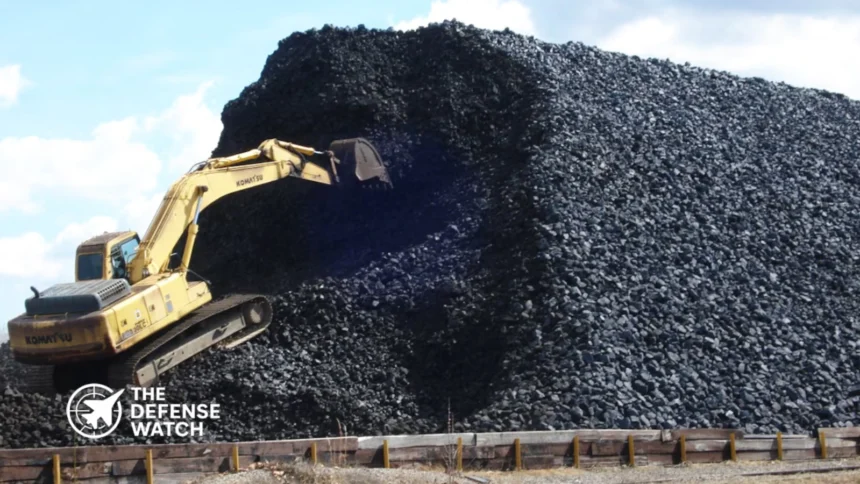
The U.S. Defense Logistics Agency (DLA) committed $2 billion during fiscal year 2026 to acquire strategic and critical materials for the National Defense Stockpile, supporting efforts to strengthen domestic supply chains for materials used in military equipment and essential industries.
The November 6 announcement from the U.S. Department of War identifies domestic industrial capacity as a central objective of the acquisitions. Eric Mata, director of DLA Strategic Materials, said most of the critical-mineral contracts awarded through the agency’s Contracting Services Office were intended to encourage domestic production and provide suppliers with clearer demand signals.
The announcement covers a broad range of materials, from high-purity aluminum to vanadium pentoxide. However, DLA did not publish a complete breakdown of the $2 billion by material, supplier, purchase quantity or individual contract.
The distinction matters because funding commitments and appropriations do not automatically translate into delivered stockpile inventory. The effectiveness of the program will depend on procurement execution, available production capacity and the ability of suppliers to deliver materials that meet government requirements.
Why the National Defense Stockpile Matters
The National Defense Stockpile is a U.S. government reserve of strategic and critical materials maintained for national defense and essential civilian requirements during emergencies.
It is managed by DLA Strategic Materials, which oversees material acquisition, storage, inventory management and disposal.
The stockpile is intended to address situations in which commercial suppliers cannot provide sufficient quantities of essential materials during a national emergency. Such disruptions could affect defense manufacturing, military maintenance, aerospace production and other industrial activities.
Materials held or acquired for the stockpile can support several sectors, including:
- Aerospace: Metals and specialized materials used in aircraft structures, engines and manufacturing.
- Maritime: Industrial materials required for shipbuilding and naval equipment.
- Ground forces: Materials used in military vehicles, equipment and defense production.
- Space systems: Specialized inputs supporting space-related manufacturing.
- Communications: Materials required for industrial and electronic components.
- Munitions: Raw materials and processed inputs supporting weapons manufacturing.
DLA’s latest announcement emphasizes that the stockpile is not simply a warehouse of emergency supplies. Its procurement activities are also intended to encourage domestic companies to maintain and expand production capabilities.
$2 Billion Acquisition Effort Targets Domestic Suppliers
According to the Department of War announcement, DLA’s fiscal 2026 acquisitions were designed to direct demand toward American material suppliers and processors.
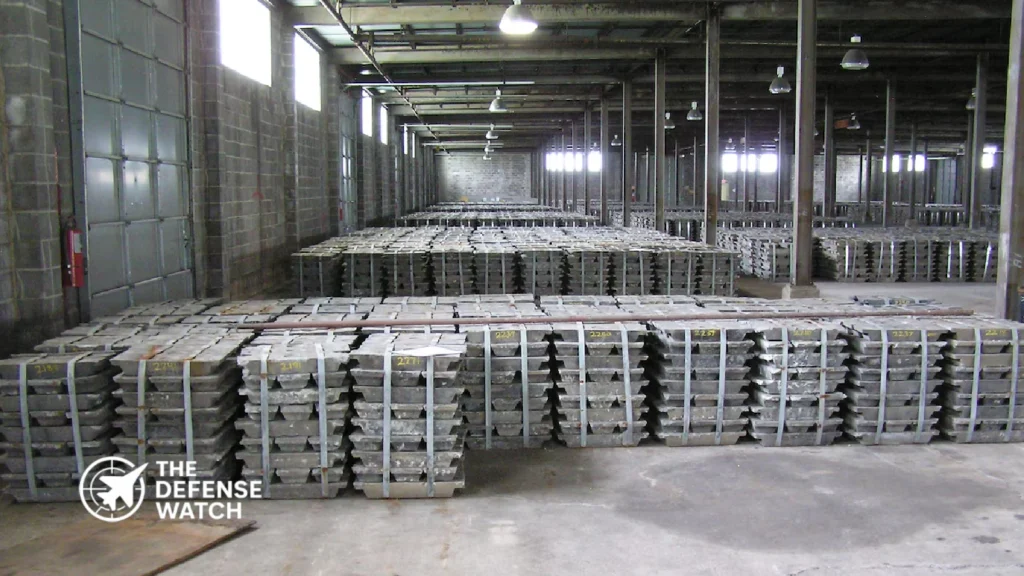
Eric Mata said domestic sourcing is particularly important when materials are difficult to replace, available from only a limited number of suppliers or vulnerable to concentrated international supply chains.
The agency also identified several methods of obtaining critical materials beyond conventional mining.
These include:
- Recovery of materials from existing industrial sources.
- Recycling and reclamation.
- Domestic refining and processing.
- Development of additional domestic production sources.
- Acquisition of materials for emergency reserves.
The approach could help reduce dependence on overseas suppliers while creating more predictable demand for U.S. producers.
However, the public announcement does not identify all the companies involved or establish how much of the $2 billion is associated with each material category.
That makes it difficult to assess the precise industrial impact of the latest procurement effort.
Funding and Procurement: What the Budget Documents Show
The $2 billion commitment is part of a wider funding effort to improve the National Defense Stockpile.
The Department of War’s fiscal 2027 budget justification provides additional context. It identifies a $2 billion appropriation under the One Big Beautiful Bill Act, signed into law on July 4, 2025, with funding available through fiscal year 2029.
The document explains that although the appropriation was received in fiscal 2025, the budget authority to execute it was received in fiscal 2026.
Importantly, the same budget document reported that, at the time of its preparation in April 2026, approximately $174.7 million had been executed and $573 million was in commitment status.
These figures provide a more detailed picture of the program’s financial position than the headline $2 billion figure alone.
They also underline the difference between appropriated funding, procurement commitments, executed funds and materials physically delivered into storage.
The fiscal 2027 budget requested a further $18 billion in mandatory funding for strategic material acquisitions, indicating that the Pentagon views stockpile expansion as a continuing requirement rather than a one-year procurement activity.
The additional request should not be confused with an approved appropriation or completed purchase.
Supply Chain Vulnerabilities Remain a Defense Concern
The latest acquisitions address a longstanding challenge for U.S. defense planners: access to materials that cannot easily be substituted or produced domestically at sufficient scale.
The Government Accountability Office (GAO) examined the issue in its September 2024 report, National Defense Stockpile: Actions Needed to Improve DOD’s Efforts to Prepare for Emergencies.
The report identified weaknesses in the Department of Defense’s ability to determine its full requirements for strategic and critical materials.
According to GAO, the department lacked sufficient information to model requirements for 115 of 258 materials on its strategic and critical materials list in fiscal 2023.
The report also found that more than 90 percent of materials identified as being in shortfall had either zero or one domestic supplier.
These findings illustrate why expanding the stockpile alone may not resolve every supply-chain vulnerability.
The Pentagon also needs reliable information about material requirements, qualified suppliers and the production capacity available during emergencies.
For some materials, increasing domestic processing and recycling capacity could be as important as purchasing additional quantities.
Stockpiling Is Only Part of the Industrial Base Strategy
DLA’s approach combines inventory acquisition with efforts to strengthen the companies that produce and process critical materials.
This distinction is important. A government reserve can provide temporary protection against supply interruptions, but it cannot independently guarantee a continuous supply of materials for a defense industry operating during a prolonged crisis.
Domestic mining, refining, recycling and processing capacity must also remain available.
DLA’s fiscal 2025 historical report describes an earlier phase of the acquisition effort. It records that the agency developed 19 rapid acquisition packages covering approximately $2.057 billion across more than 30 materials. At that stage, eight contracts totaling $800 million had been awarded, with $51 million in delivery orders obligated.
The report demonstrates that the stockpile expansion involves multiple procurement packages rather than one single purchase.
It also shows why contract awards, delivery orders and actual inventory additions should be assessed separately.
What to Watch in the Coming Months
Several indicators will help determine whether the latest funding effort translates into stronger U.S. defense supply chains.
First, detailed contract announcements would provide greater visibility into the materials being acquired and the suppliers selected.
Second, delivery information will show whether domestic producers can meet government requirements at the necessary scale.
Third, additional investment in refining, processing and recycling could indicate whether procurement is generating lasting industrial capacity rather than simply increasing government inventories.
The fiscal 2027 funding request also points to continued attention to strategic material shortages. However, the availability of additional funding does not guarantee that all identified shortages can be resolved quickly.
For the U.S. defense industrial base, the central challenge is not just securing raw materials. It is maintaining dependable access to the processed materials needed to manufacture and sustain military equipment during normal operations and national emergencies.