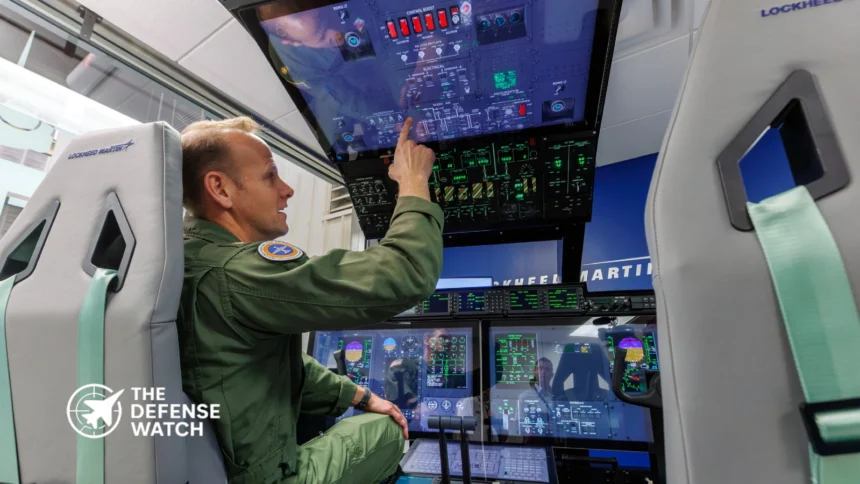
Lockheed Martin has introduced a configurable training system designed to help military operators expand C-130J Super Hercules aircrew training without relying exclusively on expensive, full-motion flight simulators.
The system, known as the C-130J Configurable Aircraft Trainer (JCAT), is intended to bridge the gap between basic aircraft familiarization and advanced mission qualification. The company announced the system in a November 9, 2026, feature, identifying limited training capacity and shortages of qualified aircrew and maintenance personnel as challenges facing military aviation operators.
JCAT uses the same C-130J Virtual Simulator (VSIM) and Instructor Operating Station (IOS) architecture found in Lockheed Martin’s Full Flight Simulator and Weapons System Trainer (FFS/WST). This allows operators to conduct selected training activities on a more configurable platform while reserving full-motion simulators for more demanding instruction.
The system is particularly relevant as the C-130J fleet continues to serve military operators across multiple countries and mission types.
JCAT Adds an Intermediate Layer to C-130J Training
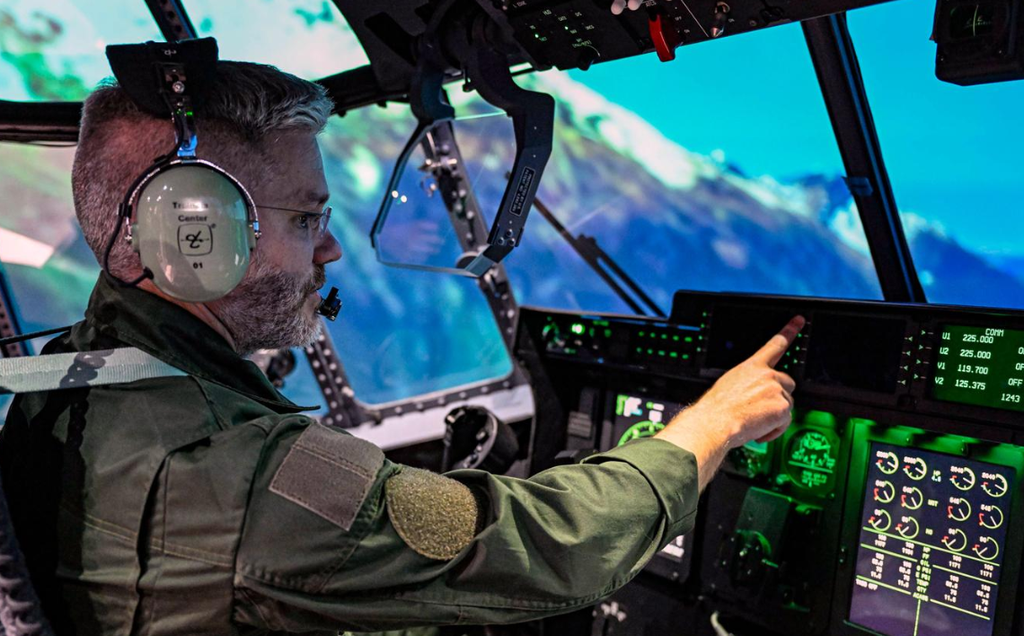
Traditional military aircrew training involves several stages, including classroom instruction, aircraft systems familiarization, simulator exercises and supervised flight training.
Full-flight simulators provide a highly realistic environment for practicing aircraft handling, emergency procedures and mission scenarios. However, their complexity, cost and maintenance requirements can limit the number of training sessions available to students.
JCAT is designed to address part of this constraint.
Rather than replacing existing full-flight simulators, the configurable trainer provides an additional training environment for procedural instruction, aircraft systems familiarization and selected mission-related activities.
Lockheed Martin says the system can be configured according to an operator’s training requirements, budget and operational priorities. Customers can begin with basic capabilities and expand the trainer as additional funding and requirements become available.
This approach could allow military organizations to move more students through preliminary training before they enter advanced simulator qualification.
How the C-130J JCAT System Works
The central feature of JCAT is its shared software architecture with the larger C-130J FFS/WST training system.
According to Lockheed Martin, both platforms use the same physics-based Virtual Simulator and Instructor Operating Station. This provides a common foundation for aircraft flight dynamics, system behavior and instructor-controlled training scenarios.
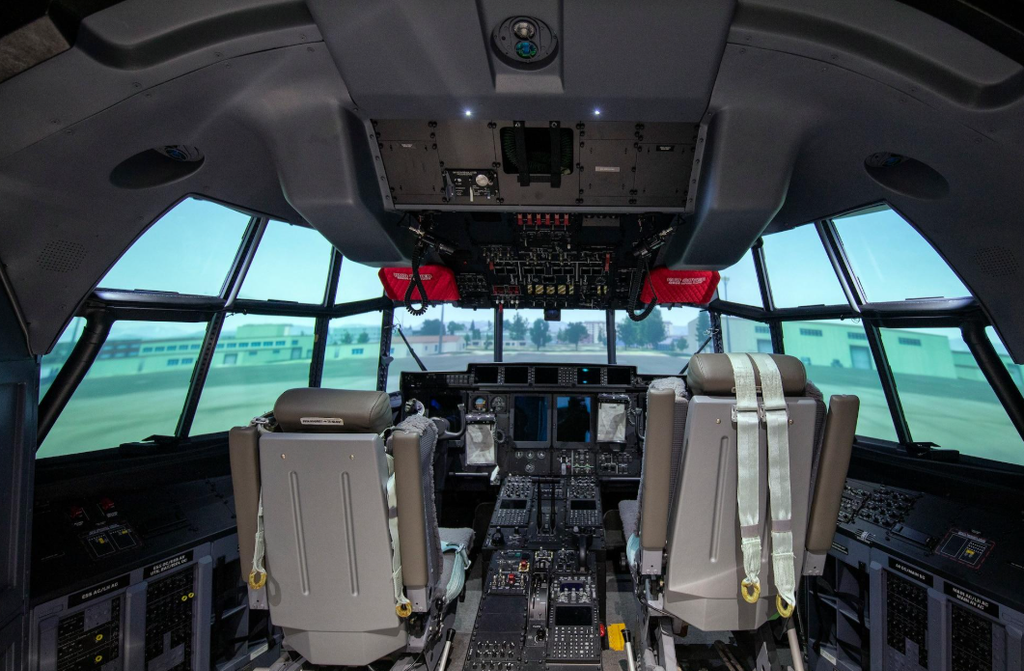
The configurable trainer also incorporates modular panels, controls and touchscreen displays.
Its architecture allows operators to adjust the physical training interface and visual system to meet different instructional requirements. The system supports updates associated with aircraft Operational Flight Programs, including changes involving the mission computer and Communication, Navigation and Identification System Processor.
Lockheed Martin also identifies more than 1,100 simulated malfunctions for normal and emergency training scenarios.
These scenarios can help instructors expose students to aircraft problems that would be difficult, expensive or unsafe to reproduce during actual flight operations.
Another important feature is interoperability with other C-130J training devices and mission-planning systems. The company says the modular architecture is designed to support relocation, integration and future upgrades as aircraft configurations change.
Why Full-Flight Simulator Capacity Matters
The C-130J Super Hercules performs a broad range of military missions, including tactical airlift, personnel transport, airdrop operations, aeromedical evacuation and special operations support.
Each mission places different demands on aircrew and maintenance personnel.
Pilots must understand aircraft handling, navigation, instrument procedures and emergency responses. Loadmasters require training in cargo management, aircraft loading, weight distribution and aerial delivery procedures. Maintenance personnel must also understand the aircraft’s systems and troubleshooting requirements.
These training demands create a continuing requirement for qualified instructors, suitable facilities and available simulation equipment.
The U.S. Air Force has used simulator-based instruction as a central part of C-130J qualification. At Little Rock Air Force Base, the C-130J schoolhouse provides academic and simulator instruction through the Maintenance and Aircrew Training System.
An Air Force account published in 2019 described how pilots and loadmasters progress from basic instruction to more advanced simulator exercises, including emergency scenarios and cargo-handling procedures.
JCAT introduces another option within this training structure.
By transferring appropriate preliminary and intermediate exercises to a configurable trainer, operators may be able to preserve full-flight simulator availability for advanced mission qualification.
This division of training responsibilities is the central operational benefit of the system.
A Wider C-130J Training Network
Lockheed Martin’s training activities extend beyond the introduction of JCAT.
The company operates a wider portfolio of C-130J training products covering aircrew instruction, loadmaster preparation and maintenance education.
These include:
- Full Flight Simulator/Weapons System Trainer: A high-fidelity, dynamic-motion system for initial qualification, instrument procedures, emergency training and mission rehearsal.
- Loadmaster Fuselage Trainer: Replicates the aircraft flight deck and cargo compartment for loadmaster instruction.
- Loadmaster Part-Task Trainer: Supports procedural training involving cargo handling and airdrop controls.
- Virtual Maintenance Trainer: Uses digital aircraft models and interactive scenarios for maintenance education.
- Observer Training Aid: Supports familiarization and mission-related training for additional crew positions.
The Hercules Training Center in Marietta, Georgia, provides training for domestic and international C-130J and LM-100J operators. Lockheed Martin says the facility, established in 2018, has graduated more than 1,700 students.
The company also supports a France-Germany Multinational Training Center at Évreux-Fauville Air Base in France. That facility supports training for the two countries’ multinational C-130J squadron.
These facilities demonstrate that JCAT is part of a larger training ecosystem rather than an isolated simulator development.
New Training Demand Is Also Reflected in Recent Contracts
The introduction of JCAT comes as Lockheed Martin expands its support for C-130J training across U.S. and international fleets.
On April 14, 2026, the Pentagon awarded the company a 10-year, indefinite-delivery, indefinite-quantity contract valued at up to $1.9 billion to continue the C-130J Maintenance and Aircrew Training System (MATS) program.
The contract enables the U.S. Air Force Life Cycle Management Center to continue providing training equipment, courseware, engineering services, program operations and contractor logistics support.
The program supports several U.S. military organizations, including:
- Air Mobility Command
- Air National Guard
- Air Force Reserve Command
- Air Force Special Operations Command
- Air Education and Training Command
- U.S. Marine Corps
The contract also provides for expanded aircrew training support to the U.S. Navy Reserve and U.S. Coast Guard.
Importantly, the $1.9 billion contract covers the broader MATS program. It should not be interpreted as a separate procurement award for JCAT.
International demand is another factor.
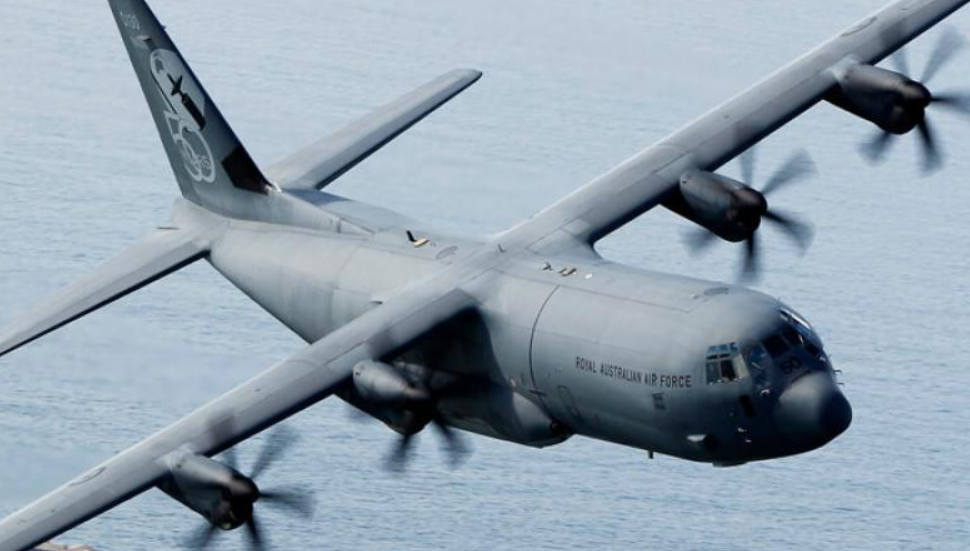
In February 2026, Lockheed Martin announced a Foreign Military Sales contract to supply advanced C-130J training devices and upgrades to the Royal Australian Air Force.
The package includes two Weapons Systems Trainers, an Enhanced Integrated Cockpit Systems Trainer, a Loadmaster Part-Task Trainer and upgrades to Australia’s existing virtual simulation and maintenance training systems. Deliveries are scheduled to begin in 2029.
The Australian agreement illustrates how C-130J operators are investing in training infrastructure alongside aircraft acquisition and fleet modernization. Lockheed Martin+1
What JCAT Could Mean for International Operators
The configurable design could be particularly useful for countries that operate relatively small C-130J fleets but need to maintain independent training capabilities.
Sending personnel abroad for qualification or refresher courses can involve travel expenses, scheduling constraints and additional time away from operational units.
A portable trainer could allow operators to conduct selected training activities at their own bases, reducing the need to move personnel for every stage of instruction.
This is also relevant for countries operating aircraft in different configurations. Training systems must reflect changes to avionics, mission computers and aircraft software if crews are expected to operate the actual aircraft safely and effectively.
Lockheed Martin says JCAT is designed to accommodate aircraft updates through its configurable architecture and common software foundation.
However, the actual benefit will depend on how individual customers configure the equipment, integrate it with existing training programs and provide qualified instructors.
There is also an important distinction between simulator familiarization and operational qualification. JCAT can support selected training stages, but it does not eliminate the need for advanced simulator instruction, instructor assessment or actual flight training where required.
Training Capacity Remains a Readiness Issue
The C-130J training requirement extends beyond the availability of simulators.
Military operators must maintain a continuous pipeline of pilots, loadmasters, instructors and maintenance specialists. As aircraft fleets expand or existing platforms receive new equipment, training organizations must update their curricula and instructional systems.
The U.S. Air Force’s C-130J training structure demonstrates the scale of this responsibility. Its training system combines academic instruction, contractor-supported simulator training and government-administered flight training and evaluations.
JCAT offers a way to distribute some of that workload across a more flexible training platform.
The system’s practical value will ultimately depend on customer adoption, training throughput, simulator availability and the ability to keep its software aligned with operational aircraft.
Lockheed Martin has not disclosed a specific JCAT procurement quantity, customer list, contract value or deployment schedule in its November 9 announcement.
For now, the system represents an additional option for C-130J operators seeking to increase training capacity without making every training requirement dependent on a full-motion simulator.