Saab Expands Combat Boat 90 With New Anti-Ship and Air Defense Configurations
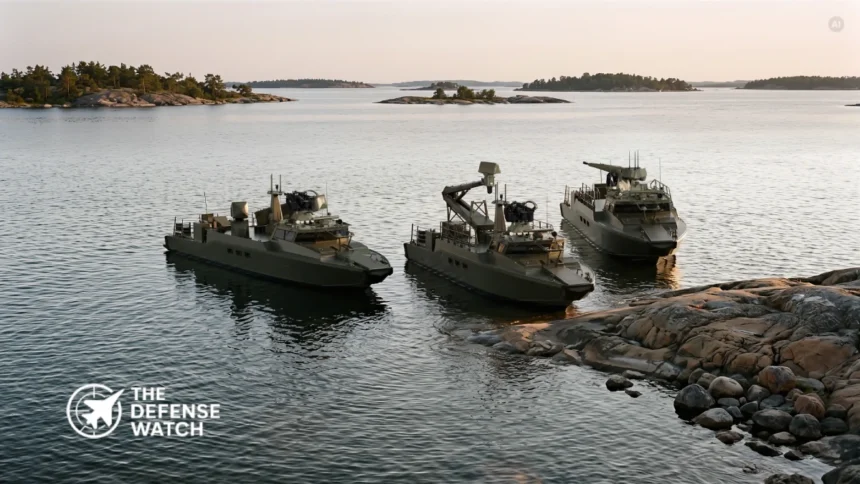
Saab has introduced the Combat Boat 90 Capability X (CB90 CX), an expanded version of its established fast assault craft designed to combine maritime surveillance, surface strike and short-range air defense in an optionally crewed platform.
- Saab Expands Combat Boat 90 With New Anti-Ship and Air Defense Configurations
- A Larger Combat Boat With an Expanded Mission
- Three Configurations Address Different Maritime Threats
- 1. Intelligence, Surveillance and Reconnaissance (ISR)
- 2. Anti-Ship Warfare Configuration
- 3. Short-Range Air Defense (SHORAD)
- Autonomous Operations Are Central to the New Design
- Sweden’s Naval Modernization Provides the First Operational Market
- What the CB90 CX Could Mean for Future Coastal Operations
- There are also practical limitations.
The Swedish defense company announced the new vessel on November 2, 2026, presenting three mission-specific configurations intended to give smaller naval platforms a more direct role in coastal combat operations.
Sweden is the launch customer, with the CB90 CX currently in production. The new model will operate alongside the existing CB90 Next Generation (CB90 NG), rather than immediately replacing the smaller vessel.
A Larger Combat Boat With an Expanded Mission
The CB90 CX builds on the design heritage of Saab’s Combat Boat 90, a fast assault craft used by naval forces for troop transport, coastal patrol and amphibious operations.
However, the new version shifts the platform toward a broader combat role. Instead of concentrating primarily on transporting personnel and equipment, the CB90 CX is designed to integrate surveillance sensors, weapons and autonomous operating functions.
According to Saab’s published specifications, the vessel measures 18 meters in length and 4 meters in width. It is powered by two 1,100-horsepower engines and has a published maximum speed exceeding 40 knots.
The manufacturer also lists a crew capacity of zero to 10 personnel, reflecting its design for both crewed and uncrewed operations.
| Specification | Saab CB90 CX |
|---|---|
| Length | 18 meters |
| Width | 4 meters |
| Maximum speed | More than 40 knots |
| Propulsion | Two 1,100 hp engines |
| Crew capacity | 0 to 10 personnel |
| Draught | 1.1 meters |
| Classification | DNV HSLC 1A HSLC Patrol (S) EO R2 |
The figures are manufacturer-published specifications, not independently verified operational performance measurements.
Three Configurations Address Different Maritime Threats
Saab is introducing the CB90 CX through three initial configurations. Each is designed around a different operational requirement, allowing naval forces to distribute surveillance and weapons capabilities across multiple smaller platforms.
1. Intelligence, Surveillance and Reconnaissance (ISR)
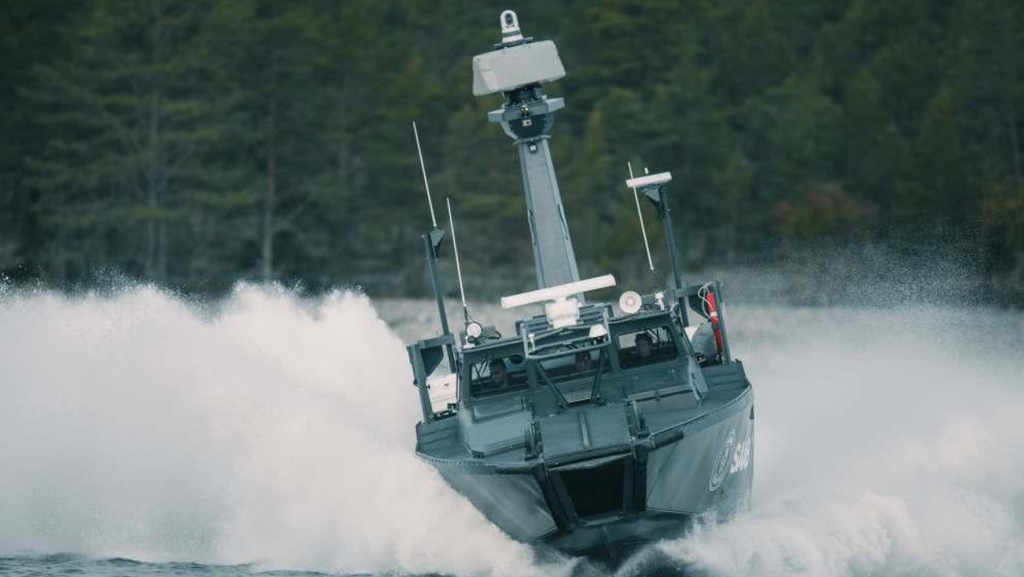
The ISR configuration is designed to improve maritime situational awareness through Saab’s Giraffe 1X radar.
The sensor is intended to support surveillance of air and surface targets, including small vessels and uncrewed aerial systems. Saab’s product information also identifies a Trackfire remote weapon station as part of the sensor and weapon integration concept.
The configuration’s main value is its potential contribution to a distributed maritime surveillance network. Multiple smaller vessels equipped with sensors could share information and help commanders maintain awareness across coastal operating areas.
2. Anti-Ship Warfare Configuration
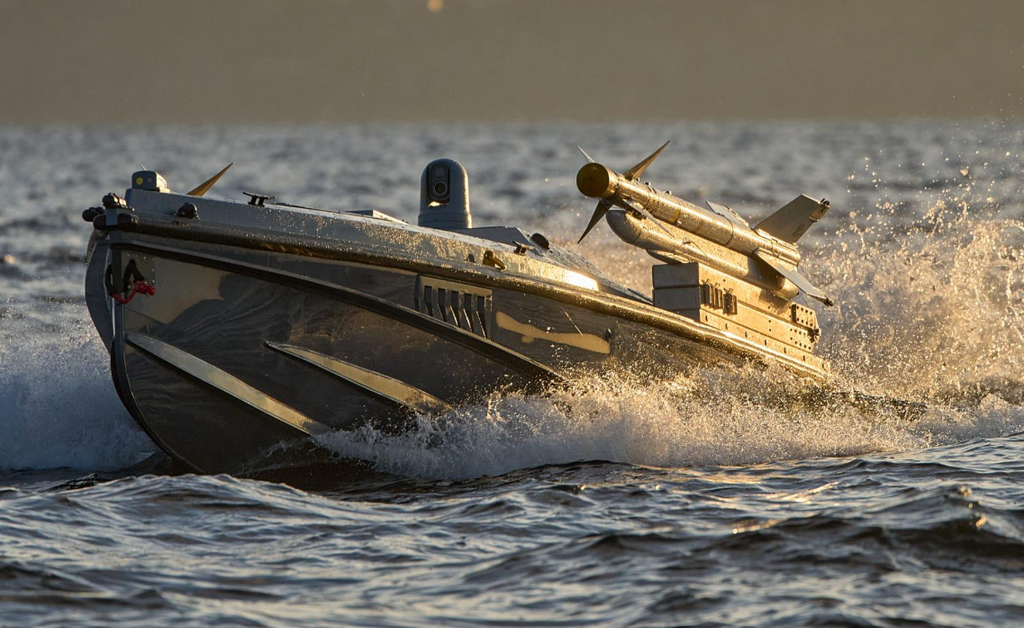
The anti-ship configuration gives the CB90 CX a surface-strike role beyond conventional patrol and amphibious support missions.
Saab identifies MBDA’s MARTE ER anti-ship missile as the weapon associated with this configuration. The company’s product information describes an engagement capability exceeding 100 kilometers, using targeting information supplied by external sensors.
This is an important distinction. A small combat boat operating close to shore may not independently detect every target it could potentially engage. Its effectiveness against targets beyond its own sensor horizon would depend on receiving accurate targeting information from other platforms.
That could include maritime surveillance aircraft, coastal sensors, other naval vessels or networked reconnaissance assets.
The configuration therefore reflects a wider naval concept in which smaller combatants contribute weapons to a distributed force rather than operating as isolated platforms.
3. Short-Range Air Defense (SHORAD)
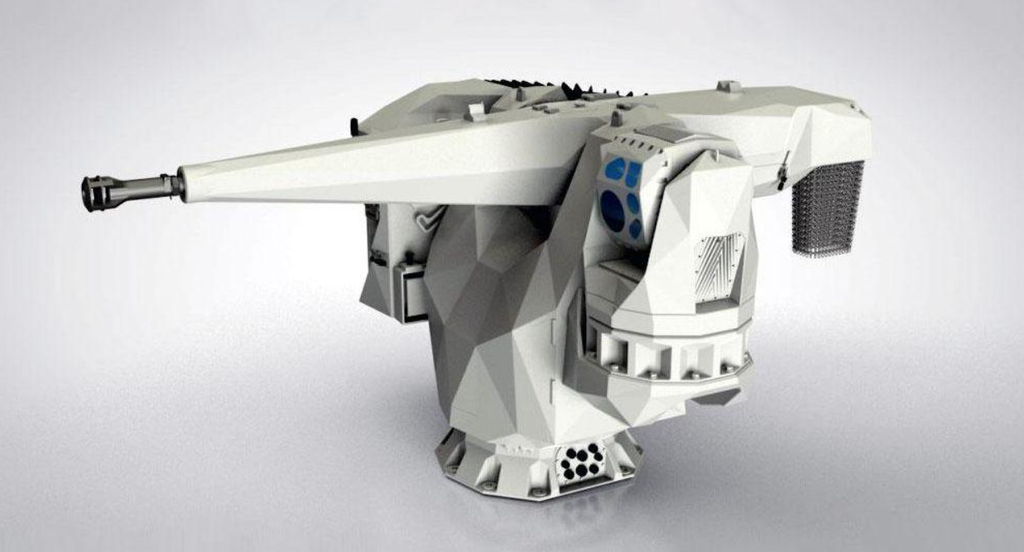
The third configuration focuses on protection against aerial threats.
It uses Rheinmetall’s SeaSnake 30 remote-controlled weapon station, incorporating a 30 mm automatic cannon. Saab describes the system as capable of engaging low-altitude aerial threats, including uncrewed aircraft, helicopters and loitering munitions.
The weapon station also provides a potential capability against selected surface and land targets.
The inclusion of this configuration reflects a growing concern for smaller naval vessels operating in environments where inexpensive drones and loitering weapons can threaten ships and coastal installations.
However, a 30 mm cannon does not replace layered naval air defense. Its effectiveness depends on target detection, tracking, engagement conditions and the availability of other defensive systems.
Autonomous Operations Are Central to the New Design
One of the most important differences between the CB90 CX and earlier Combat Boat 90 models is its emphasis on optional crewed operation.
Saab says the vessel incorporates its Autonomous Ocean Core, a control system intended to support autonomous vessel operations.
The company’s description identifies the technology as a vessel-agnostic system for managing craft autonomously. Its integration into the CB90 CX provides a foundation for operating the platform with or without personnel aboard.
This approach could give naval commanders additional flexibility when assigning missions in contested coastal waters.
For example, an uncrewed configuration could potentially perform selected surveillance or other missions without placing a crew directly in a high-risk operating area.
Nevertheless, important technical details remain undisclosed. Saab has not publicly established the full level of autonomous decision-making, remote-control arrangements, communications architecture or operational limitations of the CB90 CX.
Optionally crewed capability should not automatically be interpreted as unrestricted autonomous combat operation.
Sweden’s Naval Modernization Provides the First Operational Market
Sweden’s selection of the CB90 CX as its launch-customer platform gives the program an immediate domestic procurement context.
The Swedish Armed Forces operate in a maritime environment shaped by extensive coastlines, islands and archipelagos. Fast, relatively small combatants are useful in these conditions because they can operate in coastal areas where larger naval vessels may face restrictions.
The Baltic Sea also presents a demanding operating environment, with relatively short distances between important coastal areas and a requirement for persistent maritime surveillance.
Saab’s decision to retain the CB90 NG alongside the new CX suggests that the two models are intended to serve complementary requirements.
The original CB90 family already has an established international user base. Saab says the platform serves nine navies across Europe, the Middle East, Africa, Asia-Pacific and the Americas.
Procurement reporting provides further context. Sweden ordered 10 CB90 boats in June 2024 under a contract valued at approximately SEK 400 million. A subsequent order for 22 boats was announced in 2025, valued at approximately SEK 900 million.
Naval News also reported that Sweden’s wider CB90 procurement total reached 36 boats following four additional vessels in the first half of 2026. However, the available reporting does not establish that all 36 boats are CB90 CX configurations.
What the CB90 CX Could Mean for Future Coastal Operations
The CB90 CX reflects an approach to naval modernization that places greater emphasis on distributing sensors and weapons across smaller platforms.
Rather than relying exclusively on large surface combatants, navies can use smaller vessels to provide local surveillance, contribute to coastal defense and potentially deliver weapons against surface targets.
This concept has particular relevance to the Baltic and other geographically restricted maritime environments, where islands, narrow waterways and coastal infrastructure shape naval operations.
There are also practical limitations.
Small combat boats have less internal space, endurance and payload capacity than larger warships. Their ability to operate effectively will depend on maintenance, communications, crew training, weapons integration and coordination with other naval assets.
Uncrewed operation introduces additional considerations, particularly communications resilience and the ability to maintain reliable control in environments affected by electronic warfare.
The CB90 CX also does not independently provide the full capabilities of a larger surface combatant. Its value will depend on how effectively its individual configurations integrate into a wider naval force.
For Saab, the new platform expands an established combat boat family into a more sensor-intensive and weapons-oriented category. For Sweden, it offers another option for developing distributed coastal combat capabilities.
The central question is how the Swedish Armed Forces will employ the three configurations together, particularly whether autonomous operations and networked targeting can deliver meaningful advantages under realistic maritime conditions.
Public information has yet to establish the full operational concept, delivery schedule or final configuration of Sweden’s CB90 CX fleet.