

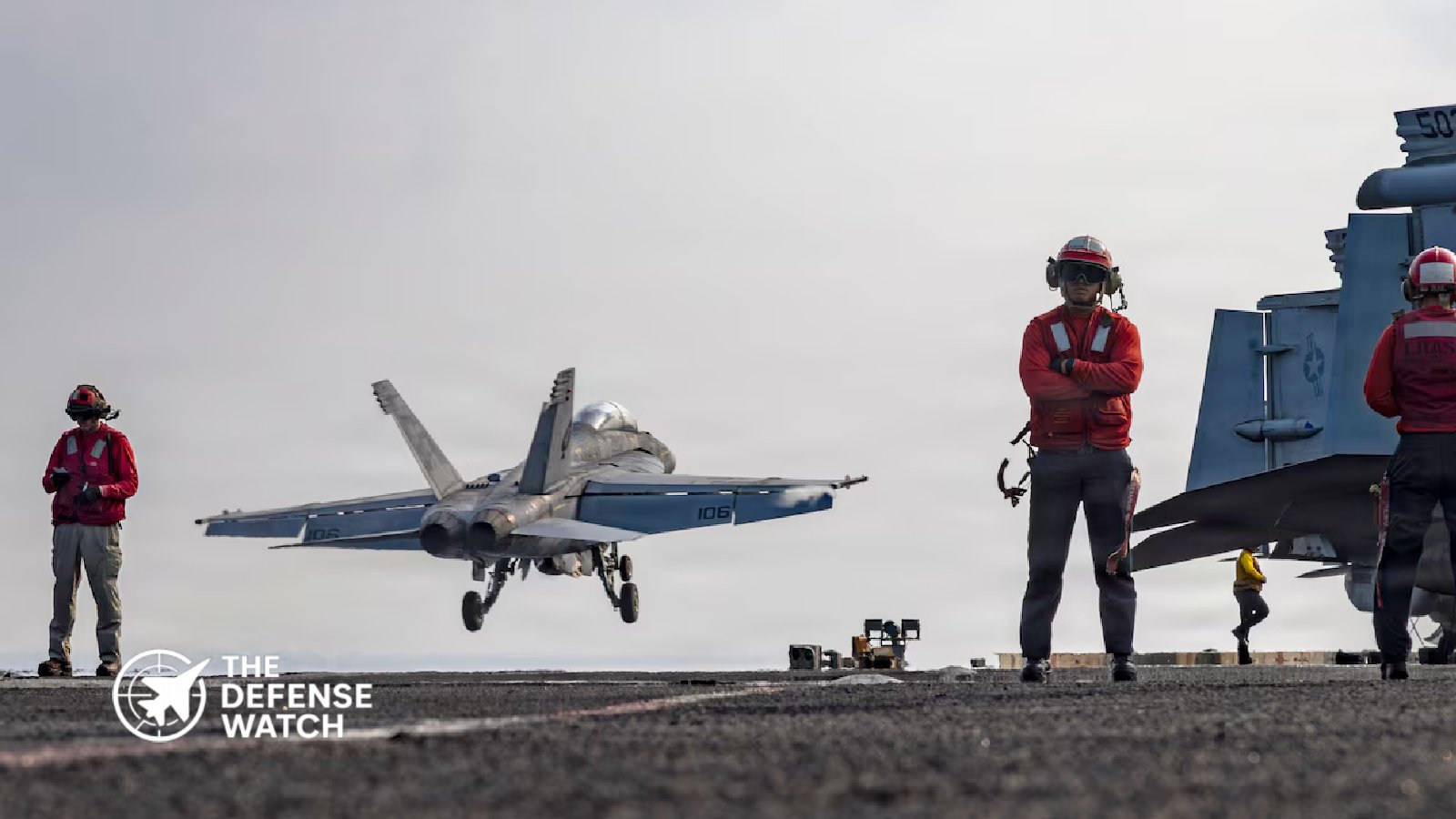
Hegseth Honors USS Lincoln After 321-Day Deployment
The USS Abraham Lincoln is returning to San Diego after one of the most demanding deployments in the modern history of U.S. carrier aviation, with Secretary of War Pete Hegseth visiting the ship at sea on October 7 to recognize the carrier strike group and present it with the Presidential Unit Citation.
The award followed a 321-day deployment that began in November 2025 and was repeatedly extended as the strike group was redirected from its original Indo-Pacific mission toward the Middle East. The deployment included operations supporting Operation Epic Fury, a sustained period of combat operations against Iran, and subsequent maritime operations around the Strait of Hormuz.
The length of the deployment is notable, but the more unusual figure is the 264 consecutive days the Lincoln spent without a port call, according to Hegseth. That surpassed the previous U.S. Navy record of 206 consecutive days at sea set by the USS Dwight D. Eisenhower in 2020.
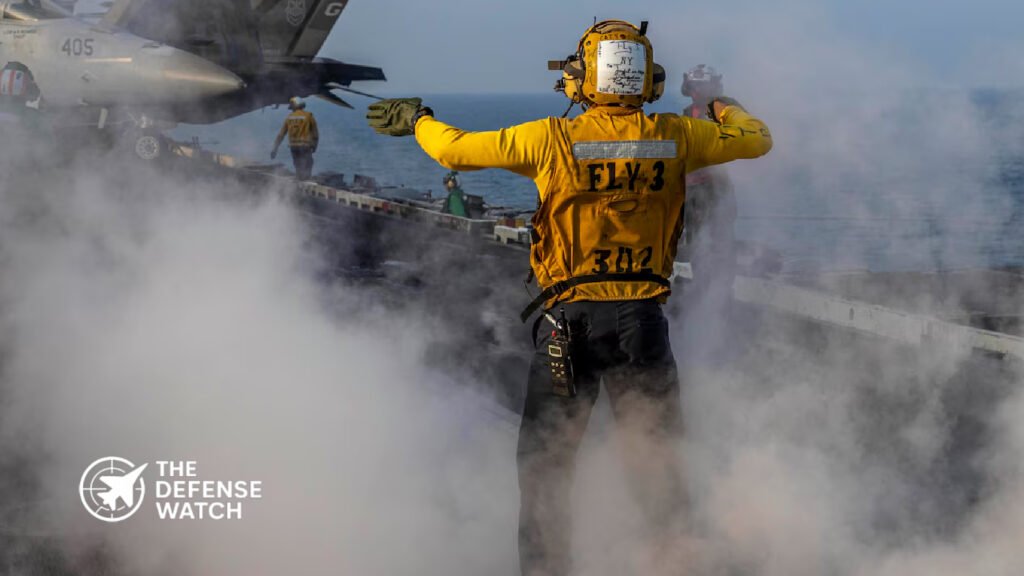
A carrier deployment shaped by changing operational demands
The Lincoln departed San Diego on November 21, 2025, for what was initially planned as an Indo-Pacific deployment. The strategic situation changed after the carrier strike group was redirected toward the Middle East.
By September, the Navy reported that Lincoln had spent 286 days at sea and that a September port visit to Thailand was its first full port stop since the beginning of the deployment. The strike group then continued its return journey toward the United States.
That distinction matters because the 321-day figure covers the full deployment, while the 264-day figure refers specifically to the uninterrupted period without a port call. The deployment therefore combined an unusually long time away from home with a particularly demanding stretch of sustained operations.
The Navy’s earlier public statements also show how operational requirements affected the deployment. In August, Acting Secretary of the Navy Hung Cao said the carrier had been extended because the mission required it and acknowledged that prolonged combat deployments created challenges involving resupply, communications with families and crew welfare.
Combat operations produced a heavy operational tempo
During his visit, Hegseth cited figures from the strike group’s combat operations that illustrate the scale of activity.
According to the figures presented by Hegseth, the Lincoln strike group:
- Conducted 3,693 combat sorties
- Delivered approximately 1.37 million pounds of ordnance
- Launched 450 Tomahawk land-attack cruise missiles from accompanying warships
- Shot down 77 one-way attack drones
- Destroyed 21 anti-ship cruise missiles
- Defended against four fast-attack craft and explosive-carrying vessels
- Contributed to the sinking of 64 Iranian warships
Hegseth also said the strike group completed 40 consecutive days of combat operations beginning February 28 under Operation Epic Fury.
These figures were presented by the secretary and should therefore be understood as official U.S. government figures rather than independently verified battlefield assessments. The available public information does not provide a separate, comprehensive accounting that independently confirms every individual engagement or loss attributed to the strike group.
The operational tally nevertheless demonstrates the range of missions expected from a carrier strike group during a high-intensity campaign. Carrier aviation provided sustained air operations, while the strike group’s surface combatants contributed long-range strike capacity, air and missile defense, and protection for the carrier.
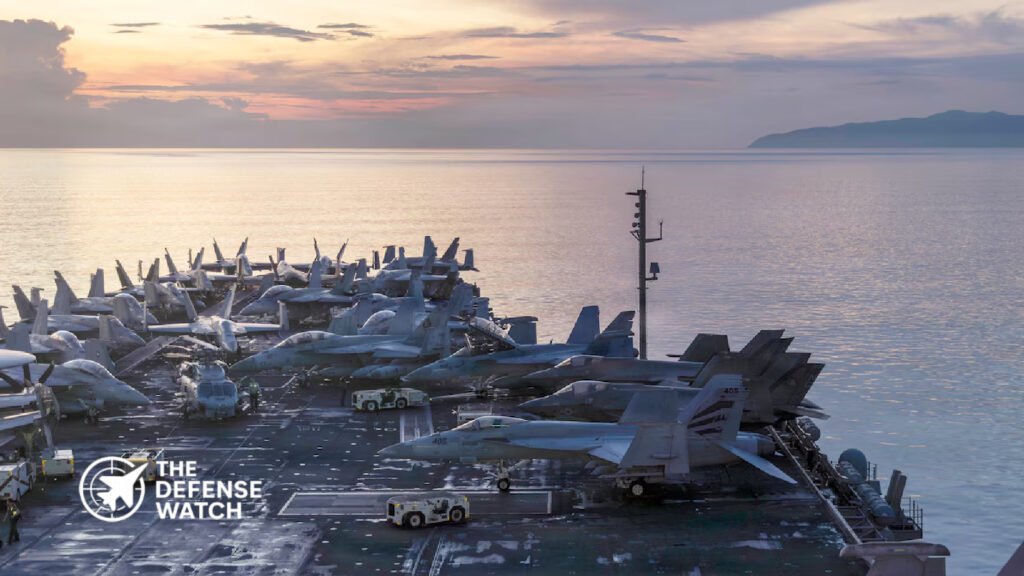
The Department of War has also documented Lincoln operating in the Arabian Sea during blockade operations, with Carrier Air Wing 9 employing F-35C fighters alongside F/A-18 aircraft, EA-18G electronic attack aircraft, E-2D airborne command and control aircraft, MH-60 helicopters and CMV-22B logistics aircraft.
The award recognizes combat performance, not simply deployment length
The Presidential Unit Citation is significant because it recognizes extraordinary heroism in action against an armed enemy. Hegseth presented the award to the Lincoln strike group in recognition of its combat performance during Operation Epic Fury and subsequent maritime operations.
The citation places the award in the context of the strike group’s 40 days of combat operations and its participation in the maritime blockade around Iran.
For the Navy, the award also provides an institutional recognition of a deployment that required the carrier and its escorts to sustain combat operations far beyond the duration normally associated with a carrier rotation.
The distinction is important. Long deployments by themselves do not establish combat effectiveness. In Lincoln’s case, however, the extended deployment was combined with a substantial operational tempo, including carrier aviation missions, long-range missile strikes and defensive operations against Iranian and other threats.
The human and sustainment cost of staying at sea
The operational results came with considerable demands on the sailors and Marines aboard the strike group.
Before the deployment ended, Navy officials acknowledged problems associated with the prolonged mission. In August, the acting secretary of the Navy said fresh resupply had at times been unavailable, requiring adjustments to meal plans, while communications with families were limited when operational conditions made them difficult.
The Navy also said that lessons from the deployment were being applied to future long-duration carrier operations. Among the changes discussed publicly were increasing food, retail and hygiene supplies before deployment and converting available spaces into additional storage to improve the carrier’s ability to remain self-sufficient when resupply becomes difficult.
That experience has implications beyond the Lincoln itself. A carrier strike group can remain operational for long periods only if aviation maintenance, fuel, ammunition, food, spare parts, medical support and personnel endurance are sustained at the same time.
The deployment therefore provides another example of the logistical challenge created when U.S. naval forces are required to maintain a carrier presence in a contested region for substantially longer than the traditional deployment cycle.
Lincoln has a history of extended deployments
The current deployment is not the first unusually long mission for the Nimitz-class carrier.
Lincoln previously completed a 294-day deployment between April 2019 and January 2020, a mission that included operations in the Middle East and a change of homeport from Norfolk to San Diego. That deployment was extended several times and became a prominent example of the strain created by prolonged carrier commitments.
Lincoln also spent about 290 days deployed between July 2002 and May 2003 in support of Operations Enduring Freedom and Iraqi Freedom.
The current 321-day deployment therefore continues a pattern in which Lincoln has repeatedly been retained at sea beyond conventional carrier deployment timelines.
It is also important not to describe the 321-day mission as the longest U.S. carrier deployment overall. The USS Gerald R. Ford completed a 326-day deployment earlier in 2026. Lincoln’s current deployment is better understood as a record-setting mission for its uninterrupted period without a port call, rather than the longest carrier deployment in the broader historical record.
What the Lincoln deployment shows about carrier force demands
Lincoln’s experience illustrates a continuing tension in U.S. naval force planning. Carrier strike groups provide a combination of aviation, long-range strike, air defense, command and control, logistics and maritime presence that is difficult to reproduce with a single smaller platform.
That versatility also makes carriers attractive to combatant commanders when crises develop. The consequence is that individual carrier groups can face pressure to remain deployed when replacement forces are not immediately available or when operational requirements change faster than the Navy’s deployment schedule.
The 2026 deployment shows both sides of that equation. Lincoln demonstrated that a carrier strike group can sustain a lengthy combat mission and shift between theaters while continuing to generate large numbers of sorties and long-range strikes. At the same time, the Navy’s own statements show that extended deployments require additional planning for resupply, storage, communications and crew welfare.
As Lincoln reaches San Diego, its most important legacy may therefore extend beyond the combat statistics. The deployment provides the Navy with another real-world case study in how long a carrier strike group can remain effective under sustained operational pressure, and what additional resources are required to keep it there.
For the Lincoln crew, the immediate milestone is simpler. After 321 days away from home, the carrier is finally completing its return to San Diego.
