F-35C And F-22 Train Against Complex Air Defenses
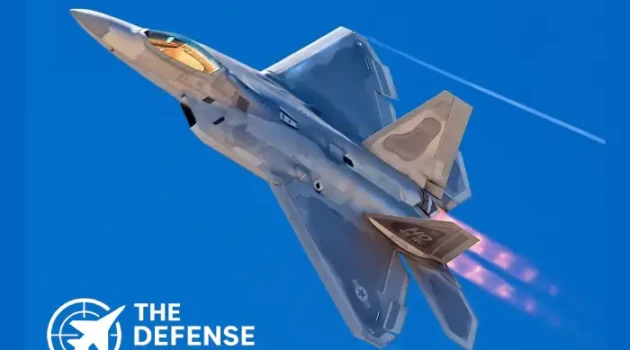
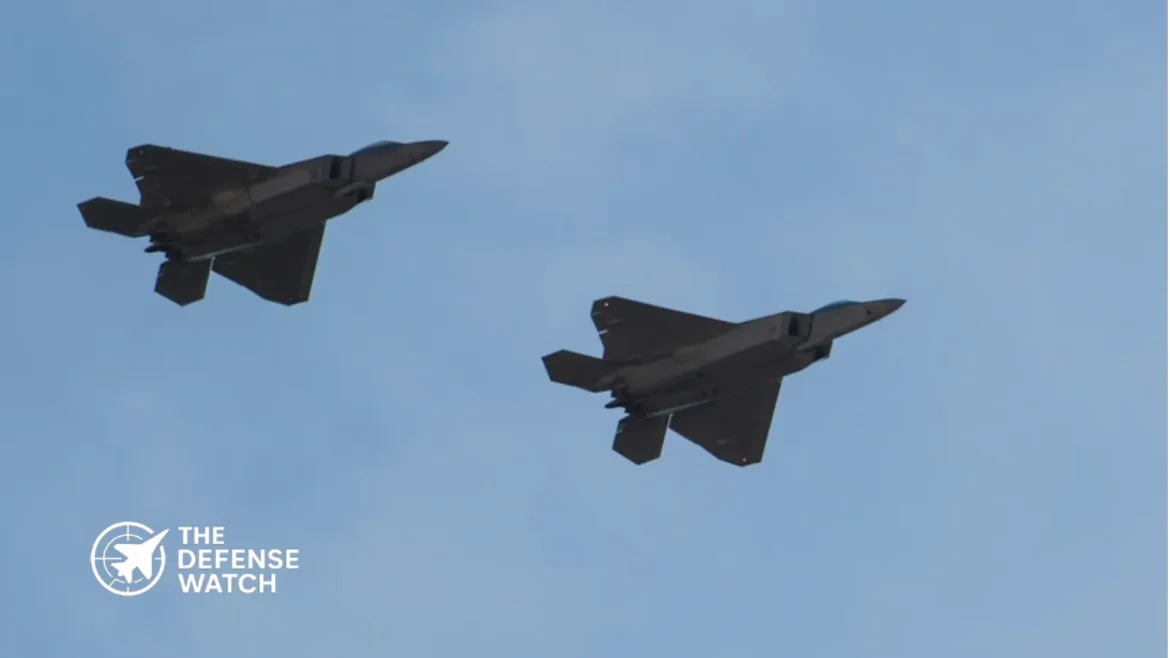
The F-35C Lightning II and F-22 Raptor operated together during Red Flag Alaska 26-3, where U.S. forces trained against simulated peer and near-peer threats, complex air defenses and battlefield disruptions. The exercise ran from Aug. 14 to Aug. 18 and represented the third and final Red Flag Alaska iteration of 2026.
Takeaways
F-35C Lightning II and F-22 Raptor fighters trained together against simulated peer threats and complex air defenses during Red Flag Alaska 26-3.
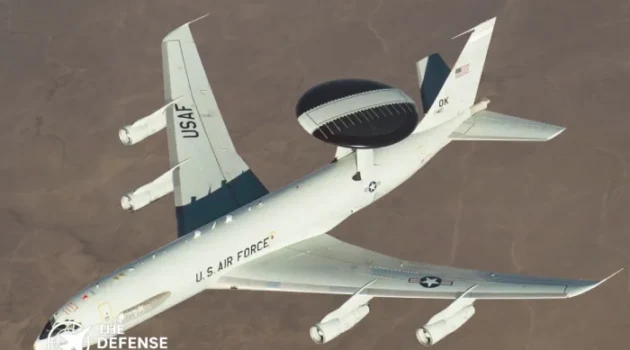
The fighter force included F-35Cs from Marine Fighter Attack Squadron 251 at Marine Corps Air Station Cherry Point, North Carolina, and F-22s from the Air Force’s 3rd Wing at Joint Base Elmendorf-Richardson, Alaska. An E-3 Sentry from the 961st Airborne Air Control Squadron at Kadena Air Base, Japan, also participated.
The combination placed two different fifth-generation fighter types within a larger air battle framework supported by airborne command and control. The training was designed to move beyond individual aircraft proficiency toward coordinated operations in a contested environment.
Why Red Flag Alaska Matters
Red Flag Alaska uses the Joint Pacific Alaska Range Complex, which covers approximately 120,000 square miles of airspace. The range allows U.S. and partner forces to progress from individual tactical skills to large-scale engagements involving multiple aircraft and mission areas.
The size of the training area is particularly important for air combat exercises because it allows forces to practice operations across greater distances rather than limiting engagements to a small training box.
The Air Force said Red Flag Alaska 26-3 brought together 79 aircraft from 10 units across the Joint Pacific Alaska Range Complex. The exercise concluded Aug. 28 after two weeks of realistic combat training, although the F-35C and F-22 activity highlighted in this report took place Aug. 14 to Aug. 18.
F-35C And F-22 Bring Different Strengths
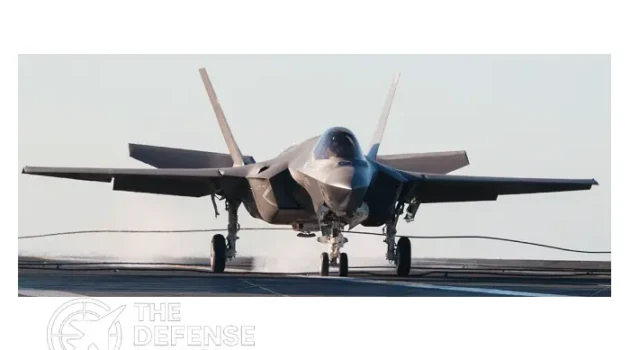
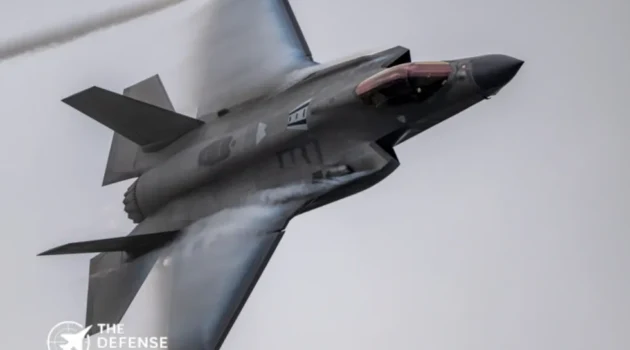
The F-35C is the carrier-capable variant of the F-35 family. The U.S. Navy describes the F-35C as a fifth-generation aircraft with stealth, enhanced lethality and survivability, a robust communications suite and the ability to employ internal or external weapons.
The F-22, meanwhile, was developed primarily around air dominance. The Air Force identifies stealth, supercruise, maneuverability and integrated avionics as core characteristics of the Raptor. Its sensor and avionics architecture is designed to provide pilots with a high level of situational awareness while operating against advanced air threats.
That difference is important when considering the value of combined training.
The exercise was not simply about placing two stealth fighters in the same formation. It provided an opportunity to practice how different aircraft, sensors, weapons and command-and-control systems function together when the battlespace becomes increasingly difficult to manage.
Aircraft Primary Service Key Training Relevance F-35C Lightning II U.S. Marine Corps Stealth, sensing, networking and carrier-capable multirole operations F-22 Raptor U.S. Air Force Air dominance, stealth, supercruise and advanced air combat E-3 Sentry U.S. Air Force Airborne command and control Training Included Battlefield Disruptions
One of the more significant elements of Red Flag Alaska 26-3 was its designation as a Special Technical Operation exercise.
According to the exercise organizers, scenarios introduced operational disruptions intended to replicate conditions associated with peer and near-peer conflicts. These included non-kinetic effects designed to disrupt coordination and complicate operations.
That matters because modern air warfare is not limited to aircraft engaging aircraft or missiles engaging targets.
A major air operation depends on communications, data exchange, command networks, navigation, sensors and decision-making. If those functions become degraded or disrupted, pilots and commanders must continue operating with incomplete or delayed information.
The exercise therefore tested an important part of modern air combat readiness: the ability of a force to maintain coordinated operations when its normal information flow is under pressure.
The Role Of The E-3 Sentry
The participation of an E-3 Sentry added another layer to the training.
The E-3 is an airborne command-and-control platform that can support the broader air picture. Its presence alongside F-35Cs and F-22s reflects the reality that air dominance operations normally depend on more than fighter aircraft alone.
The operational value comes from connecting different capabilities into a functioning force. Fighters provide combat power, while airborne command and control can help coordinate the wider engagement.
This type of integration becomes increasingly important as forces operate across larger areas and against opponents equipped with advanced sensors, aircraft, electronic warfare systems and air-defense networks.
Complex Air Defenses Remain A Major Challenge
Red Flag Alaska 26-3 specifically required participants to coordinate joint and coalition operations against complex air-defense systems. The exercise combined multiple effects to train forces to overcome those threats in a contested environment.
For fifth-generation aircraft, the challenge is not simply achieving low observability.
Stealth can reduce an aircraft’s detectability, but modern air-defense networks can combine multiple sensors, communications links and weapons systems. Training therefore has to account for the wider system rather than treating an air-defense battery as an isolated target.
This makes large-force exercises valuable. Pilots can practice the interaction between aircraft, command-and-control assets and other supporting capabilities while facing simulated disruptions.
The F-22’s air-dominance role is particularly relevant in this context. The Air Force says the aircraft combines stealth, integrated avionics and supercruise to support operations against advanced air threats.
The F-35C brings a different set of capabilities, including stealth, advanced sensing and networking. The Marine Corps aircraft therefore contributes to the broader force rather than functioning only as a conventional strike platform.
What The Exercise Says About Joint Air Operations
The most important lesson from the training is the emphasis on integration.
The F-35C and F-22 are operated by different U.S. military services and were designed around different primary missions. Yet a real contingency would require them to function as parts of the same air campaign.
Red Flag Alaska creates a controlled environment where those relationships can be tested repeatedly.
The exercise also included allied and partner participation across its broader 2026 schedule. Red Flag Alaska 26-2, for example, involved more than 70 aircraft and approximately 2,100 personnel from U.S. and partner nations.
That multinational element matters for Pacific operations, where U.S. forces could be required to operate alongside allied aircraft and other joint capabilities across large distances.
The Broader Pacific Relevance
Alaska’s geography gives the training environment particular relevance to Pacific air operations.
The Joint Pacific Alaska Range Complex provides a large overland training area where forces can practice operations at a scale that is difficult to reproduce at smaller ranges. Pacific Air Forces describes Red Flag Alaska as a venue for realistic deployed-environment training, interoperability and contingency response.
For the United States, that supports a broader readiness requirement: maintaining the ability to generate and coordinate combat airpower under contested conditions.
The exercise does not prove how the aircraft would perform in an actual conflict. Instead, its value lies in giving crews and supporting units the opportunity to identify problems, refine procedures and improve coordination before those capabilities are required operationally.
What Comes Next For Fifth-Generation Integration
The U.S. Air Force is also moving toward a future force in which fifth-generation fighters operate alongside newer systems and autonomous aircraft.
In June 2026, the Department of the Air Force announced contracts connected with development and production of its first-generation Collaborative Combat Aircraft, while also establishing a competitive market for mission-autonomy software.
That development increases the importance of exercises that test not only individual aircraft but the ability of different platforms to share information and perform complementary missions.
Red Flag Alaska 26-3 provides a current example of that approach. F-35Cs, F-22s and an E-3 operated within a scenario that included simulated advanced air defenses and disrupted battlefield conditions.
For U.S. air forces, the objective is increasingly broader than mastering a single aircraft. It is building the ability to operate a connected force when an adversary is actively trying to disrupt that force.
Bottom Line
The F-35C and F-22 training during Red Flag Alaska 26-3 demonstrated the continuing U.S. emphasis on integrated air operations against sophisticated threats.
The exercise combined fifth-generation fighters, airborne command and control, complex simulated air defenses and Special Technical Operations effects inside one large training environment.
Its significance is less about a particular simulated engagement and more about the operational problem being addressed: how to maintain air combat effectiveness when advanced defenses and battlefield disruptions make coordination harder.
That remains a central requirement for U.S. airpower in the Indo-Pacific and other contested theaters.

USS George Washington Reaches 200,000th Aircraft Recovery
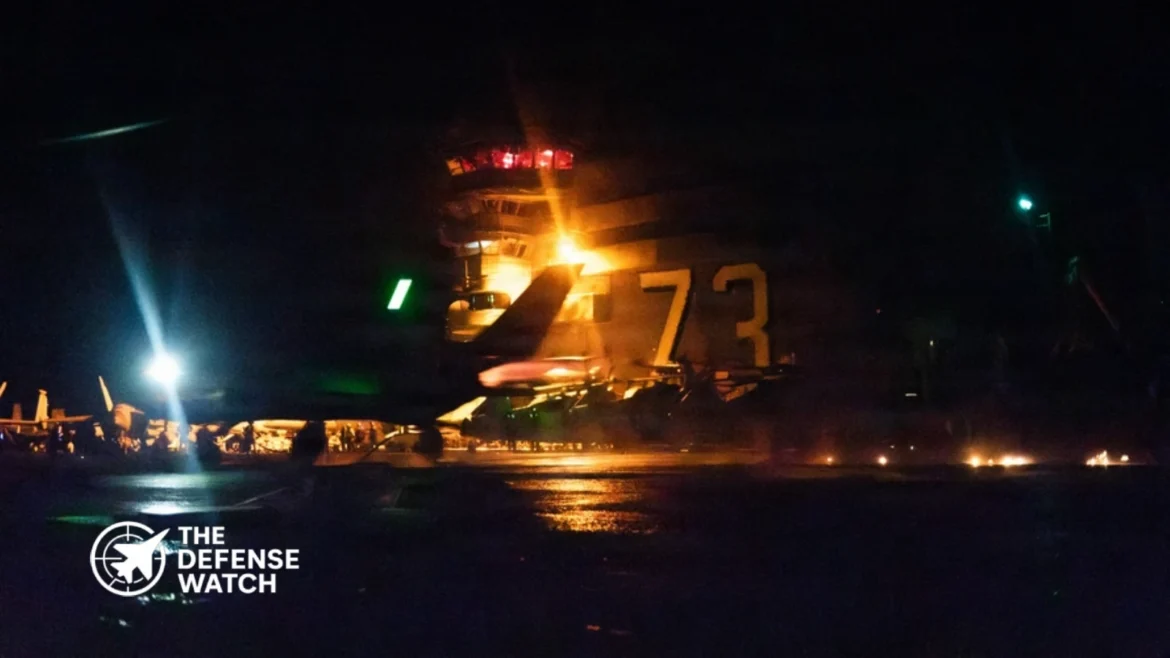
USS George Washington has completed its 200,000th fixed wing aircraft recovery, with an F-35C Lightning II making the milestone landing during flight operations in the Indian Ocean on Aug. 18, 2026. The U.S. Navy reported the event through the Defense Visual Information Distribution Service, identifying the landing as a major aviation milestone after more than three decades of carrier operations.
Takeaways
A major carrier aviation milestone for USS George Washington
1. 200,000 Fixed Wing Recoveries
USS George Washington completed its 200,000th fixed wing aircraft recovery while operating in the Indian Ocean on Aug. 18, 2026.
2. F-35C Performs the Milestone Landing
An F-35C Lightning II assigned to Strike Fighter Squadron 147 conducted the historic arresting gear landing.
3. More Than 34 Years of Service
Commissioned in 1992, the Nimitz class carrier has supported U.S. naval aviation operations across multiple generations of carrier aircraft.
4. Forward Deployed in the Indo Pacific
George Washington is operating in the U.S. 7th Fleet area of operations as part of the Navy’s forward presence in the Indo Pacific.
5. The Milestone Reflects Carrier Readiness
The 200,000 recovery figure represents decades of coordinated work involving pilots, landing signal officers, flight deck crews, maintainers and arresting gear teams.
The aircraft involved was an F-35C assigned to Strike Fighter Squadron 147, the Navy’s first operational F-35C squadron. The pilot, Lt. Steven Frazier, conducted the recovery after routine operations in the U.S. 7th Fleet area of operations.
For a carrier, an aircraft recovery is more than a landing. The aircraft must approach a moving flight deck, align with the landing area and use its tailhook to catch one of the ship’s arresting wires, which rapidly absorbs the aircraft’s energy and brings it to a stop.
The Navy said George Washington can recover approximately one aircraft per minute and typically lands about 70 aircraft during several flight operations events throughout a day.
A 34 Year Record of Carrier Aviation
USS George Washington was commissioned on July 4, 1992, and is one of the Nimitz class nuclear powered aircraft carriers. Navy historical records show that the ship was designed to support sustained offensive air operations while providing forward presence, sea control, deterrence and maritime security.
The 200,000 recovery milestone therefore represents aircraft operations spanning several generations of U.S. naval aviation.
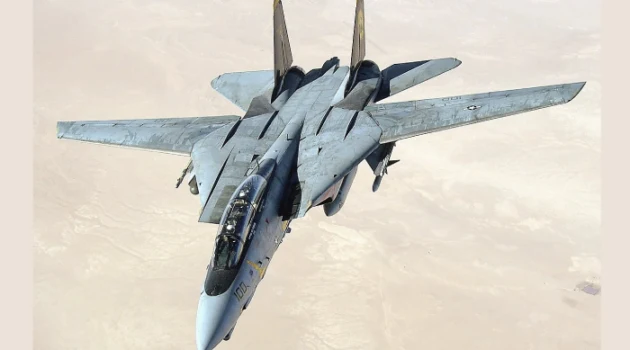
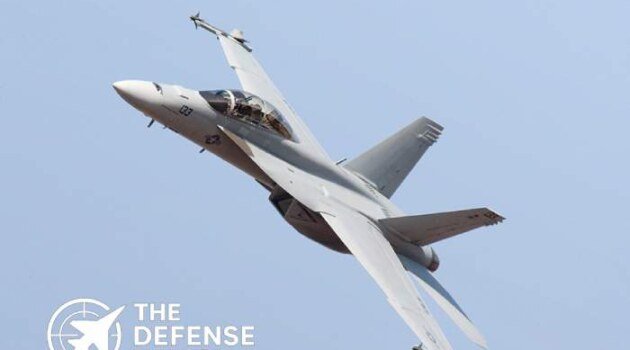
According to the Navy, George Washington has recovered aircraft ranging from F-14 Tomcats and F/A-18C/D Hornets to F/A-18E/F Super Hornets, EA-18G Growlers, E-2D Hawkeyes and the F-35C Lightning II.
That transition is significant because the aircraft operating from the carrier have changed considerably in their sensors, mission systems, propulsion, weapons integration and maintenance requirements.
The ship’s underlying recovery function, however, remains dependent on the same basic principle: safely stopping a fixed wing aircraft on a relatively short flight deck at sea.
Why the F-35C Is Suited to Carrier Operations
The F-35C is specifically designed for catapult assisted launches and arrested landings aboard large aircraft carriers.
Compared with the other F-35 variants, the carrier version has larger wings, reinforced landing gear and structural features designed to withstand the repeated stresses associated with carrier launch and recovery operations. Its wingtips also fold to improve aircraft handling and storage on the carrier deck.
F-35C Carrier Feature Operational Purpose Larger wing surfaces Improved low speed carrier handling Reinforced landing gear Supports carrier launch and recovery loads Arresting hook Enables arrested landings Folding wingtips Improves carrier deck and hangar storage Internal fuel capacity of nearly 20,000 pounds Supports longer range and mission persistence Supersonic performance Allows high speed tactical operations The F-35C can reach approximately Mach 1.6 and has more than 1,200 nautical miles of range according to Lockheed Martin. The aircraft also combines stealth characteristics with sensor fusion and networked information sharing, making it fundamentally different from many of the aircraft that previously operated from George Washington.
The Navy declared the F-35C operationally capable in February 2019. VFA-147 was the first Navy squadron to reach that milestone with the aircraft.
The Recovery System Is a Critical Part of Carrier Combat Power
The 200,000th recovery also highlights an element of carrier aviation that receives less attention than the aircraft itself: the ship’s arresting gear and the personnel responsible for operating it.
Every recovery requires coordination between the pilot, landing signal officer, flight deck personnel, maintainers and arresting gear operators. The recovery system must absorb the aircraft’s kinetic energy while keeping the landing sequence within the available deck space.
The Navy described the milestone as the product of continuous work by arresting gear teams, flight deck personnel, maintainers and watch standers who keep the carrier’s aviation systems operational.
This is particularly important for a carrier operating at sea because aviation support cannot depend on a conventional runway or nearby maintenance base. The ship has to launch, recover, refuel, rearm and maintain aircraft while continuing to operate as a mobile naval airfield.
The F-35C adds another layer of complexity because its carrier operations depend on the aircraft’s specialized landing gear, arresting hook, folding wings and integration with carrier launch and recovery equipment.
From F-14 Tomcats to F-35C Lightning IIs
The aircraft recovered by George Washington over its service life provide a useful picture of the evolution of U.S. carrier aviation.
When the carrier entered service in 1992, its air wing included aircraft such as the F-14B Tomcat, F/A-18C Hornet, E-2C Hawkeye, EA-6B Prowler, S-3B Viking and C-2A Greyhound.
Many of those platforms have since been retired.
Today’s carrier aviation force relies heavily on the F/A-18E/F Super Hornet, EA-18G Growler, E-2D Hawkeye, MH-60 helicopters and F-35C. The change reflects the Navy’s broader move toward networked operations, improved sensors, electronic warfare and fifth generation aircraft.
The F-35C’s presence aboard George Washington is particularly relevant because the aircraft can contribute sensing and targeting information beyond its traditional role as a fighter. Its networked architecture allows information gathered by the aircraft to be shared with other connected forces.
Why the Milestone Matters for U.S. Naval Operations
The 200,000th recovery is primarily a readiness milestone, but it also illustrates the operational value of maintaining carrier aviation at high tempo.
A carrier’s combat effectiveness depends on its ability to repeatedly generate sorties. Launching an aircraft is only one part of that cycle. The aircraft must also be recovered safely, inspected, serviced and prepared for another mission.
The recovery rate cited by the Navy, approximately one aircraft per minute under suitable operating conditions, demonstrates why arresting gear performance and flight deck coordination are central to carrier sortie generation.
This matters to U.S. naval strategy because aircraft carriers are designed to provide air power without requiring access to a land base. In the Indo Pacific, where distances between bases can be substantial and access to fixed infrastructure can be politically or militarily constrained, the ability to operate aviation forces from the sea remains an important component of U.S. forward presence.
George Washington’s current activity in the 7th Fleet area also places the milestone within the Navy’s broader Indo Pacific posture. The Navy describes the carrier as a forward deployed platform supporting U.S. engagement with allies and partners across the region.
F-35C Integration Shows the Carrier’s Continued Adaptation
George Washington has continued integrating the F-35C into its flight operations rather than treating the aircraft as a separate capability.
In earlier operations, the carrier conducted cyclic flight operations involving F-35Cs and other aircraft. During a 2024 training period, the Navy reported 141 sorties, including 67 day traps and 17 night traps, as the carrier and air wing practiced operating together.
That integration is important because the value of a carrier based fifth generation aircraft depends not only on the jet itself, but also on the ship, air wing, maintenance teams, communications architecture and flight deck personnel working as a single operational system.
The 200,000th recovery therefore represents more than a numerical record. It demonstrates that a carrier commissioned in 1992 remains capable of supporting a modern air wing built around aircraft with substantially different requirements from those of the platforms it operated during its early service.
A Milestone Built Around Routine Operations
The significance of the event also comes from the fact that it occurred during routine flight operations rather than a ceremonial demonstration.
The Navy described the recovery as part of normal operations in the Indian Ocean. That distinction matters because carrier readiness is ultimately measured through repeated operational performance, not isolated demonstrations.
For the sailors involved, the 200,000th trap was the result of thousands of previous recoveries and the accumulated procedures, maintenance practices and training developed over the carrier’s service life.
George Washington is now well into its fourth decade of service. Its latest aviation milestone shows how the Nimitz class continues to support successive generations of aircraft while remaining part of the U.S. Navy’s forward deployed carrier force.
The 200,000th fixed wing recovery, completed by an F-35C in the Indian Ocean, connects those two eras directly: a carrier commissioned during the Cold War era’s aftermath recovering a fifth generation fighter designed for modern networked naval warfare.