

Table of Contents
China’s Expanding Hypersonic Missile Force
China’s hypersonic missile expansion has become a central concern for U.S. defense planners as Beijing accelerates the development of advanced glide vehicles, dual-use missiles, and operational hypersonic platforms. As the U.S. Air Force and Missile Defense Agency work to field their own systems, the strategic race now centers on one question critical to both sides: how fast is hypersonic speed, and why do hypersonic weapons pose such a challenge to U.S. hypersonic missile defense systems?
Hypersonic speed is commonly defined as Mach 5 or higher—roughly 3,836 mph (6,174 km/h). But speed alone does not make hypersonic weapons disruptive. Their ability to maneuver unpredictably at these velocities is what gives China an emerging military advantage and stretches the limits of existing U.S. detection and interception capabilities.
China’s Hypersonic Weapons: DF-17, Glide Vehicles, and New Test Activity
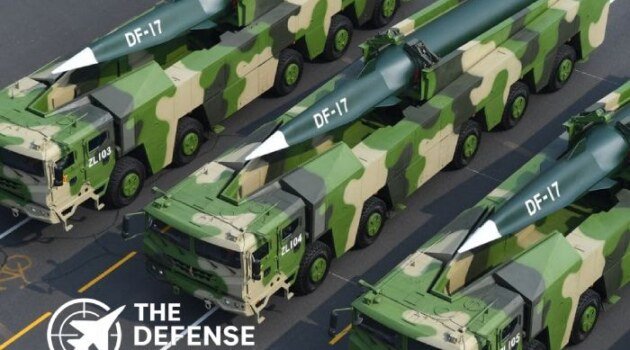
DF-17 Ballistic Missile + Hypersonic Glide Vehicle (HGV)
China’s publicly revealed operational hypersonic system is the DF-17, which pairs a medium-range ballistic missile booster with a hypersonic glide vehicle capable of flying low, maneuvering laterally, and evading traditional radar tracking.
U.S. defense officials have consistently assessed the DF-17 as fielded and deployable, giving China a regional capability aimed at U.S. bases and naval assets in the Indo-Pacific.
Hypersonic Fractional Orbital Bombardment System (FOBS) Tests
In recent years, China reportedly tested a system that combined a fractional orbital bombardment vehicle (FOBS) with a maneuverable hypersonic glide body. While publicly available details remain limited, the test suggested advanced capabilities for global-range, non-ballistic flight paths designed to bypass U.S. early-warning systems.
Scramjet and Boost-Glide Research
Chinese state media and academic publications show continuing investment in:
- Scramjet-powered hypersonic cruise missiles
- High-enthalpy wind tunnels (Mach 25+)
- Thermal protection materials
- Advanced guidance and control algorithms
This broad research ecosystem suggests China aims for a multi-layered hypersonic portfolio similar to U.S. programs but with faster deployment timelines.
DF-17 Hypersonic Missile – Full Specifications
How Fast Is Hypersonic Speed? Understanding Mach 5 and Beyond
Hypersonic speed begins at Mach 5, but modern weapons often reach Mach 8–10 depending on their design.
Speed Benchmarks
System TypeTypical Speed Hypersonic glide vehicles Mach 5–10 Hypersonic cruise missiles Mach 5–7 Ballistic missiles (mid-course) Mach 15–20 (but predictable trajectories) The difference lies in maneuverability, not raw velocity.
Ballistic missiles can travel faster, but their paths are fixed and easily modeled.
Hypersonic weapons fly lower and unpredictably, making them far more challenging to track and defeat.Why Hypersonic Weapons Challenge U.S. Hypersonic Missile Defense Systems
1. Low-Altitude Maneuvering
Hypersonic glide vehicles fly at 30–60 km altitude, which is below ballistic missile mid-course height. This creates a coverage gap between:
- Ground-based radars optimized for higher ballistic arcs
- Space-based sensors optimized for boost-phase tracking
2. Compressed Reaction Time
At speeds over 4,000–7,000 mph, hypersonic weapons reduce the time available for:
- Detection
- Tracking
- Interceptor launch
- Engagement
In the Pacific, flight times could drop to minutes, significantly complicating U.S. response options.
3. Thermal and Plasma Effects
Heat generated at hypersonic speed can create a plasma sheath around the weapon, reducing its radar signature and complicating sensor tracking.
4. Maneuverability and Uncertain Pathing
Course adjustments during glide make it difficult for missile defense systems to calculate intercept points. Traditional interceptors, designed for predictable ballistic trajectories, require new seekers and guidance technology to counter such threats.
U.S. Hypersonic Missile and Defense Programs
While China deploys operational systems, the United States is pursuing multiple offensive and defensive programs:
Offensive Hypersonic Programs
- ARRW (Air-launched Rapid Response Weapon) – canceled after testing issues
- Hypersonic Attack Cruise Missile (HACM) – ongoing, scramjet-powered
- Long-Range Hypersonic Weapon (LRHW) – Army hypersonic missile under development
Defensive Systems
- Glide Phase Interceptor (GPI) – Navy program focused on intercepting hypersonic threats in glide phase
- Hypersonic and Ballistic Tracking Space Sensor (HBTSS) – new satellites for persistent tracking
- Aegis modernization – improved radar and interceptor capabilities
Progress is steady, but no complete operational defense against hypersonic glide vehicles currently exists.
Strategic Implications: A Shifting Indo-Pacific Deterrence Balance
China’s hypersonic missile expansion presents several major implications for U.S. forces and regional allies.
1. Increased Pressure on U.S. Naval Assets
Carrier strike groups operating near the first island chain face growing challenges from fast, maneuvering anti-ship weapons.
2. Greater Threat to Fixed Bases
U.S. facilities in Guam, Japan, and South Korea remain at risk due to the DF-17’s regional range and maneuverability.
3. A New Deterrence Formula
Hypersonic weapons alter escalation dynamics by offering:
- Rapid strike capability
- Precision against hardened or moving targets
- Unpredictable flight characteristics
Both the U.S. and China now view hypersonic systems as essential to shaping future deterrence and crisis response.
FAQs
What is hypersonic speed?Hypersonic speed refers to any velocity above Mach 5, or roughly 3,836 mph (6,174 km/h). Both China and the United States are developing weapons capable of sustaining these extreme speeds.
What hypersonic missiles does China currently field?China’s most well-known operational system is the DF-17, a ballistic missile paired with a maneuverable hypersonic glide vehicle (HGV). China is also researching scramjet-powered hypersonic cruise missiles and has tested a system combining a fractional orbital bombardment system (FOBS) with a hypersonic vehicle.
Why are hypersonic weapons hard to intercept?Unlike ballistic missiles, hypersonic weapons fly lower, maneuver during flight, and travel at Mach 5+, reducing detection time and making their path unpredictable. These characteristics strain current U.S. radar coverage and missile defense architectures.
Does the United States have hypersonic missiles?The U.S. is developing several systems—such as the Hypersonic Attack Cruise Missile (HACM) and the Long-Range Hypersonic Weapon (LRHW)—but none are yet operational. This has contributed to concerns about China holding an early advantage in hypersonic strike capability.
Can current U.S. missile defenses stop hypersonic missiles?As of now, the U.S. does not have a fully operational system capable of reliably intercepting hypersonic glide vehicles. However, the Glide Phase Interceptor (GPI) and new space-based tracking satellites are under development to close this gap over the coming decade.
Get real time update about this post category directly on your device, subscribe now.

18 comments
[…] Modernization: How will this contract fit with Greece’s other procurement plans (e.g., missile systems, corvettes, anti-drone/seasurface […]
[…] hypersonic flight testing capabilities arrives at a critical juncture for U.S. defense strategy. China and Russia have made substantial progress in hypersonic weapons development, with both nations fielding operational systems. The ability to conduct frequent, […]
[…] Fahrenheit. Unlike ballistic missiles that briefly experience similar conditions during reentry, hypersonic weapons maintain these extreme speeds while maneuvering within the […]
[…] The released aerial footage shows a high-altitude view of the impact site, followed by a significant explosion, shockwaves, and a rising fireball. Russia asserts that the strike resulted in the complete destruction of all three missile systems. […]
[…] Missile systems (like Patriot, IRIS-T SLM, NASAMS) handle high-altitude, long-range, or high-speed threats. […]
[…] ATACMS (Army Tactical Missile System) is a U.S.-developed surface-to-surface missile capable of striking targets up to 300 kilometers […]
[…] are driving renewed interest in space-based interceptors as a potential layer in future U.S. missile defense […]
[…] location is critical, sitting between Europe and North America and hosting key components of U.S. missile defense infrastructure. Copenhagen’s influence in Washington during the Cold War, often referred to as […]
[…] blur traditional distinctions between theater ballistic roles and strategic reach. By combining hypersonic speed with mobile launch platforms and potential nuclear payloads, Moscow gains a lever to thwart […]
[…] a European collaborative approach to complex weapons development. The company specializes in missile systems across air, land, and naval platforms, with operations in France, Germany, Italy, Spain, and the […]
[…] award reflects continued Army investment in proven infantry and vehicle mounted missile systems as part of broader conventional force modernization […]
[…] the U.S. Army since the 1980s. It carries two pods of six 227 mm rockets or Army Tactical Missile System missiles, with a three-person crew operating from within the protected […]
[…] missile is designed to defeat modern surface to air missile systems by targeting the sensors that enable them. This makes it a key tool for suppression and destruction […]
[…] Harpoon Block II remains integrated on several U.S. Navy platforms, including guided-missile destroyers and cruisers. Completing the final update test ensures the fleet retains a proven, mature strike option alongside newer missile systems. […]
[…] introduction of the Pakistan SMASH hypersonic missile system carries implications for regional deterrence calculations and force posture planning. Naval […]
[…] firm added that system performance was validated down to the subcomponent level at hypersonic speeds, producing datasets expected to support future design […]
[…] company plans further phases of testing to demonstrate advanced flight control at hypersonic speeds, manoeuvrability, and ultimately demonstration of full mission capability. The goal is to field a […]
[…] cooperation ensures interoperability, shared threat analysis, and alignment with broader U.S. missile defense priorities. David’s Sling is also seen as a reference system for allied nations evaluating […]