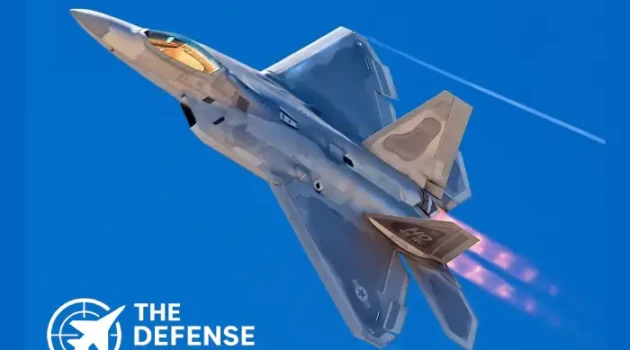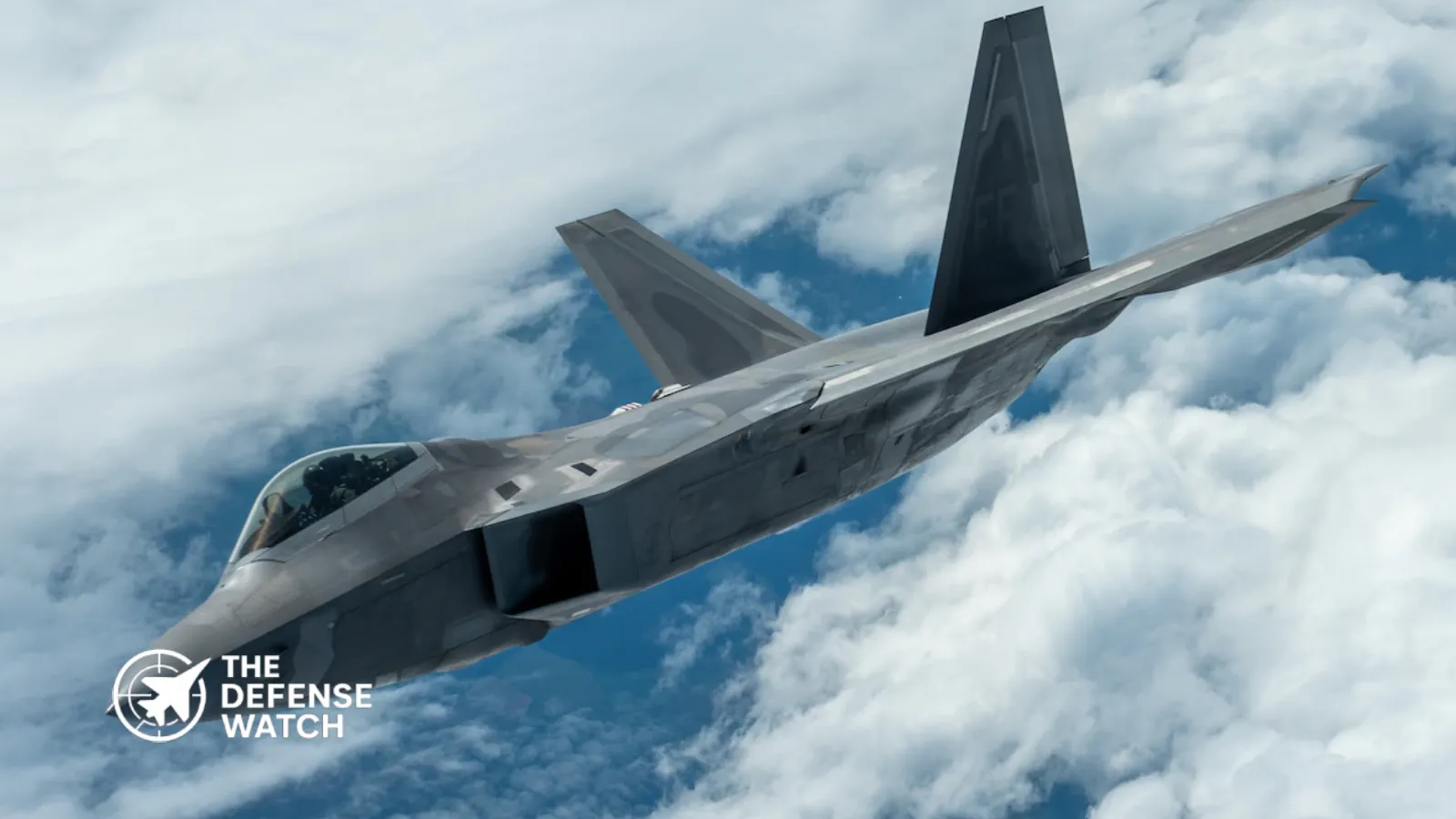
- ► The United States has deployed 12 F-22 Raptor fighter jets to southern Israel.
- ► The F-22 is the U.S. Air Force’s primary air superiority and stealth fighter platform.
- ► Export of the aircraft is prohibited under U.S. federal law, making overseas deployments highly sensitive.
- ► The move signals elevated deterrence and operational readiness amid regional tensions.
- ► The deployment represents one of the most visible U.S. airpower signals in the region in recent years.
U.S. Deploys 12 F-22 Raptors To Southern Israel In Strategic Signal Of Air Dominance
The United States has deployed 12 F-22 Raptors to southern Israel, marking a rare and strategically significant forward positioning of its most advanced air superiority fighter.
According to U.S. defense officials, the aircraft were repositioned as part of broader force posture adjustments aimed at reinforcing deterrence and maintaining rapid response capability in the region. The move comes amid elevated tensions across the Middle East.
The F-22 Raptor, developed by Lockheed Martin for the United States Air Force, remains the cornerstone of American air dominance strategy. Designed for stealth, high-end air combat, and precision strike missions, it combines low observable characteristics with advanced avionics and sensor fusion.
Why The F-22 Deployment Matters
Forward basing F-22 aircraft outside the continental United States is always deliberate. The platform was built primarily to counter near-peer air threats and establish uncontested control of contested airspace.
Its deployment to southern Israel signals three clear objectives:
First, it enhances regional air superiority coverage. The F-22’s advanced radar, electronic warfare suite, and beyond visual range missile capability allow it to detect and engage adversaries before being detected.
Second, it strengthens deterrence. The visible presence of fifth-generation fighters complicates adversary planning and raises the operational threshold for escalation.
Third, it reassures regional partners. Forward positioning high-end assets demonstrates sustained U.S. commitment to allied defense arrangements.
The F-22 is also unique in one key respect. Unlike the F-35 Lightning II, it has never been exported. Congress banned foreign sales of the aircraft in 1998 to protect sensitive technologies. As a result, every overseas deployment carries strategic weight.
Operational Capabilities
The F-22 was designed during the Cold War to defeat advanced Soviet aircraft. It combines stealth shaping, supercruise capability, thrust vectoring, and an advanced AN/APG-77 radar system.
It can carry AIM-120 AMRAAM air to air missiles internally, preserving its low observable profile. Its ability to operate without afterburners at supersonic speed gives it extended reach and faster response time compared to legacy fighters.
While originally optimized for air dominance, the platform has also evolved to support limited precision ground attack missions.
Regional Context
The Middle East has seen recurring periods of escalation involving state and non state actors, missile threats, and drone operations. U.S. air assets routinely rotate through regional bases, but the deployment of 12 F-22s represents a notable concentration of top tier capability.
The United States maintains a longstanding security partnership with Israel, including integrated air and missile defense cooperation. U.S. Central Command regularly coordinates with Israeli defense forces on regional contingency planning.
Though officials have not detailed specific mission sets, analysts assess that the deployment primarily serves a deterrent and contingency response function rather than signaling imminent offensive operations.
Strategic Signaling And Deterrence
In modern force posture strategy, presence is policy. Deploying the F-22 communicates readiness without issuing formal ultimatums.
Unlike carrier strike groups, which are highly visible symbols of naval power, stealth fighters operate with strategic ambiguity. Their survivability and first strike capacity make them particularly effective for crisis stabilization and escalation management.
At the same time, forward deployments carry logistical and sustainment demands. The F-22 fleet is relatively small, with approximately 180 operational aircraft in the inventory. Committing 12 aircraft overseas represents a meaningful allocation of high end air combat power.
What Comes Next
Defense officials have not specified the duration of the deployment. Historically, F-22 rotations to Europe and the Pacific have lasted several weeks to months, depending on regional conditions.
The presence of the F-22 in southern Israel underscores a broader U.S. objective: maintaining air dominance as the foundation of deterrence strategy in contested regions.
As tensions evolve, the forward deployment of America’s premier stealth fighter will remain a closely watched indicator of Washington’s strategic posture in the Middle East.
Get real time update about this post category directly on your device, subscribe now.