
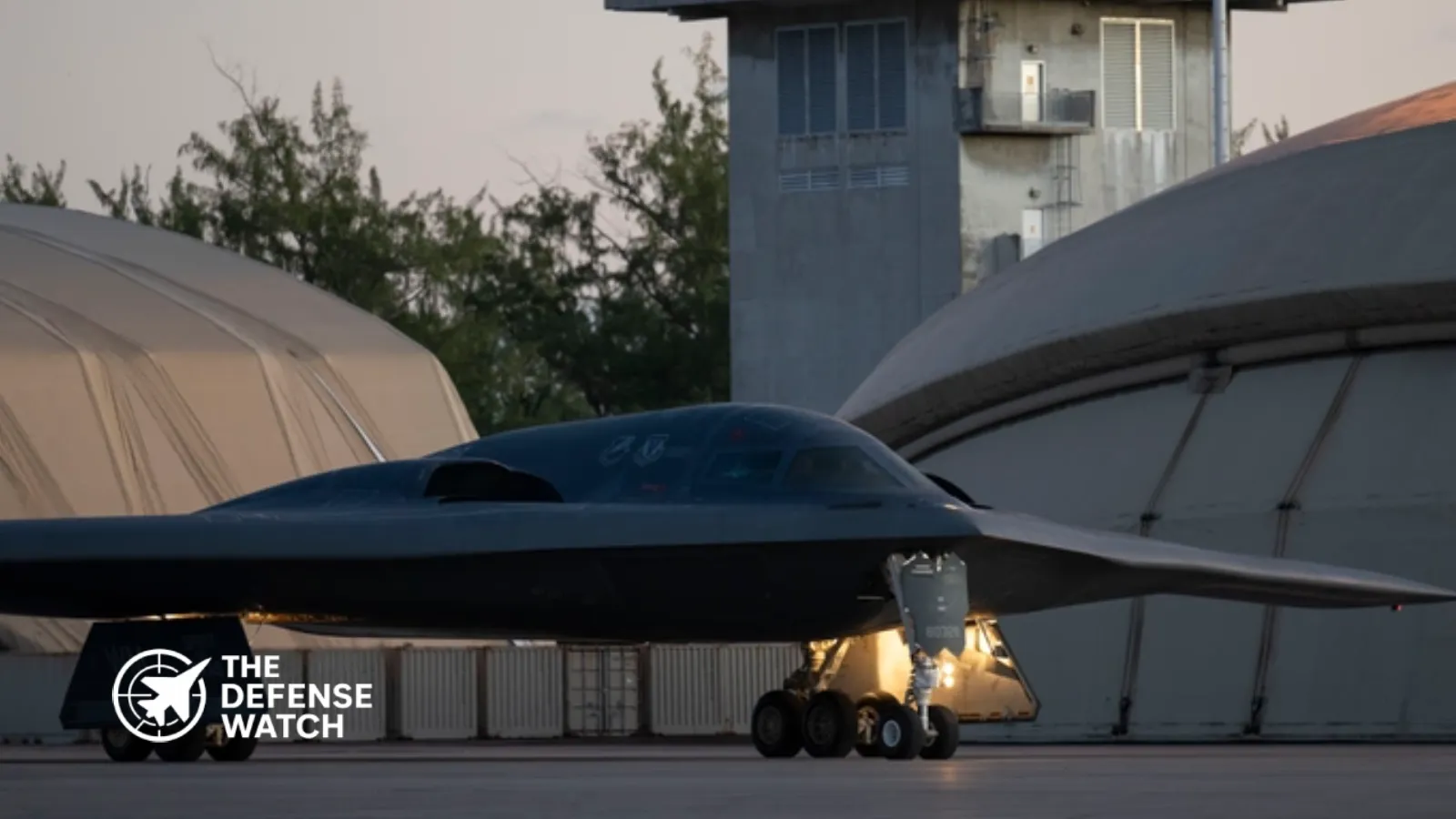
- U.S. Central Command says B-2 Spirit stealth bombers struck roughly 200 targets in Iran during a 72 hour air campaign.
- The strikes targeted Iranian military infrastructure linked to missile, drone, and operational command networks.
- The operation demonstrated the U.S. Air Force’s ability to conduct deep precision strikes inside contested airspace.
- B-2 bombers flew long range missions supported by aerial refueling and intelligence surveillance assets.
- The operation highlights the continued strategic relevance of stealth bombers in modern high intensity warfare.
B-2 Spirit Stealth Bombers Conduct Major Strike Operation In Iran
B-2 Spirit stealth bombers carried out strikes on roughly 200 targets in Iran during a 72 hour operation, according to U.S. Central Command. The long range bombing campaign targeted Iranian military infrastructure and operational facilities connected to missile and drone activity.
Officials said the operation relied heavily on the stealth capabilities and precision strike capacity of the U.S. Air Force’s B-2 bomber fleet. The aircraft conducted deep strike missions designed to degrade Iranian military capabilities while avoiding heavily defended airspace.
The operation represents one of the largest stealth bomber strike campaigns conducted in the region in recent years.
The Big Picture
The use of B-2 Spirit stealth bombers highlights the United States’ continued reliance on long range stealth strike platforms to conduct high value missions in heavily defended environments.
The B-2 remains one of the few aircraft capable of penetrating advanced air defense networks while delivering precision guided munitions against strategic targets. Although the aircraft entered service in the 1990s, its stealth design and long range endurance still give the U.S. Air Force a unique deep strike capability.
Operations like this also reflect a broader shift in modern warfare. Precision air campaigns increasingly focus on disabling command networks, missile infrastructure, and unmanned systems rather than mass bombing of large facilities.
By striking hundreds of smaller operational nodes, the United States aims to disrupt military coordination and reduce the ability of adversaries to launch sustained attacks.
What’s Happening
U.S. Central Command reported that B-2 Spirit stealth bombers struck approximately 200 targets across Iran during a 72 hour period.
The strikes focused on military infrastructure linked to missile systems, drone launch operations, and command and control networks.
The B-2 Spirit is designed for long range precision strike missions. The aircraft can fly intercontinental distances and deliver conventional or nuclear payloads. Its stealth design reduces radar detection, allowing it to operate inside contested airspace protected by modern air defense systems.
The bombers typically operate from Whiteman Air Force Base in Missouri, though they can deploy forward when required. Long duration strike missions often rely on extensive aerial refueling and intelligence support from surveillance aircraft and satellites.
CENTCOM did not release detailed information about the specific locations targeted or the munitions used in the operation.
Why It Matters
The B-2 bomber strikes in Iran demonstrate the continued operational value of stealth aircraft in modern military campaigns.
Stealth platforms allow commanders to strike high value targets early in a conflict without exposing large numbers of aircraft to enemy air defenses. This approach reduces operational risk while maximizing the impact of precision weapons.
The ability to hit 200 targets in a short time frame also shows the scale at which modern precision strike operations can be conducted. Advances in intelligence, targeting systems, and networked warfare allow militaries to coordinate complex air campaigns across multiple locations simultaneously.
For the United States, maintaining the ability to conduct these deep strike missions is a core component of global power projection.
Strategic Implications
The operation sends a clear signal about U.S. military reach and readiness.
Stealth bombers remain a central component of American deterrence strategy. Their ability to strike strategic targets anywhere in the world gives U.S. leaders flexible options during crises.
The strikes also highlight the importance of integrated air campaigns. Missions involving B-2 bombers typically rely on a large supporting network that includes intelligence satellites, airborne early warning aircraft, aerial refueling tankers, and electronic warfare platforms.
This layered approach allows U.S. forces to maintain situational awareness while conducting high precision operations in contested environments.
The campaign may also shape how future air operations are planned in regions with advanced air defense systems.
Competitor View
Regional and global competitors closely monitor the use of stealth bombers in real combat operations.
Iran has invested heavily in air defense systems, including domestically produced radar networks and surface to air missile platforms. Operations involving B-2 Spirit stealth bombers test the effectiveness of those defenses against advanced low observable aircraft.
China and Russia also study these operations carefully. Both countries continue developing advanced radar systems and stealth detection technologies designed to counter aircraft like the B-2.
Real world combat operations provide valuable insight into how stealth aircraft operate in contested environments, including mission profiles, strike patterns, and operational tempo.
Capability Gap
The B-2 bomber fleet helps fill a critical capability gap in the U.S. military’s strike architecture.
Short range tactical aircraft can conduct many missions, but penetrating heavily defended territory often requires stealth platforms with long endurance and large payload capacity.
The B-2 was specifically designed for this role. Its large internal weapons bays allow it to carry precision guided bombs while maintaining a low radar signature.
However, the fleet is relatively small. The U.S. Air Force operates only about 20 B-2 aircraft, which limits the number of simultaneous missions that can be conducted.
To address this limitation, the Pentagon is developing the next generation B-21 Raider stealth bomber, which will eventually replace both the B-2 and the B-1 bomber fleets.
What To Watch Next
Future developments will likely focus on follow up military operations and potential escalation dynamics in the region.
Analysts will also watch for signs of damage to Iranian missile infrastructure and drone launch capabilities following the strikes.
Another key factor will be how Iran adjusts its air defense posture and military strategy after the operation.
The strikes may also accelerate discussions around next generation long range strike capabilities as the U.S. Air Force prepares to field the B-21 Raider.
The Bottom Line
The B-2 Spirit stealth bomber strikes in Iran highlight the United States’ ability to conduct large scale precision air operations deep inside contested territory.
Get real time update about this post category directly on your device, subscribe now.


