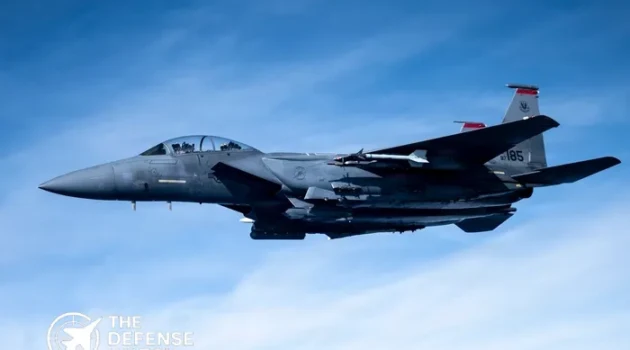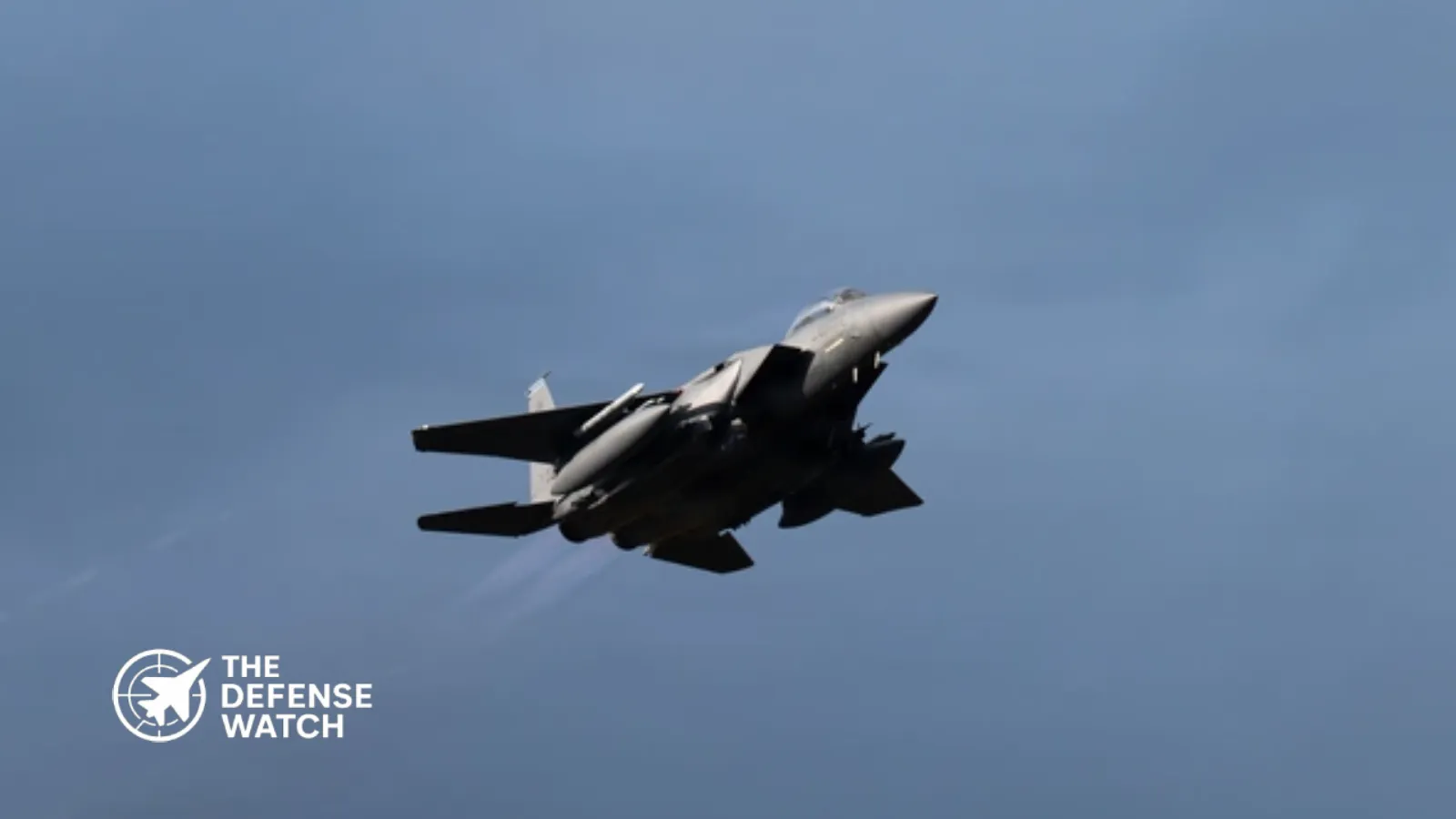
- ► Reports claim a US Air Force F-15 crashed in northern Kuwait near the Iraqi border.
- ► The aircraft reportedly went down close to the Khor Abdullah waterway.
- ► Initial accounts suggest the pilot ejected safely before impact.
- ► Video circulating online appears to show an F-15 descending while trailing smoke.
- ► US officials have not confirmed the crash or identified the variant involved.
US Air Force F-15 Jet Reportedly Crashes In Kuwait
A US Air Force F-15 crash in Kuwait is being widely reported across regional media and social platforms, though American authorities have not yet confirmed the incident.
According to early accounts circulating online, a United States Air Force F-15 fighter jet went down in northern Kuwait near the Iraqi border, close to the Khor Abdullah waterway. The area is described as sparsely populated.
Initial reporting attributed to Iraqi and Kuwaiti sources claims the pilot ejected safely before impact. Some local accounts state residents assisted the pilot after landing. These reports remain unverified.
At the time of publication, neither the US Department of Defense nor the US Air Force has issued an official statement confirming the loss of an aircraft or detailing the circumstances.
Online Footage And Local Reports
Several short video clips circulating online appear to show what is described as an F-15E Strike Eagle descending rapidly while trailing smoke, with flames visible from one engine before the aircraft drops below the horizon.
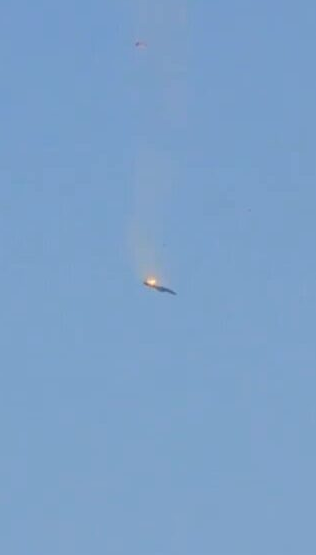
The authenticity, timing, and exact location of the footage have not been independently verified. No official imagery or confirmation has been released.
Residents in parts of Kuwait reportedly described hearing explosions and air raid sirens around the same timeframe. Increased military activity was also reported in areas including Jahra and the Tenth District. These claims remain unconfirmed by official sources.
Given the current regional tensions, unverified footage and claims can spread rapidly. Defense analysts caution against drawing conclusions before formal confirmation from US or Kuwaiti authorities.
What Variant Could Be Involved?
One widely cited report referred to an F-15 Eagle operated by the United States Air Force. Some social media posts specifically mentioned the F-15E Strike Eagle variant.
The F-15E Strike Eagle is a dual role platform capable of both air superiority and deep strike missions. According to the US Air Force, it is designed for long range interdiction missions and carries advanced targeting and avionics systems.
The broader F-15 Eagle family, first introduced in the 1970s, remains a key component of US tactical airpower. With a high thrust to weight ratio and twin engine configuration, the aircraft is known for strong performance and survivability.
However, without official confirmation, it remains unclear whether the reported US Air Force F-15 crash in Kuwait involved a single seat F-15C, a two seat F-15D, or the strike optimized F-15E.
Operational Context In Kuwait
Kuwait hosts US military forces and serves as a strategic logistics and operational hub in the Gulf region. The country has supported coalition operations for decades and provides basing access for US aircraft.
In periods of heightened regional tension, US fighter aircraft operate from forward deployed locations across the Gulf to support deterrence, air defense, and strike missions.
If confirmed, a US Air Force F-15 crash in Kuwait would likely trigger a formal safety investigation under established US Air Force procedures. Such investigations typically assess mechanical performance, flight data, maintenance history, weather conditions, and human factors.
Until official findings are released, attributing a cause would be premature.
No Official Confirmation Yet
As of this writing, there has been no public confirmation from the US Department of Defense, US Central Command, or the US Air Force regarding the reported F-15 crash in Kuwait.
In previous aviation incidents, official confirmation has sometimes followed several hours after initial reports, particularly when information is still being verified on the ground.
The absence of confirmation does not validate or dismiss the reports. It simply reflects the current information gap.
Why Verification Matters
In high tension environments, claims of aircraft losses can carry strategic implications. False or misinterpreted reports may influence public perception and regional narratives.
For that reason, professional military reporting relies on official statements, corroborated imagery, and multiple independent sources before confirming an aircraft loss.
At present, the reported US Air Force F-15 crash in Kuwait remains unverified.
TheDefenseWatch will update this story if and when US or Kuwaiti authorities release official information.
Get real time update about this post category directly on your device, subscribe now.