Executive Summary
- Flydubai Flight FZ1073, traveling from Dubai to Tel Aviv on September 30, diverted to Tabuk, Saudi Arabia, after emergency signals were transmitted during an onboard cockpit incident. Flydubai said the aircraft landed safely and all passengers were accounted for.
- Flight-tracking data indicated a rapid descent of nearly 14,000 feet in less than 30 seconds, followed by emergency signals associated with a general emergency and possible unlawful interference. The exact cause of the descent and who transmitted the signals remain subject to investigation.
- Israeli officials initially treated the event as a serious security incident, but the Israeli prime minister’s office said it was not believed to be a hijacking. The episode nevertheless exposed how quickly a cockpit emergency on a civilian aircraft can become a regional air-defense and national-security problem.
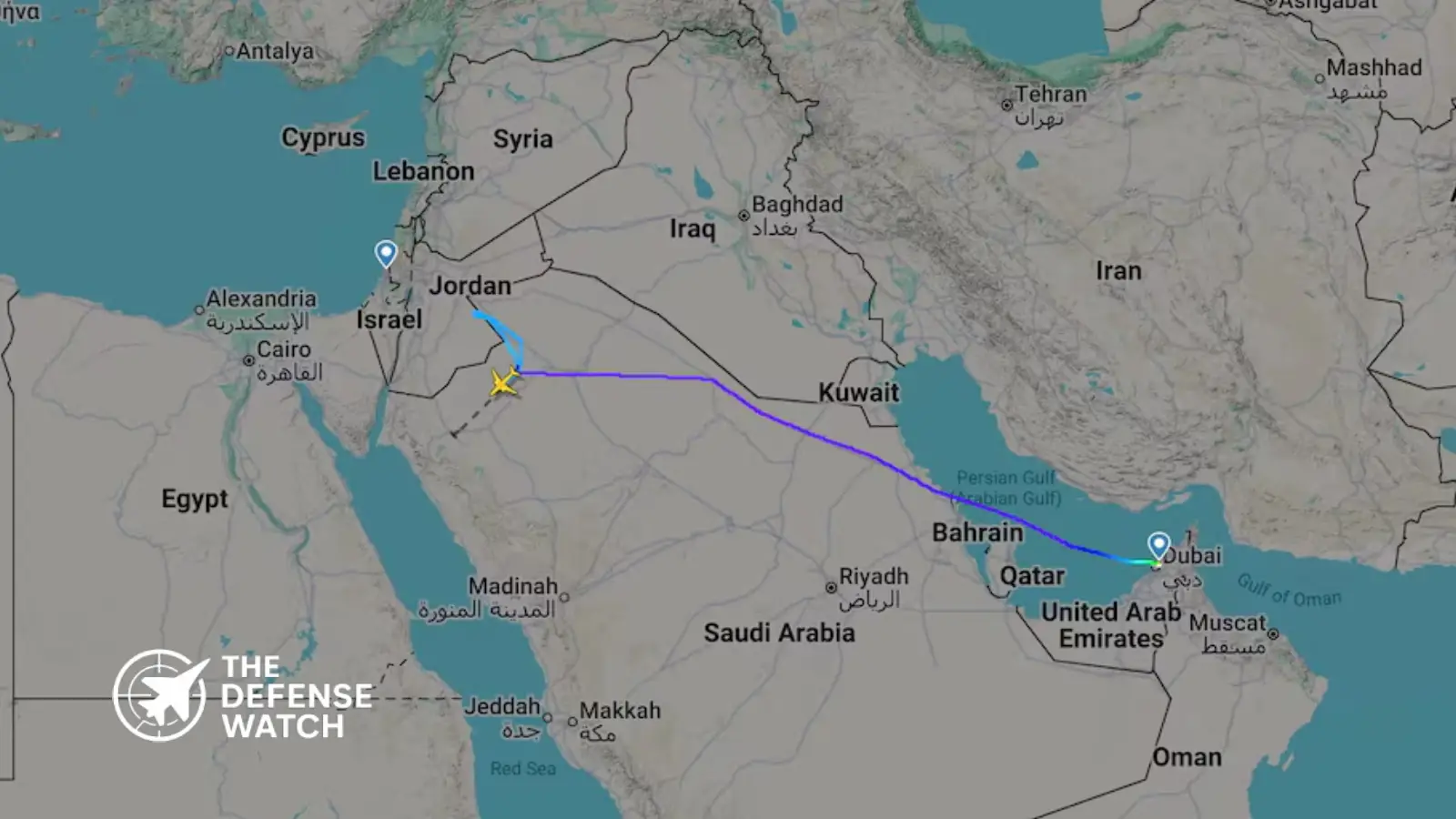
Flydubai Flight FZ1073, operating from Dubai International Airport to Tel Aviv, diverted to Saudi Arabia on September 30 after an onboard cockpit incident triggered emergency signals and a rapid change in the aircraft’s flight profile. The Boeing 737 ultimately landed safely at Tabuk in northwestern Saudi Arabia, with Flydubai reporting that passengers were safe and accounted for.
The incident initially generated concern in Israel because the aircraft transmitted an emergency signal followed by a signal indicating possible unlawful interference. Israeli officials subsequently said the event was not considered a hijacking, while describing the circumstances as potentially involving an intentional act by one of the pilots. Those assessments remain preliminary and should be distinguished from independently established facts.
What Happened to Flydubai FZ1073?
FZ1073 diverted while traveling toward Israel and was operating over the Jordanian area before turning toward Saudi Arabia. Flightradar24 data showed the aircraft transmitted a general emergency signal and later another signal indicating possible unlawful interference.
The aircraft subsequently transmitted the general emergency signal again before landing at Tabuk airport. Flydubai separately confirmed that the aircraft had experienced an incident en route and landed safely in Tabuk, with passengers and crew accounted for.
Israeli officials told Reuters that the pilots had been involved in a physical altercation. Reuters later reported that Israeli officials believed the co-pilot may have stabbed the captain before cabin crew intervened. The precise sequence of events remains under investigation.
Reports from passengers and Israeli media have provided additional descriptions of the incident, but some of those accounts have not been independently verified. Reuters specifically noted that an image reportedly taken inside the aircraft could not immediately be authenticated.
Why the Emergency Signals Mattered
The most important aviation-security element was not simply the reported fight between pilots. It was the combination of an abnormal aircraft trajectory, emergency communications and an indication of possible unlawful interference.
In civil aviation, emergency transponder codes allow controllers and other parts of the aviation-security system to identify the broad nature of an emergency. A signal associated with unlawful interference can trigger a substantially different response from an ordinary technical or medical emergency.
That distinction is particularly important when the aircraft is approaching a country operating under heightened security conditions.
In this case, the aircraft was headed for Israel, and the emergency developed while the flight was operating through a region where several countries maintain sensitive airspace and military surveillance networks. An unexplained deviation therefore had implications beyond normal airline operations.
Rapid Descent Became a Key Indicator
Flightradar24 data cited by Reuters indicated that the aircraft descended nearly 14,000 feet in less than 30 seconds before the first emergency signal. Reuters said it was not immediately clear who transmitted the emergency signals.
That flight profile is significant because an unexpected high-rate descent can indicate several different categories of emergency, including aircraft-control problems, onboard conflict, incapacitation, deliberate interference or other situations requiring immediate crew action.
The tracking data alone cannot establish the cause.
This distinction is important. A flight-tracking record can establish the aircraft’s observed movement and transmitted transponder information, but it cannot independently determine what happened inside the cockpit.
Israeli Security Response
The incident prompted security consultations in Israel, including involvement by Prime Minister Benjamin Netanyahu. The Israeli prime minister’s office subsequently said the situation was under control and that measures were being taken to return the Israeli passengers.
The initial security response illustrates a broader challenge for modern air-defense networks: civilian aircraft can become uncertain tracks when their behavior suddenly departs from expected flight plans.
For an aircraft approaching sensitive national airspace, authorities have only a limited amount of time to determine whether an abnormal track represents a technical emergency, communications failure, unlawful interference or a deliberate attack.
That requires coordination between civil aviation authorities, air-traffic control, intelligence organizations and military air-defense elements.
Why Tabuk Became the Diversion Point
The aircraft’s safe diversion to Tabuk was also strategically significant.
Saudi Arabia does not maintain formal diplomatic relations with Israel, yet the geography of commercial aviation in the region means that emergency situations can cross political boundaries quickly. Reuters noted that the flight path normally uses Saudi and Jordanian airspace and that the incident was not the first emergency involving an Israel-UAE flight that resulted in a landing in Saudi Arabia.
For aviation planners, this demonstrates the practical importance of emergency landing options even where diplomatic and political relationships remain complicated.
An aircraft in distress does not necessarily have the luxury of choosing a destination according to normal political alignments. Fuel state, aircraft condition, terrain, weather, runway availability and airspace access can become more important than the original destination.
The Military Implications Are Limited but Important
This was primarily a civil aviation security incident, not a conventional military engagement.
There is no confirmed evidence in the available reporting that the aircraft was attacked from outside, that an adversary attempted to seize it remotely, or that a hostile state was involved.
The military relevance instead lies in the response architecture.
An unidentified or apparently compromised passenger aircraft can force authorities to make rapid decisions about whether military aircraft should intercept, monitor or escort it. Those decisions must be made before investigators know exactly what caused the abnormal behavior.
This creates a difficult identification problem.
| Indicator | What it can establish | What it cannot establish |
|---|---|---|
| Emergency transponder signal | Aircraft has declared an emergency or possible unlawful interference | Exact cause of the emergency |
| Rapid altitude change | Abnormal flight profile | Whether the descent was deliberate |
| Route diversion | Crew or aircraft departed from planned destination | Why the diversion occurred |
| Cockpit altercation reports | Possible internal security incident | Whether it constituted an attempted hijacking |
| Safe landing at Tabuk | Aircraft remained controllable enough to land | Full explanation of the preceding events |
The distinction between these categories will matter as investigators reconstruct the incident.
A Challenge for Civil Aviation Security
The event also highlights a vulnerability that is different from traditional external threats.
Modern passenger aircraft have extensive avionics, navigation, communications and flight-control systems, but those technologies do not eliminate the importance of cockpit security and crew coordination.
An incident involving flight crew can create a particularly difficult security problem because the cockpit remains the primary control point for the aircraft. Cabin crew can intervene in some circumstances, but their ability to restore control depends on the precise situation and the aircraft’s operating condition.
The reported intervention by cabin crew in FZ1073 therefore becomes an important area for investigators, particularly in determining how control of the aircraft was maintained during the emergency.
UAE-Israel Aviation Links Add Regional Context
The flight also operated within a strategically important aviation corridor.
Israel and the UAE established diplomatic relations in 2020, after which commercial and security links between the two countries expanded. Reuters reported that Flydubai operates daily return services between Dubai and Tel Aviv, making the route an established component of the regional civil aviation network.
That connectivity creates economic and diplomatic benefits, but it also means that an aviation emergency can rapidly involve several governments.
FZ1073 was a UAE-operated commercial flight carrying passengers traveling to Israel, diverted into Saudi Arabia, with the emergency developing in airspace connected to Jordan and Saudi Arabia. The incident therefore crossed several national aviation-security jurisdictions within a single flight.
What Remains Unconfirmed
Several details circulating in initial reports should not yet be treated as established facts.
Reuters reported conflicting media accounts concerning the nationalities of the pilots. It also reported conflicting descriptions of the motive and circumstances surrounding the cockpit confrontation.
The Israeli government was reported to be assessing whether the incident could constitute an attempted terrorist attack, while the Israeli prime minister’s office separately said it was not believed to be a hijacking. These are official assessments rather than a completed investigative finding.
The available information also does not establish whether the rapid descent was directly caused by the cockpit confrontation or occurred for another reason.
Aviation investigators will need aircraft data, cockpit voice recordings, air-traffic-control records, crew interviews and physical evidence before a definitive reconstruction can be made.
Strategic Assessment
The FZ1073 incident demonstrates how civilian aviation emergencies can become regional security events without involving an external military attack.
Three elements were particularly important: the aircraft’s abnormal flight profile, the transmission of an unlawful-interference warning and the aircraft’s location on a route connecting several politically sensitive airspaces.
The successful diversion to Tabuk also shows the value of regional aviation cooperation during emergencies. Regardless of diplomatic relationships, safe landing opportunities can become essential when a passenger aircraft experiences a serious onboard incident.
For military and civil aviation planners, the broader lesson is that airspace security depends not only on detecting hostile aircraft. It also depends on rapidly distinguishing between genuine threats and civilian aircraft experiencing emergencies.
That distinction has to be made quickly, often with incomplete information.
In the case of FZ1073, the aircraft landed safely, the passengers were accounted for, and Israeli officials said the incident was not a hijacking. The investigation will now need to determine precisely what occurred inside the aircraft, why the rapid descent took place and why the emergency signals were transmitted.
Until those questions are answered, the most significant confirmed fact is straightforward: a commercial Boeing 737 operating from Dubai to Tel Aviv experienced a serious onboard incident, diverted to Saudi Arabia and landed safely at Tabuk.