
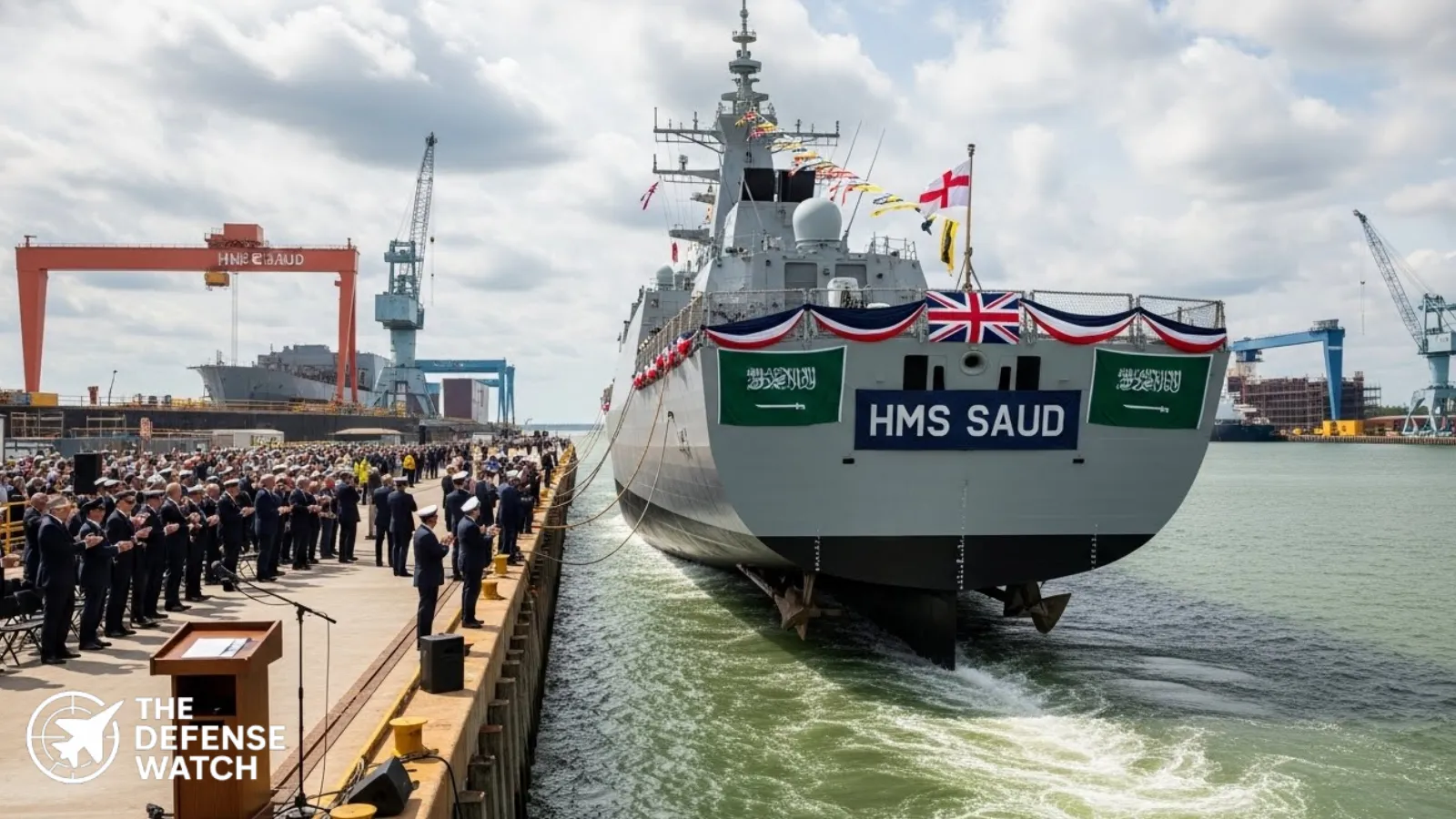
U.S. Shipyard Launches First MMSC Frigate HMS Saud in Wisconsin
The first Multi-Mission Surface Combatant, or MMSC frigate, designated HMS Saud, was officially launched at a U.S. shipyard in Wisconsin, marking a major milestone for the Royal Saudi Naval Forces and a key step in a long running U.S. Saudi defense cooperation program. The launch ceremony took place in early December 2025 and represents the first vessel completed under the MMSC frigate program for Saudi Arabia.
HMS Saud is the lead ship of a planned fleet of advanced surface combatants intended to modernize Saudi Arabia’s naval capabilities and enhance maritime security across the Red Sea and the Arabian Gulf. The ship’s launch moves the program from construction to the final stages of integration, testing, and future sea trials.
Background of the MMSC Frigate Program
The MMSC frigate program is based on the Freedom variant of the U.S. Navy’s Littoral Combat Ship design, adapted to meet Saudi operational requirements. The program was approved under a U.S. Foreign Military Sales agreement and includes four frigates, training, logistics support, and long term sustainment.
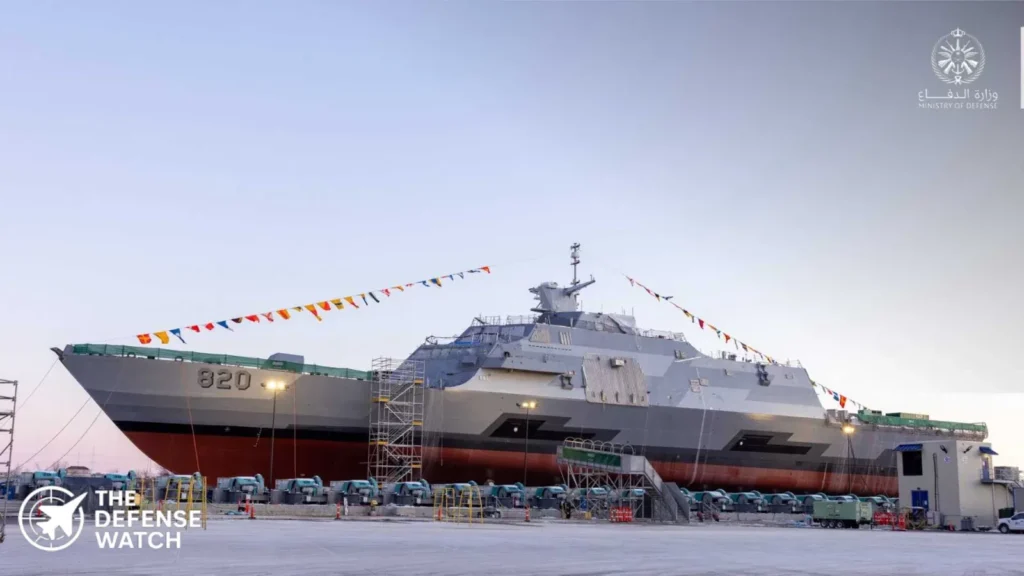
Saudi Arabia selected the MMSC frigate to replace aging surface combatants and to address evolving maritime threats, including anti-ship missiles, fast attack craft, and unmanned systems. The program is also intended to improve interoperability with U.S. and allied naval forces operating in the region.
The launch of the first MMSC frigate HMS Saud signals steady progress after several years of detailed design work, systems integration, and construction.
Details of HMS Saud and Its Capabilities
HMS Saud is designed as a multi-role surface combatant capable of air defense, anti-surface warfare, and anti-submarine operations. The MMSC frigate HMS Saud is equipped with a modern combat management system, advanced sensors, and a layered weapons suite.
Key features include a vertical launch system for surface to air missiles, a modern naval gun, anti-ship missile capability, and close-in weapon systems for point defense. The ship is also fitted with advanced radar and electronic warfare systems designed to detect and counter aerial and surface threats.
Aviation facilities on board allow the operation of naval helicopters and unmanned aerial systems, expanding the ship’s surveillance and strike reach. These capabilities position the MMSC frigate HMS Saud as a central element in Saudi Arabia’s future naval task groups.
Strategic Importance for Saudi Arabia
For Saudi Arabia, the MMSC frigate HMS Saud represents a major leap in naval modernization. The Royal Saudi Naval Forces are seeking to protect critical sea lanes, offshore infrastructure, and coastal areas at a time of increased regional maritime competition.
The introduction of the MMSC frigate fleet is expected to strengthen Saudi Arabia’s ability to conduct sustained operations and contribute to coalition maritime security efforts. The ships are designed to operate in high threat environments and support both national defense and regional stability missions.
Saudi defense officials have previously emphasized that the MMSC program supports broader defense reform goals, including improved readiness, training, and local industry participation over the life of the ships.
U.S. Shipbuilding and Defense Cooperation
The launch in Wisconsin underscores the role of U.S. shipyards in supporting allied naval programs. The MMSC frigate HMS Saud was built using U.S. naval standards, with American industry responsible for hull construction, systems integration, and testing.
The program reflects a long standing defense relationship between the United States and Saudi Arabia, particularly in the maritime domain. U.S. officials have highlighted that such programs strengthen interoperability and ensure that allied navies can operate effectively alongside U.S. forces.
From a U.S. perspective, the MMSC frigate program also supports domestic shipbuilding jobs and maintains industrial capacity for complex surface combatant construction.
What Comes Next for HMS Saud
Following its launch, HMS Saud will undergo outfitting, systems activation, and dockside testing before commencing sea trials. These trials will validate the ship’s propulsion, sensors, and combat systems under operational conditions.
Once testing is complete, the frigate will be formally delivered to Saudi Arabia. Saudi crews are expected to receive training in the United States as part of the overall program, ensuring a smooth transition into operational service.
The remaining MMSC frigates are scheduled to follow in the coming years, with each launch bringing the Royal Saudi Naval Forces closer to full fleet modernization.
Broader Impact of the MMSC Frigate Program
The launch of the first MMSC frigate HMS Saud is likely to influence naval balance considerations in the Middle East. As regional navies invest in more capable surface combatants, emphasis is increasingly placed on integrated air and missile defense at sea.
The MMSC design reflects this shift, combining flexibility with advanced defensive systems. Analysts note that the program could serve as a reference for other navies seeking cost effective, multi-mission frigates built on proven U.S. designs.
As HMS Saud moves toward operational service, attention will remain on its performance during trials and its eventual role within Saudi Arabia’s evolving maritime strategy.
Get real time update about this post category directly on your device, subscribe now.

1 comment
[…] weapons, such as shipborne lasers, have emerged as a transformative technology for naval defense. These systems deliver precise, speed-of-light engagements against aerial and surface threats, […]