
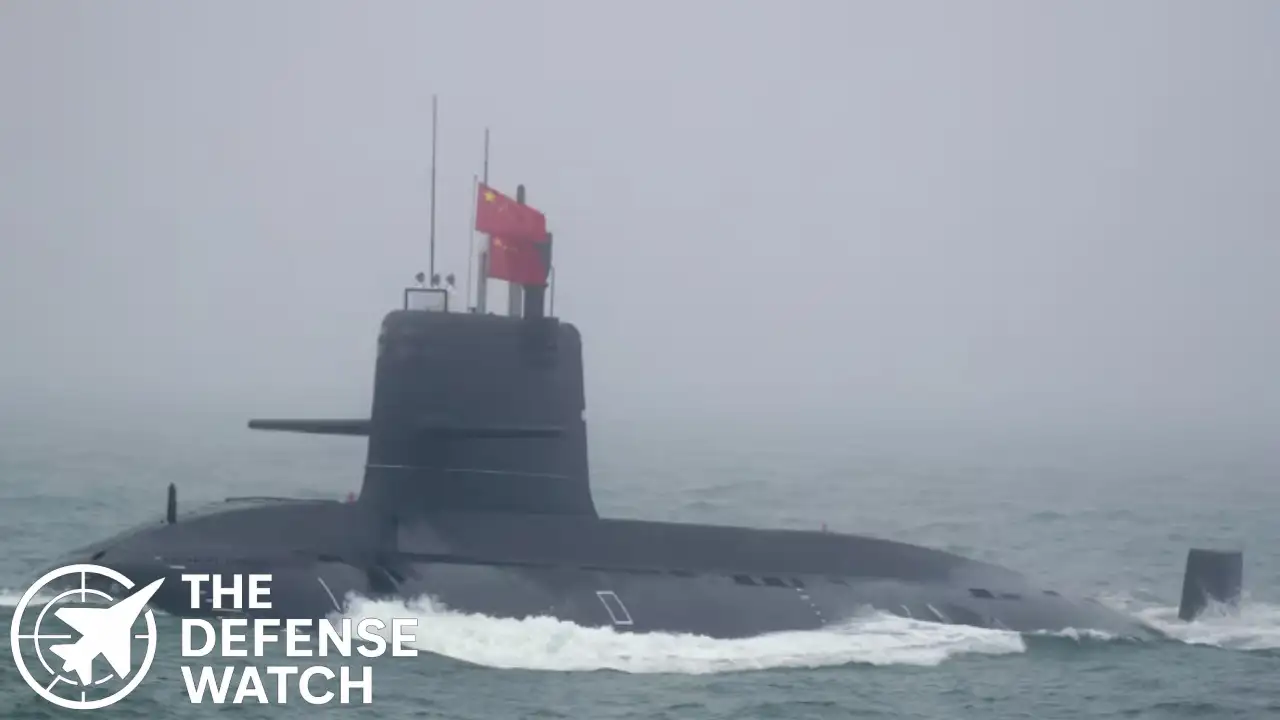
What happened: the patrol in brief
Chinese and Russian submarines conducted a coordinated patrol in August, sailing through the East China Sea and the Sea of Japan in what both capitals called a demonstration of growing military cooperation. The exercise involved the Russian diesel-electric submarine Volkhov, a Chinese Kilo-type boat, plus two Russian surface ships that accompanied the transit. The patrol followed a larger set of bilateral anti-submarine drills held earlier the same month.
Why the choice of submarines matters
Both nations used Kilo-class diesel-electric boats — a Cold War-era design optimized for quiet operation in littoral waters. Kilo variants are widely exported and remain valuable for anti-shipping and area-denial missions in relatively shallow seas; their diesel-electric propulsion can make them hard to detect at low speeds. Using broadly similar, non-nuclear platforms reduced the technical risk of revealing advanced SSN capabilities while still signaling cohesion.
Strategic context: a pattern, not yet a pact
This undersea patrol is the latest in a steady uptick of Sino-Russian military displays — bomber flights, surface task groups, and combined drills — that underline a pragmatic, if limited, alignment. Analysts note this cooperation is opportunistic: historical rivalries, diverging long-term interests and mutual suspicion limit deep integration. Crucially, neither side committed nuclear-powered submarines to the patrol, a restraint that keeps technical sharing and operational integration at arm’s length for now.
What it means for the United States — Analysis
A direct military threat? Limited, but watchable
On its face, the patrol is not an immediate existential threat to U.S. maritime power. The forces involved were older, conventionally powered boats operating in East Asian waters — not a combined, blue-water nuclear-submarine fleet capable of strategic power projection. That said, repeated, practiced cooperation improves mutual familiarity, logistics, communications and tactics — the kinds of soft gains that over time can complicate U.S. operational plans in the Western Pacific.
The alliance response: diplomacy, posture and capability
The most immediate U.S. response leans on allies. AUKUS — the trilateral effort to expand allied nuclear-submarine capability and shipbuilding capacity — directly addresses regional undersea balance by bringing U.S., U.K. and Australian SSN work closer together. Accelerating allied submarine deployments, rotational basing and combined anti-submarine warfare (ASW) exercises will be central to deterrence. The AUKUS program’s industrial and training pieces are already active and likely to be cited in U.S. strategy discussions.
Technology and force posture: invest in ASW and surge capacity
Diesel boats remain a stubborn ASW challenge because of their quietness in littoral environments. The U.S. and partners should keep investing in layered ASW: more maritime patrol aircraft, towed-array sensors, unmanned undersea systems, improved sonobuoys, and allied sensor networks. At the industrial level the U.S. Navy continues procuring Virginia-class and future SSN designs to maintain undersea dominance — a long-term program that underpins presence and deterrence.
Avoiding overreaction while deterring escalation
Experts caution against reflexive escalation. Washington’s diplomatic and operational choices should avoid needlessly provoking an adversarial security spiral while making clear the costs of coercion. Targeted presence, alliance reassurance, and clear red lines combined with back-channel communication can limit miscalculation.
Conclusion — forward look
The China-Russia joint submarine patrol is a meaningful datapoint: it signals growing naval coordination but remains tactical rather than strategic in scope. For U.S. defense planners the takeaway is pragmatic: accelerate alliance ASW integration, maintain investment in nuclear-powered submarines and undersea sensors, and calibrate presence so it deters without inflaming. Expect more symbolic, incremental naval pairings from Beijing and Moscow; a step beyond that — joint nuclear-submarine operations or deep technology transfer — would be the true inflection point that would force a wholesale reappraisal of U.S. undersea strategy.
Get real time update about this post category directly on your device, subscribe now.

16 comments
[…] missiles, radars, and fighter aircraft rely on rare earth elements, many of which are processed in China — creating a strategic […]
[…] allies to accelerate investments in counter-UAV systems, electronic warfare, and sensor networks. China’s stronger role in aiding UAV evolution in Russia suggests it may export more advanced systems globally, especially to states aligned against U.S. […]
[…] missiles, such as the BrahMos cruise missile jointly developed by India and Russia, fly at Mach 2.8–3, making them harder to intercept than traditional subsonic systems. Supersonic […]
[…] sum, the U.S. remains at or near the top, but cannot be complacent — rising challengers like China’s J-20 and Russia’s Su-57 are narrowing the […]
[…] heavily on Chinese imports; China absorbs Russian resources. Yet this dependency is asymmetric. China holds more leverage, particularly in critical technologies, trade, and […]
[…] Cloud… Dean-of-Defense Strategy 2025: U.S. Shifts Focus to Homeland and Indo-Pacific Amid… China, Russia Hold Joint Submarine Patrol — What It Means for… SUBSCRIBE […]
[…] Cloud… Dean-of-Defense Strategy 2025: U.S. Shifts Focus to Homeland and Indo-Pacific Amid… China, Russia Hold Joint Submarine Patrol — What It Means for… SUBSCRIBE […]
[…] Supply in 2025 F-35 Program in 2025: Record Deliveries Expected but Upgrade Delays Cloud… China, Russia Hold Joint Submarine Patrol — What It Means for… SUBSCRIBE […]
[…] Shape the Global Power Balance Why U.S. Artillery Shells Remain in Short Supply in 2025 China, Russia Hold Joint Submarine Patrol — What It Means for… F-35 Program in 2025: Record Deliveries Expected but Upgrade Delays Cloud… […]
[…] Strategic Posture Defense Diplomacy: How Military Partnerships Shape the Global Power Balance China, Russia Hold Joint Submarine Patrol — What It Means for… First Flight of Air Force’s YFQ-42A Drone Wingman Marks Major Step… Why U.S. Artillery […]
[…] A-10 Warthog in… Autonomous Weapon Systems Spark U.S. Ethics Debate Amid Rapid Military AI… China, Russia Hold Joint Submarine Patrol — What It Means for… Global Hypersonic Arms Race Intensifies: China, India, Japan, Russia & U.S…. Key Features […]
[…] Jet Fleets in… Key Features of Boeing’s Sixth-Gen F-47 Fighter Jet That Define Next-Gen… China, Russia Hold Joint Submarine Patrol — What It Means for… Top 5 U.S. Army Weapons That Define Modern Warfare in 2025 Global Hypersonic Arms Race […]
[…] Strategic Importance:Essential for high-threat environments against near-peer adversaries like China and Russia. […]
[…] India, Japan, Russia & U.S…. China vs. U.S. Naval Expansion: Who Holds the Edge in the… China, Russia Hold Joint Submarine Patrol — What It Means for… SUBSCRIBE […]
[…] DoD: multiple instances of using personal devices or unapproved applications for official business — especially in circumstances such as remote work or when secure communications were considered […]
[…] force against unarmed maritime trafficking suspects blurs the line between drug enforcement and warfare — circumventing due process and raising serious international law […]