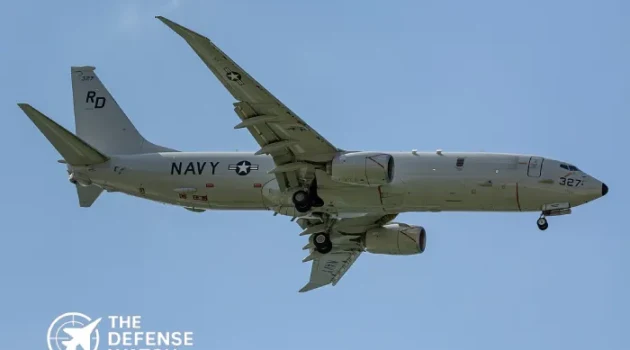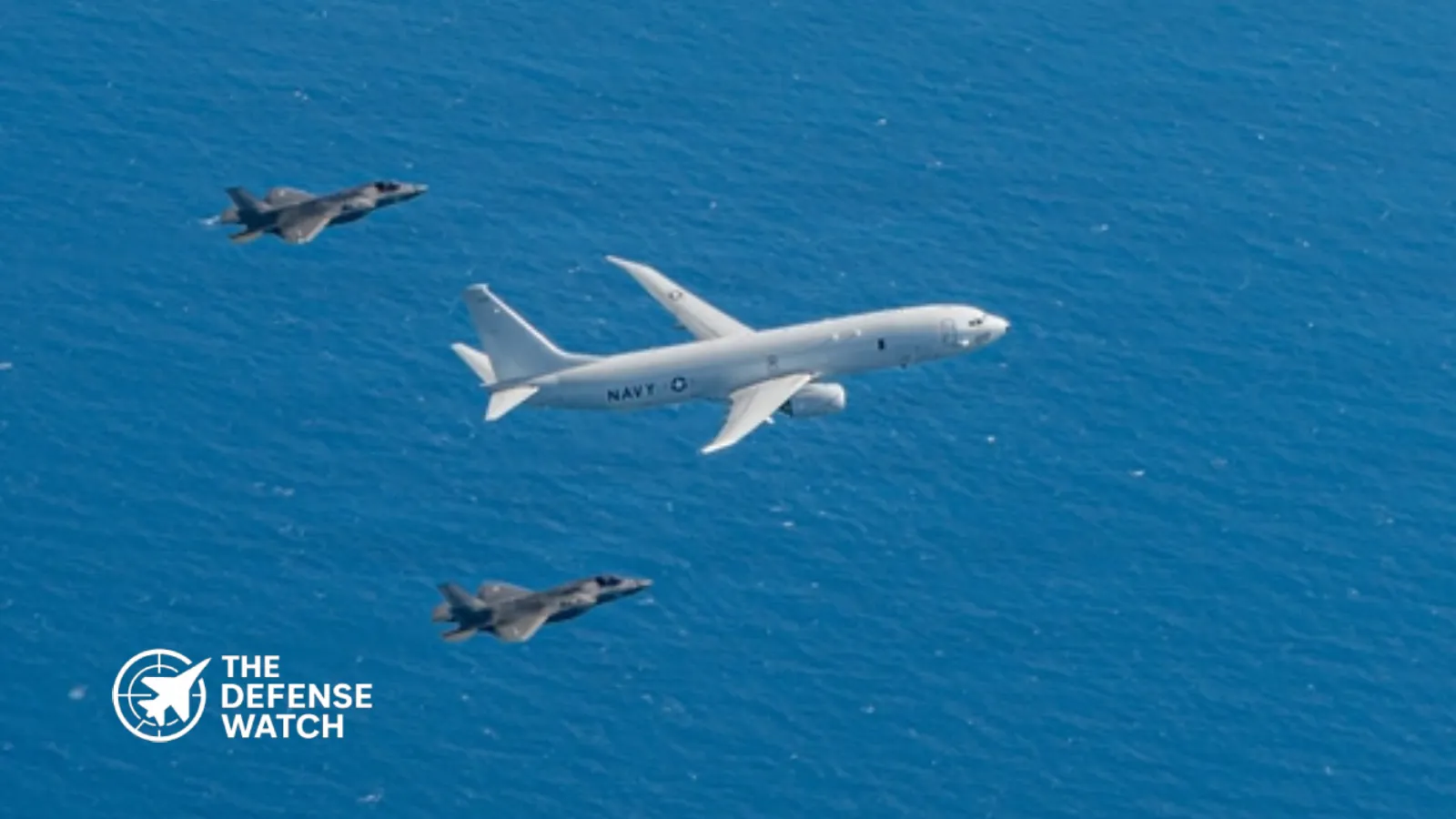
- Boeing received a $38.67 million contract to upgrade software on South Korea’s P-8A aircraft.
- The upgrade includes Tactical Open Mission Software version 105K enhancements and capability expansion.
- New features include Multi-Static Active Coherent processing and Harpoon II integration.
- Work will be conducted across five locations in the United States and South Korea through January 2029.
- The $38.67 million contract is funded in full through Foreign Military Sales.
Boeing P-8A Software Upgrade Strengthens South Korea’s Maritime Surveillance
The Boeing P-8A software upgrade contract marks a significant step in enhancing South Korea’s maritime patrol and anti-submarine warfare capabilities, as the U.S. Navy awarded a $38.67 million order under an existing agreement.
The contract, issued by Naval Air Systems Command, covers the development and installation of an updated software load for the Republic of Korea’s P-8A Poseidon fleet. The effort centers on deploying Tactical Open Mission Software (TOMS) version 105K, a key evolution in the aircraft’s mission system architecture.
This upgrade is designed to improve operational flexibility, address supply chain constraints, and expand mission effectiveness in contested maritime environments.
Modernizing Mission Systems And Addressing Supply Chain Gaps
A core component of the Boeing P-8A software upgrade is the inclusion of improvements tied to diminishing manufacturing sources and material shortages. These updates ensure continued system sustainment as legacy components become harder to source.
This reflects a broader trend across U.S. and allied defense programs, where software-driven upgrades are increasingly used to extend platform life cycles without requiring costly hardware redesigns.
By integrating these changes into TOMS 105K, Boeing enables the Republic of Korea Navy to maintain readiness while adapting to evolving logistical challenges.
Expanded Combat Capabilities With Advanced Processing And Weapons Integration
Beyond sustainment, the Boeing P-8A software upgrade introduces notable capability enhancements.
One of the most significant additions is Multi-Static Active Coherent (MAC) processing. This technology improves the aircraft’s ability to detect and track submarines by leveraging multiple acoustic sources and receivers. In practical terms, it strengthens anti-submarine warfare performance, particularly in complex underwater environments.
The upgrade also integrates Harpoon II anti-ship missile capabilities. This provides the P-8A with enhanced maritime strike options, allowing it to engage surface targets with greater precision and flexibility.
Together, these additions move the aircraft beyond traditional surveillance roles toward a more versatile, multi-mission platform.
Distributed Industrial Base And Long-Term Timeline
Work on the Boeing P-8A software upgrade will be distributed across several locations, reflecting the program’s wide industrial footprint.
Seattle, Washington, will handle the largest share at 45 percent, followed by Huntington Beach, California at 30 percent. Additional work will take place in St. Louis, Missouri, Patuxent River, Maryland, and Pohang, South Korea.
The program is scheduled for completion by January 2029, indicating a multi-year effort that aligns with long-term fleet modernization planning.
This distributed approach supports both U.S. defense industry capacity and allied integration, reinforcing interoperability between American and South Korean forces.
Strategic Implications For South Korea’s Maritime Posture
The Boeing P-8A software upgrade comes at a time of increasing maritime security concerns in the Indo-Pacific region. South Korea faces a complex threat environment, including North Korean submarine activity and broader regional naval competition.
Enhancing the P-8A’s capabilities directly contributes to improved situational awareness and deterrence. The addition of advanced anti-submarine processing and anti-ship strike capability strengthens Seoul’s ability to monitor and respond to threats across its maritime domain.
From a strategic perspective, this upgrade also deepens defense ties between the United States and South Korea under the Foreign Military Sales framework.
Growing Role Of Software In Modern Military Aviation
The contract highlights a broader shift in military aviation toward software-centric modernization.
Rather than relying solely on new airframes, defense planners are increasingly investing in software upgrades to unlock new capabilities from existing platforms. This approach reduces costs, accelerates deployment timelines, and allows for more rapid adaptation to emerging threats.
In the case of the P-8A, continuous software evolution ensures the aircraft remains relevant against advancing submarine technologies and changing operational demands.
Contract Details And Funding Structure
The $38.67 million contract is funded بالكامل through Foreign Military Sales customer funds, which were obligated at the time of award. Notably, none of the funds are set to expire at the end of the current fiscal year, providing stability for program execution.
The award was issued on a sole-source basis, consistent with Boeing’s role as the original manufacturer and systems integrator for the P-8A platform.
Naval Air Systems Command, based in Patuxent River, Maryland, is overseeing the contract.
Get real time update about this post category directly on your device, subscribe now.