

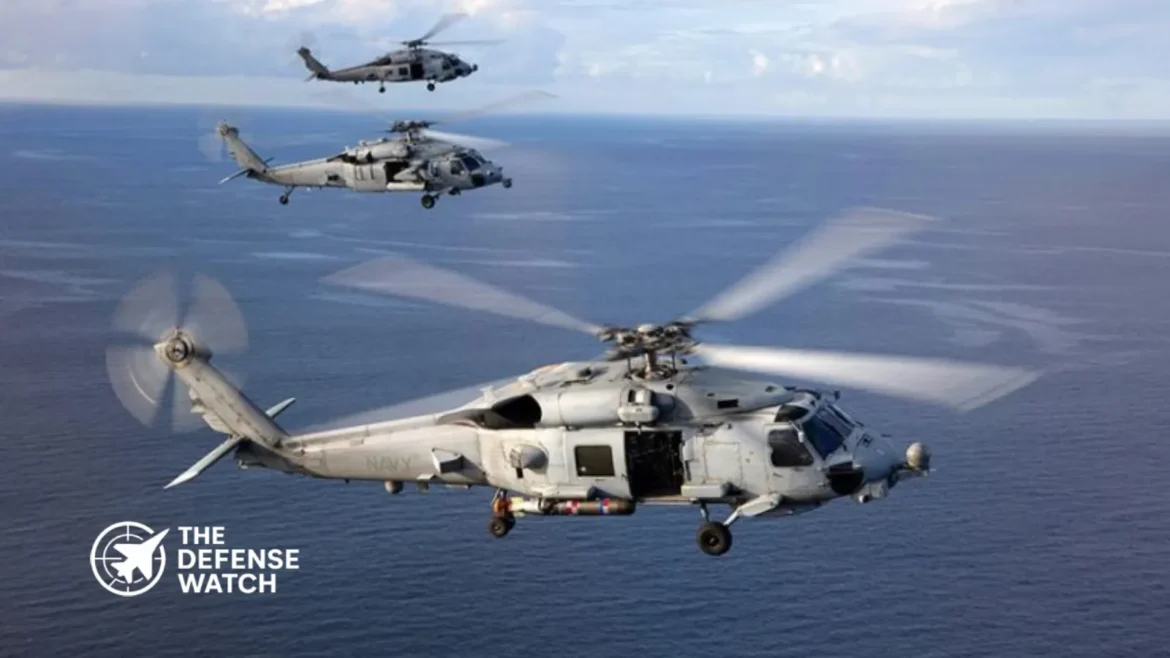
- South Korea has begun deploying MH-60R Seahawk helicopters to strengthen anti-submarine warfare operations.
- The helicopters are designed to detect, track, and engage submarines using advanced sensors and weapons.
- The move targets growing concerns over North Korea’s expanding submarine and underwater capabilities.
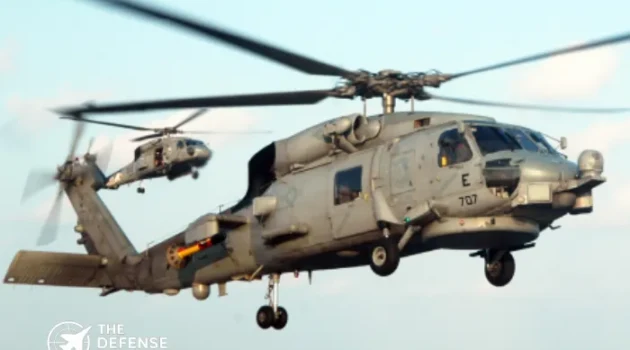
- MH-60R platforms integrate sonar systems, radar, and torpedoes for multi-mission maritime operations.
- Deployment reflects deeper interoperability with U.S. naval forces and regional deterrence efforts.
South Korea MH-60R Seahawk Deployment Strengthens Anti-Submarine Warfare
South Korea MH-60R Seahawk deployment marks a significant step in enhancing the Republic of Korea Navy’s anti-submarine warfare capability amid rising undersea threats from North Korea.
According to reporting by Army Recognition, Seoul has begun fielding its first batch of MH-60R Seahawk maritime helicopters, a U.S.-built platform widely regarded as one of the most advanced naval helicopters for anti-submarine and anti-surface warfare missions. The deployment comes as North Korea continues to invest in submarine-launched ballistic missile programs and quieter diesel-electric submarines.
The introduction of the MH-60R provides South Korea with a modern, networked system capable of detecting, tracking, and engaging hostile submarines across complex maritime environments.
Advanced Sensors And Weapons Enhance Maritime Awareness
The MH-60R Seahawk is equipped with a suite of advanced sensors that significantly improve situational awareness in contested waters. These include dipping sonar systems, sonobuoys, maritime surveillance radar, and electro-optical targeting systems.
This combination allows operators to detect submerged threats at extended ranges while maintaining real-time data links with surface combatants. The helicopter can deploy Mk 54 lightweight torpedoes and anti-ship missiles, giving it both defensive and offensive capabilities.
From an operational standpoint, the platform enables layered anti-submarine warfare. Surface ships can rely on airborne assets to extend their detection range, reducing response time against fast-moving or stealthy underwater threats.
This capability is particularly relevant in the Korean Peninsula, where shallow waters and dense maritime traffic complicate submarine detection.
Strategic Context: Rising North Korean Submarine Threat
The South Korea MH-60R Seahawk deployment is closely tied to evolving threats from North Korea’s naval forces. Pyongyang has prioritized the development of submarine-based deterrents, including experimental ballistic missile submarines and new classes of conventional attack submarines.
While North Korea’s submarine fleet is not as technologically advanced as those of major naval powers, its focus on asymmetrical warfare poses persistent risks. Smaller, quieter submarines operating in coastal environments can challenge traditional detection methods.
By integrating the MH-60R into its fleet, South Korea is addressing a critical capability gap in airborne anti-submarine warfare. The helicopter’s ability to operate from destroyers and frigates adds flexibility, allowing rapid deployment across multiple maritime zones.
This shift reflects a broader trend in regional naval modernization, where airborne assets are increasingly central to undersea warfare.
Interoperability With U.S. Forces And Regional Allies
Another key aspect of the MH-60R Seahawk deployment is interoperability. The platform is already widely used by the U.S. Navy and several allied nations, including Australia and India.
For South Korea, this means seamless integration into joint operations, particularly in scenarios involving combined maritime task forces. Shared systems, communication protocols, and training frameworks allow for coordinated anti-submarine operations.
This interoperability enhances deterrence by signaling a unified response capability to potential adversaries. It also improves operational efficiency during joint exercises and real-world contingencies.
In practical terms, South Korean MH-60R units can operate alongside U.S. naval forces with minimal adaptation, strengthening alliance-based maritime security in Northeast Asia.
Operational Impact On Korean Peninsula Maritime Security
The deployment of MH-60R helicopters is expected to significantly expand South Korea’s maritime surveillance and response capabilities. By extending the detection range of surface fleets, the helicopters provide early warning against submarine incursions.
They also improve response speed. Instead of relying solely on ship-based sensors, commanders can deploy helicopters to investigate contacts, track targets, and engage if necessary.
This layered approach reduces vulnerabilities in coastal defense and strengthens protection of key sea lines of communication. Given the strategic importance of maritime trade routes to South Korea’s economy, enhanced naval aviation capability plays a critical role in national security.
From a broader perspective, the deployment underscores the increasing importance of anti-submarine warfare in modern naval strategy. As submarine technologies evolve, so too must the tools used to counter them.
Analysis: A Targeted Capability Upgrade With Strategic Implications
The South Korea MH-60R Seahawk deployment is not just a platform upgrade, it represents a focused investment in undersea warfare dominance.
While surface ships and submarines remain central to naval power, airborne assets like the MH-60R are becoming indispensable in detecting and neutralizing underwater threats. The ability to rapidly deploy sensors and weapons from the air adds a critical dimension to maritime operations.
In the context of the Korean Peninsula, where geographic and operational constraints complicate traditional naval engagements, this capability is especially valuable. It allows South Korea to counter North Korea’s submarine strategy more effectively without relying solely on expensive or time-intensive ship deployments.
At the same time, the move aligns with broader U.S.-allied efforts to strengthen maritime security across the Indo-Pacific. By adopting a widely used platform, South Korea enhances both its independent defense posture and its role within allied frameworks.
- Boeing received a $38.67 million contract to upgrade software on South Korea’s P-8A aircraft.
- The upgrade includes Tactical Open Mission Software version 105K enhancements and capability expansion.
- New features include Multi-Static Active Coherent processing and Harpoon II integration.
- Work will be conducted across five locations in the United States and South Korea through January 2029.
- The $38.67 million contract is funded in full through Foreign Military Sales.
Boeing P-8A Software Upgrade Strengthens South Korea’s Maritime Surveillance
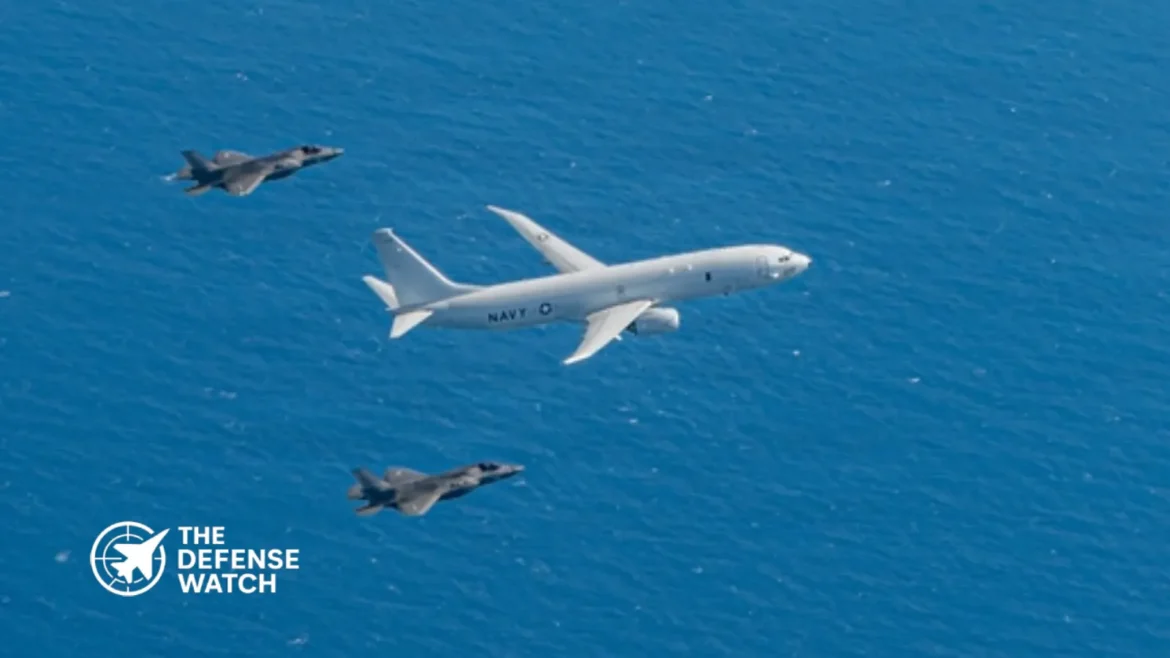
The Boeing P-8A software upgrade contract marks a significant step in enhancing South Korea’s maritime patrol and anti-submarine warfare capabilities, as the U.S. Navy awarded a $38.67 million order under an existing agreement.
The contract, issued by Naval Air Systems Command, covers the development and installation of an updated software load for the Republic of Korea’s P-8A Poseidon fleet. The effort centers on deploying Tactical Open Mission Software (TOMS) version 105K, a key evolution in the aircraft’s mission system architecture.
This upgrade is designed to improve operational flexibility, address supply chain constraints, and expand mission effectiveness in contested maritime environments.
Modernizing Mission Systems And Addressing Supply Chain Gaps
A core component of the Boeing P-8A software upgrade is the inclusion of improvements tied to diminishing manufacturing sources and material shortages. These updates ensure continued system sustainment as legacy components become harder to source.
This reflects a broader trend across U.S. and allied defense programs, where software-driven upgrades are increasingly used to extend platform life cycles without requiring costly hardware redesigns.
By integrating these changes into TOMS 105K, Boeing enables the Republic of Korea Navy to maintain readiness while adapting to evolving logistical challenges.
Expanded Combat Capabilities With Advanced Processing And Weapons Integration
Beyond sustainment, the Boeing P-8A software upgrade introduces notable capability enhancements.
One of the most significant additions is Multi-Static Active Coherent (MAC) processing. This technology improves the aircraft’s ability to detect and track submarines by leveraging multiple acoustic sources and receivers. In practical terms, it strengthens anti-submarine warfare performance, particularly in complex underwater environments.
The upgrade also integrates Harpoon II anti-ship missile capabilities. This provides the P-8A with enhanced maritime strike options, allowing it to engage surface targets with greater precision and flexibility.
Together, these additions move the aircraft beyond traditional surveillance roles toward a more versatile, multi-mission platform.
Distributed Industrial Base And Long-Term Timeline
Work on the Boeing P-8A software upgrade will be distributed across several locations, reflecting the program’s wide industrial footprint.
Seattle, Washington, will handle the largest share at 45 percent, followed by Huntington Beach, California at 30 percent. Additional work will take place in St. Louis, Missouri, Patuxent River, Maryland, and Pohang, South Korea.
The program is scheduled for completion by January 2029, indicating a multi-year effort that aligns with long-term fleet modernization planning.
This distributed approach supports both U.S. defense industry capacity and allied integration, reinforcing interoperability between American and South Korean forces.
Strategic Implications For South Korea’s Maritime Posture
The Boeing P-8A software upgrade comes at a time of increasing maritime security concerns in the Indo-Pacific region. South Korea faces a complex threat environment, including North Korean submarine activity and broader regional naval competition.
Enhancing the P-8A’s capabilities directly contributes to improved situational awareness and deterrence. The addition of advanced anti-submarine processing and anti-ship strike capability strengthens Seoul’s ability to monitor and respond to threats across its maritime domain.
From a strategic perspective, this upgrade also deepens defense ties between the United States and South Korea under the Foreign Military Sales framework.
Growing Role Of Software In Modern Military Aviation
The contract highlights a broader shift in military aviation toward software-centric modernization.
Rather than relying solely on new airframes, defense planners are increasingly investing in software upgrades to unlock new capabilities from existing platforms. This approach reduces costs, accelerates deployment timelines, and allows for more rapid adaptation to emerging threats.
In the case of the P-8A, continuous software evolution ensures the aircraft remains relevant against advancing submarine technologies and changing operational demands.
Contract Details And Funding Structure
The $38.67 million contract is funded بالكامل through Foreign Military Sales customer funds, which were obligated at the time of award. Notably, none of the funds are set to expire at the end of the current fiscal year, providing stability for program execution.
The award was issued on a sole-source basis, consistent with Boeing’s role as the original manufacturer and systems integrator for the P-8A platform.
Naval Air Systems Command, based in Patuxent River, Maryland, is overseeing the contract.