
UK Typhoon Fighter Jets Sustain Continuous Air Defense In Middle East
UK Typhoon fighter jets are maintaining continuous air defense operations across the Middle East, reinforcing the United Kingdom’s forward-deployed military posture in a region marked by persistent instability and evolving aerial threats.
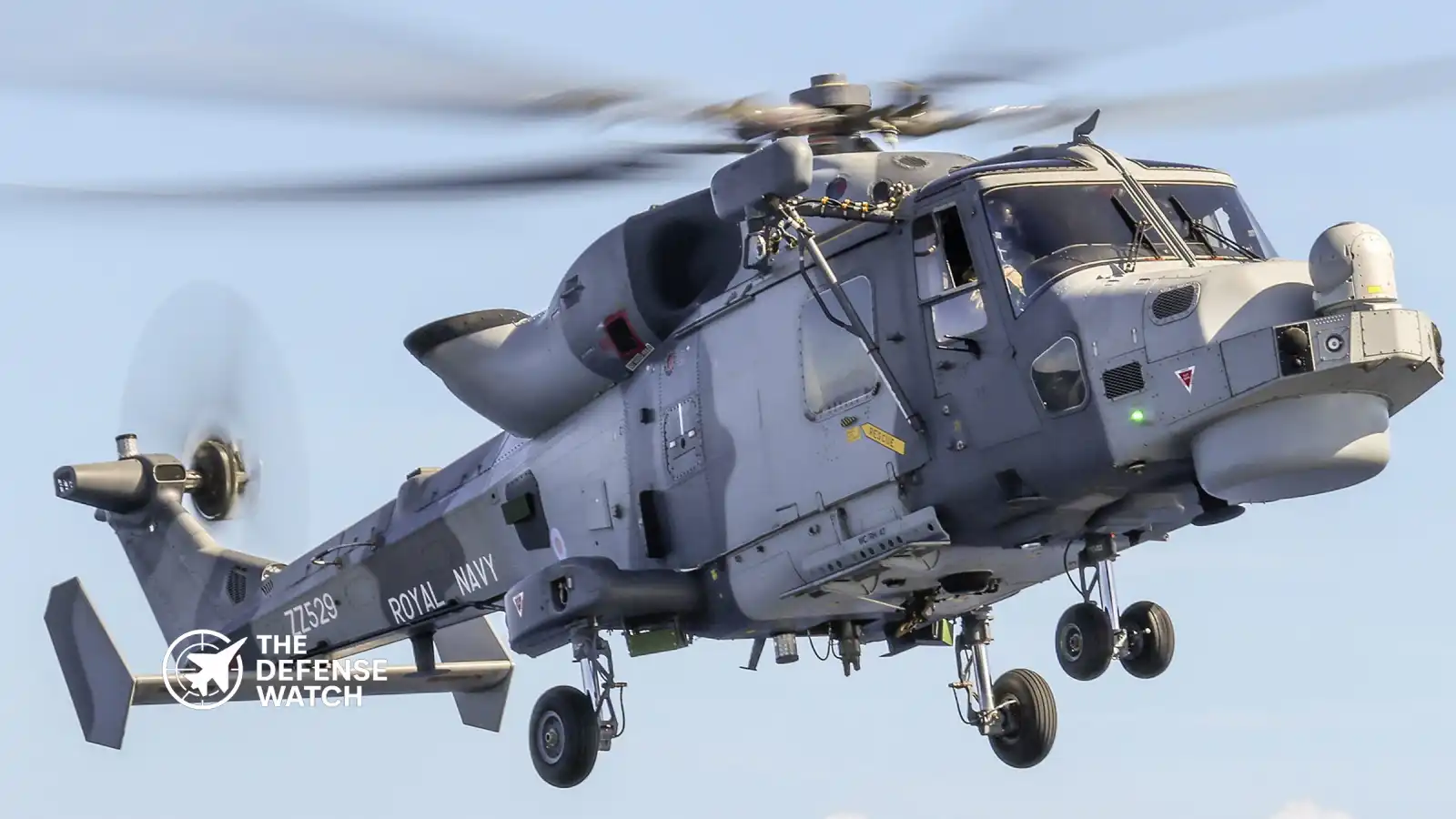
the Royal Air Force has deployed Eurofighter Typhoon aircraft alongside Wildcat helicopters to conduct sustained patrols, surveillance, and rapid response missions. These operations are designed to ensure airspace security, protect allied assets, and deter potential adversaries.
The presence of UK Typhoon fighter jets reflects a broader effort by London to maintain operational readiness and strategic influence in key theaters, particularly amid heightened tensions involving state and non-state actors across the region.
- UK Typhoon fighter jets are conducting continuous air defense patrols across the Middle East.
- Wildcat helicopters are supporting maritime and regional security operations alongside fighter jets.
- The deployment reflects sustained UK military presence in response to evolving regional threats.
- Operations include air policing, surveillance, and rapid response capabilities.
- The mission underscores NATO-aligned commitments and UK strategic interests in the region.
Integrated Air And Maritime Security Operations
The deployment combines air superiority fighters with rotary-wing platforms, creating a layered defense approach. Typhoon jets provide high-speed interception and air policing capabilities, while Wildcat helicopters support maritime surveillance and close-range operational tasks.
This integration enhances situational awareness across both air and sea domains. Wildcat helicopters are particularly suited for operations in littoral environments, offering flexibility in monitoring shipping lanes and supporting naval forces.
Such combined operations indicate a shift toward multi-domain coordination, where air and maritime assets operate in tandem to address complex security challenges. This approach aligns with modern NATO doctrines emphasizing interoperability and rapid response.
Strategic Context Behind UK Air Defense Deployment
The continued presence of UK Typhoon fighter jets in the Middle East comes at a time of increased regional volatility. Ongoing conflicts, drone proliferation, and missile threats have heightened the demand for persistent air defense coverage.
British forces have historically played a role in coalition operations across the Middle East, including counterterrorism missions and air policing tasks. The current deployment builds on that legacy while adapting to newer threats such as unmanned aerial systems and low-altitude cruise missiles.
From a strategic standpoint, maintaining continuous air patrols allows the UK to project power, reassure allies, and respond quickly to emerging crises. It also strengthens partnerships with regional and international forces operating in the same theater.
Operational Role Of Typhoon Fighter Jets
The Eurofighter Typhoon is a multi-role combat aircraft capable of both air-to-air and air-to-ground missions. In the context of Middle East operations, its primary role centers on air defense, including intercepting unidentified aircraft and maintaining airspace integrity.
Equipped with advanced radar systems and beyond-visual-range missiles, Typhoon jets are well-suited for detecting and neutralizing potential threats at extended distances. Their speed and agility allow for rapid deployment across wide operational areas.
The aircraft’s ability to integrate with allied command and control systems further enhances its effectiveness in coalition environments. This interoperability is critical in a region where multiple nations conduct overlapping operations.
Wildcat Helicopters Add Tactical Flexibility
Wildcat helicopters complement the capabilities of UK Typhoon fighter jets by providing close-range surveillance and support functions. Operating from both land bases and naval platforms, these helicopters play a key role in monitoring maritime activity and supporting ground forces.
Their advanced sensors enable real-time intelligence gathering, which can be shared with other assets in the operational network. This contributes to a more comprehensive picture of the battlespace.
In scenarios involving asymmetric threats, such as small boats or low-flying drones, Wildcat helicopters offer a flexible and responsive option that fixed-wing aircraft may not fully address.
Analysis: Sustained Presence Signals Long-Term Commitment
The continuous deployment of UK Typhoon fighter jets suggests a long-term commitment rather than a short-term response. This reflects a recognition that Middle East security challenges are persistent and require ongoing engagement.
From an operational perspective, maintaining continuous air patrols places demands on logistics, personnel, and maintenance cycles. This indicates a high level of prioritization within UK defense planning.
The integration of Typhoon jets and Wildcat helicopters also highlights a trend toward adaptable force structures. Instead of relying solely on high-end platforms, the UK is employing a mix of capabilities to address a spectrum of threats.
Moreover, the deployment serves as a deterrent signal. By maintaining a visible and capable presence, the UK aims to discourage hostile actions while supporting stability in a strategically vital region.
Get real time update about this post category directly on your device, subscribe now.


