
Table of Contents
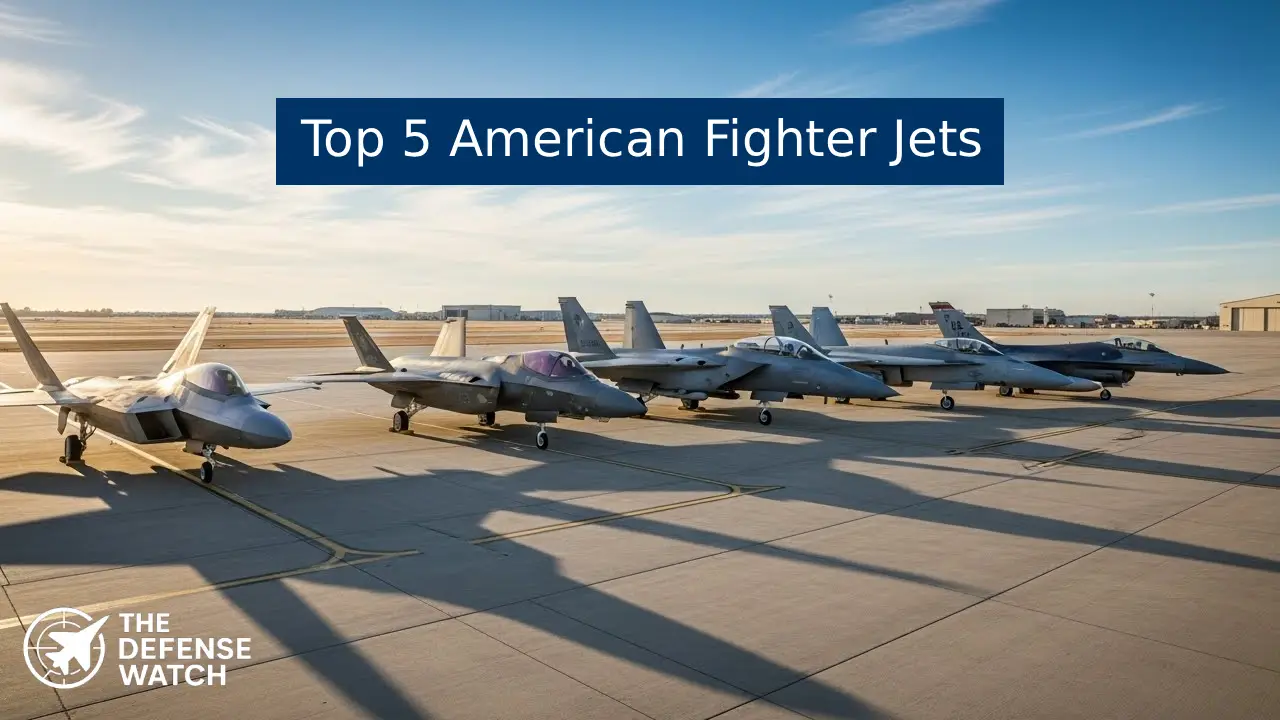
Top 5 American Fighter Jets
The top 5 American fighter jets define the core of United States airpower, and each American fighter jet in this group supports a different mission set across global operations. These aircraft cover air dominance, strike, electronic attack, and multirole missions. They also form the backbone of joint and allied air campaigns.
This report outlines the current inventory, the roles of each platform, and the factors that continue to shape U.S. air combat planning.
The Top 5 American Fighter Jets
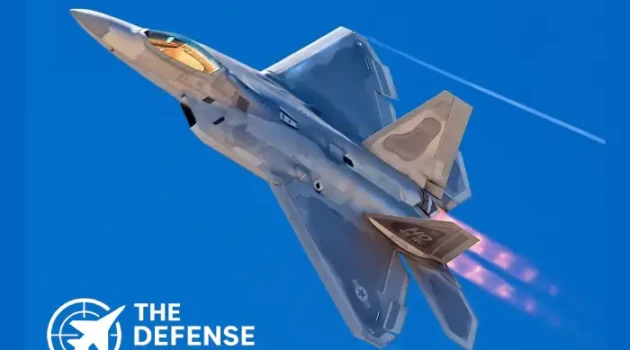
1. F 22 Raptor
The F 22 serves as the primary air superiority fighter in U.S. service. It uses low observable shaping, advanced avionics, and high thrust to weight performance. The aircraft excels in beyond visual range engagement, but it can also operate in dense threat environments for air to air work. The fleet remains limited in size, and production ended in 2012. The platform still holds a unique position due to its supercruise speed and sensor fusion.
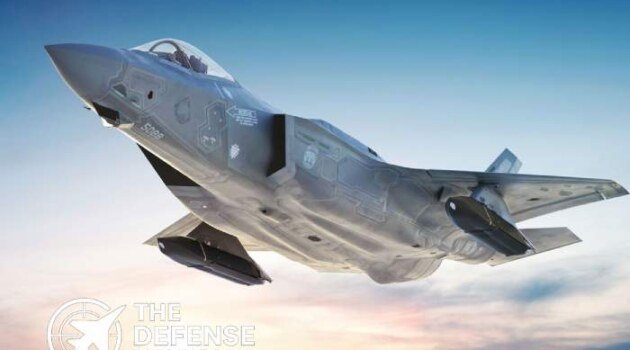
2. F 35 Lightning II
The F 35 is the widest fielded fifth generation fighter in U.S. service. It comes in three variants for the Air Force, Navy, and Marine Corps. The aircraft integrates strike, electronic attack, and intelligence functions. Its ability to pass targeting data to other platforms is a core feature of joint operations. The large procurement program makes it central to long term planning, both for the United States and allied fleets.
3. F 15EX Eagle II
The F 15EX is the newest evolution of the F 15 line. It keeps the well known range and payload of earlier Eagles but adds an open systems backbone, upgraded mission computers, and the latest radar set. The aircraft provides capacity for large weapon loads during stand off strike operations. It also offers rapid integration of new air to air and air to ground weapons due to its digital architecture.
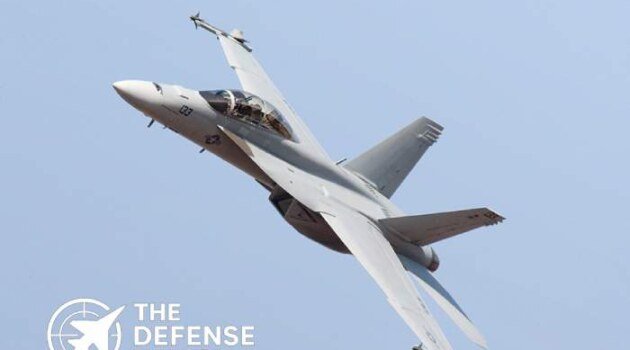
4. F 18E and F 18F Super Hornet
The Super Hornet remains the core carrier based fighter for the Navy. It covers strike, air defense, and maritime missions. It also serves as a key node in naval air wings due to its reliability and broad mission loadout. Modernization programs continue to support radar upgrades and new weapons integration.
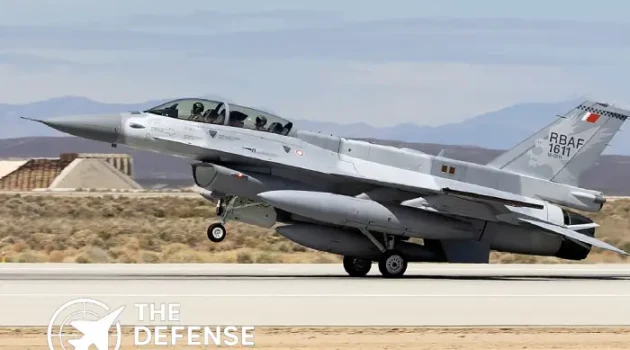
5. F 16 Fighting Falcon
The F 16 remains a large portion of the Air Force fleet. It is used for homeland defense, forward deployments, and precision strike. Even as fifth generation jets expand, the F 16 continues to receive avionics upgrades and radar improvements. Its smaller size and lower operating cost make it suited for steady state operations in multiple theaters.

Mission Roles Across the Fleet
Air Superiority
The F 22 and F 15EX carry the largest air to air loadouts and operate at long ranges. These platforms protect airspace, support joint forces, and counter advanced threats.
Multirole Strike
The F 35, F 18, and F 16 each handle both air to air work and ground attack missions. Their flexibility allows the Air Force and Navy to assign them to rapid deployments or integrated exercises.
Carrier Operations
Only the F 18 and the short takeoff version of the F 35 operate from ships. This gives the Navy and Marine Corps fixed wing strike capacity in distant regions without relying on land bases.
Modernization and Future Direction
The mix of fifth generation and advanced fourth generation fighters reflects the current transition in U.S. planning. The Air Force continues service life extensions for the F 16, while the F 35 fleet grows each year. The F 15EX fills a high payload role that fifth generation aircraft cannot match. The Navy uses the Super Hornet as a bridge while the carrier based F 35C expands.
A future sixth generation platform is in development, but until it enters production the top 5 American fighter jets listed here will remain the primary tools for combat aviation.
Analysis
The combination of stealth aircraft, high capacity fighters, and long serving multirole platforms reflects a layered approach to air combat. Each aircraft supports a specific mission while contributing to shared sensor networks and distributed operations. This model seeks to counter advanced air defense systems, extend engagement ranges, and support joint strike missions across maritime and land theaters.
As global competitors increase investment in long range missiles and modern fighters, the United States continues to focus on survivability, electronic attack, and shared targeting. The F 35 plays a central role in this networked model. The F 22 still shapes air dominance doctrine, but its limited numbers highlight the need for a future air superiority platform. The large fleets of F 16 and Super Hornet remain important because they provide operational volume during long deployments.
The final structure of the future U.S. force will depend on budgets, production rates, and technology timelines, but current plans suggest the top 5 American fighter jets will stay in service well into the 2030s.
FAQs
What is the most advanced American fighter jet?The F 22 holds the highest air to air performance in U.S. service.
Which American fighter jet is the most widely used?The F 16 has the largest fleet, while the F 35 is the largest ongoing procurement program.
What fighter jet does the U.S. Navy rely on?The Navy operates the F 18E and F 18F, alongside the carrier variant of the F 35.
Are all American fighter jets stealth platforms?No. Only the F 22 and F 35 are low observable. The F 15EX, F 18, and F 16 are advanced fourth generation designs.
How long will these jets remain in service?Most platforms are planned to remain through the 2030s, with upgrades extending service life where required.
Get real time update about this post category directly on your device, subscribe now.



1 comment
[…] World’s largest fleet of fifth generation fighters, including F 22 Raptor and F 35 Lightning II […]