
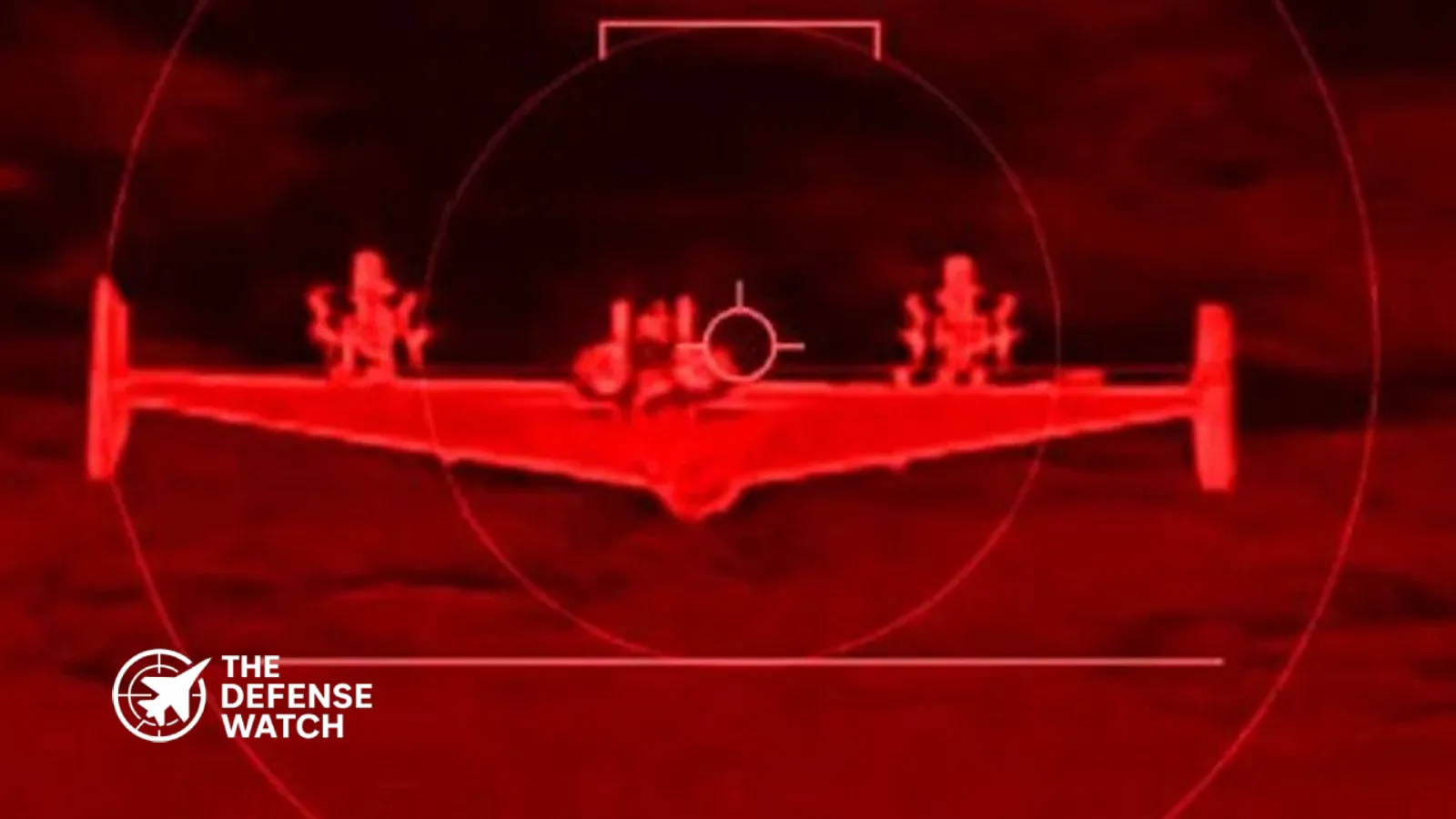
- Russia has modified the Geran-2 loitering munition to carry and deploy FPV drones during long-range strike missions.
- The system acts as a drone carrier, releasing smaller FPV drones closer to frontline or high-value targets.
- This approach extends operational reach while reducing vulnerability of short-range FPV systems.
- The concept reflects evolving Russian tactics focused on layered and networked drone warfare.
- The development underscores growing importance of low-cost, high-impact UAV solutions in Ukraine.
Russia Geran-2 FPV Drone Carrier Marks Shift In Deep Strike Strategy
Russia’s Geran-2 FPV drone carrier concept signals a notable shift in how Moscow is adapting unmanned systems for long-range strike operations in Ukraine. According to reporting by Army Recognition, Russian forces have modified the Geran-2 loitering munition to act as a delivery platform for first-person view (FPV) drones, effectively extending their operational reach.
The Geran-2, widely assessed as a Russian-produced variant of the Iranian Shahed-136, has been used extensively for infrastructure strikes. Its conversion into a drone carrier introduces a new layer of tactical flexibility, allowing it to deploy smaller, highly maneuverable FPV drones closer to defended or mobile targets.
This evolution reflects a broader trend in the conflict, where both Russia and Ukraine are rapidly iterating on unmanned systems to gain operational advantages.
Expanding Reach Of FPV Drone Operations
FPV drones have become a defining feature of the war in Ukraine due to their low cost, precision, and adaptability. However, their limited range has constrained their use primarily to frontline engagements.
The Russia Geran-2 FPV drone carrier addresses this limitation by using a long-range loitering munition as a transport node. Once the Geran-2 reaches a designated area, it can release FPV drones, which then conduct terminal attacks against vehicles, defensive positions, or infrastructure.
This layered approach effectively combines the endurance of long-range UAVs with the precision of short-range strike drones. It also complicates air defense efforts, as defenders must now counter both the carrier platform and the deployed FPV systems.
From an operational standpoint, this method allows Russian forces to strike deeper into Ukrainian territory without relying solely on more expensive cruise missiles or manned aircraft.
Tactical And Operational Implications
The introduction of a Russia Geran-2 FPV drone carrier suggests a growing emphasis on distributed and networked warfare. By integrating multiple drone types into a single mission profile, Russian forces can create more complex attack patterns.
This approach offers several advantages:
- Increased survivability for FPV drones by reducing exposure during transit
- Enhanced targeting flexibility against dynamic or time-sensitive targets
- Greater saturation potential against air defense systems
At the same time, the concept introduces new challenges. Coordinating the release and control of FPV drones from a moving carrier platform requires reliable communication links and precise timing. Electronic warfare, already a major factor in the conflict, could disrupt these operations.
Western defense analysts have noted that such adaptations demonstrate how quickly lessons from the battlefield are being translated into new capabilities. The use of hybrid drone systems also reflects a cost-imposition strategy, forcing defenders to expend higher-value interceptors against relatively inexpensive threats.
Broader Context In UAV Warfare Evolution
The Russia Geran-2 FPV drone carrier development fits into a wider pattern of innovation in unmanned warfare. Both sides in the Ukraine conflict have increasingly relied on modular and improvised solutions to enhance combat effectiveness.
Ukraine has pioneered the use of FPV drones for precision strikes against armored vehicles and logistics nodes. Russia’s adaptation appears to build on similar principles but extends their reach through integration with existing long-range platforms.
This trend highlights a shift away from traditional, platform-centric warfare toward more flexible, system-of-systems approaches. In this model, relatively simple technologies are combined to achieve effects traditionally associated with more advanced and costly systems.
Strategic Significance
From a strategic perspective, the emergence of the Russia Geran-2 FPV drone carrier underscores the growing importance of unmanned systems in modern conflict. It also illustrates how incremental modifications can yield meaningful operational gains.
The ability to project FPV drone strikes over longer distances could increase pressure on Ukrainian rear areas, including logistics hubs and command nodes. It may also force Ukraine to adapt its air defense posture, potentially diverting resources from other critical areas.
At the same time, the effectiveness of this approach will depend on factors such as reliability, production scale, and countermeasures. Electronic warfare, improved air defenses, and counter-drone technologies could limit its impact.
Get real time update about this post category directly on your device, subscribe now.
