
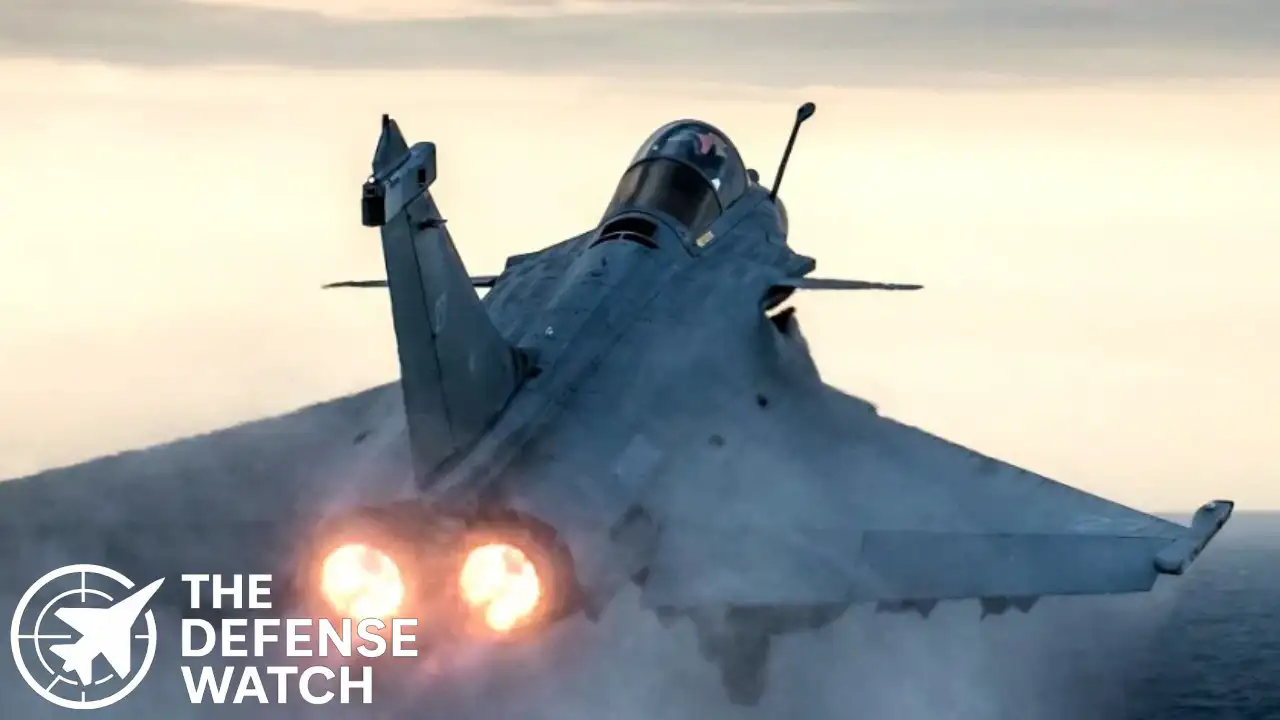
Rafale Fighter Jet Capabilities: A Deep Dive
The Dassault Rafale, often referred to simply as the Rafale jet, is one of the most advanced multirole fighter aircraft in service today. Designed and built by France’s Dassault Aviation, the Rafale has become a symbol of French aerospace innovation and defense autonomy.
As a “omnirole” fighter, the Rafale is capable of performing air superiority, ground attack, reconnaissance, and nuclear deterrence missions within a single sortie. The aircraft is currently operated by the French Air and Space Force and the French Navy, with exports to India, Egypt, Greece, Croatia, and the United Arab Emirates strengthening its global footprint.
With increasing international attention on advanced combat aircraft, defense observers frequently compare the Rafale’s capabilities to those of leading U.S. fighters such as the F-16 Fighting Falcon, F/A-18 Super Hornet, and even the fifth-generation F-35 Lightning II.
What is the Rafale?
The Rafale is a twin-engine, delta-wing, multirole fighter equipped with advanced avionics, sensor fusion, and fly-by-wire controls. Developed to replace a diverse mix of French legacy aircraft, it was designed to handle all mission types without relying on a broad fleet mix.
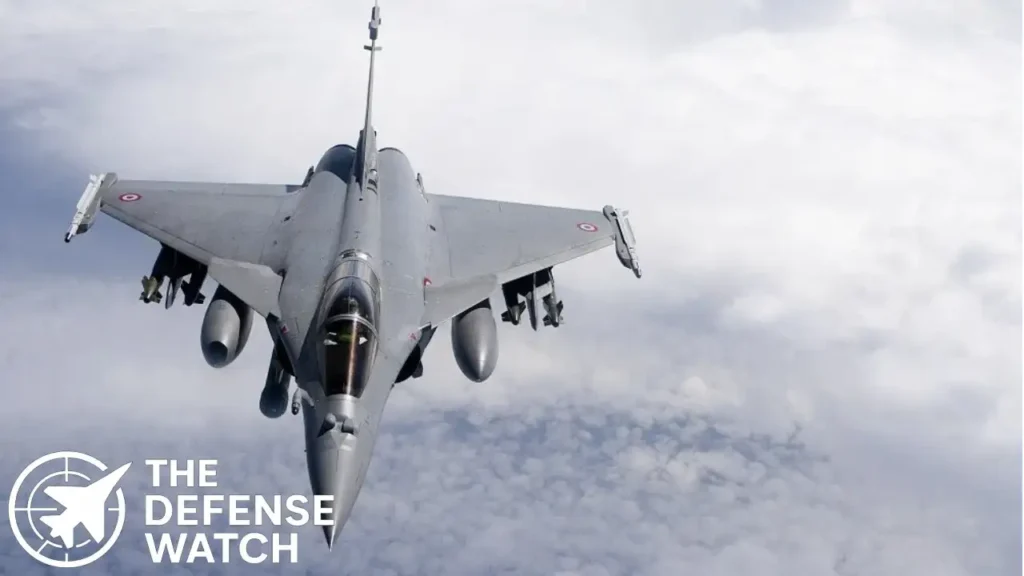
Key specifications include:
- Engines: Two Snecma M88 turbofans
- Maximum speed: Mach 1.8
- Combat range: Over 1,800 km with external fuel tanks
- Armament: 30mm GIAT cannon, 14 hardpoints for air-to-air and air-to-ground munitions
- Weapons compatibility: Meteor beyond-visual-range missiles, SCALP cruise missiles, AM39 Exocet anti-ship missiles, and nuclear-capable ASMP-A
This versatility makes the Rafale especially appealing to air forces seeking independence from U.S. or Russian fighter procurement lines.
Rafale Fighter Jet vs. U.S. Aircraft
When compared to American platforms, the Rafale occupies an intermediate position between fourth-generation and fifth-generation fighters.
- Against the F-16: The Rafale offers superior avionics, sensor integration, and weapons load, but the F-16 remains cheaper and more widely available.
- Against the F/A-18 Super Hornet: Both aircraft share carrier-operating capabilities, though the Rafale’s advanced missiles and electronic warfare suite give it an edge.
- Against the F-35 Lightning II: The Rafale lacks stealth, but it is combat-proven, less dependent on software-driven logistics, and fully sovereign in production—an advantage for export customers wary of foreign restrictions.
France also emphasizes the Rafale’s interoperability with NATO allies, although the U.S. maintains a clear technological lead in stealth and network-centric warfare capabilities.
Operational Record
The Rafale has been combat-proven in Afghanistan, Libya, Mali, Iraq, and Syria, where it conducted precision strikes, close air support, and intelligence missions. Its reliability and flexibility in expeditionary operations have bolstered its reputation as a highly dependable aircraft.
Export customers such as India, which ordered 36 Rafales under a $9.4 billion deal, view the aircraft as a strategic asset in countering regional threats. In the Middle East, UAE and Egyptian acquisitions further highlight the Rafale’s growing role in reshaping regional airpower balances.
Analysis: The Rafale’s Strategic Value
The Rafale’s greatest strength lies in its balance between technology, sovereignty, and versatility. Unlike U.S. fighters, which often involve restrictions on weapons integration and mission software, the Rafale offers customers full operational independence.
For countries outside the NATO sphere, this independence is crucial. Nations like India and the UAE see the Rafale as a way to diversify defense procurement and avoid overdependence on U.S. or Russian suppliers.
At the same time, the Rafale cannot entirely match the fifth-generation advantages of stealth aircraft like the F-35 or F-22. Its survivability against advanced integrated air defense systems (IADS) may be more limited, though France continues to upgrade the jet with new sensors, radar, and weaponry to maintain competitiveness.
FAQs
The Rafale is a French twin-engine multirole fighter jet developed by Dassault Aviation, capable of air-to-air, air-to-ground, and reconnaissance missions.
The Rafale offers advanced avionics and weapons versatility, outperforming older U.S. fighters like the F-16, but falls short of the stealth advantages of the F-35.
France, India, Egypt, Greece, Croatia, and the United Arab Emirates currently operate or have ordered the Rafale.
It can carry Meteor air-to-air missiles, SCALP cruise missiles, AM39 Exocet anti-ship missiles, precision-guided bombs, and nuclear-capable ASMP-A.
No, the Rafale is classified as a 4.5-generation fighter, bridging the gap between fourth-generation and fifth-generation aircraft.
Get real time update about this post category directly on your device, subscribe now.

10 comments
[…] U.S. continues to lead in sheer depth and integration of fighter capability. The F-35 remains the backbone of next-generation U.S. airpower, while the F-22 remains unmatched […]
[…] Rafale was built as an “omnirole” fighter capable of switching between air-to-air and strike missions mid-flight. It features advanced avionics, […]
[…] Strike Eagle (1988 onward) – A dual-role fighter capable of precision strike and deep interdiction, with two-seat cockpit for pilot and weapons […]
[…] particularly over maritime boundaries and in contested coastal corridors. The shift to more capable jets is aligned with the broader Forces Goal 2030 modernization […]
[…] Yet analysts caution that official figures do not necessarily capture the full picture. For China, off-budget spending, currency conversion (to reflect purchasing power) and other hidden expenditures may raise the real number. One study estimates China’s full defense outlay could be US$471 billion in 2024 — about 36 % of U.S. levels. Others argue China’s spending might still be significantly less in terms of comparable capability. […]
[…] 39 Gripen, where “JAS” stands for Jakt (Fighter), Attack, and Spaning (Reconnaissance)—a true multirole concept that replaced several older aircraft types in Swedish […]
[…] technical specs, the Su-30SM fighter embodies Russia’s bid to reshape airpower dynamics. In a multipolar world, its export success erodes Western monopolies on advanced fighters, […]
[…] term 110kN aero engine increasingly serves as a benchmark requirement, capable of powering medium-weight fighters in the 5th-generation class with improved thrust-to-weight ratios, supercruise potential, and […]
[…] procedures, mission coordination, and data utilization in support of reconnaissance missions. The aircraft’s capabilities are expected to enhance unit-level intelligence gathering as the service transitions toward a more […]
[…] by the French procurement agency DGA in January 2023. Testing included separation trials from a Rafale aircraft to ensure safe release, and subsequent live-fire testing to validate operational […]